rifanmuazin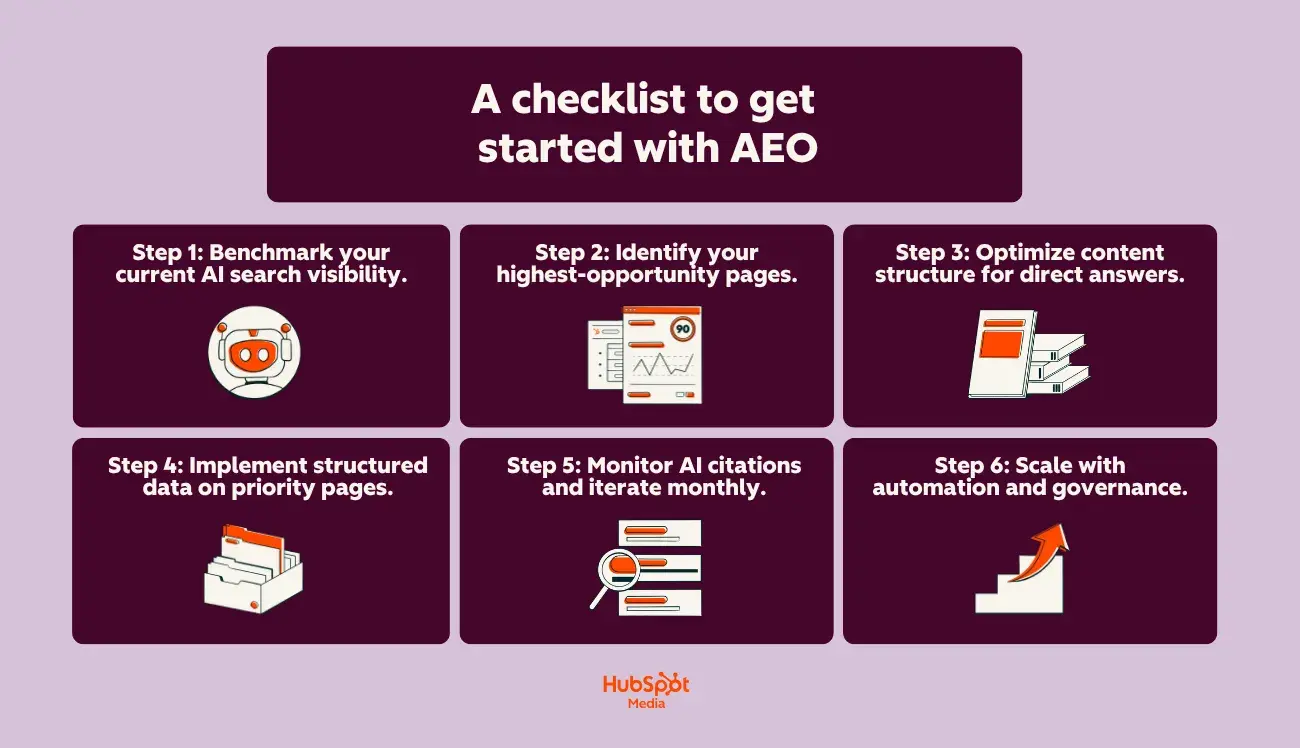
In an era defined by the rapid ascent of artificial intelligence, the paradigm of digital discovery is undergoing a profound transformation. What was once a theoretical consideration for marketing leaders – Answer Engine Optimization (AEO) – has swiftly evolved into a measurable imperative, demonstrating tangible returns in conversions and long-term brand authority. As consumers increasingly leverage AI tools such as ChatGPT, Google AI Overviews, and Perplexity to find information, brands that proactively invest in AEO are gaining a distinct competitive edge, fundamentally altering the customer journey from initial query to final action.
The Genesis of AEO: A Shift in Search Behavior
For decades, traditional Search Engine Optimization (SEO) focused on ranking web pages within a list of “blue links” in response to user queries. The goal was to drive clicks to a website, where users would then find their answers. This model, while effective, began to face disruption with the widespread adoption of large language models (LLMs) and generative AI in late 2022 and early 2023. The public launch of tools like ChatGPT highlighted a new capability: AI could directly answer complex questions, synthesize information from multiple sources, and even generate creative content, often obviating the need for users to click through to a website.
Google’s subsequent introduction of AI Overviews (formerly Search Generative Experience, SGE) further cemented this shift, integrating AI-generated summaries directly into its search results pages. Perplexity AI, designed from the ground up as an “answer engine,” exemplified this new search paradigm. These developments signaled a clear evolution: users were no longer just searching for links; they were seeking direct, authoritative answers.
This change necessitates AEO, which is the specialized practice of structuring and optimizing content to ensure AI-powered search engines can accurately extract, understand, and cite a brand’s information as a direct, authoritative response to user queries. Unlike traditional SEO, which prioritizes page rankings, AEO centers on the clarity, conciseness, and authority of answers, ensuring content is “answer-ready” for AI synthesis. The transition from merely appearing in search results to being the answer cited by AI agents marks a critical juncture for digital marketing strategies.
A New Customer Journey: Before the Click
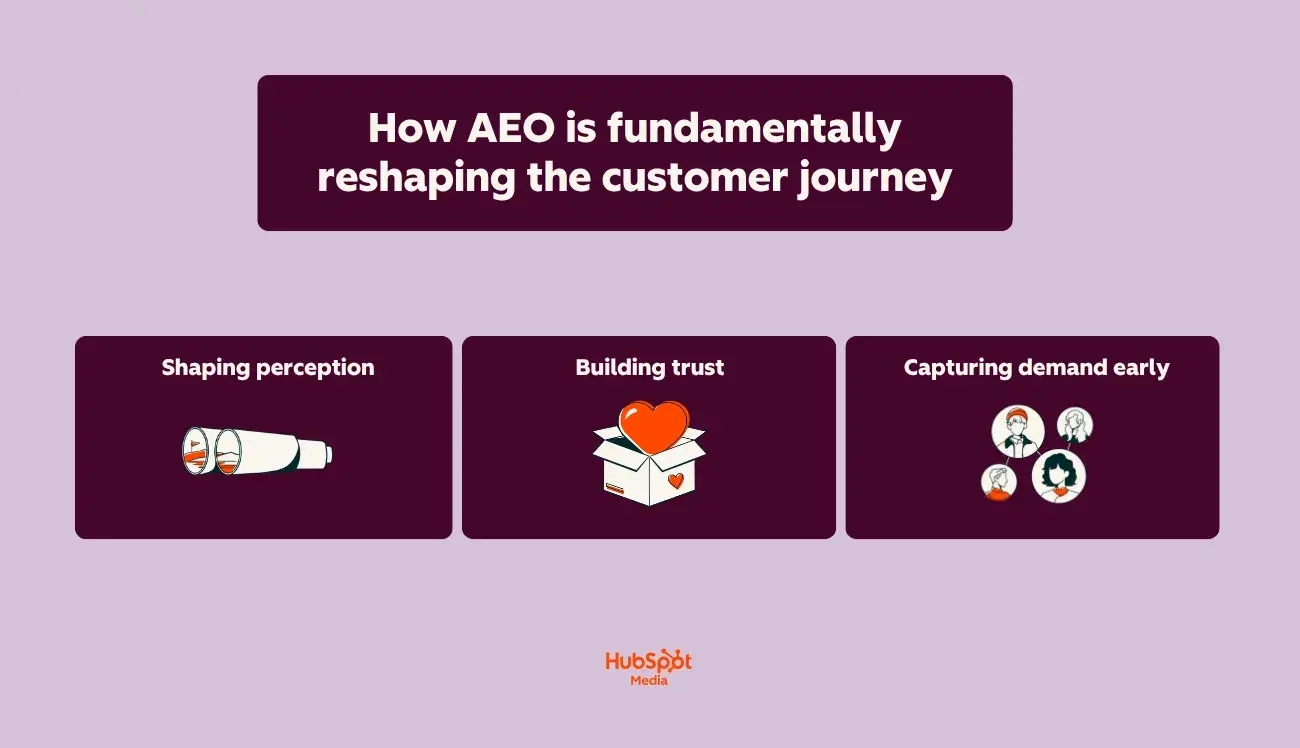
The most significant implication of AEO is its reshaping of the customer journey. Buyers are now receiving answers before they ever navigate to a brand’s website. This means that brands appearing in AI-generated responses are capturing demand at the moment of intent formation, not merely at the point of click-through. A recent HubSpot study revealed that while nearly half of marketers (49%) observed a decrease in web traffic from traditional search due to AI answers, a substantial 58% noted that AI referral traffic exhibits significantly higher intent. This data underscores AEO’s power to deliver a more qualified audience, shortening the path from discovery to conversion.
Unpacking the Measurable Benefits of AEO
For marketing leaders, AEO is no longer a strategic “nice-to-have” but a direct conduit to pipeline influence and sustained brand growth. The advantages are compounding, becoming increasingly difficult for competitors to replicate over time.
-
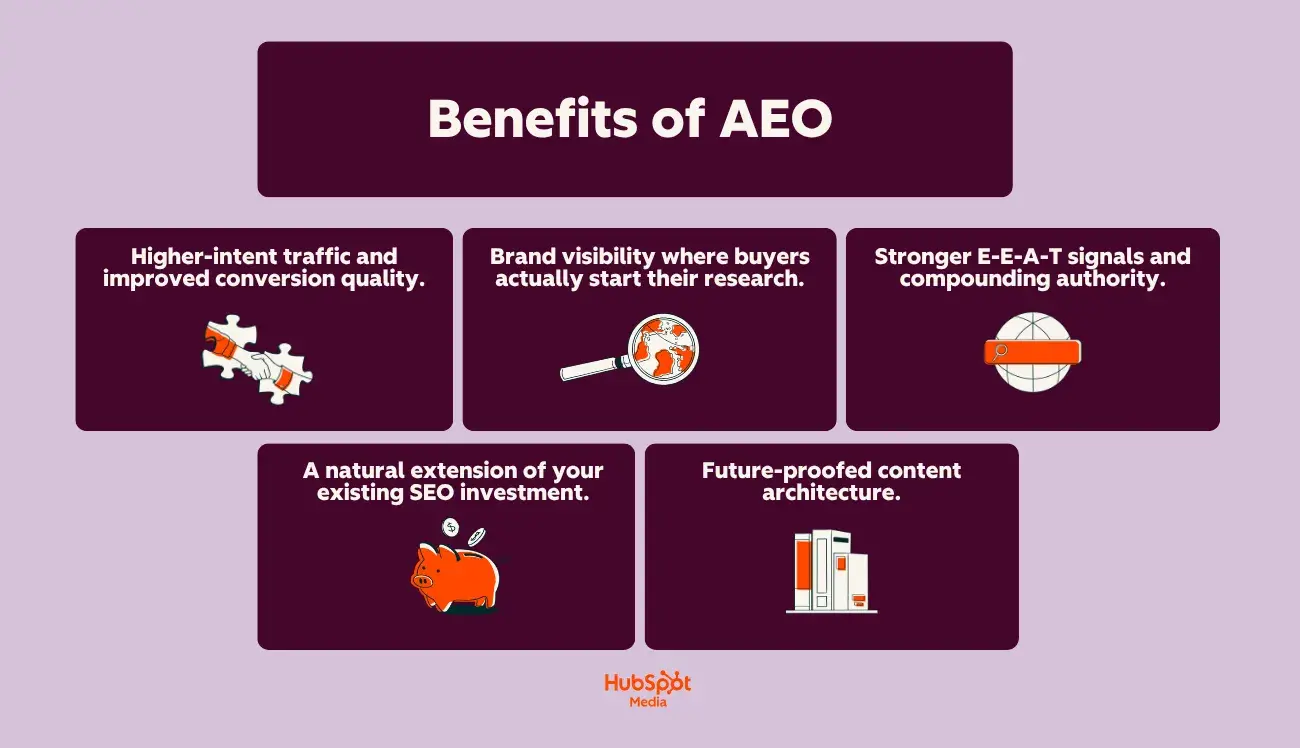
Higher-Intent Traffic and Improved Lead Quality: When an AI answer cites a brand, it has already performed a crucial vetting process: explaining the topic, matching user intent, and positioning the brand’s content as highly relevant and authoritative. Users arriving at the site from such a citation are typically much further along in their buyer’s journey, leading to shorter sales cycles, higher conversion rates, and a demonstrable increase in marketing-qualified leads (MQLs). The initial AI interaction serves as a powerful pre-qualification filter.
-
Enhanced Brand Visibility and Demand Capture: AEO significantly amplifies brand visibility within the burgeoning AI-powered search landscape. As AI systems learn to associate a brand with accurate, well-structured answers, that visibility compounds, establishing the brand as a recognized authority. This proactive presence captures demand precisely where buyers initiate their research, giving early adopters a crucial first-mover advantage in a rapidly evolving ecosystem.

-
Strengthening E-E-A-T and Long-Term Authority: The foundational work of AEO—meticulously defining entities, implementing structured data, and publishing clear, well-sourced answers—directly reinforces Google’s E-E-A-T signals (Experience, Expertise, Authoritativeness, Trustworthiness). Every piece of answer-optimized content deepens a brand’s entity profile across LLMs, increasing the probability of future citations and solidifying its long-term authority in its domain. This virtuous cycle enhances both AI and traditional search rankings.
-
Measurable Performance with Purpose-Built Tools: A significant historical challenge for AEO has been the difficulty in proving ROI, as legacy SEO tools were not designed to track AI citations. However, the advent of specialized AEO measurement tools has transformed this. Platforms like HubSpot AEO Grader and HubSpot AEO provide a concrete baseline for AI visibility, identify content gaps, offer prioritized recommendations, and allow continuous monitoring of brand presence in answer engines. This enables marketing teams to directly attribute optimization efforts to tangible outcomes, moving beyond intuition to data-driven decision-making.
-
A Natural Extension of Existing SEO Investments: Far from being a separate, competing discipline, AEO acts as a powerful layer atop existing SEO strategies. High-ranking pages, already possessing topical authority, become prime candidates for AEO optimization. Structured data implemented for AI citation simultaneously enhances traditional rich results. Well-developed topic clusters, a cornerstone of advanced SEO, provide the interconnected entity relationships that LLMs require for comprehensive understanding. This synergistic relationship allows teams to integrate AEO incrementally, leveraging current content programs rather than rebuilding from scratch.
-
Future-Proofing Content Architecture: Investing in AEO today means building content infrastructure that is inherently scalable across emerging channels. Voice search, multimodal AI, agent-driven commerce, and zero-click interfaces all rely on the same foundational principles: clearly defined entities, semantically rich content, and robust structured data. By optimizing for these fundamentals now, brands are not merely adapting to current answer engines but are future-proofing their content strategy against the next wave of digital discovery innovations.
Navigating the Challenges of AEO Implementation
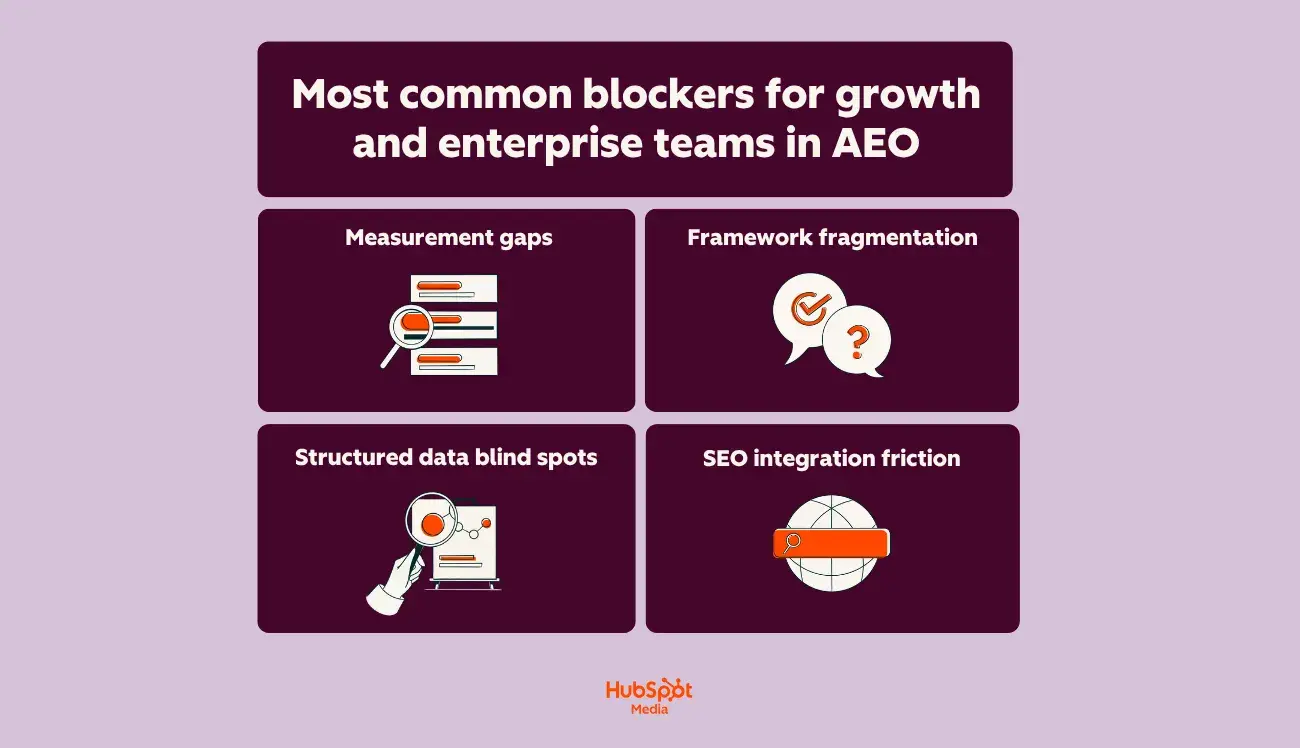
Despite its clear benefits, the path to successful AEO adoption is not without its hurdles. Marketing teams frequently encounter a common set of blockers when transitioning from experimentation to a scalable program.
-
Measuring ROI in a New Landscape: The absence of integrated tracking for AI citations in traditional tools makes it difficult to justify budget and demonstrate impact to leadership. The solution lies in adopting purpose-built AEO measurement tools, which provide a baseline score, a gap analysis, and prioritized actions, enabling rigorous reporting on AI citation presence akin to organic traffic metrics.
-
Developing Repeatable Optimization Frameworks: Many teams approach AEO ad hoc, restructuring a few pages or adding schema without a systematic process, leading to work that doesn’t scale. Building a repeatable AEO content workflow with defined steps—from content audits and competitive analysis to content refinement and structured data implementation—transforms AEO from a one-off project into a sustainable operational capability.
-
Integrating AEO with Existing SEO Strategies: Concerns about duplicate effort or cannibalizing existing rankings often create friction. The strategic approach is to treat AEO as a complementary layer. By focusing AEO efforts on high-performing SEO pages and recognizing that structured data benefits both traditional and answer engines, AEO reinforces rather than competes with established SEO investments.
-
Overcoming Technical Hurdles (Structured Data): The implementation of schema markup across vast content libraries can appear technically daunting for marketing teams lacking extensive developer resources. Prioritizing high-impact, low-effort schema types like FAQPage, HowTo, and Organization schema can provide significant gains without requiring heavy engineering lifts. Many modern CMS platforms, like HubSpot’s Content Hub, offer native support for structured data, easing implementation.
-
Securing Leadership Buy-In: Translating AEO’s benefits into terms that resonate with C-suite executives—such as increased MQLs, reduced customer acquisition costs, or competitive risk mitigation—is crucial for resource allocation. Framing AEO as essential for maintaining visibility in a shifting search landscape, rather than merely an experimental tactic, can secure necessary buy-in. Demonstrating progress with tools like the AEO Grader, benchmarked against pipeline metrics, solidifies the business case.
-
Understanding Diverse Answer Engine Behaviors: The varied retrieval behaviors of different LLMs (ChatGPT, Google AI Overviews, Perplexity) can create ambiguity regarding where to focus optimization efforts. The most effective solution is to optimize for shared fundamental principles: clarity, conciseness, authority, and robust structure. Content that is meticulously crafted to be the most clear, well-structured, and authoritative answer will perform well across diverse answer engines.
A Strategic Roadmap for AEO Adoption
The teams currently excelling in AI search are not those with limitless budgets, but those adhering to a clear, iterative process supported by the right tools. A practical checklist can guide initial AEO efforts within the first 30-90 days:
-
Benchmark Current AI Search Visibility: Before any optimization, establish a baseline. Tools like HubSpot’s AEO Grader provide an initial visibility score, identify content gaps, and offer prioritized actions, making every subsequent optimization trackable.
-
Identify High-Opportunity Pages: Focus on content that already possesses strong topical authority and organic traffic. These pages offer the most robust signals for LLMs. Automating content audits with tools like AirOps can programmatically evaluate pages for answer-readiness and structured data gaps across large content libraries.
-
Optimize Content Structure for Direct Answers: AI answer engines process information most effectively when content is clearly structured. This involves ensuring introductory paragraphs function as direct answers, using clear headings (H2, H3) for distinct sub-questions, summarizing complex topics, and employing bulleted or numbered lists for easy extraction. HubSpot’s Content Hub can facilitate the creation and management of such answer-friendly formats.
-
Implement Strategic Structured Data: Prioritize high-impact schema types such as FAQPage, HowTo, and Organization schema. These often require less technical effort and provide immediate benefits by explicitly defining content elements for AI.
-
Continuous Monitoring and Iteration: Set up ongoing monitoring to track AI citations, content summaries, and competitive landscape shifts. Regular review of results and quarterly AEO Grader assessments inform the prioritization of subsequent optimization cycles. Platforms like Perplexity can serve as a testing surface to see how content is cited and summarized.
-
Scale with Automation and Governance: Once initial successes are achieved, leverage automation tools like AirOps for programmatic content audits, bulk schema generation, and AI-assisted optimization recommendations. Establishing clear governance and style guides ensures consistency and quality across a growing content library.
The Future is Answer-Centric
The benefits of AEO are no longer speculative; they are measurable, compounding, and directly aligned with the pipeline and visibility goals critical to marketing success. The landscape of digital discovery is accelerating, with AI systems poised to handle an ever-larger share of the user journey. Brands that embrace AEO as a core operational capability, commit to data-driven iteration, and proactively build their answer-ready content foundations today, will be the ones that establish defensible brand authority and secure a lasting competitive advantage in this new era of search.