rifanmuazin
The evolving landscape of digital search, fundamentally reshaped by artificial intelligence, presents a paradoxical challenge and opportunity for businesses: while AI-driven search behavior may lead to a reduction in organic traffic, it simultaneously delivers a significantly higher quality of leads. For marketers, this shift represents a substantial strategic advantage. A recent groundbreaking study, HubSpot’s “State of AEO 2026” report, identified AI search as the single most potent predictor of purchase intent among CRM software buyers, underscoring its critical importance for every go-to-market team navigating the modern digital ecosystem.
The Paradigm Shift: Understanding AI Search Behavior
AI search behavior refers to the methods and patterns individuals employ when seeking information and answers through artificial intelligence interfaces, whether interacting with conversational AI platforms like ChatGPT or engaging with integrated AI Overviews within traditional search engines like Google. This represents a profound departure from historical search paradigms.
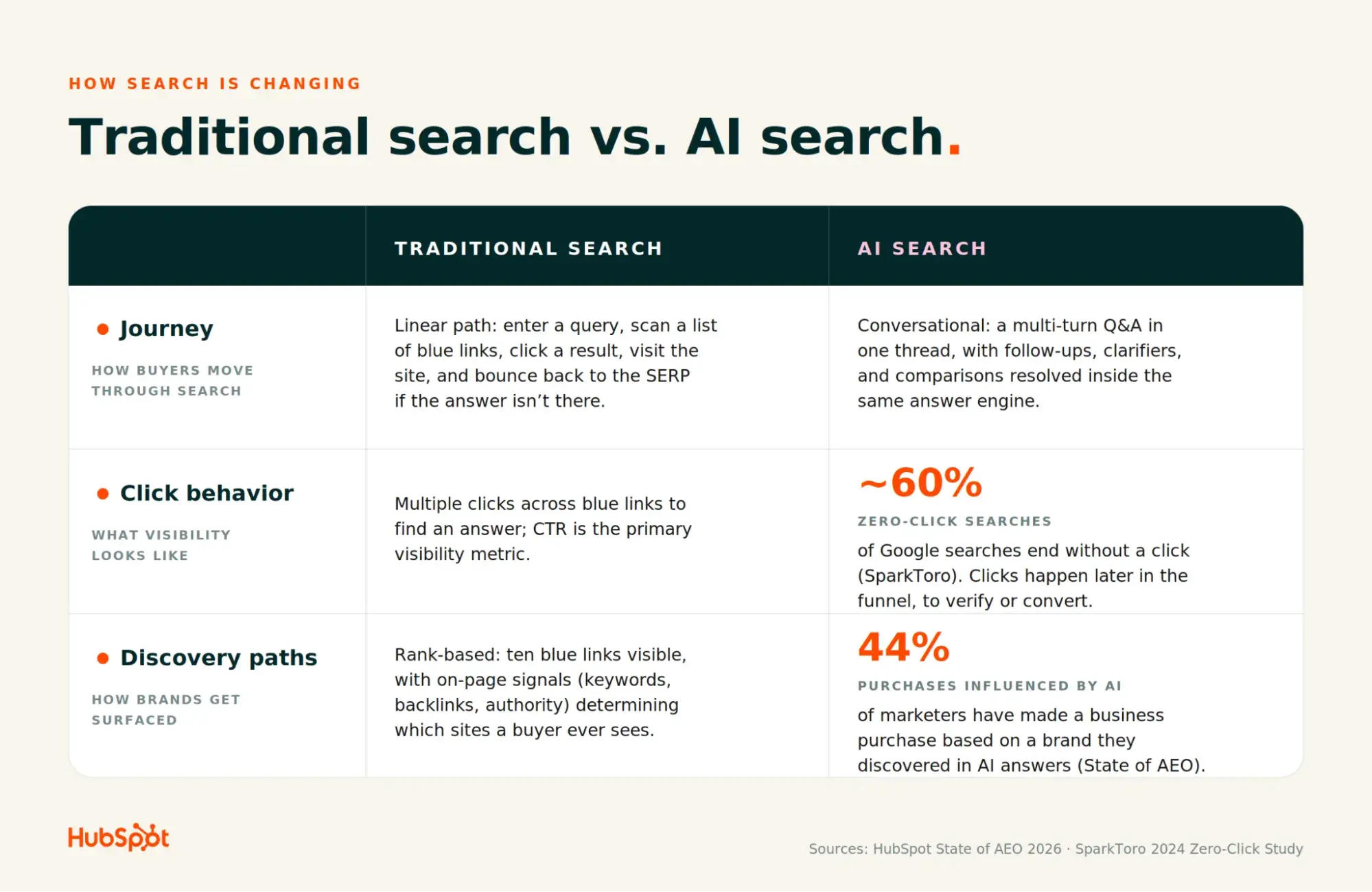
Traditionally, a user’s search journey involved entering keywords into a search engine, receiving a list of “blue links,” and then meticulously clicking through these results to locate their desired information. However, this established behavior is rapidly changing. Today, users are increasingly turning to AI with more conversational, often multi-sentence queries, expecting immediate, AI-generated summaries that directly address their needs. Unlike the linear click-and-browse model of traditional search, AI search fosters a multi-turn, question-and-answer dialogue, providing a comprehensive response within a single chat interface, often eliminating the need to navigate to external webpages. This fundamental difference in user interaction means that the journey, click behavior, and discovery paths are entirely reconfigured.
Marketers are compelled to understand and adapt to AI search behavior because it constitutes an ever-growing segment of the overall search landscape. While traditional Search Engine Optimization (SEO) remains crucial for determining which pages rank in the underlying search index, a new discipline, Answer Engine Optimization (AEO), now dictates which sources AI tools choose to cite when compiling their summaries. Consequently, both SEO and AEO must be meticulously optimized in parallel. Increasingly, AEO is becoming the primary gatekeeper, influencing whether potential buyers even encounter a brand’s website in the initial stages of their information-gathering process.
Navigating the New Funnel: High-Intent Discovery and Conversion
While the advent of AI search behavior is undeniably contributing to a decrease in raw organic traffic, this trend is counterbalanced by the superior quality and higher intent of the traffic it does generate. Data from HubSpot in 2025 indicated a remarkable three-fold improvement in conversion rates from AI-sourced leads compared to those originating from other digital channels. Furthermore, referral traffic from prominent AI tools such as ChatGPT and Google Gemini has reportedly tripled, according to analysis by Search Engine Land.
The superior conversion performance of AI-referred traffic stems from the “summary-first” experience inherent in answer engines. These platforms effectively resolve simple, surface-level queries directly within the AI interface. For instance, a user asking “what is AEO?” will likely receive a concise definition, perhaps a brief list of vendors, and then move on without needing to click any external links. However, a user who, after reading an AI-generated answer, chooses to click through to an external site in response to a more complex query like “how can a B2B marketing team of five implement AEO on their blog?” has typically progressed beyond the initial informational layer. Such individuals have often validated their problem, noted the sources cited by the AI, and are now seeking to verify information, compare solutions, or initiate a conversion.
This significant alteration in the shape of the marketing funnel necessitates a re-evaluation of success metrics. Clicks, while still valuable, become a smaller, later-stage signal within a customer journey that now largely unfolds within the answer engine itself. The new critical metrics for AEO include the frequency with which a brand surfaces in AI summaries, the specific competitors it appears alongside, and the types of prompts that funnel the highest-intent traffic to its website.
Reshaping Brand Visibility: The AI Overview Effect
AI search behavior has dramatically reconfigured the dynamics of brand discovery. The traditional search canvas was predictable: a clear display of ten blue organic links, interspersed with a few advertisements at the top, and occasionally a featured snippet. In the pre-AI era, securing the number one ranking for a relevant category term reliably placed a brand directly in the buyer’s line of sight. However, the emergence of AI answer engines, conversational assistants, and copilots has largely superseded this familiar layout. The majority of the visible screen real estate is now occupied by the AI-generated answer itself, rather than the list of underlying links.
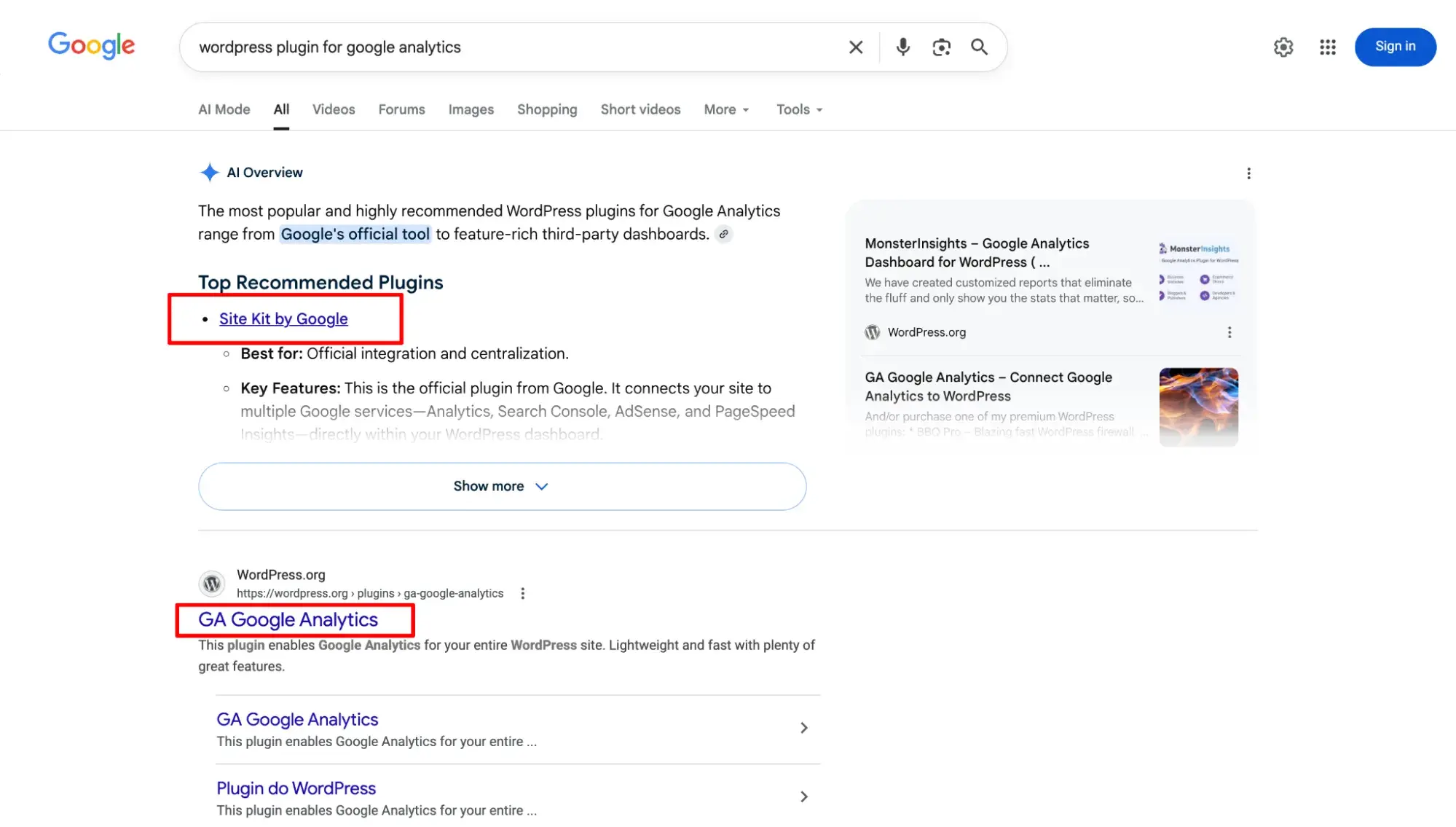
A striking example can be observed in a typical Google search for “WordPress plugin for Google Analytics.” The AI Overview prominently dominates the screen above the fold. Even if a specific page, such as one for “GA Google Analytics,” holds the coveted #1 organic position, it is often outranked in prominence by a different solution, like “Site Kit,” which the AI Overview chooses to highlight. This visual hierarchy profoundly influences user behavior, making the AI-recommended option significantly more likely to be clicked.
Data from SparkToro indicates that approximately 60% of Google searches now conclude without a single click, a figure widely anticipated to continue rising as more queries trigger AI-generated answers. This trend disproportionately impacts category-term discovery, where AI search has hit hardest. Ahrefs reports that Google serves AI Overviews for non-branded queries 1.9 times more frequently than for branded ones. A query such as “what is the best software for video editing” no longer merely presents a list of blue links for independent evaluation. Instead, it typically returns one or two brands recommended by the AI in a highly personalized output, potentially alongside a comparative table, often leading the buyer to act directly on the AI’s suggestion. Branded searches, however, have largely held steady, as buyers already familiar with a brand’s name continue to seek it out directly.

HubSpot’s “State of AEO 2026” report further emphasized this impact, revealing that 42% of CRM software buyers utilized AI search to evaluate vendors. Across all tracked evaluation activities, AI search emerged as the strongest predictor of purchase intent for CRM buyers. When an answer engine prominently names a competitor in its recommendation, the sales process can effectively be decided before a sales team is even aware of the buyer’s existence.
In this new environment, three key elements – entity clarity, topical authority, and reputation signals – now predominantly determine which brands answer engines surface. While traditional SEO signals like backlinks, keywords, and domain authority still contribute to blue-link visibility and long-term reputation, in the context of AI search, these signals are first evaluated by an answer engine before a prospect ever reaches a website. By the time a user clicks through, they have often already weighed several options presented within an AI answer, ideally including the brand in question.
Strategic Content Adaptation for the AI Era
Content planning for AI search behavior demands a fundamental shift from keyword-centric strategies to prompt-centric approaches. Buyers leveraging AI rarely pose a single, isolated query. Instead, they typically initiate a multi-turn conversation, beginning with a primary question, followed by clarifiers, comparisons, and deeper inquiries. To secure citations throughout this extended conversational exchange, content must be comprehensively structured to anticipate and address this logical sequence of questions.
Brainstorming Buyer Questions for AI: The process begins with “question mapping.” Starting with a broad, early-funnel query relevant to a product category (e.g., “what is AEO?”), marketers must then meticulously brainstorm the subsequent five to ten logical questions a buyer would ask (e.g., “how is AEO different from SEO?”, “do I need an AEO tool?”, “which AEO tools do marketers actually use?”, “how much does AEO software cost?”, “what’s the ROI of AEO?”). This comprehensive sequence forms the collective content strategy that needs to be addressed.
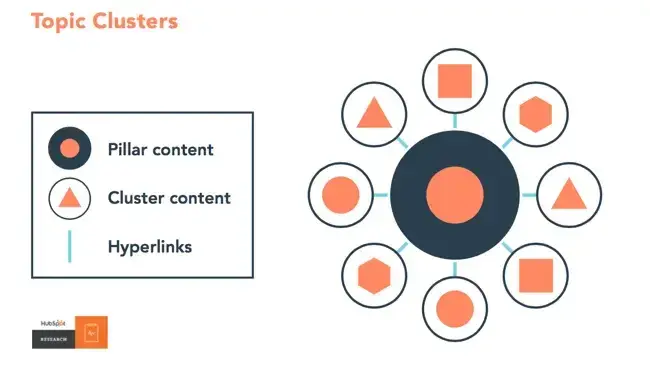
HubSpot’s established topic cluster model provides an effective framework for organizing these question sets into a pillar page and supporting cluster pages. The pillar page addresses the broad, seed question, while individual cluster pages delve into each follow-up query. This structured approach offers answer engines a clear primary entity to cite for the overarching query and a well-defined trail of supporting pages for long-tail follow-ups. Tools like HubSpot’s Content Hub are designed to help marketing teams manage and organize these topic clusters and pillar pages efficiently within their CMS.
A practical “pro tip” for content creators is to run their seed questions through popular AI models like ChatGPT and Perplexity, carefully tracking which sources are cited for each follow-up question. These cited brands represent direct competitors within the answer engine, and their citation patterns offer valuable insights into the type of content that earns mentions at various stages of the buyer’s journey.
Restructuring Existing Content for Extractable Answers: A thorough content audit is essential to identify which existing pages are already earning AI citations and which require optimization. Rerunning target queries for the top 20 or so organic landing pages through ChatGPT, Gemini, and Perplexity can quickly reveal performance. Cited pages are performing well, while uncited ones are prime candidates for restructuring. Strategies for making existing content more AEO-friendly include:
- Answer-First Design: Ensure that the main question is answered succinctly and comprehensively in the introduction of each piece of content.
- Clear Heading Hierarchy: Utilize H2s, H3s, and H4s to break down complex topics into easily digestible, answerable sections.
- Concise Paragraphs: Write in short, focused paragraphs that allow AI models to easily extract key information.
- Use of Lists and Tables: Incorporate bulleted lists, numbered lists, and comparison tables to present information in a highly parseable format.
- FAQ Sections: Integrate dedicated FAQ sections, especially those structured with clear questions and concise answers.
Measuring Success in the AI Landscape: Tracking AEO Visibility
Tracking AI search metrics is crucial for transforming perceived declines in traditional organic traffic into quantifiable visibility wins that can be presented to leadership. These same metrics provide actionable insights into which prompts a brand is losing, which competitors are gaining traction, and which content areas require immediate attention.
AI search visibility can be broken down into three key signals that are vital to track:
- Brand Mentions: How often an AI answer refers to a brand, even without providing a direct link.
- Share of Voice: The frequency with which a brand surfaces in AI summaries compared to its competitors for specific category-level questions.
- Citation Rate: The number of times a brand’s specific content is linked or explicitly referenced as a source within an AI-generated answer.
Traditional analytics tools like Google Analytics were not designed to measure brand mentions or share of voice within AI contexts. To address this, businesses can either manually audit AI answer engines or leverage specialized AEO tools, such as HubSpot AEO, which automate AI visibility tracking.
Auditing AI Search Visibility: A baseline audit involves running the 10-20 highest-priority prompts through ChatGPT, Gemini, and Perplexity (ensuring logged-out or temporary chat sessions to avoid personalization bias). The audit should record which sources are cited, whether the brand appears, and which competitors are leading across critical topic clusters, branded queries, and category-level questions. This baseline data helps identify visibility gaps and informs a roadmap for content optimization.
Tracking AI Search Visibility Over Time: Tools like AEO Grader offer a quick, free snapshot of a brand’s standing across major AI platforms, including a share of voice score. For continuous monitoring, HubSpot AEO tracks brand visibility over time, analyzes competitor performance, and prioritizes recommendations to improve citation rates, serving as the ongoing tracking layer post-baseline.
The Dynamic Nature of AI: Model Updates and Continuous Optimization
Much like Google’s traditional algorithm, AI models undergo frequent updates. Each update can alter how the model weighs various factors, leading to shifts in answer patterns and source selections. For example, OpenAI’s GPT-5 release in August 2025 significantly improved the model’s ability to answer health-related questions, offering more precise, reliable, and contextually aware responses.
To remain optimized for the latest AI models, businesses must track release notes from key developers like OpenAI, Anthropic, Google, and Perplexity. A consistent review cadence is also recommended:
- Weekly: Monitor prompt-level visibility shifts.
- Monthly: Conduct a broader content audit to identify underperforming pages.
- Immediately after major model releases: Re-test critical queries to assess impact.
Between review cycles, four content-side elements are particularly crucial for continuous maintenance:
- Prompt-specific answers: Ensuring content directly addresses anticipated AI prompts.
- Parseable structure: Maintaining clear headings, lists, and concise paragraphs.
- Entity consistency: Consistently reinforcing brand identity and expertise across content.
- Topical authority: Building comprehensive content clusters that establish deep expertise.
Beyond Marketing: AI Search’s Ripple Effect on Sales and Service
The implications of AI search behavior extend far beyond the marketing department, fundamentally altering sales conversations and the strategic value of service content.
How AI Search Behavior Changes Sales Conversations: AI search behavior effectively compresses the traditional sales cycle, as prospects often arrive at initial sales calls already having consumed AI-generated summaries comparing product categories, competitors, and pricing. This necessitates an evolution in sales outreach timing and messaging. Generic discovery questions (e.g., “what’s your current stack?”, “what are your pain points?”) often fall flat with AI-informed prospects who have already explored these details with a chatbot. Sales representatives who can lead with insights into the specific competitors and trade-offs that AI surfaced for a buyer’s category can bypass redundant, surface-level inquiries, leading to more productive and advanced conversations. Tools like AEO within Marketing Hub can surface relevant prompts and citations, making these critical signals visible to both sales and marketing teams.
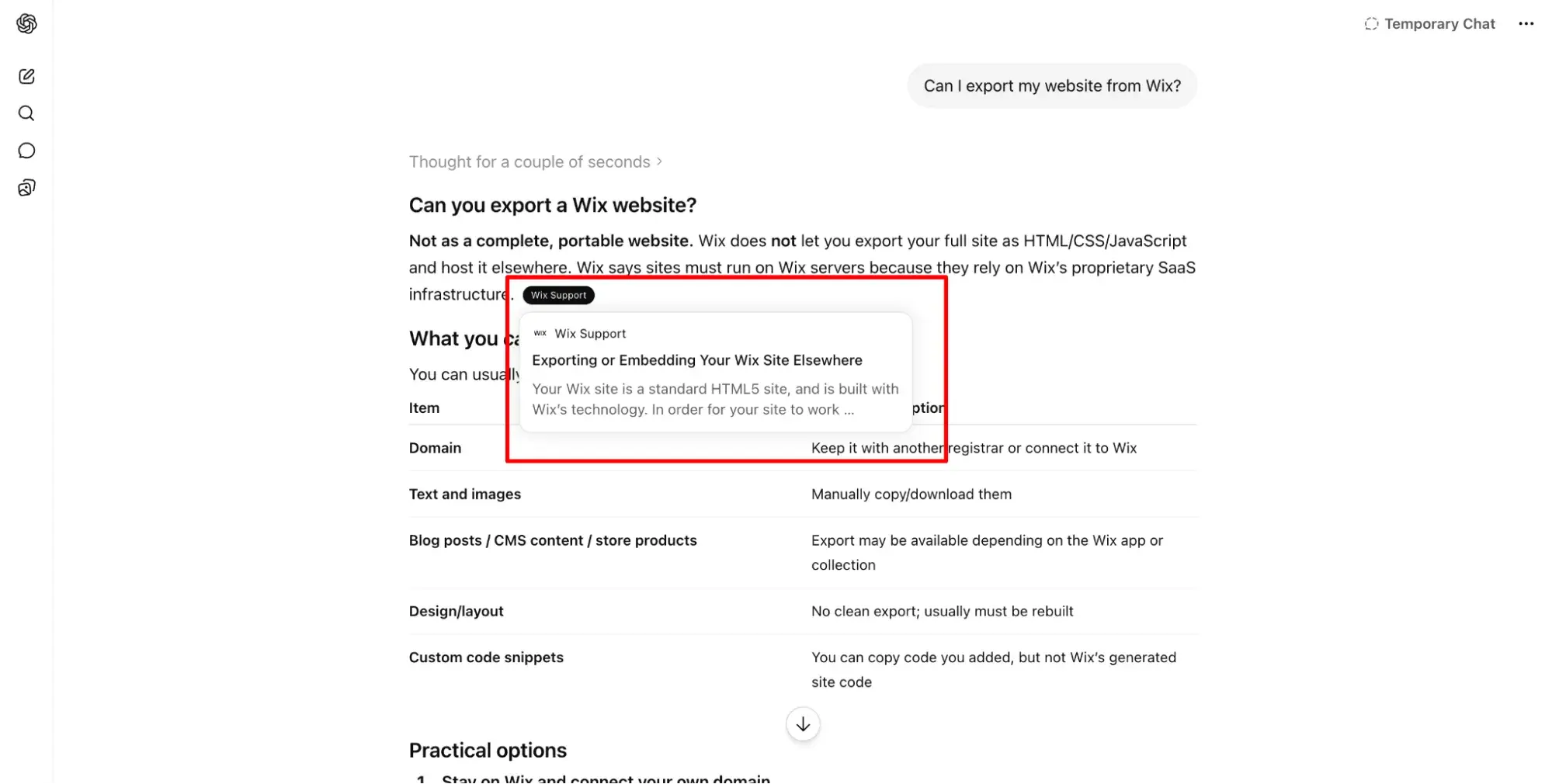
How AI Search Behavior Changes Service Content: Service content, including knowledge base articles and help center documentation, is proving to be excellent source material for answer engines. A well-structured support article addressing a common user query, such as “how do I export X from your tool?”, exemplifies the kind of extractable, question-formatted content that AI models prefer to cite. Therefore, service teams who optimize their documentation for clarity and direct answers are simultaneously enhancing their brand’s AI visibility. For instance, a ChatGPT query about exporting a website from Wix might cite a specific Wix help center article, demonstrating the direct influence of service content on AI answers.
How Sales and Service Teams Inform AEO Content: Establishing robust feedback loops between sales, service, and marketing is paramount. Sales and service teams are on the front lines, hearing the authentic questions that buyers and customers ask, often before these queries appear in traditional keyword research tools. A shared document, a dedicated communication channel (e.g., Slack), or regular quarterly reviews can effectively route this invaluable buyer language back to the content creation teams, directly informing their AEO strategy and content roadmap.
Implementing an AEO Framework: A Practical Playbook
This AEO playbook outlines a four-phase approach to adapting to AI search behavior:
-
Uncover Customer Questions for AI: The foundation of this playbook is identifying the specific prompts potential customers are using with AI about a brand. This can be achieved by prompting answer engines with category seed queries, noting AI-generated follow-ups, and crucially, gathering direct feedback from sales teams about questions heard during calls. Marketers serious about AI search optimization benefit significantly from specialized AEO tools that facilitate prompt discovery and tracking. HubSpot Marketing Hub Professional or Enterprise subscribers, for example, have access to AEO, which can suggest prompts based on CRM business context.
-
Build Extractive Answers and Entities: Once questions are identified, new content must be created, or existing content optimized, to address them directly. Each page should be structured to answer the main question in its introduction, immediately reinforcing the brand entity behind the information. AI answer engines prioritize content that resolves queries swiftly and clearly identifies its source. Research, such as a March 2026 preprint by Junwei Yu et al., demonstrated that structural changes—including heading hierarchy, paragraph chunking, and visual emphasis—can increase citation rates by double-digit percentages across various answer engines. Key elements to focus on include:
- Answer-first introductions: Get straight to the point.
- Clear, logical headings: Use H1, H2, H3 to outline content.
- Concise paragraphs: Make information easily digestible.
- Use of lists and tables: Enhance readability and extractability.
-
Apply Schema Markup and Internal Links: Schema markup and strategic internal linking provide answer engines with crucial structural cues, aiding in page interpretation and source quality ranking. HubSpot’s “State of AEO 2026” found a correlation between pages with FAQ sections and higher citation rates in AI Overviews. This correlation was even stronger when FAQ sections were paired with schema markup in platforms like Gemini, Google AI Mode, and Perplexity. The optimal combination identified was a descriptive H2 like “Frequently Asked Questions About [Topic]” with each question formatted as an H3 beneath it, outperforming generic “FAQ” headings.
Heading structure itself also serves as a citation signal. Keyword-rich H1s correlate with more citations, as does including the current year in H1s and meta titles. A greater number of headings overall, particularly H3s and H4s, tracked with higher citation rates, with the sweet spot for H2s being between 7 and 15 per page.
The role of schema markup in AEO is a topic of ongoing discussion among experts. Kaleigh Moore, an AEO strategist, suggests that while not detrimental, schema may not be the primary lever for winning citations, preferring focus on off-site signals from platforms like LinkedIn and YouTube. Conversely, Elie Berreby, Head of SEO and AI Search at Adorama, strongly advocates for schema, emphasizing its value in building knowledge graphs that help answer engines map entity relationships. Even when injected via JavaScript (which some AI crawlers may not render directly), Googlebot can process schema, creating an indirect mechanism where rich search results feed AI scrapers and subsequent AI-generated answers. The consensus leans toward implementing schema, but not as a singular solution, rather as part of a holistic, well-structured content strategy, especially in conjunction with well-organized FAQ sections. Finally, robust internal linking is essential for reinforcing topical authority and routing ranking signals between related pages.
- Publish, Monitor, and Iterate: Post-publication, a continuous cycle of monitoring and iteration based on data is critical. Maintaining a spreadsheet or dashboard to track shifts in citations, lost prompts, and competitor gains, reviewed weekly to monthly, is essential. Key metrics to log include:
- Prompt: The specific query used.
- AI Engine: Which AI platform was queried.
- Citation: Whether the brand was cited.
- Competitors Cited: Which competitors were mentioned.
- Share of Voice: Brand’s percentage of citations for that prompt.
- Date: When the data was logged.
While tools like AEO Grader offer baseline snapshots, HubSpot AEO provides comprehensive ongoing tracking, competitor monitoring, and prompt-level reporting, automating the iteration process.
Outlook and Future Considerations
The evolution of AI search behavior is not a static event but an ongoing transformation. Businesses must adopt a proactive, agile approach to remain competitive and relevant. The shift towards higher-intent, AI-driven leads represents a significant opportunity for those willing to adapt their content strategies, measurement frameworks, and cross-functional team alignment. As AI models continue to advance in sophistication and pervasiveness, the principles of AEO—answer-first content, clear structure, entity consistency, and robust topical authority—will only grow in importance, defining the future of digital visibility and customer engagement.