
 rifanmuazin
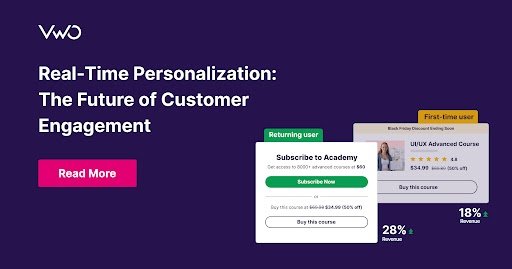
The digital landscape is undergoing a fundamental transformation as the industry moves toward 2026, shifting from static, one-size-fits-all content to dynamic environments that respond to user intent in milliseconds. In the traditional digital model, a returning subscriber seeking advanced technical tutorials and a first-time visitor arriving via a "Black Friday" advertisement would encounter the same generic homepage banner. This lack of differentiation often results in immediate disengagement, where one user feels bored by redundant information and the other feels lost in a sea of irrelevant content. However, the emergence of real-time personalization allows platforms to pivot instantly, turning live clicks into nuanced conversations and immediate signals into long-term customer loyalty.
The Evolution of Consumer Expectations and Market Dynamics
Real-time personalization is defined as the practice of dynamically adapting digital experiences—including website content, promotional offers, and product recommendations—based on a user’s live behavior, context, and intent during an active session. This shift represents a move from assumption-driven marketing, which relies on historical data from weeks or months prior, to signal-driven marketing, which responds to what a user is demonstrating in the present moment.
Industry analysts suggest that by 2026, relevance will no longer be a competitive advantage but a baseline requirement. According to recent market research, fast-growing companies generate approximately 40% more revenue from personalization than their slower-growing counterparts. Furthermore, consumer sentiment surveys indicate that 60% of shoppers are more likely to become repeat buyers when a brand consistently delivers a personalized experience. The economic implication is clear: businesses that fail to respond to user intent the moment it is signaled are effectively ceding market share to more agile competitors.
The Mechanics of Real-Time Personalization: The Listen-Think-Act Loop
The technical infrastructure behind real-time personalization operates as a high-speed orchestration of data and design. To the end-user, the experience feels intuitive and responsive; behind the scenes, a seamless "Listen-Think-Act-Learn" loop operates within milliseconds to ensure the experience remains relevant.
1. Unified Data Collection (Listen)
The process begins with the capture of real-time event-stream data. Unlike traditional systems that store data for later batch processing, real-time engines evaluate signals as they occur. These signals include:
- Behavioral Triggers: Specific actions such as clicking a "Compare" button, hovering over shipping details, or repeatedly viewing the same product category.
- Contextual Data: Information regarding the user’s device type, geographic location, local weather, and the referral source (e.g., a specific social media campaign).
- Historical Integration: Connecting live signals with known customer history via a Customer Data Platform (CDP) to ensure the current session reflects the user’s broader journey.
2. AI-Driven Decisioning (Think)
Once data is captured, artificial intelligence (AI) and machine learning (ML) models process the information to predict intent. This involves pattern recognition, where the system identifies "struggle signals"—such as rapid back-and-forth navigation—and determines the optimal intervention to prevent a bounce.
3. Dynamic Experience Delivery (Act)
The final stage is the immediate adaptation of the interface. This must occur without a "flicker effect," where original content appears briefly before the personalized version loads. Modifications may include:
- Dynamic Hero Images: Changing the primary visual to match the user’s inferred interest (e.g., showing professional gear to a subscriber and a discount-heavy banner to a bargain hunter).
- Contextual CTAs: Adjusting "Sign Up" buttons to "Upgrade Now" for existing users.
- Urgency Messaging: Deploying time-bound offers, such as "Free Express Shipping for the next 30 minutes," when a user shows hesitation on a shipping information page.
A Strategic Framework for Implementation
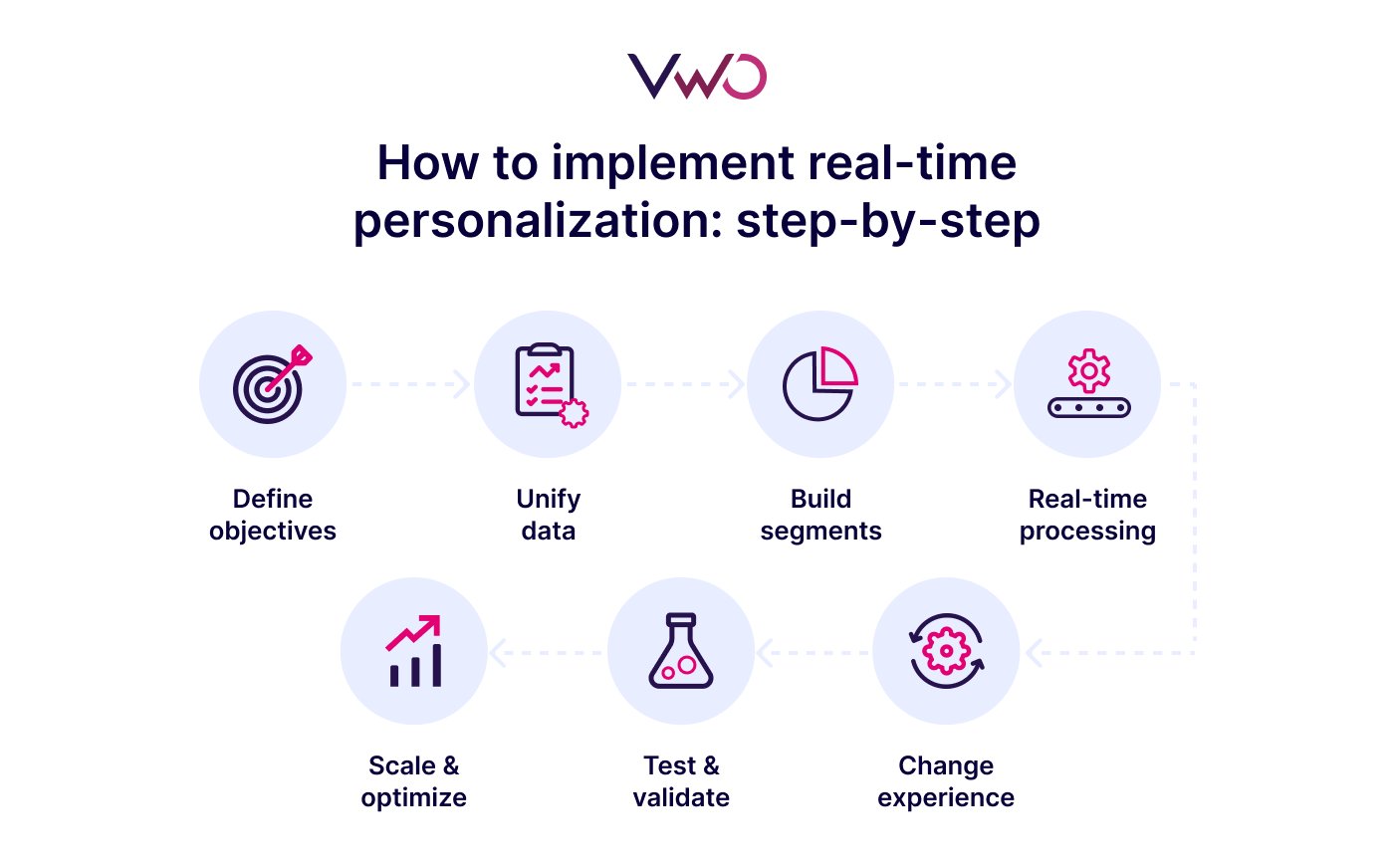
Transitioning to a real-time model requires a structured approach that balances technological capability with business objectives. Industry experts recommend a seven-step blueprint for scaling personalization efforts:
Step 1: Objective Definition
Organizations must identify primary outcomes, such as reducing cart abandonment, increasing the Average Order Value (AOV), or accelerating SaaS feature adoption. Clear objectives prevent "personalization for the sake of personalization."
Step 2: Data Unification
Data silos are the primary obstacle to real-time success. Systems must integrate live behavioral data with CRM records and transactional history to create a single source of truth.
Step 3: Audience Segmentation
Rather than attempting 1:1 personalization immediately, successful firms build actionable segments based on shared characteristics, such as "High-Value Cart Abandoners" or "First-Time Technical Visitors."
Step 4: Low-Latency Processing
The system must be capable of updating user context in milliseconds. Intent has an expiration date; a search for "urgent home office setup" is valuable in the moment but may be irrelevant by the following morning.
Step 5: Defining Responses
Teams must specify the visible changes for each segment, focusing on reducing friction and guiding the user toward the next logical step in their journey.

Step 6: Validation and Testing
Personalization must be treated as a hypothesis. By using experimentation platforms, teams can compare personalized experiences against non-personalized controls to measure incremental lift in conversion rates and revenue.
Step 7: Continuous Optimization
As AI models ingest more interaction data, the personalization engine should refine its predictions. If a user ignores a specific recommendation, the system must adjust the user’s profile instantly to ensure the next interaction is more accurate.
Industry-Specific Applications and Case Studies
The impact of real-time responsiveness varies across sectors, but the core principle of addressing friction remains constant.
- eCommerce and Retail: A visitor dwelling on a "Shipping & Returns" page while viewing high-end electronics signals a hesitation regarding delivery. By instantly triggering a "Free Express Shipping" banner, the site addresses the friction point exactly when the user is most likely to convert.
- Software as a Service (SaaS): If a trial user repeatedly visits a premium feature page without activating it, an in-app nudge offering a 30-second walkthrough or a industry-specific use case can accelerate the path to a paid subscription.
- Travel and Hospitality: In a sector where availability fluctuates, real-time updates—such as "2 rooms left at this price"—help reduce choice overload and encourage faster booking decisions.
- Financial Services: Banks use real-time signals to assist users with complex tasks. If a customer pauses while using a mortgage calculator, a prompt offering a tailored repayment breakdown can increase application completion rates.
Challenges: Scalability, Privacy, and Consistency
Despite the clear benefits, implementing real-time personalization at scale presents significant challenges.
The Scalability Hurdle
Processing massive volumes of behavioral data across multiple channels can strain legacy marketing technology. Inconsistent data synchronization often leads to fragmented profiles, where a user receives a "first-time buyer" discount on a website minutes after making a purchase via the mobile app. To address this, organizations are increasingly investing in CDPs to centralize data streams.
The Privacy Paradox
Consumer demand for personalization exists alongside a rising concern for data privacy. Regulations such as the General Data Protection Regulation (GDPR) and the California Consumer Privacy Act (CCPA) require transparency. High-performing organizations are shifting toward first-party and zero-party data—information shared intentionally by the user—to build trust while maintaining relevance.
Maintaining Content Consistency
Personalization loses its efficacy if it becomes contradictory. If a brand’s email marketing, social ads, and website do not "speak the same language," the customer journey becomes disjointed. A unified customer data layer is essential to ensure that every touchpoint reflects the most current state of the user’s intent.
The Technological Ecosystem
A robust personalization strategy relies on a stack of integrated tools:
- Customer Data Platforms (CDPs): For organizing data into persistent profiles.
- Personalization Engines: For determining session-based changes.
- Experimentation Platforms: For validating impact through A/B testing.
- Behavioral Analytics: For identifying "struggle signals" and friction points.
- AI Recommendation Tools: For predicting user preferences at scale.
Analysis of Implications: The End of Static Marketing
The transition toward real-time personalization signals the "death of the data silo." In the coming years, the ability to capitalize on "perishable data"—intent signals that lose value rapidly—will be the defining factor in digital commerce.
While AI provides the scale and predictive power, human-led rule-based personalization remains critical for compliance-heavy industries like healthcare and finance, where strict eligibility rules must be followed. The most successful strategies will likely be hybrid models: AI-driven discovery paired with rule-based precision, all validated through rigorous experimentation.
As digital interactions become more frequent and less patient, the "Welcome" banner of the past is being replaced by an intuitive, living interface. For the modern enterprise, the goal is no longer just to sell a product, but to make the customer feel "known." In 2026 and beyond, the brands that win will be those that can turn a single click into a meaningful, real-time conversation.








