Asep Darmawan
Last month, a federal court issued a directive for Google to integrate with Prebid, a significant development in the ongoing antitrust scrutiny of the tech giant’s ad tech dominance. However, the court’s order lacked specific implementation details, prompting the open-source ad-tech consortium, Prebid, to proactively develop its own framework for this mandated integration. This strategic move by Prebid aims to redefine the dynamics of the digital advertising auction, shifting the paradigm to allow ad servers to bid into Prebid, a departure from the current model where Prebid bids into ad servers.
The proposed architectural shift was unveiled by Prebid at its recent Summit in New York City, sparking considerable industry discussion. This novel auction model is currently undergoing a public comment period, with the dedicated working group aiming for formalization by the end of the first quarter. Upon finalization, it is slated for rollout in a future Prebid update, marking a potentially transformative moment for digital advertising.
The genesis of this proposal can be traced back to April, when the Prebid working group began anticipating a scenario where Google might be compelled to separate its integrated Google Ad Manager (GAM) product. GAM, a powerful suite that combines the AdX ad exchange with its ad server (formerly known as DoubleClick for Publishers), has been a focal point of regulatory concern. While the court ultimately decided against ordering a structural breakup of GAM, ruling that Google would not have to divest its ad tech business, Prebid’s foresight has positioned the organization to influence the integration process.
Reorienting the Auction for Publisher Empowerment
The core of Prebid’s proposal lies in its ability to grant publishers access to demand from Google AdX without requiring them to exclusively utilize Google’s ad server. This effectively achieves a form of unbundling, allowing publishers greater control and flexibility in their monetization strategies, even without a judicial mandate for Google to split its services.
Furthermore, this revised auction mechanism offers Google a ready-made pathway to comply with the court’s integration requirement. Judge Leonie Brinkema, in her ruling, stipulated that Google must facilitate better interoperability with Prebid. The proposed framework, by allowing ad servers to bid into Prebid, directly addresses this mandate.
Olly Burns, CTO at the publisher monetization platform Teal and a co-author of the Prebid proposal, emphasized the broader implications for publishers. "This is about making publishers less dependent on GAM and giving them more freedom to choose their ad servers and run auctions in a way that truly benefits their business," Burns stated in an interview with AdExchanger prior to the summit.
Navigating the Mandate: Prebid Takes the Reins
The federal court’s order to Google, while groundbreaking, left a critical gap: the absence of a defined methodology for integration. The court outlined three primary requirements for Google’s engagement with Prebid:

- Facilitating Bid Stream Access: Google must ensure that Prebid can access the full bid stream from its ad exchange, AdX.
- Enabling Publisher Choice: Publishers must be able to choose an ad server other than GAM and still access AdX demand.
- Ensuring Fair Competition: Google cannot leverage its ad server to disadvantage competing ad servers or exchanges.
Burns highlighted the lack of specificity regarding the technical mechanisms for these connections. "Anticipating that lack of clarity, the Prebid working group proactively laid the groundwork for these integrations via Prebid Server," he explained. This proactive approach, according to Burns, is about ensuring Prebid is "on the front foot" and can "set the agenda" to benefit publishers.
The working group’s initiative was also fueled by concerns about Google’s past engagement with industry-wide efforts to reform ad tech. Burns cited previous overhauls that yielded limited results despite significant investment and effort. "Google’s got a bit of a track record of screwing ad tech stuff up," he remarked, referencing past initiatives like the Privacy Sandbox API (PAPI), which he characterized as "rubbish." By leading the charge, Prebid aims to "maximize the chance of success" for its community.
However, a significant hurdle remains: Prebid cannot unilaterally force Google to integrate through its server-side solution, Prebid Server. Brian Sardo, a senior software engineer at Microsoft and lead presenter of the proposal at the summit, pointed out that Google could opt to integrate with Prebid.js, the browser-based version of Prebid. The new auction framework is specifically designed for Prebid Server, meaning its full benefits are contingent on Google’s adoption of this server-side integration. Despite this, Prebid members are optimistic, betting that Google will integrate with both Prebid Server and Prebid.js. They also believe that having a robust framework ready before the conclusion of Google’s antitrust legal proceedings will encourage Google to adopt it rather than develop a bespoke solution.
Deconstructing "Prebid": A Shift in Auction Dynamics
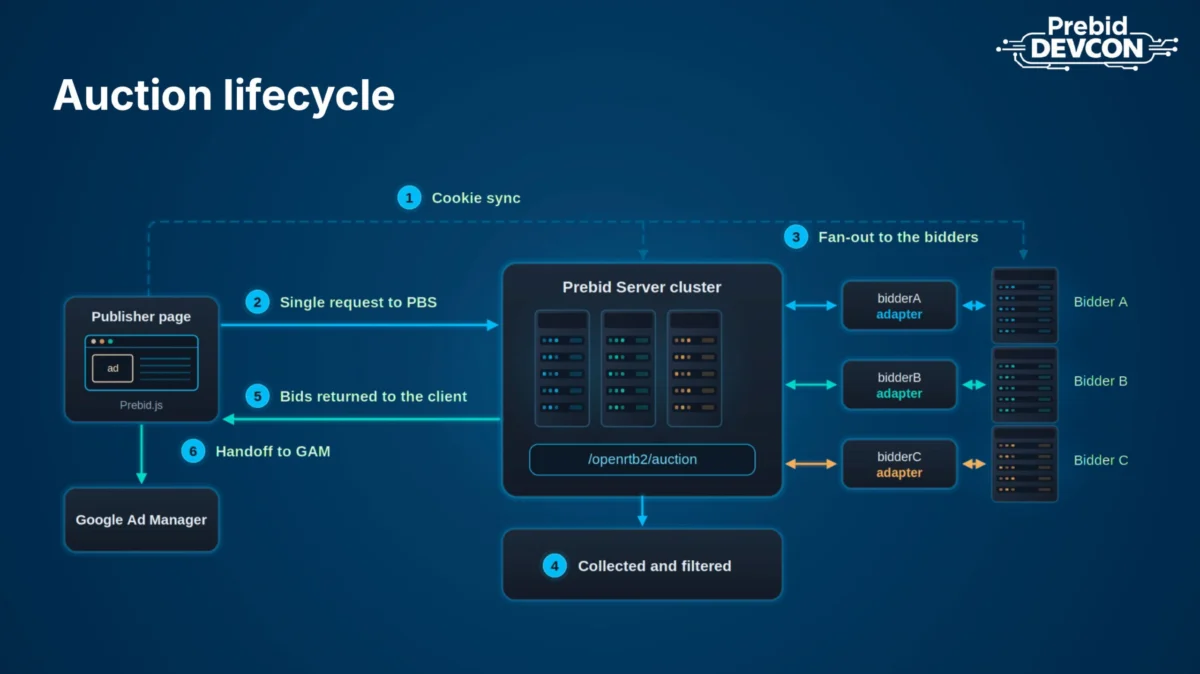
The proposed reorientation, where ad servers bid into Prebid, fundamentally alters the auction process and addresses all three of the court’s integration requirements. This structural change effectively makes Google’s auction run concurrently with other demand sources within the Prebid ecosystem.
The very name "Prebid" reflects its historical origin: to circumvent the limitations imposed by GAM. Historically, Prebid conducted a "pre-auction," feeding winning bids into GAM for final adjudication against Google’s AdX demand. This sequential process provided Google with a strategic advantage, allowing AdX to often outbid the highest Prebid bidder after seeing their price.
Under the new proposal, if GAM and AdX bid directly into Prebid, AdX would compete on a more level playing field alongside other Supply-Side Platforms (SSPs). This eliminates the need for the "pre-auction," prompting Burns to jokingly suggest Prebid might even need a name change.
Fostering Competition and Transparency
This shift in auction dynamics is poised to dismantle one of Google’s key structural advantages. By removing the sequential auction flow, where Google’s AdX could leverage insights from the Prebid auction, the playing field is leveled. Constantine Mirin, CEO at Postindustria, a firm involved in ad tech development and a member of the Prebid working group, noted that it will be "interesting to see whether GAM becomes less of a dominant source of publisher revenue going forward" without this inherent advantage.
Furthermore, the proposed model enhances transparency for publishers. When GAM and AdX bid directly into Prebid, publishers gain the court-mandated visibility into Google’s bidding behavior, both winning and losing bids. Previously, accessing such insights necessitated the use of GAM.

The speed of the auction process also stands to improve significantly. Publishers currently face delays of up to four hours for GAM analytics, rendering them less effective for real-time market adjustments. "If you plug in your own analytics stack, you can respond to market changes within a minute," Burns explained. "And in an open-auction environment, on a Black Friday, for example, that could be material."
With GAM holding an estimated 90% market saturation in the ad server space, according to the Department of Justice, weakening its market dominance through increased competition among ad servers and bidding analysis solutions is a significant implication of this proposal. Eugene Dorfman, a technical partner and solutions architect at Postindustria and a co-author of the proposal, anticipates that publishers will gain "far more flexibility to plug in any analytics adapter," including custom dashboards tailored to their specific business needs. This could also pave the way for "agentic-first ad servers," making them more accessible to publishers.
Beyond the immediate benefits to publishers, the reorientation of the auction promises to improve internet performance. Burns pointed out that GAM is "one of the worst offenders in slowing the internet down." By collapsing the two separate calls (one to Prebid, one to GAM) into a single call, the new model could "pretty much halve the time," leading to a faster, more efficient web.
Addressing Lingering Questions and Future Steps
While the proposal has generated significant excitement, the public comment period is crucial for addressing remaining questions and concerns within the Prebid community. A notable point of discussion at the Prebid Summit revolved around the possibility of allowing client-side (browser-based) Prebid auctions to run after the Prebid Server auction. This would enable client-side bidders to react to server-side bids, particularly for publishers not running a parallel Prebid Server auction.
However, Patrick McCann, SVP of Research at Raptive and chair of Prebid.js, argued that this approach contradicts Prebid’s objective of accelerating auction times. Sardo added that keeping auction decisioning server-side prevents publisher business logic from being exposed on the client, where it could be accessed by browser companies. Hillary Slattery, Senior Director of Product Management, Programmatic at the IAB Tech Lab, further elaborated that server-side decisioning avoids the risk of publishers "chucking all your information over the wire in JSON," keeping data contained to trusted parties.
The ultimate success of this new framework hinges on Google’s willingness to integrate with Prebid Server. Even with the federal court’s mandate, the level of Google’s cooperation remains a critical unknown. As the industry watches closely, the move by Prebid signals a determined effort to shape the future of digital advertising auctions and ensure greater fairness and efficiency for publishers, regardless of regulatory ambiguity. Despite ongoing regulatory pressures, Google’s substantial influence in the ad tech landscape continues to be a central factor in these evolving dynamics.


 Muslim

 Reynand Wu