Telly, the innovative startup renowned for its strategy of distributing free smart TVs in exchange for user data and advertising exposure, is significantly expanding its monetization capabilities. The company has announced that its home screen advertisements are now available for programmatic purchasing, a move designed to attract broader brand investment and foster greater industry standardization in this emerging advertising channel. This strategic initiative aims to solidify Telly’s position in the connected TV (CTV) advertising landscape by offering a novel and data-rich environment for advertisers.
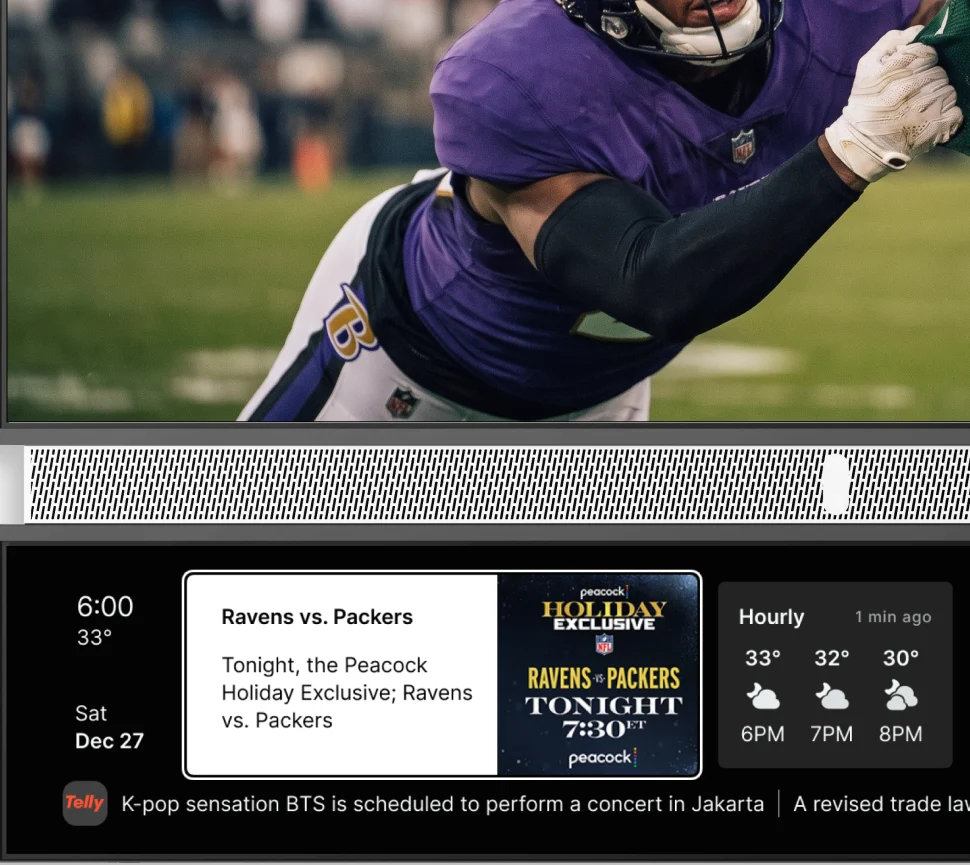
The Telly smart TV experience is characterized by its distinctive dual-screen setup. While the main screen displays the viewer’s chosen content, a smaller, secondary screen, perpetually active below the primary display, presents a continuous stream of news updates and advertisements. This secondary screen is the primary location for Telly’s programmatic home screen ads. The technical backbone for delivering these advertisements relies on Magnite’s SpringServe ad server, with demand actively being driven by leading platforms such as The Trade Desk and Teads, among others. This integration underscores Telly’s commitment to leveraging established ad tech infrastructure to ensure efficient and scalable ad delivery.
Mike Shehan, Telly’s Chief Revenue Officer, emphasized the critical role of programmatic enablement in achieving the necessary scale for home screen advertising to gain traction. Shehan, a figure with significant experience in the CTV ad space, having previously served as CEO of SpotX before its acquisition by Magnite for a substantial $1.17 billion in 2021, brings a wealth of expertise to Telly’s strategic direction. His involvement signals a serious intent to professionalize and scale Telly’s advertising operations.
While Telly’s approach to programmatic home screen advertising is noteworthy, it is not the first to enter this arena. Ad tech platform Nexxen, for instance, made its native home screen advertisements programmatically accessible across a growing portfolio of TV manufacturers, including V (formerly VIDAA) and TiVo, commencing last year. Similarly, Supply-Side Platforms (SSPs) like Magnite have been offering programmatic access to pause ads for some time. These precedents highlight a broader industry trend towards making CTV ad inventory more accessible and efficient through automation.
Telly’s differentiation, however, lies in its proactive engagement with industry bodies. The company is collaborating closely with the IAB Tech Lab to establish standardized specifications for home screen ads within the bidstream. This initiative is crucial for ensuring interoperability and trust among advertisers and publishers. The IAB Tech Lab concluded its public comment period for proposed spec updates at the end of June, subsequently finalizing these signal updates in July. Such standardization is a vital step towards attracting significant and sustained ad spend in this nascent market. By contributing to these standards, Telly positions itself as a thought leader and a facilitator of growth in the CTV advertising ecosystem.
Shehan further elaborated on Telly’s competitive advantages, citing the unique characteristics of its second screen and the wealth of first-party customer data it collects. He argued that these elements provide a distinct edge in targeting home screen ads with precision and driving measurable business outcomes for advertisers. This sophisticated approach to data utilization and ad placement is central to Telly’s value proposition.
Go Big or Go Home Screen: Leveraging Data for Unprecedented Targeting
The process of acquiring a Telly device begins with an extensive onboarding questionnaire. Prospective users are required to provide detailed demographic, lifestyle, and brand preference information. This includes data points such as household income, the number of occupants, specific brand affiliations, insurance providers, vehicle ownership (including make, model, and lease/ownership status), and a wide array of interest and behavior-based questions. Shehan described this initial data collection as "very deep on demographics, lifestyle and brand loyalty."
This rich first-party data, when combined with Automatic Content Recognition (ACR) data – which tracks the content users are viewing on their main screen – enables a level of granular targeting previously unattainable in the CTV space. For example, an insurance provider could specifically target households actively researching new policies, or a car manufacturer could reach consumers demonstrating an interest in particular vehicle segments. This deep understanding of user behavior and preferences allows Telly to offer highly relevant ad placements, thereby increasing the likelihood of engagement and conversion for advertisers.
Beyond its sophisticated data capabilities, the Telly second screen serves a dual purpose. It is not merely a data repository but an active advertising canvas. Because it can operate independently of the main screen, it can display advertisements without interrupting the primary viewing experience. This is particularly advantageous for reaching audiences who subscribe to ad-free streaming services, a segment that has traditionally been difficult for advertisers to access. The non-disruptive nature of these ads ensures a positive user experience while still delivering advertising messages effectively.
Expanding Ad Formats and Private Marketplace Opportunities
In addition to programmatic access, Telly is also exploring longer-form advertising opportunities, with ads of up to five minutes now available through private marketplace (PMP) deals facilitated by Magnite. Shehan highlighted that the combination of extended duration and the inherent non-intrusiveness of a home screen placement is particularly conducive to fostering deep viewer engagement.
To illustrate the efficacy of these longer ad formats, Telly cited a recent campaign with an unnamed streaming service. This advertiser reportedly achieved five times the number of app opens with a five-minute home screen advertisement compared to a two-minute spot. This data point suggests that when delivered in a non-disruptive context, longer ad formats can yield significantly better results than traditional, shorter ad units.
Media buyers are beginning to recognize the potential of this advertising model. Mike Treon, Head of CTV and Video Strategy at PMG, commented on the strategic value of the home screen: "The home screen has always been a powerful front door for us to engage viewers. Telly extends that opportunity, giving brands a persistent presence that enhances engagement." This sentiment underscores the perception of the Telly home screen as a prime real estate for brand visibility and consumer interaction.
Navigating the Future of CTV Advertising
The success of Telly’s initiative will ultimately hinge on its ability to translate this initial enthusiasm into sustained, long-term investment from advertisers. The company’s commitment to standardization through partnerships with bodies like the IAB Tech Lab is a crucial step in building advertiser confidence. Furthermore, its robust data strategy and innovative ad formats position it as a compelling alternative to traditional advertising channels.
The broader implications of Telly’s model extend beyond its own platform. It signals a potential paradigm shift in how consumers can access premium technology and how advertisers can reach them. By offering free devices in exchange for data and ad exposure, Telly is creating a new economic model for smart TV ownership and advertising. This could accelerate the adoption of smart TVs in households that might otherwise find the cost prohibitive, thereby expanding the overall CTV audience.
The ongoing evolution of the CTV advertising landscape is marked by a continuous search for more effective and efficient ways to connect brands with consumers. Telly’s dual-screen approach and its programmatic expansion represent a significant development in this quest. As the industry continues to grapple with issues of measurement, privacy, and ad effectiveness in the CTV environment, Telly’s data-centric and standardized approach offers a compelling vision for the future. The company’s ability to deliver both scale and granular targeting, combined with its innovative ad formats, positions it as a key player to watch in the evolving world of connected TV advertising. The coming months will be critical in determining whether Telly’s ambitious strategy can indeed redefine the home screen as a primary advertising frontier.