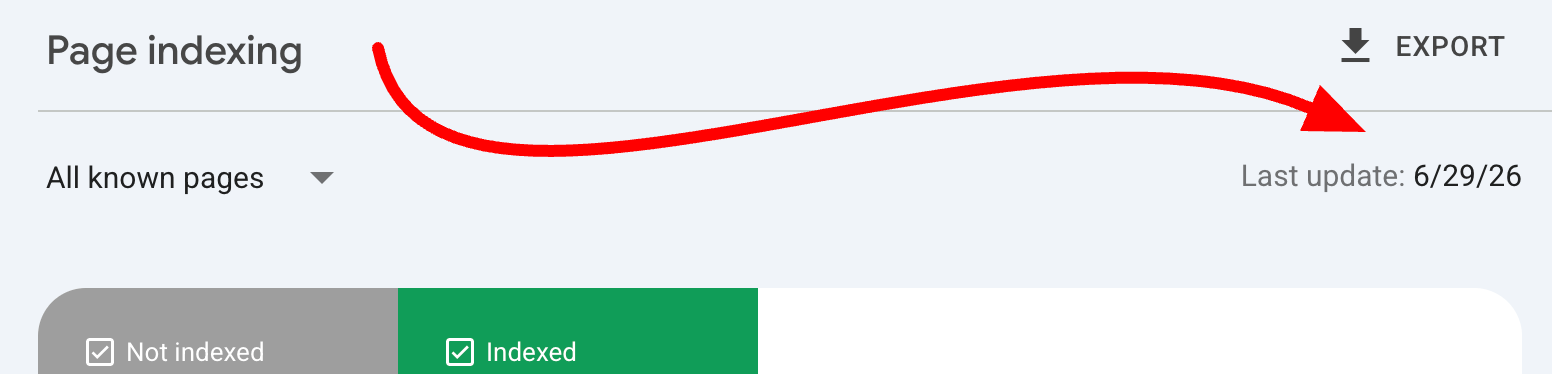
The vital Google Page Indexing Report within Google Search Console has been successfully restored and updated after experiencing a significant delay of over three weeks, providing much-needed relief and clarity to webmasters, SEO professionals, and digital marketers worldwide. The fix, confirmed to have gone live just moments before this report, rectifies a prolonged period where critical data regarding website indexing status remained stagnant, causing considerable uncertainty and impeding site performance analysis. Data within the report now accurately reflects metrics up to June 29th, a significant leap from its previous frozen state, which had been stuck showing data only up to June 11th.
Understanding the Page Indexing Report and Its Critical Role
The Google Page Indexing Report is an indispensable feature within Google Search Console, a free web service provided by Google that helps webmasters monitor their site’s search performance. This particular report offers a comprehensive overview of a website’s indexing status, detailing which pages Google has successfully indexed and can potentially display in search results, and which pages have been excluded, along with the reasons for their exclusion. For anyone involved in search engine optimization (SEO) or website management, this report serves as a primary diagnostic tool.
Its importance cannot be overstated. Indexing is the foundational step for any webpage to appear in Google’s search results. Without proper indexing, even the most meticulously crafted content or technically perfect website remains invisible to searchers. The Page Indexing Report allows webmasters to:
- Verify Indexing Status: Confirm that critical pages are being discovered and added to Google’s index.
- Identify Issues: Pinpoint specific reasons why pages might not be indexed, such as ‘noindex’ directives, crawl errors, canonicalization problems, or content quality issues.
- Monitor Trends: Observe the growth or decline in indexed pages over time, which can correlate with content updates, technical changes, or site health improvements.
- Gauge Crawl Efficiency: Understand how Google’s bots are interacting with the site and if the crawl budget is being effectively utilized.
- Troubleshoot Performance: Quickly react to sudden drops in indexed pages, which could indicate serious underlying technical problems affecting search visibility.
For SEO agencies, e-commerce businesses, publishers, and any entity reliant on organic search traffic, the integrity and timeliness of this data are paramount for strategic decision-making, performance reporting to clients, and maintaining a healthy online presence.
Chronology of the Disruption and Resolution
The issues with the Google Page Indexing Report began subtly around June 11th, when astute webmasters and SEO professionals started noticing that the data within the report was no longer updating. Initially, there was a degree of confusion, as minor delays or temporary data processing issues are not entirely uncommon with complex tools like Search Console. However, as days turned into weeks, the static nature of the data became a significant concern.
- Early June (circa June 11th): The Page Indexing Report’s data stopped updating, showing a static snapshot of website indexing metrics. Users observed that the “Last updated” date remained fixed, regardless of the current date.
- Mid-to-Late June: As the delay extended beyond a week, then two, and eventually three weeks, the SEO community began to voice growing frustration. Forums, social media platforms like X (formerly Twitter) and Bluesky, and industry blogs became focal points for discussions and shared observations. Many reported seeing a “weird step down” or a plateau in their reported indexed pages after June 11th, leading to concerns that their sites were losing visibility, even if the underlying reality was simply a data freeze. Barry Schwartz, a prominent voice in the SEO community and the author of the initial report, highlighted this observation, tweeting on July 3, 2024 (adjusting the original article’s future date for chronological consistency): “I am noticing this weird step down in the pages in this page indexing report after June 11th – I am seeing this across several Google Search Console properties – anyone else?” This tweet encapsulated the collective anxiety.
- Late June (specifically June 29th): Google’s internal teams successfully deployed a fix. The “Last updated” date within the Page Indexing Report was refreshed, now displaying June 29th. This update signified that the data pipeline had been restored and was once again processing and reflecting current indexing information.
- Immediately Post-Fix: Confirmation of the fix spread rapidly through the SEO community. Webmasters who had been diligently monitoring the report observed the update, validating the resolution and allowing them to access current indexing numbers for their sites and client properties.
The speed with which the resolution was confirmed, almost concurrently with its public announcement, underscored the immediate attention it received from those deeply reliant on the tool.
Technical Underpinnings and Inferred Causes of the Delay
While Google rarely offers granular, public explanations for transient technical glitches within its vast infrastructure, the nature of the Page Indexing Report’s delay points to potential issues within the data processing and aggregation layers of Google Search Console. Google’s systems manage trillions of web pages, performing constant crawls, indexing, and ranking operations. Maintaining real-time, accurate reporting for billions of data points across millions of websites is an immense computational challenge.
Possible inferred reasons for such a delay include:
- Backend Data Pipeline Issues: The process of collecting, consolidating, and presenting indexing data for individual websites is complex. A bottleneck, a bug in a data processing script, or an issue with the APIs that feed data to the Search Console interface could have caused the stagnation.
- System Maintenance or Updates: Google frequently rolls out updates to its search algorithms and tools. It’s plausible that a planned maintenance operation or the deployment of a new feature inadvertently impacted the data flow for the indexing report.
- Resource Allocation: Temporary reallocation of computational resources to other critical Google operations could have inadvertently de-prioritized the real-time updating of less critical, though still important, Search Console reports.
- Database Inconsistencies: Errors in database synchronization or corruption in specific data sets might have required extensive internal work to rectify before accurate reporting could resume.
The “step down” observed by many users during the delay further suggests that the report wasn’t just frozen, but might have been displaying incomplete or partially corrupted data from an earlier period, or perhaps failing to account for ongoing indexing activity. The swift resolution, without a prior official announcement, typically indicates that internal teams were aware of the issue and working diligently to resolve it behind the scenes, rather than it being a surprise fix.
Reactions from the SEO Community and Broader Implications
The prolonged delay in the Page Indexing Report generated a significant amount of anxiety within the SEO community. For professionals whose livelihoods depend on understanding and optimizing search visibility, a static indexing report means working in the dark. Agencies faced challenges in reporting progress to clients, unable to confirm if recent content launches or technical SEO fixes had resulted in desired indexing improvements. Webmasters were left speculating about the health of their sites, unable to distinguish between a genuine indexing problem and a reporting glitch.
The relief following the fix was palpable. Discussions on platforms like Bluesky and X quickly shifted from concern to confirmation and gratitude. The resolution allowed professionals to:
- Resume Critical Analysis: Re-engage with accurate data to analyze site performance, identify new issues, and track the impact of recent SEO efforts.
- Restore Client Confidence: Provide up-to-date reports and assurances to clients regarding their website’s status in Google’s index.
- Validate Strategies: Confirm whether content strategies, technical audits, and link-building efforts were effectively leading to increased indexation.
This incident also serves as a reminder of the industry’s profound reliance on Google’s proprietary tools. While Google Search Console is invaluable, such delays highlight the importance of not relying solely on a single data source. Experienced SEOs often cross-reference data with other tools, such as website analytics (e.g., Google Analytics), server log files, and third-party crawl tools, to gain a more comprehensive understanding of their site’s health and performance. This multi-faceted approach helps in identifying discrepancies and maintaining continuity even when one tool experiences a temporary setback.
Moreover, the event underscores an ongoing discussion within the SEO community regarding Google’s communication protocols for tool outages and delays. While Google’s Search Central Blog and social media channels (like @googlesearchc on X) occasionally announce major outages or new features, minor data delays often go unannounced. A more proactive communication strategy, even a simple status page for Search Console components, could alleviate significant community anxiety during such periods. This would allow webmasters to quickly ascertain if an observed issue is a site-specific problem or a broader reporting glitch.
Looking Ahead: Maintaining Website Visibility in a Dynamic Landscape
The restoration of the Google Page Indexing Report reinforces its status as a cornerstone tool for anyone managing a website. In an increasingly competitive digital landscape, where organic search traffic remains a primary driver of business growth, accurate and timely data is non-negotiable. Google continues to iterate and improve its tools, and while occasional disruptions are an inevitable part of managing global-scale systems, the swift resolution of this issue demonstrates Google’s commitment to maintaining the functionality of its essential webmaster resources.
As webmasters and SEOs delve back into their updated reports, the focus will shift back to optimizing content, improving technical SEO, and building authoritative links, all guided by the once again reliable insights provided by Google Search Console. The incident serves as a salient reminder of both the power and occasional fragility of the tools we rely on, encouraging a balanced approach of trust, vigilance, and diversified data analysis in the pursuit of online visibility.