The digital landscape underwent significant transformations in April 2026, as Google continued to push the boundaries of artificial intelligence integration within its search ecosystem, simultaneously reinforcing its commitment to quality and combating manipulative practices. Insights from SEO experts Carolyn Shelby and Alex Moss, presented during Yoast’s monthly SEO update, highlighted these pivotal shifts, underscoring a future where AI agents play a central role and generic content faces increasing devaluation. The overarching message for webmasters and content creators is clear: simply publishing more content is no longer a viable strategy and, in many instances, can actively hinder online visibility.
The Rise of AI Agents in Search and Web Interaction
A monumental shift in how search engines and AI interact with the web became evident with Google’s introduction of a new “Google-agent user agent.” This development signals a more explicit and formalized support for AI-driven crawling and interaction, moving beyond traditional web spiders. Historically, user agents have been strings of text identifying the client software accessing a web server, allowing websites to tailor content or block specific bots. The advent of a dedicated “Google-agent” user agent suggests Google is distinguishing between its traditional crawling activities (e.g., Googlebot for indexing) and new, more dynamic interactions performed by advanced AI systems designed for tasks beyond mere content retrieval.
This move is not isolated but part of a broader industry evolution. Concurrently, proposals like WebMCP (Web Machine Comprehension Protocol) are emerging, aiming to standardize how AI agents interact with websites. Just as robots.txt and sitemaps provided a structured way for webmasters to communicate with traditional search engine crawlers, WebMCP seeks to establish a similar framework for the sophisticated, multi-modal interactions of AI agents. Such standardization is critical to prevent a chaotic internet where disparate AI systems bombard websites without clear protocols, ensuring both efficient data access for AI and control for website owners.
Reinforcing this trajectory, Google’s leadership has publicly articulated a vision where search evolves into an “AI agent manager.” This profound statement from Google’s CEO predicts a future where users don’t just query a search engine for information, but rather task an AI manager to deploy various specialized AI agents to fulfill complex requests. These agents might synthesize information, perform comparative analysis, or even complete multi-step tasks across different web services. The implication for webmasters is significant: the web is being restructured around agent access, not solely human browsing. This necessitates a re-evaluation of how websites are built, optimized, and secured, moving towards an environment where structured data, API accessibility, and clear semantic meaning are paramount for AI agent comprehension.
The actionable takeaway for businesses is to prepare for a web where AI agents are primary consumers of information. This means focusing on robust technical SEO, semantic markup, and potentially even designing specific API endpoints or machine-readable content for AI agents, alongside human users. Websites that fail to adapt risk becoming less accessible to the increasingly influential AI layer of the internet.
Google’s Relentless Pursuit of AI Efficiency and Integration
Beyond the philosophical shift towards AI agents, Google continues to make tangible advancements in AI capabilities and efficiency. A notable development in April was the introduction of TurboQuant, a novel approach to AI model compression. Large Language Models (LLMs) and other advanced AI models are notoriously resource-intensive, requiring immense computational power and memory. Quantization is a technique to reduce the precision of the numerical representations used in these models, thereby shrinking their size and improving inference speed. TurboQuant, as an “extreme compression” method, represents a significant leap in making AI models faster, more energy-efficient, and capable of running on a wider range of hardware, from data centers to edge devices.
The “why it matters” here is multi-faceted: enhanced efficiency translates directly into lower operational costs for Google, allowing them to deploy more sophisticated AI features at scale. It also contributes to environmental sustainability by reducing the energy footprint of AI. For users, it means quicker responses and more seamless integration of AI into their daily interactions.
Concurrently, Google is expanding “task-based features in AI Mode” and refining how users interact with AI-driven search experiences. This indicates a move beyond simple question-answering to enabling users to accomplish multi-step goals directly within the search interface, powered by AI. For example, instead of merely finding recipes, AI Mode might help a user plan an entire meal, order ingredients, and even schedule cooking times, by interacting with various online services through AI agents.
As AI becomes faster and more deeply integrated into search, user expectations and search behavior will inevitably continue to shift. Users will anticipate more proactive, personalized, and efficient interactions, demanding that search engines not just provide information, but actively help them do things. This necessitates that content creators consider the “task-oriented” nature of user intent, optimizing not just for keywords, but for the steps a user might take to complete a goal.
Structured Data and Documentation Evolve for an AI-First Web
The evolving landscape also demands refinement in how web content is presented and understood by machines. Google’s addition of AI bot labels to forum and Q&A structured data is a crucial step in this direction. This helps search engines distinguish between human-generated contributions and those created by AI, which is vital for maintaining content integrity and combating misinformation. In an era where AI can generate plausible but potentially inaccurate or unverified content, transparent labeling allows search engines to better assess the trustworthiness and origin of information, impacting how it is displayed or prioritized in AI-generated responses.
Furthermore, Google updated its documentation with “read more” deep link best practices. Deep links allow search engines to direct users not just to a webpage, but to a specific section or piece of information within that page. With AI increasingly synthesizing answers and presenting snippets, the ability to link accurately to the source, particularly to relevant sections, becomes paramount for attribution, verification, and user experience. It ensures that when an AI system pulls a fact, the user can easily “read more” directly from the authoritative source, fostering trust and transparency.
These changes underscore that search engines are actively adapting their systems to better interpret, label, and present AI-generated content alongside human contributions. For webmasters, this means a renewed focus on precise and comprehensive structured data implementation. Beyond basic schema markup, there’s an increasing need to consider how AI might interpret every piece of content, ensuring that it is semantically clear, accurately attributed, and easily verifiable. The emphasis shifts to providing not just content, but context and provenance for AI systems.
Tightening Core Updates, Spam Policies, and Enforcement
Amidst the AI revolution, Google’s steadfast commitment to search quality remained a dominant theme in April 2026. The completion of the March 2026 spam update and core update sent ripples through the SEO community. These updates are a routine but critical part of Google’s effort to refine its ranking algorithms, aiming to reward high-quality, relevant content and penalize low-value or manipulative practices. The March 2026 updates, in particular, were noted for their broad impact, suggesting a significant algorithmic recalibration rather than minor tweaks.
In conjunction with these core updates, Google also introduced updates to its spam policies, specifically addressing tactics like “back button hijacking.” This manipulative practice involves redirecting users to an unwanted page when they attempt to use their browser’s back button. Such tactics severely degrade user experience and are a clear violation of Google’s guidelines. The explicit targeting of this and other underhanded techniques, alongside improvements to spam reporting tools, signals Google’s granular and increasingly sophisticated approach to enforcement.

The “why it matters” here is unequivocal: enforcement is becoming more precise, targeting both technical manipulation and the proliferation of low-value content. This reinforces the long-standing principle that SEO should prioritize user experience and genuine value creation over attempts to game the system. Websites engaging in manipulative practices face a higher risk of penalties, including de-indexing, while those focused on quality, relevance, and user satisfaction are more likely to thrive. For SEO professionals, this means a continued emphasis on ethical, white-hat strategies that align with Google’s evolving understanding of quality and user intent.
Platforms and Tools Embrace AI-Driven Workflows
The integration of AI is not confined to Google’s search algorithms but is rapidly permeating the tools and platforms that power the web. Elementor, a popular WordPress website builder, launched “Angie, an agentic AI for WordPress,” demonstrating how AI agents are being embedded directly into content creation and website management workflows. Similarly, Cloudflare introduced “EmDash” as a WordPress alternative, also signaling a push towards AI-driven content generation and website optimization, while continuing work on agent readiness standards. These developments illustrate a broader trend where AI assists or even automates significant portions of website development, content creation, and maintenance, making these processes more efficient and accessible.
The broader AI landscape also saw significant advancements from leading LLM developers. Anthropic released “Claude Design” and previewed “Mythos,” indicating continued innovation in AI capabilities, potentially focusing on creative tasks, design assistance, or complex reasoning. OpenAI, not to be outdone, tested an “AdsBot” and introduced a ChatGPT ad manager interface. This suggests OpenAI is exploring new avenues for AI monetization, integrating AI directly into advertising workflows, from campaign creation to optimization.
The “why it matters” for these platform and tool developments is that AI is increasingly embedded directly into content creation, workflows, and monetization systems. This offers both opportunities and challenges. On one hand, it can democratize sophisticated content creation and optimization, making advanced tools available to a wider audience. On the other hand, it raises questions about the originality and quality of AI-generated content, and the potential for an explosion of generic, machine-produced material. Content creators must learn to leverage these AI tools effectively, using them to augment human creativity and strategy rather than replacing it entirely, to ensure differentiation and value.
The Enduring Value of Authority, Trust, and Content Quality
Despite the rapid advancements in AI and algorithmic complexity, fundamental principles of content quality and authority remain paramount. Google explicitly reinforced that “commodity content does not perform well.” Commodity content refers to easily replicable, generic information that lacks unique insights, original research, or distinct perspectives. In an age where AI can generate vast amounts of text on almost any topic, undifferentiated content struggles to stand out and provide unique value.
Broader analysis highlighted the persistent importance of authority, freshness, and first-party signals. Authority refers to the credibility and trustworthiness of the source, often built through expertise, reputation, and backlinks from reputable sites. Freshness speaks to the timeliness and currency of information, particularly for rapidly evolving topics. First-party signals, such as direct user engagement, brand mentions, and direct traffic, indicate genuine interest and trust from an audience.
The “why it matters” here is profound: as AI systems become more sophisticated in synthesizing answers and generating summaries, they rely even more heavily on trusted, differentiated sources. AI is only as good as the data it’s trained on, and for accurate, reliable output, it needs access to high-quality, authoritative information. Websites that prioritize depth, originality, factual accuracy, and demonstrate clear expertise, experience, authoritativeness, and trustworthiness (E-E-A-T) will be the ones that AI systems draw from, cite, and ultimately promote. The strategy is no longer about simply having content, but about having the best content for a given topic, supported by demonstrable authority.
Shifting Measurement and Reporting Toward AI Visibility
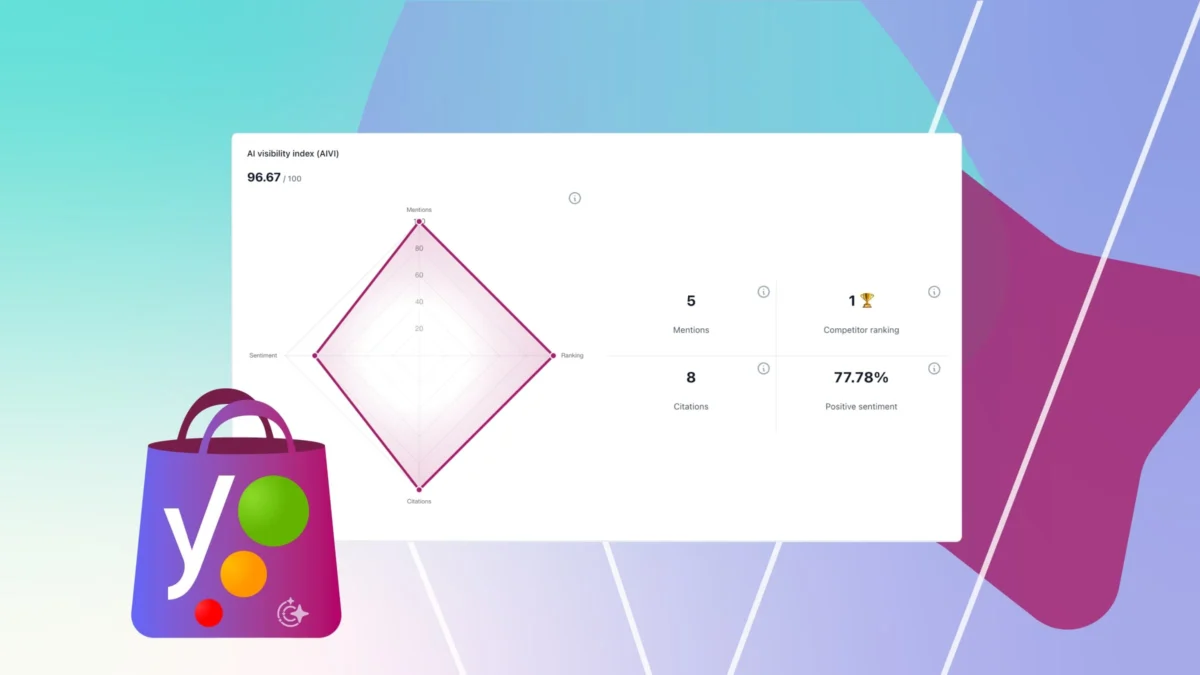
The evolution of search also necessitates a re-evaluation of how success is measured. The traditional focus on keyword rankings, while still relevant to some extent, is increasingly insufficient in an AI-driven search environment. The “why it matters” is that visibility is moving beyond mere rankings into citation, inclusion, and influence within AI-generated responses.
This means that a website might not rank #1 for a specific keyword in traditional search results, but its content could be prominently cited as a source by an AI agent providing a summary, or it could be included in a task-based AI experience. New metrics will emerge to track this “AI visibility,” such as the frequency of content being used by AI for answers, the number of direct links from AI-generated summaries, or the impact on user actions initiated by AI agents. SEO professionals will need to adapt their reporting to include these new forms of visibility, demonstrating the influence of their content within the broader AI ecosystem, rather than solely relying on organic search positions.
Broader Implications and Future Outlook
The developments of April 2026 collectively paint a picture of an internet rapidly transforming into an AI-centric information and task-completion platform. Google’s explicit support for AI agents, its continuous drive for AI efficiency, and the tightening of quality standards indicate a strategic pivot towards a more intelligent, albeit more demanding, web. The integration of AI into content creation tools and the renewed emphasis on authority and differentiated content suggest that while AI can amplify production, human ingenuity and unique value proposition remain indispensable.
For businesses and content creators, the implications are clear:
- Technical Preparedness: Websites must be technically robust and semantically rich to be easily understood and utilized by AI agents.
- Quality over Quantity: The era of mass-producing mediocre content is definitively over. Focus on creating deep, authoritative, and truly helpful content.
- User-Centric Design: Optimize for complex user tasks and intent, understanding that AI will facilitate multi-step journeys.
- Transparency and Trust: Clearly label content origin (human vs. AI) and build demonstrable E-E-A-T to be a trusted source for AI.
- Adaptive Measurement: Begin to track new metrics related to AI citation and inclusion, rather than just traditional rankings.
The digital future, as illuminated by the April 2026 updates, is one where human creativity, ethical practices, and technical foresight will converge with advanced artificial intelligence to shape how information is accessed, consumed, and acted upon. Staying abreast of these changes, as highlighted by experts like Carolyn Shelby and Alex Moss, is no longer optional but critical for sustained online success.
Sign Up for the Next SEO Update by Yoast
For those keen to delve deeper into these evolving trends and prepare for the future of search, the next SEO Update by Yoast is scheduled for May 21, 2026, at 4:00 PM CET (10:00 AM EST). Attendees can sign up to join the live discussion with leading SEO experts or receive the recording to stay informed on the latest developments shaping the digital landscape.