The landscape of online furniture retail in 2026 is defined by the ability of leading Shopify stores to adeptly navigate two formidable challenges: enabling shoppers to realistically envision a furniture piece within their personal space and cultivating sufficient trust to facilitate high-value purchases. These successful retailers employ diverse, sophisticated strategies and technological mechanics to overcome these hurdles, ranging from cutting-edge augmented reality (AR) and 3D visualization tools to meticulously crafted, customer-centric loyalty programs designed to foster deep brand engagement.
This analysis delves into the methodologies of 15 standout Shopify furniture stores in 2026, examining their unique sales tactics, strategic frameworks, and distinguishing characteristics. By dissecting their approaches, this guide offers insights into the operational and marketing blueprints that define success in this competitive sector, providing actionable lessons for other businesses.
The Evolving Landscape of Online Furniture Retail: A Contextual Overview
The furniture industry, traditionally reliant on physical showrooms and tactile experiences, has undergone a significant digital transformation. Early forays into online furniture sales were often met with skepticism, primarily due to the inherent difficulties consumers faced in assessing scale, texture, and aesthetic fit without in-person interaction. Shipping logistics for large, often fragile items also presented considerable operational complexities. However, advancements in e-commerce platforms, logistics infrastructure, and digital visualization technologies have progressively eroded these barriers.
By 2026, the global online furniture market is projected to reach substantial valuations, with growth driven by increasing digital literacy, convenience-seeking consumers, and the maturation of direct-to-consumer (DTC) brands. Shopify, as a robust and scalable e-commerce platform, has emerged as a preferred choice for many furniture retailers, offering a versatile ecosystem of apps and features that cater to the specific needs of selling high-ticket, visually driven products. The stores highlighted here exemplify how to leverage this platform to build compelling online presences that rival, and in some cases surpass, traditional retail models.
Detailed Examination of Leading Shopify Furniture Stores: Strategies for Success
Each of the 15 stores featured operates on Shopify, is actively trading, demonstrates at least one distinct and replicable sales tactic, and offers unique lessons. Their success can be broadly categorized into several strategic pillars: leveraging advanced visualization, cultivating robust loyalty and community, driving product innovation and operational excellence, and strategic market expansion.
I. Mastering Visualization and Experiential Shopping
A primary challenge in online furniture sales is the inability to "try before you buy." Leading Shopify stores address this by integrating immersive digital tools that bridge the gap between virtual browsing and real-world application.
-
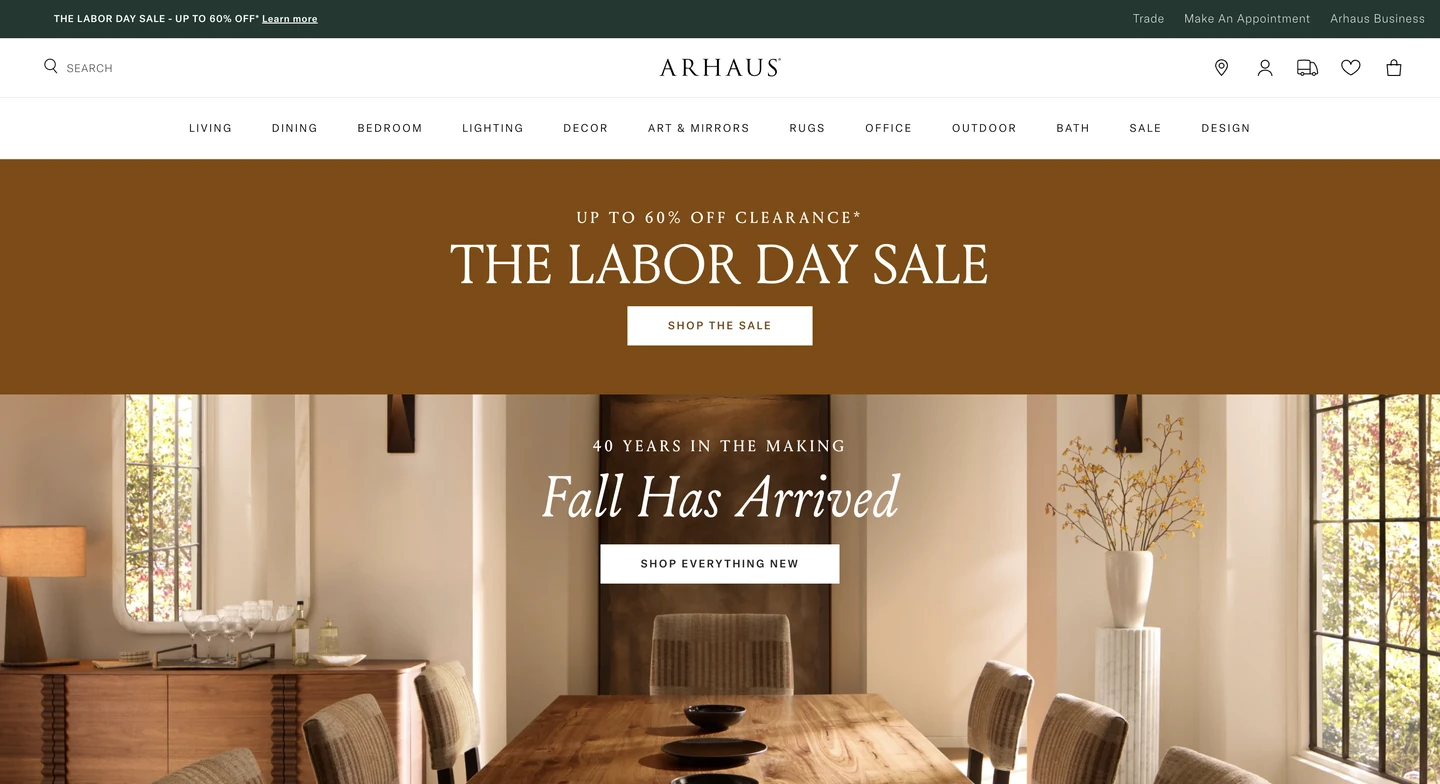
Arhaus: 3D Room Planner and Free Color Swatches
- Location: United States
- Estimated Revenue: $1.38 billion (2025 reported)
- Standout Feature: Arhaus, an upscale furniture retailer with over 100 physical showrooms, extends its premium experience online through a sophisticated 3D Room Planner. This tool allows customers to digitally arrange furniture to scale within a simulated room, providing an accurate spatial understanding. Complementing this, Arhaus offers free color swatches, enabling customers to evaluate material and finish textures firsthand. "The combination of digital planning and physical samples significantly de-risks the purchase for our discerning clientele," a representative from Arhaus’s e-commerce team might state, underscoring the brand’s commitment to customer confidence.
- Key Takeaway: Empowering shoppers with tools to visualize products in their own space, coupled with tangible samples, is crucial for reducing purchase uncertainty in high-value categories.
-
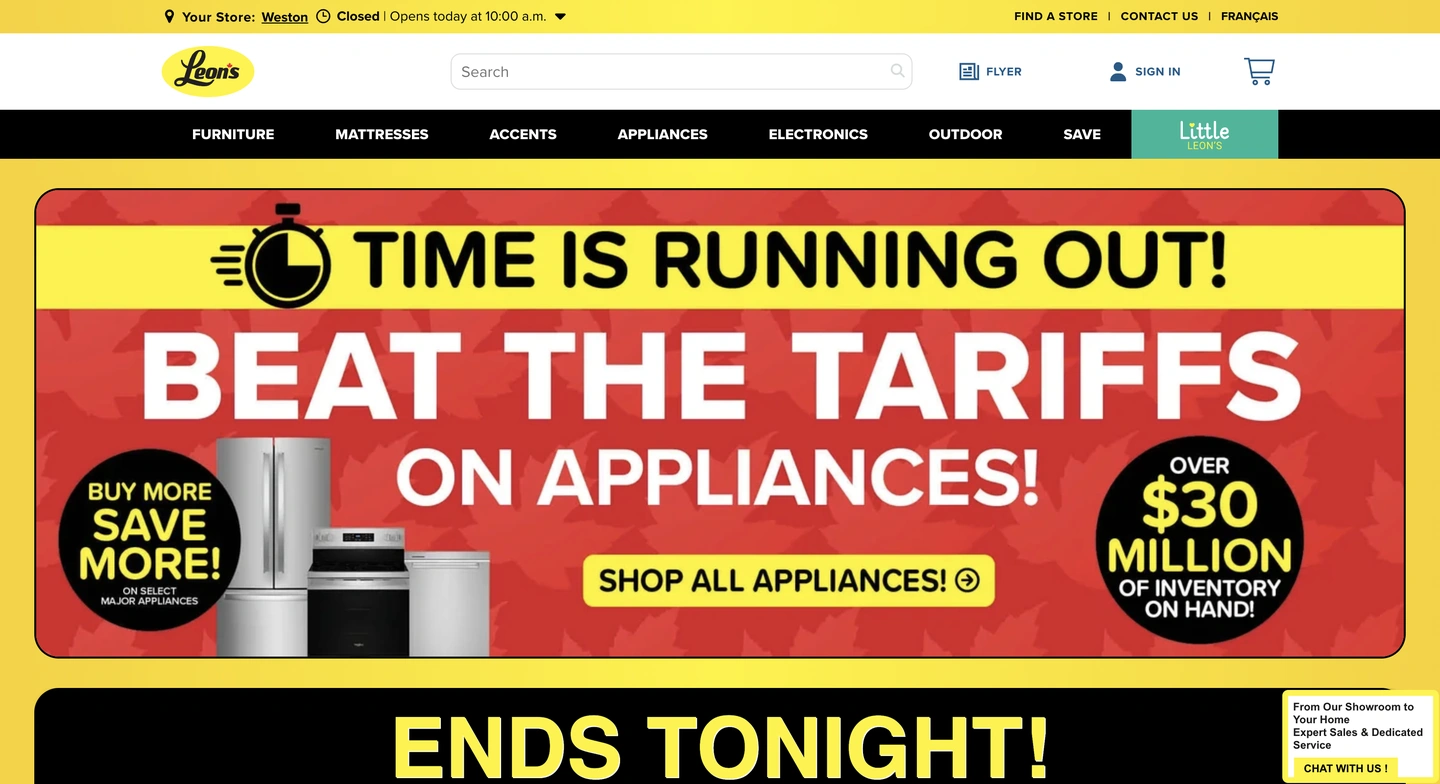
Leon’s: AR-Powered Virtual Showroom and BNPL Financing
- Location: Canada
- Estimated Revenue: ~$2.57 billion CAD (2025 data)
- Standout Feature: As one of Canada’s largest furniture and appliance retailers, Leon’s embraces augmented reality (AR) technology, allowing customers to use their smartphone cameras to virtually place furniture pieces in their homes. This AR virtual showroom experience is particularly impactful for large, expensive items where returns are impractical. Furthermore, Leon’s integrates Buy Now, Pay Later (BNPL) financing options, a strategy that, according to Adobe Analytics, drove $1.03 billion in sales on Cyber Monday 2025, with furniture being a top financing category.
- Key Takeaway: AR tools provide invaluable spatial context, while flexible financing addresses the financial commitment of high-ticket items, both critical for conversion.
-
Inside Weather: Build-Your-Own Configurator
- Location: United States
- Estimated Revenue: ~$2.9 million
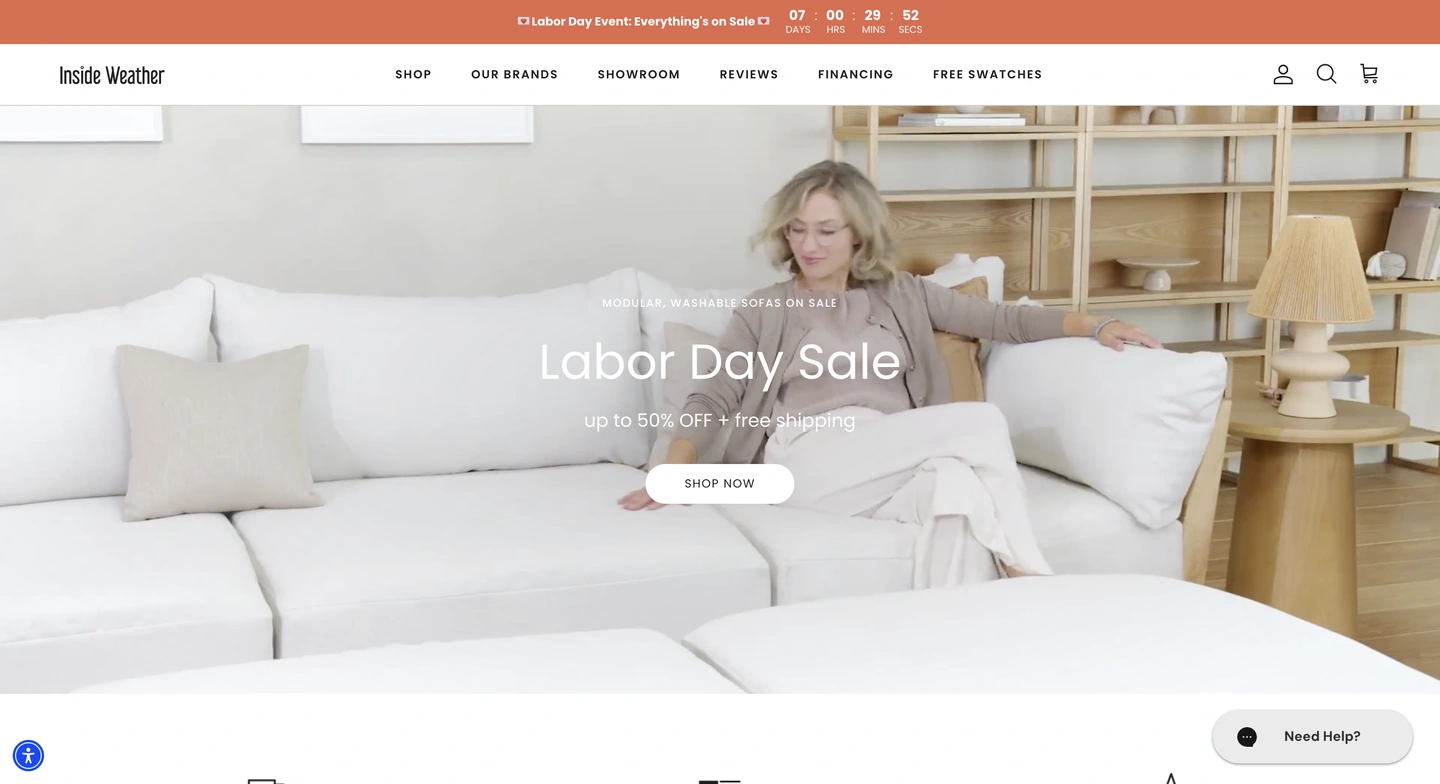
- Standout Feature: Inside Weather distinguishes itself by offering a deep level of product customization through its "build-your-own" configurator. Shoppers can select design elements, materials, finishes, and structural details before a piece is manufactured. This interactive experience transforms passive browsing into active product creation. All products ship from California, reducing delivery times for custom orders.
- Key Takeaway: Interactive configurators boost engagement and perceived value, allowing customers to tailor products precisely to their needs, thereby increasing satisfaction and reducing post-purchase dissonance.
-
Oakywood: AR Visualization via 3D-Scanning Partner
- Location: Poland
- Estimated Revenue: ~$30.4 million
- Standout Feature: Oakywood, a Polish manufacturer of wooden office furniture and accessories, utilizes AR visualization in partnership with 3D-scanning company Precismo. This allows customers to generate an AR model of a customized piece and virtually place it in their room. The brand’s transition from Etsy to Shopify Plus enabled it to scale custom orders, leading to significant increases in average order value (e.g., 458% in Germany).
- Key Takeaway: Sophisticated AR integrations, even through third-party partnerships, can dramatically enhance the customer’s confidence in customized, high-value purchases.
II. Building Brand Loyalty and Community
Beyond the initial sale, successful furniture brands cultivate lasting relationships, turning one-time buyers into repeat customers and brand advocates.
-
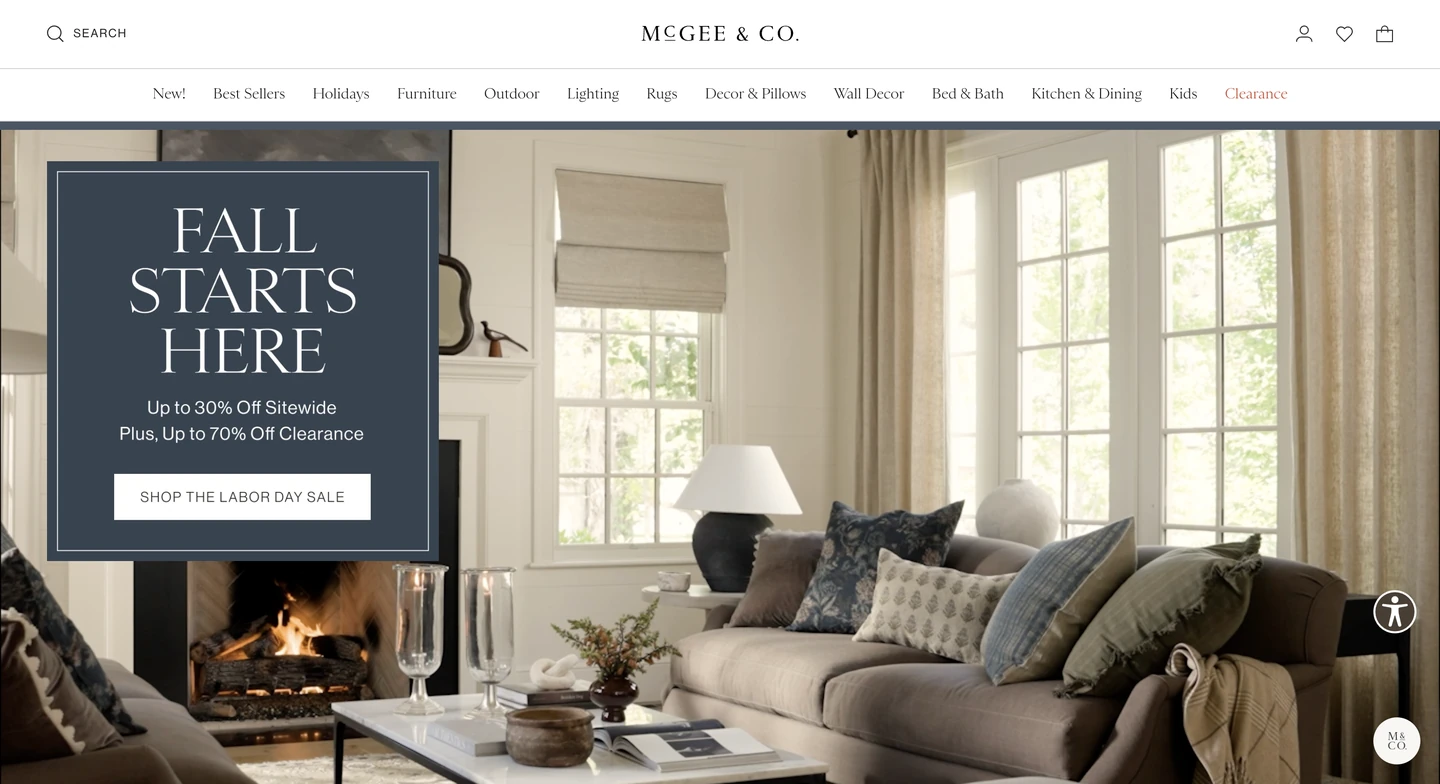
McGee & Co.: Designer-Curated, Points-Based Loyalty Program
- Location: United States
- Estimated Revenue: ~$6.6 million
- Standout Feature: McGee & Co. is the e-commerce extension of Studio McGee, leveraging the design expertise and brand recognition of founders Shea and Syd McGee. Every item is curated or designed by Shea McGee, imbuing the catalog with a distinct design point of view. The brand offers a free points-based loyalty program that rewards every purchase, encouraging repeat business even with a long natural repurchase cycle for furniture. They also offer up to 10 free upholstery and wallpaper swatches.
- Key Takeaway: A strong brand identity, coupled with a rewarding loyalty program, can foster long-term customer relationships and overcome the infrequent nature of furniture purchases.
-
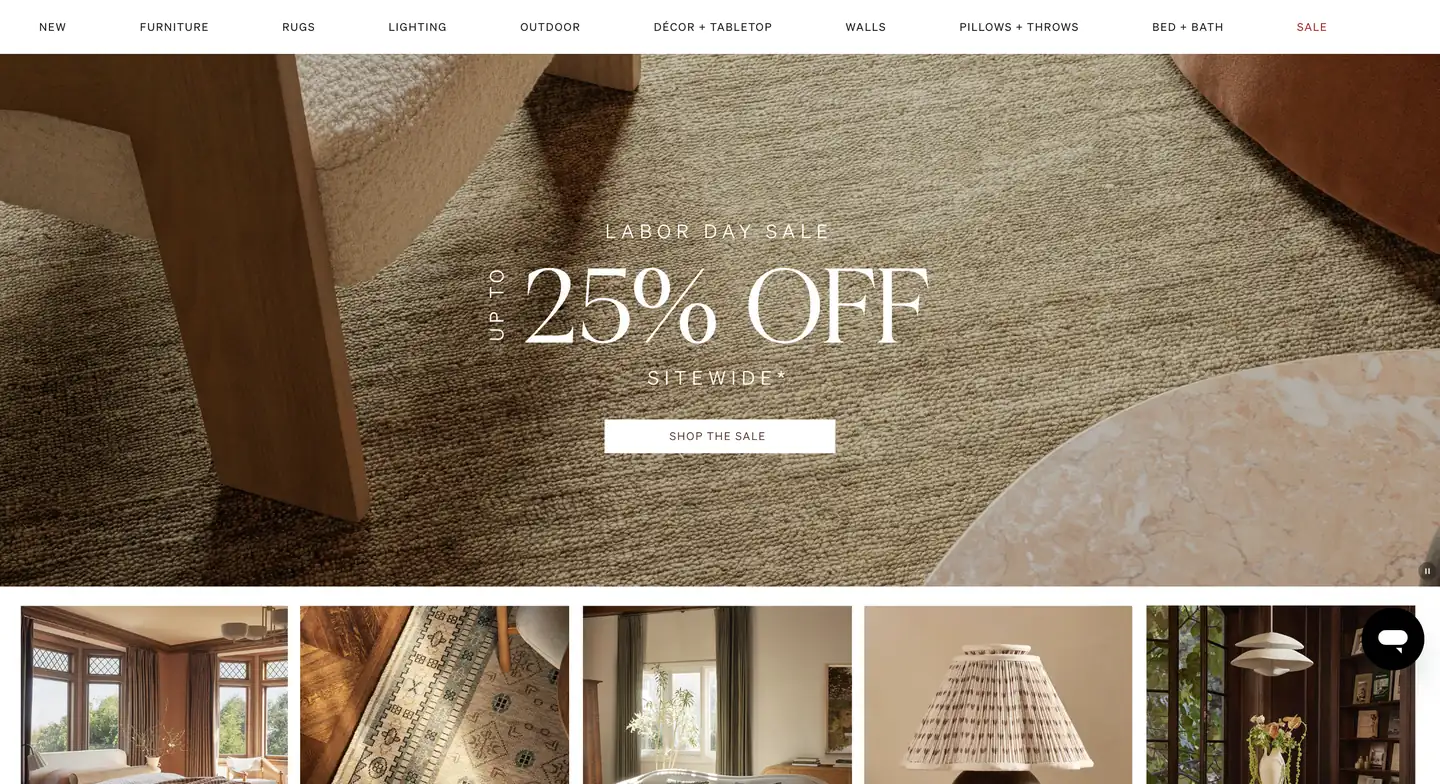
Lulu and Georgia: Trade Program and Designer Collaborations
- Location: United States
- Estimated Revenue: ~$100 million–$250 million
- Standout Feature: Lulu and Georgia, known for its design-forward rugs, furniture, lighting, and home accents, frequently collaborates with individual designers. This strategy keeps their catalog fresh and appealing. Crucially, they operate a dedicated trade program, providing interior designers with direct access to bulk pricing and specialized support. This dual approach taps into both DTC and B2B revenue streams. "Our collaborations and trade program are symbiotic," an industry observer might comment, "they continuously refresh our offerings for consumers while securing professional partnerships."
- Key Takeaway: Strategic partnerships and dedicated B2B programs can diversify revenue and leverage professional networks for sustained growth.
-
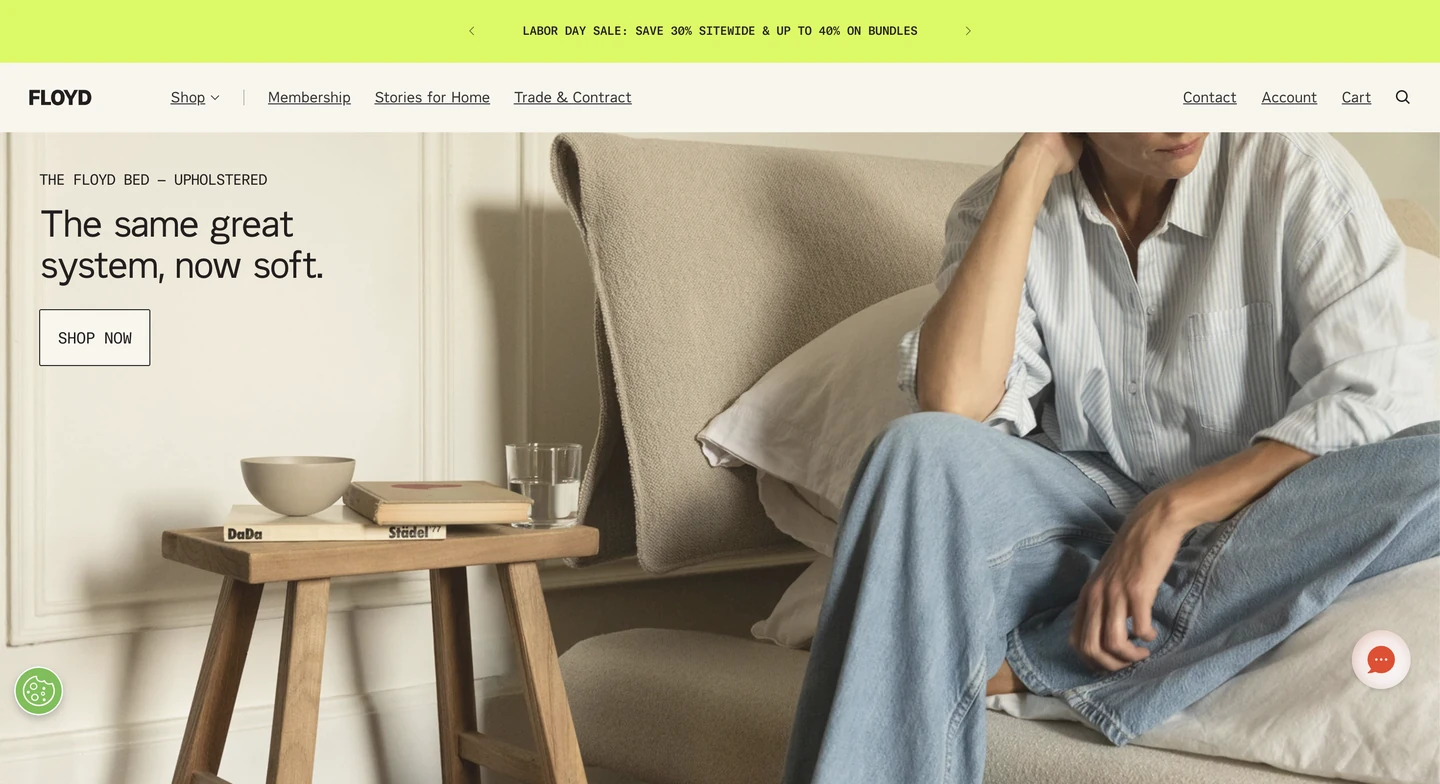
Floyd: Modular Add-Ons Plus Paid Membership
- Location: United States
- Estimated Revenue: ~$25 million–$50 million
- Standout Feature: Floyd pioneered modular furniture designed for expansion rather than replacement. Their Bed System, introduced a decade ago, continues to accommodate new add-ons, like recently launched upholstered conversion kits. This longevity encourages customers to expand their existing pieces. Despite being acquired by Rize Home, Floyd maintains its distinct brand identity.
- Key Takeaway: Designing products with modularity and offering membership perks (e.g., 20–30% off sitewide, free shipping) creates a compelling ecosystem that encourages repeat purchases and reduces churn to competitors.
-
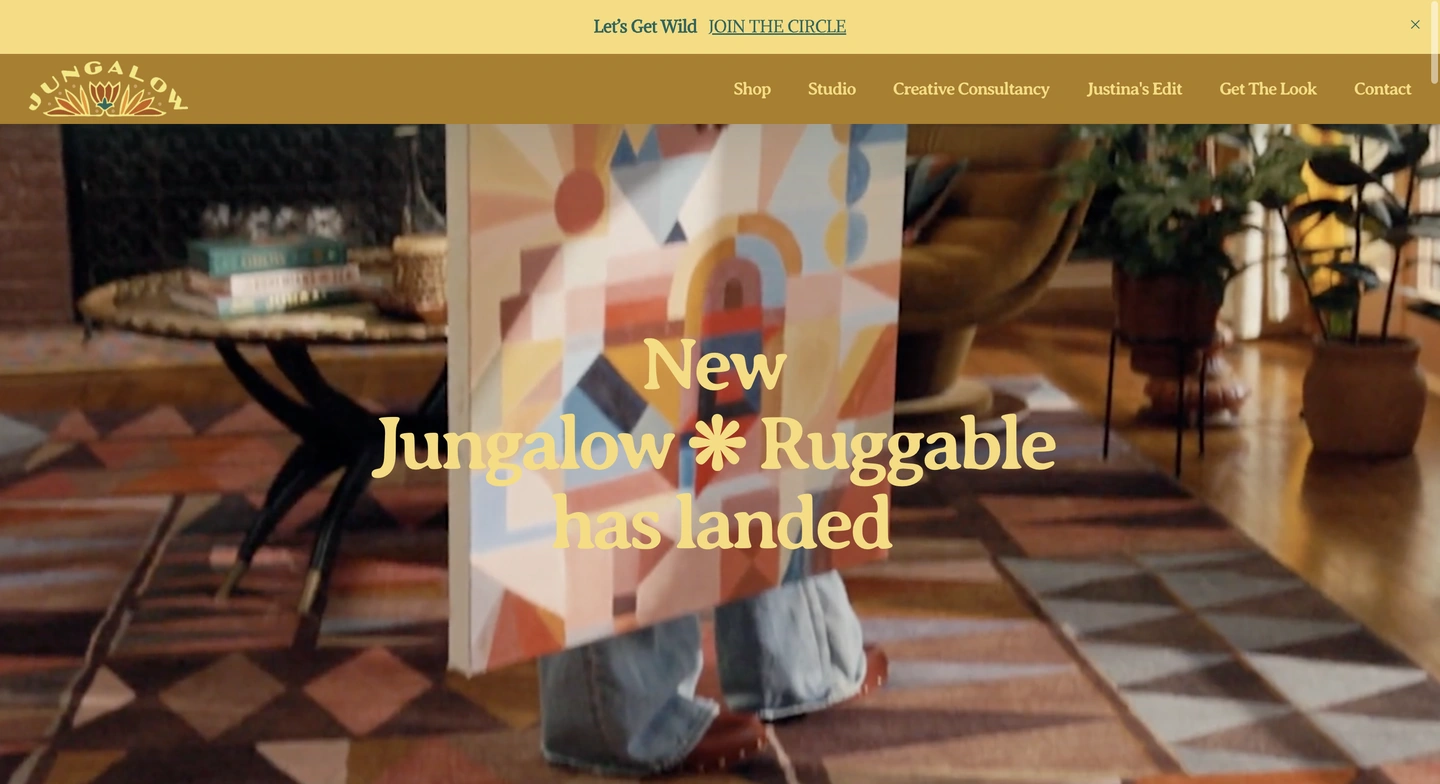
Jungalow: Brand-Owned Loyalty Club (JungaLoco)
- Location: United States
- Estimated Revenue: Not publicly disclosed
- Standout Feature: Jungalow, a bohemian-modern home and furniture brand founded by designer Justina Blakeney, built its distinctive visual identity around bold colors and patterns. After years of wholesale partnerships (e.g., Anthropologie), Jungalow launched its own Shopify Plus store to directly manage customer relationships. Their "JungaLoco" loyalty club rewards purchases and reviews, which Shopify case studies indicate boosted their returning-customer rate by 26.5% year-over-year.
- Key Takeaway: A uniquely branded loyalty program, tightly integrated with brand identity and rewarding multiple forms of engagement, is a powerful tool for customer retention and fostering community.
III. Product Innovation and Operational Excellence
Differentiation in the furniture market can also stem from superior product design, material innovation, or optimized delivery and customer service.
-
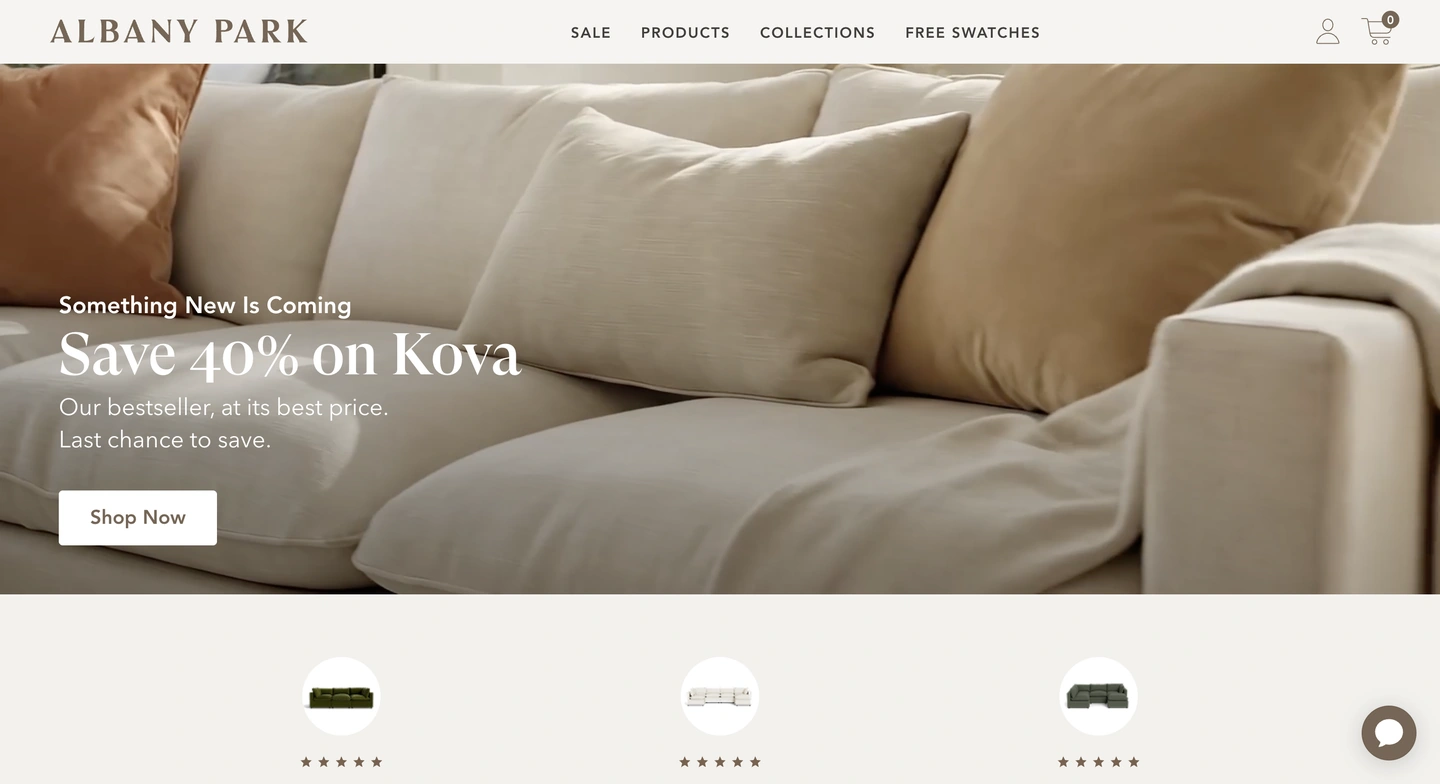
Albany Park: Free Swatches and White-Glove Delivery
- Location: United States
- Estimated Revenue: Not publicly disclosed
- Standout Feature: Albany Park focuses on a curated catalog of sofas, sectionals, and armchairs, all made to order with performance fabrics. This specialized approach allows for a high degree of customization. To mitigate purchase friction, they offer free fabric swatches and complimentary fabric upgrades. Additionally, they provide free white-glove delivery, ensuring a seamless and high-quality customer experience from selection to setup.
- Key Takeaway: Removing purchase barriers through free samples and premium delivery services enhances customer confidence and positions the brand as customer-centric.
-
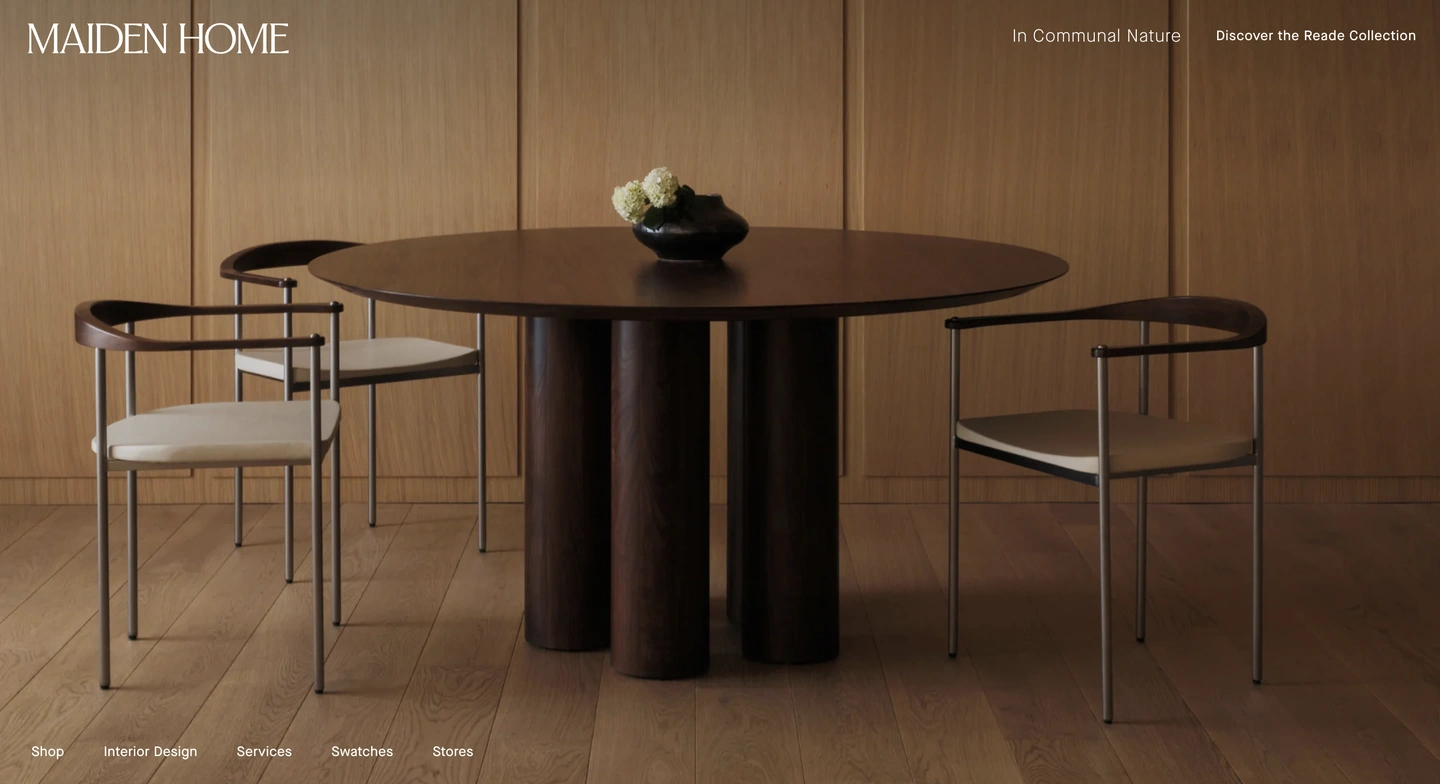
Maiden Home: Made-to-Order Plus Flagship Showrooms
- Location: United States
- Estimated Revenue: ~$32.6 million
- Standout Feature: Maiden Home crafts each piece to order, collaborating with North Carolina artisans to employ heritage upholstery techniques. To complement its online presence and made-to-order model, the brand maintains two physical flagship showrooms in New York and Miami. These showrooms allow customers to experience fabrics and finishes in person before making an online purchase. They also offer a dedicated trade and contract program for interior designers and architects, alongside free fabric and finish sampling.
- Key Takeaway: A hybrid model combining bespoke online ordering with strategic physical touchpoints and professional trade programs builds multi-faceted confidence for high-value, customized items.
-
Sixpenny: Washable Slipcovers and Low-Cost Swatch Kits
- Location: United States
- Estimated Revenue: ~$1 million–$10 million
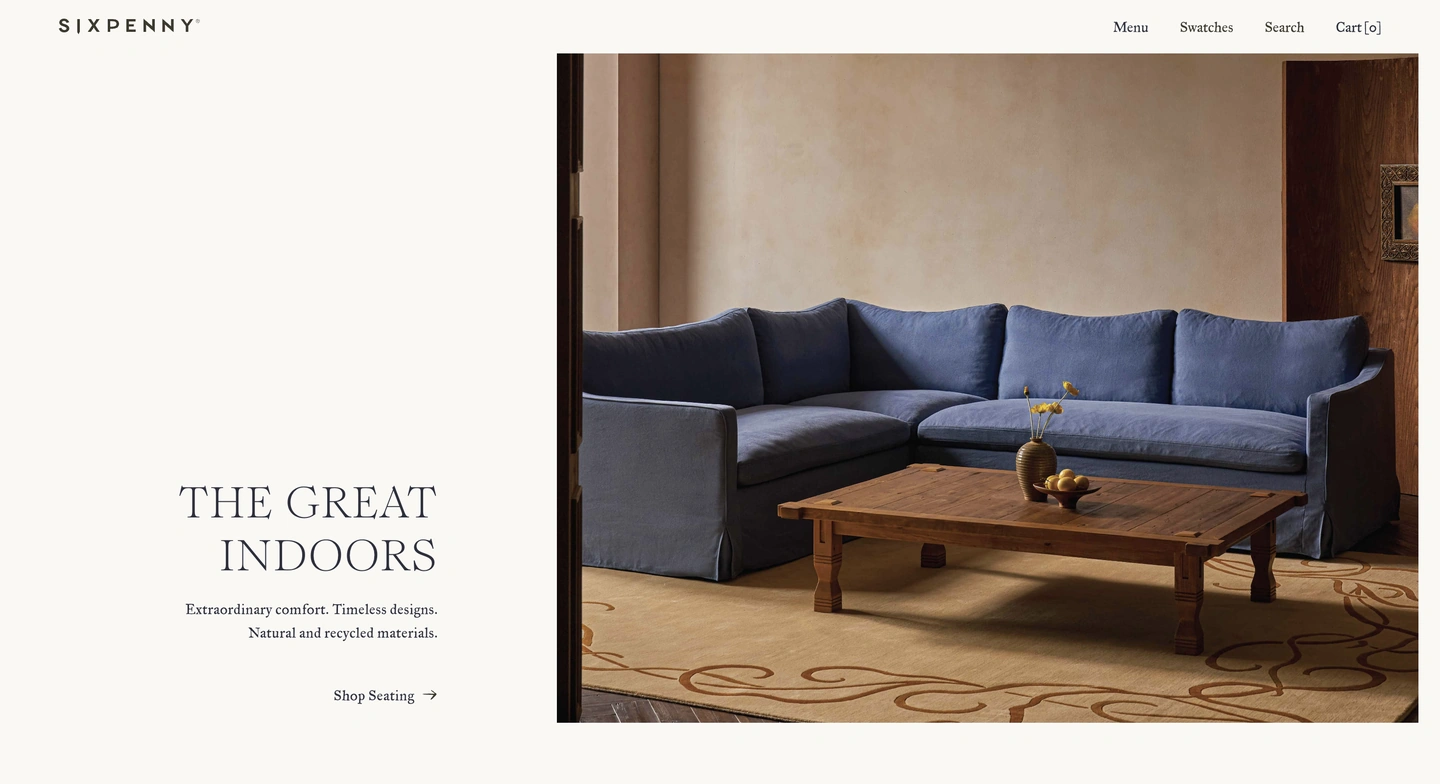
- Standout Feature: Sixpenny built its reputation on living room furniture featuring removable, machine-washable slipcovers made from natural fabrics. This directly addresses common customer concerns about durability and easy cleaning. The brand, which has expanded beyond living room specialties, offers low-cost swatch kits, allowing shoppers to physically assess linen and other materials before committing to a purchase.
- Key Takeaway: Proactively addressing customer objections (like durability and maintenance) through product features (washable covers) and offering accessible physical samples can significantly boost sales.
-
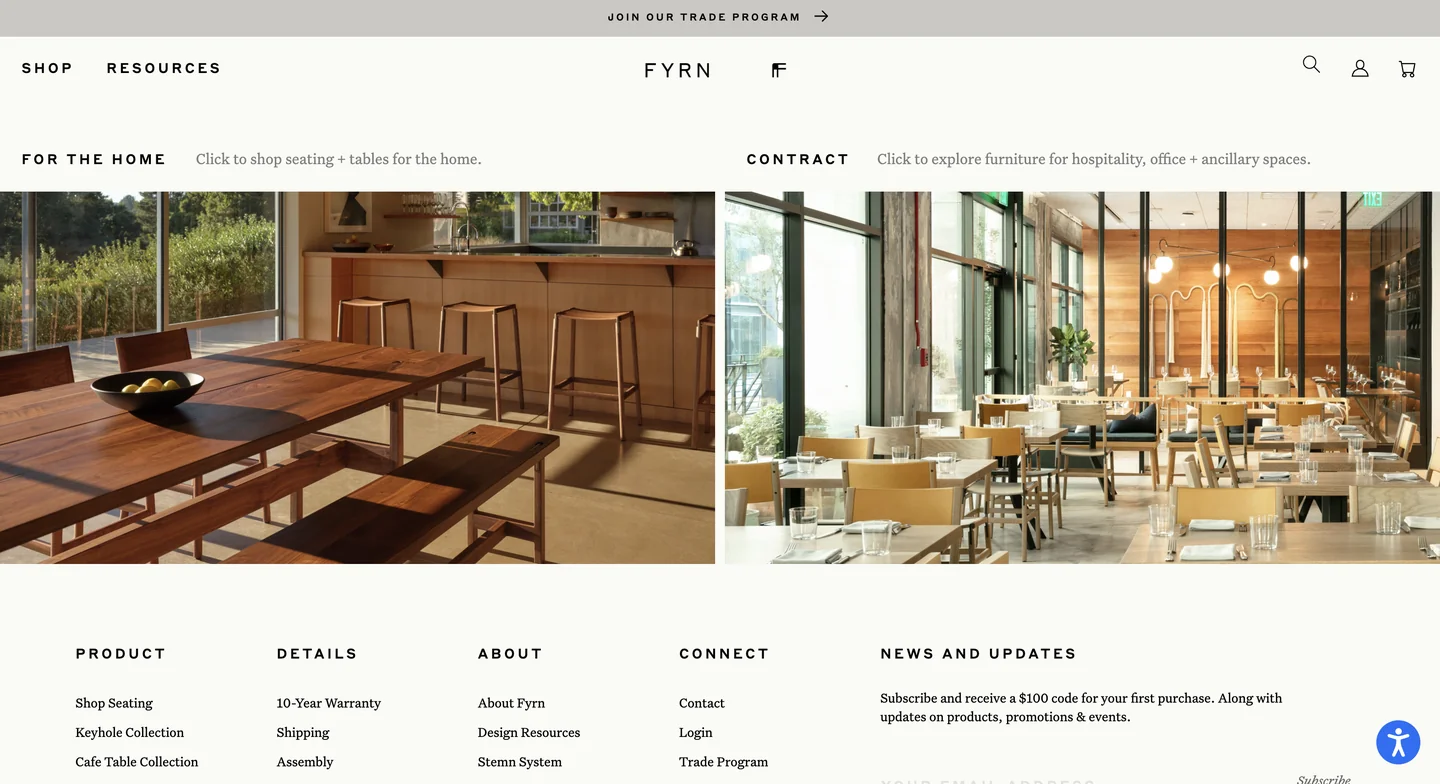
Fyrn: Patented Flat-Pack Hardware (Stemn bracket)
- Location: United States
- Estimated Revenue: Not publicly disclosed
- Standout Feature: Fyrn, a brand rooted in four generations of family woodworking craft, designs chairs, stools, and tables around its patented Stemn bracket system. This unique hardware exposes the joinery as an aesthetic feature rather than concealing it. The innovation allows the same product to be shipped flat for home assembly (at a lower price point) or fully assembled for an additional fee, offering customer choice without requiring separate SKUs.
- Key Takeaway: Proprietary product innovation that offers both design differentiation and operational flexibility (e.g., DIY vs. assembled options) can create a unique market advantage and cater to diverse customer preferences.
-
Transformer Table: Expandable Smart Tables (Hero Product Strategy)
- Location: Canada
- Estimated Revenue: Over $100 million (Shopify data)
- Standout Feature: Transformer Table built its brand around a single, highly innovative hero product: expandable, multifunctional dining tables capable of seating up to 12 people. Launched in 2016 with a viral video, this product remains the core of their catalog. After migrating to Shopify Plus, they established localized storefronts in over 35 countries, boosting international sales from 3% to approximately 20% of annual revenue.
- Key Takeaway: A strong, distinctive hero product, coupled with strategic internationalization through localized content and pricing, can drive massive growth and brand recognition.
IV. Strategic Market Expansion and B2B Integration
Expanding reach and optimizing sales channels beyond traditional DTC models are crucial for sustained growth.
-
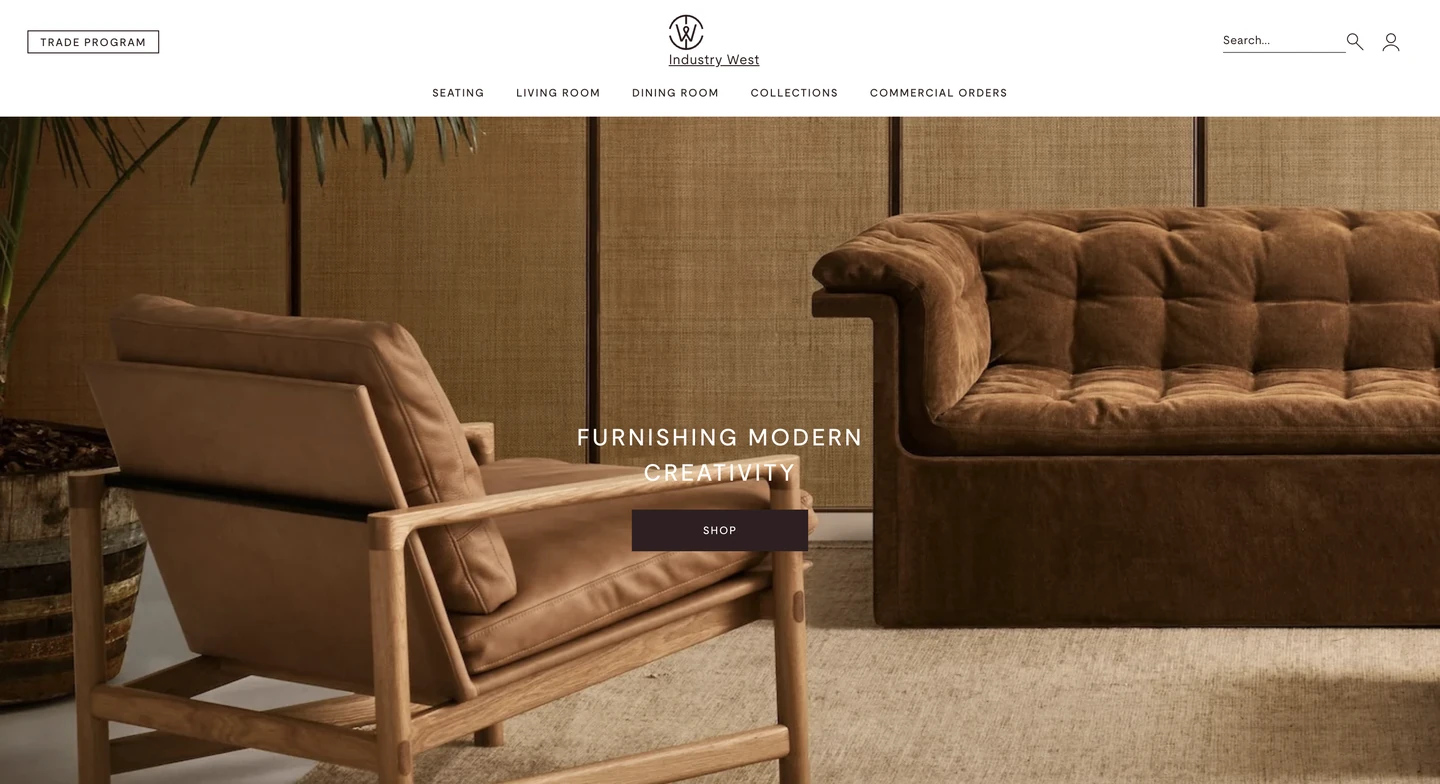
Industry West: B2B Trade Catalogs with Company Accounts
- Location: United States
- Estimated Revenue: ~$7.6 million
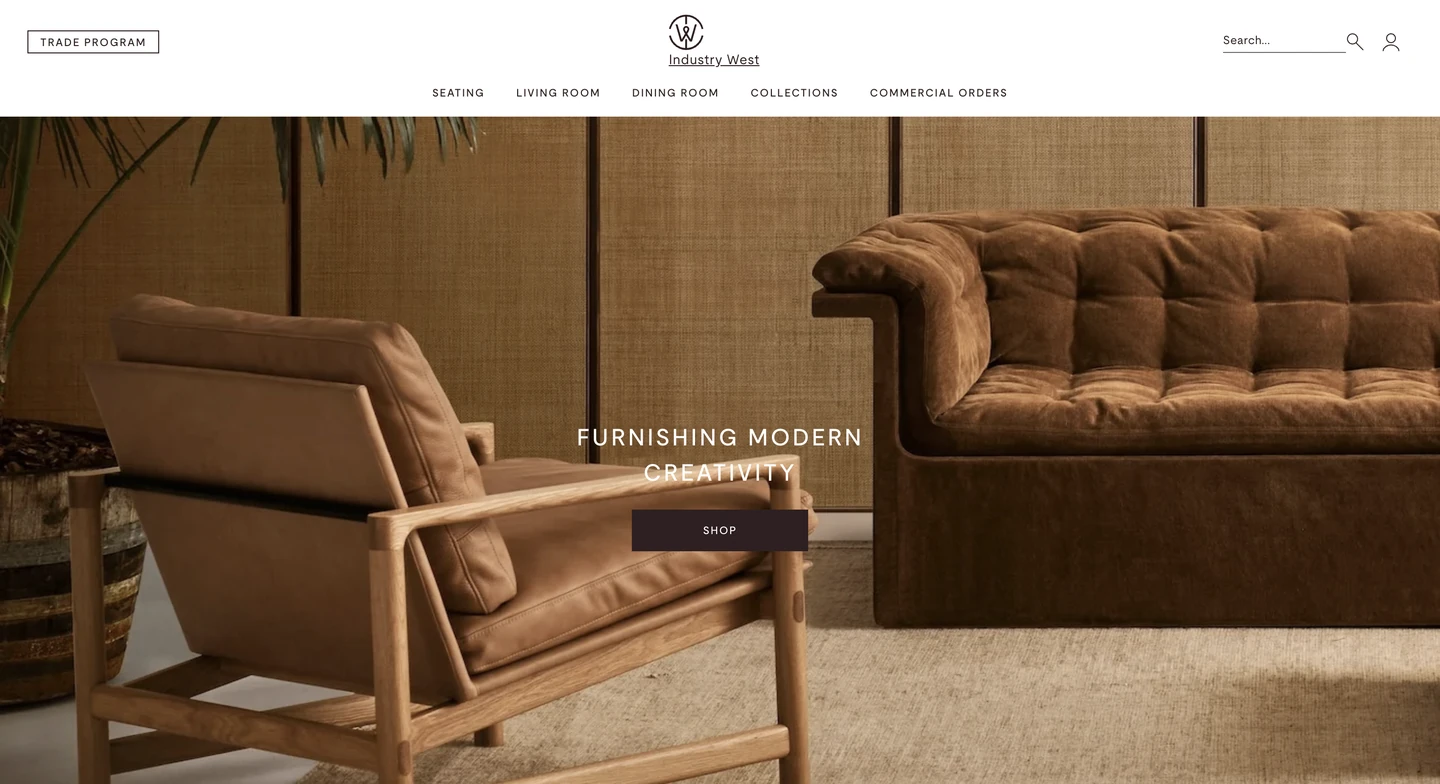
- Standout Feature: Industry West transitioned from Magento to Shopify specifically to enhance its B2B trade operations, serving designers and franchisees who frequently place repeat orders. Shopify’s B2B suite allowed them to group multiple buyers under single company accounts with pre-set pricing. This strategic move, according to a Shopify case study, resulted in a 90% increase in revenue from web orders for B2B companies. They also offer fabric swatches via Shopify’s product customization tools.
- Key Takeaway: Streamlining B2B purchasing with dedicated company accounts and automated pricing removes friction for repeat orders, significantly boosting B2B revenue.
-
CA Design: Competitions and Influencer Giveaways for List Growth
- Location: Ireland
- Estimated Revenue: Not publicly disclosed
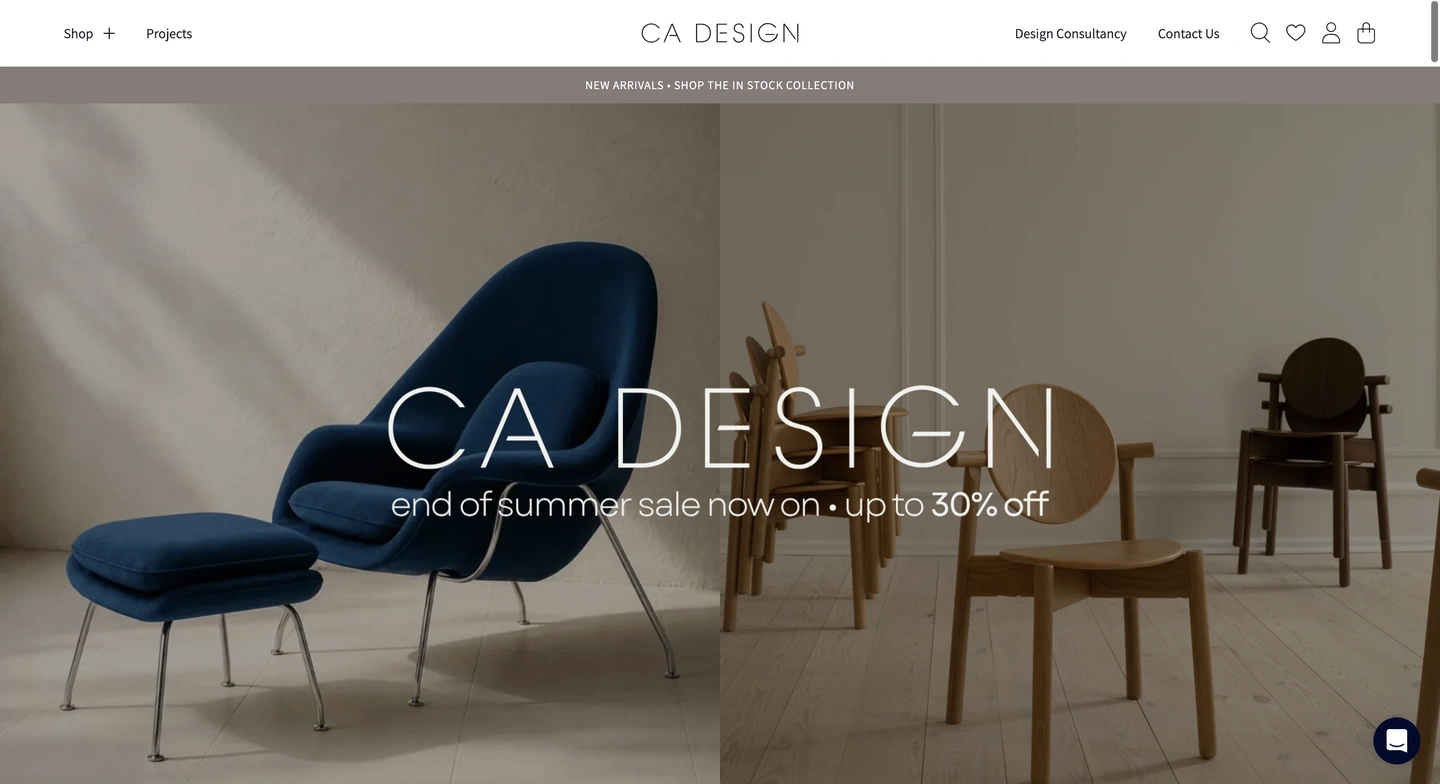
- Standout Feature: CA Design, a Dublin-based retailer specializing in mid-century and Scandinavian furniture, blends an in-house collection with European brands. To drive engagement and build its customer base, CA Design effectively leverages competitions and influencer giveaways. These campaigns strategically funnel social media attention into its email list, followed by personalized one-to-one design consultancy offers. One campaign alone generated 2,000 leads, with influencer collaborations boosting their email list by 10–15%.
- Key Takeaway: Creative social media campaigns, particularly those involving influencers and competitions, can be highly effective in converting transient social engagement into valuable owned customer data for long-term marketing efforts.
The Crucial Role of Automated Digital Marketing: Emails for Furniture Stores
While the strategies above focus on product, visualization, and customer experience, effective communication underpins all successful e-commerce operations. Omnisend’s 2026 e-commerce marketing report highlights a critical insight for the home & garden category: campaigns convert at a mere 0.04%, one of the lowest across all sectors. This underscores the lengthy purchase consideration window typical of furniture shopping.
In stark contrast, automated emails in 2025 generated an average of $2.87 per send, compared to $0.18 for scheduled campaigns – a 16x higher value per message. This significant disparity emphasizes that for furniture retailers on Shopify, building robust automation flows should be a priority, with one-off campaigns serving a supporting role.
-
Cart Abandonment and Welcome Emails: These automated flows are paramount, driving 76% of all automation-driven orders. For furniture, abandoned cart emails should prominently feature the specific item the shopper left behind, leveraging visuals and detailed product information. Welcome series, meanwhile, are prime opportunities to establish brand story, philosophy, and build initial trust, a vital component for high-value purchases.
-
Browse Abandonment: Given the extended consideration period, browse abandonment automation is a powerful tool. When a shopper repeatedly views a specific furniture piece or category, it signals genuine interest. A follow-up email, offering free swatches, styling suggestions, or even a personalized consultation, can re-engage them more effectively than a generic discount. This strategy transforms a potential bottleneck into an opportunity for relationship building.

-
Restock and Back-in-Stock Alerts: For brands offering customization or limited editions, these alerts are conversion engines. If a shopper shows interest in an item with a sold-out fabric or color, a targeted restock email for that exact configuration is highly effective. Leveraging segmentation (e.g., by room type, budget tier, or "sample requested" status) ensures these alerts are hyper-relevant. Analytics play a crucial role here, allowing stores to track time-to-purchase and revenue-per-email, continuously refining automation sequences based on real-world performance.
Omnisend, as an all-in-one email, push, and SMS platform, provides the tools for Shopify furniture stores to implement these advanced automations, offering both manual flow building and pre-built workflows to accelerate deployment.
Future Outlook and Broader Implications
The success stories of these Shopify furniture stores paint a clear picture of the future for online home furnishings. The integration of advanced visualization technologies like AR and 3D configurators will become standard, not just a differentiator. The emphasis on building strong brand identities through curated experiences, personalized loyalty programs, and community engagement will intensify. Furthermore, product innovation that addresses practical consumer needs (e.g., modularity, easy cleaning) and operational efficiencies in customization and delivery will continue to be key competitive advantages.
Industry experts anticipate a continued blending of online and offline experiences, with physical showrooms acting as discovery hubs that drive online sales, and digital tools enhancing the in-store experience. The importance of robust e-commerce platforms like Shopify, capable of supporting complex product catalogs, sophisticated integrations, and scalable marketing automation, will only grow. As the market matures, sustainability, ethical sourcing, and transparent manufacturing processes are also expected to emerge as significant factors influencing consumer choice and brand loyalty. The furniture stores that thrive in this evolving landscape will be those that embrace technological innovation, prioritize customer trust, and build enduring relationships through every stage of the buying journey.
Shopify Furniture Stores FAQs
Is Shopify good for selling furniture?
Yes, Shopify is an excellent platform for selling furniture. It offers a robust ecosystem that supports the unique needs of furniture retailers, including tools for AR product visualization, made-to-order configurators, and B2B trade catalogs. Many established brands, such as Industry West, Jungalow, and Oakywood, have successfully transitioned to Shopify to leverage these advanced features and scale their operations.
Can you sell furniture on Shopify?
Absolutely. Shopify has no specific restrictions on selling furniture beyond its standard acceptable use policies, which primarily prohibit illegal or dangerous goods. In 2026, furniture remains one of the largest and fastest-growing product categories on Shopify. However, retailers looking to engage in international shipping must ensure compliance with local laws and regulations concerning large item deliveries.
Are furniture stores profitable?
Yes, selling furniture can be a highly profitable business. Many of the top Shopify furniture stores, as evidenced by their estimated annual revenues well exceeding $1 million (with some in the hundreds of millions), demonstrate significant profitability. Success, however, is contingent on a well-defined strategy, including effective marketing, efficient supply chain management, and a strong value proposition to customers.
What is the most successful furniture store on Shopify?
While success can be measured in various ways (revenue, margins, growth rate), Leon’s, through its parent company Leon’s Furniture Limited, reported approximately $2.57 billion CAD in 2025 revenue across its banners, making it one of the largest by estimated revenue among the examples cited. However, brands like Arhaus ($1.38 billion) and Transformer Table (over $100 million) also demonstrate immense success, often through highly differentiated product or market strategies.
What cannot be sold on Shopify?
Shopify’s Acceptable Use Policy prohibits the sale of certain items, primarily focusing on illegal goods, regulated products (like weapons or drugs), and counterfeit merchandise. Furniture is not on this restricted list. It is always advisable for merchants to consult Shopify’s current Acceptable Use Policy for a comprehensive and up-to-date list of prohibited items.