The advent of artificial intelligence (AI) in search has fundamentally reshaped how consumers discover, evaluate, and engage with brands, prompting a significant shift in marketing strategies. As AI-powered answer engines and generative search experiences become increasingly prevalent, marketers are grappling with new challenges in measuring their brand’s visibility and influence within these emerging digital touchpoints. Tools like Profound AI have gained initial traction by offering marketers a window into their brand’s presence in AI-generated answers. However, a confluence of factors, including tightening marketing budgets, the rapid emergence of new AI visibility features, and increased demands for seamless integration with existing tech stacks, is driving many teams to actively seek robust and scalable alternatives to Profound AI.
The Genesis of AI in Search: A Brief Chronology

The journey from traditional keyword-based search to today’s AI-driven answer engines has been a swift and transformative one. For decades, search engine optimization (SEO) revolved around algorithms that ranked web pages based on relevance, backlinks, and technical factors, primarily leading users to a list of blue links. The late 2010s saw the gradual integration of AI and machine learning into search, enhancing relevance and understanding user intent more deeply. Google’s BERT (Bidirectional Encoder Representations from Transformers) update in 2019, followed by MUM (Multitask Unified Model) in 2021, marked significant milestones, allowing search engines to comprehend complex queries and provide more nuanced results.
The real inflection point arrived with the public release of powerful large language models (LLMs) like OpenAI’s ChatGPT in late 2022. These models demonstrated an unprecedented ability to generate human-like text, summarize information, and answer questions directly, often synthesizing data from multiple sources. This capability quickly migrated to search platforms. Google introduced its Search Generative Experience (SGE), now known as AI Overviews (AIO), in 2023, directly integrating generative AI into its primary search results. Similarly, Microsoft’s Bing adopted OpenAI’s technology to power its Copilot (formerly Bing Chat), and other platforms like Perplexity AI emerged, specifically designed as AI answer engines. This rapid evolution necessitated a new discipline: Answer Engine Optimization (AEO), focused on optimizing content not just for clicks, but for inclusion and favorable representation within AI-generated summaries and answers. The shift has been profound, with industry reports indicating that a substantial portion of search queries now result in AI-generated answers, impacting traditional organic traffic patterns.
Why Marketers Are Seeking Alternatives: A Deeper Dive into Market Dynamics

The initial appeal of tools like Profound AI was undeniable, offering a first-mover advantage in tracking brand mentions within this nascent AI search ecosystem. However, as the market matures and the strategic importance of AI visibility grows, several critical factors are compelling marketing leaders to explore more comprehensive and cost-effective alternatives.
Financial Scrutiny and Scalability Challenges: Profound’s pricing model has emerged as a significant point of contention for many organizations. While an entry-level package starting at approximately $99 per month may appear accessible, this tier often restricts monitoring to a single LLM, typically ChatGPT. As marketing teams recognize the need for broader coverage across multiple AI platforms—such as Gemini, Perplexity, Claude, and Google’s AI Overviews—the cost escalates sharply. The Growth plan, at $399 per month, still limits tracking to a handful of AI SEO tools. Beyond this, enterprise-tier pricing, which is custom and often significantly higher, becomes necessary for comprehensive monitoring across diverse markets or business units. This steep pricing gradient and limited scope at lower tiers are proving unsustainable for many, particularly when compared to alternatives that offer broader LLM coverage at more competitive price points, like Peec AI. Finance departments, increasingly scrutinizing marketing technology investments, often question separate line items for niche tools when integrated solutions promise better value and consolidated reporting.
Feature Gaps and the Quest for Holistic Visibility: Profound AI specializes in LLM monitoring, providing valuable insights into brand mentions within AI-generated responses. However, many modern marketing teams require a more holistic view that encompasses both traditional SEO performance and the evolving AI search landscape within a single, unified dashboard. The absence of integrated capabilities for keyword rankings, backlink analysis, technical SEO audits, and AI visibility forces teams to juggle multiple platforms, leading to fragmented data and inefficiencies. For instance, platforms like Semrush have rapidly evolved to include AI Overviews tracking alongside their robust traditional SEO features, offering marketers a consolidated view that simplifies reporting and strategy. The demand is shifting from mere data tracking to actionable insights, requiring tools that can translate AI visibility data directly into content briefs, strategic updates, and campaign planning. HubSpot’s ecosystem, for example, aims to bridge this gap, integrating AI insights with content creation and CRM functionalities.
Operational Bottlenecks: Seat Limits and Reporting Complexities: Seemingly minor details, such as seat limits, can create significant operational hurdles for collaborative marketing teams. Profound’s lowest tier often restricts access to a single user, which is impractical for teams where AI visibility is a shared responsibility spanning SEO specialists, content marketers, brand managers, and demand generation teams. While higher tiers offer more seats, the associated price jump can be disproportionate if the primary need is collaborative access rather than expanded monitoring capabilities. Furthermore, the ease and flexibility of reporting are paramount. Manual data exports and the need to synthesize information from disparate sources consume valuable time and can lead to disconnected metrics. Marketing leaders are increasingly seeking tools that offer customizable dashboards, automate reporting workflows, and seamlessly integrate with existing analytics platforms (like Google Analytics 4) and CRM systems (like HubSpot’s Smart CRM) to demonstrate clear business impact beyond mere visibility metrics.
Key Categories of AI Visibility Tools: A Strategic Overview
The market for AI visibility tools is rapidly segmenting to address diverse marketing needs. Understanding these categories is crucial for selecting the right alternative to Profound AI:
- Tools for Multi-Platform LLM Monitoring: These platforms focus on tracking brand presence and sentiment across a wide array of generative AI models and answer engines, including ChatGPT, Perplexity, Gemini, Claude, and Google’s AI Overviews. They emphasize comprehensive coverage and often simulate user queries across these different LLMs to gauge brand recognition.
- Tools with Region-Based Prompts and Reporting: For businesses operating in multiple geographic markets or catering to diverse linguistic audiences, generic AI monitoring is insufficient. This category of tools offers the capability to test location-specific prompts, track regional variations in AI-generated answers, and provide localized reporting, which is critical for global brands.
- Platforms That Include Google AI Overviews (AIO) Tracking: With Google’s dominant market share, specific and granular tracking of how a brand appears within Google’s AI Overviews is a top priority for many marketers. These tools often integrate AIO tracking with traditional SERP features, offering a unified view of Google’s evolving search results.
In-Depth Analysis of Leading Profound AI Alternatives
Given the evolving demands, several platforms are emerging as strong contenders to Profound AI, each offering distinct advantages:
1. HubSpot AEO Grader:
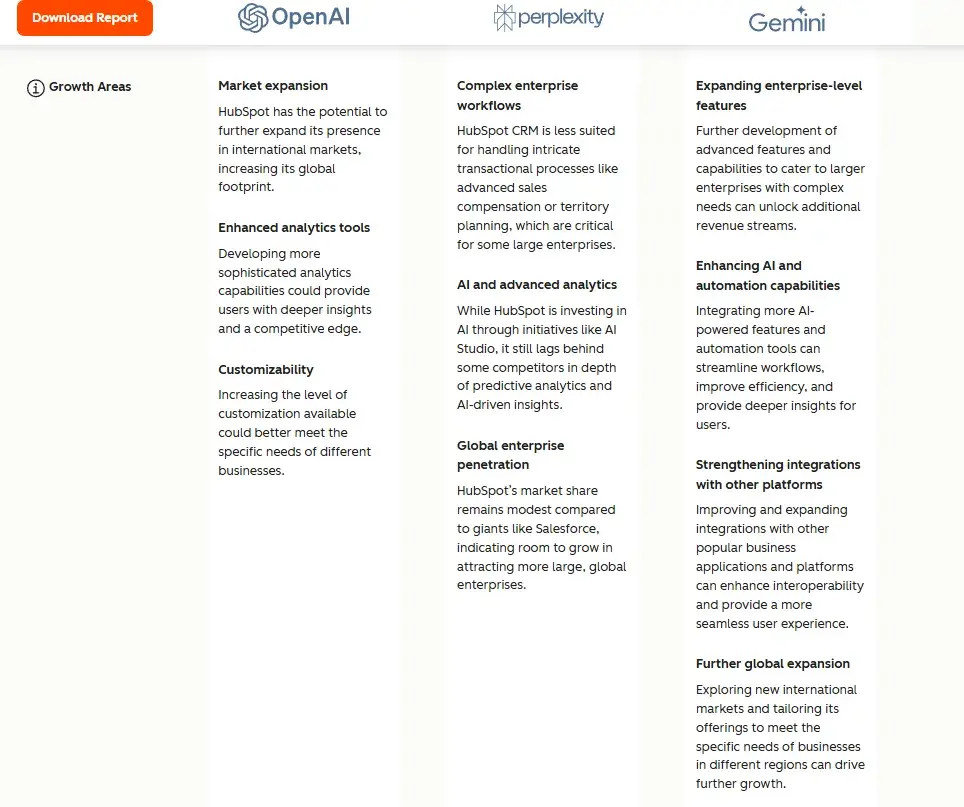
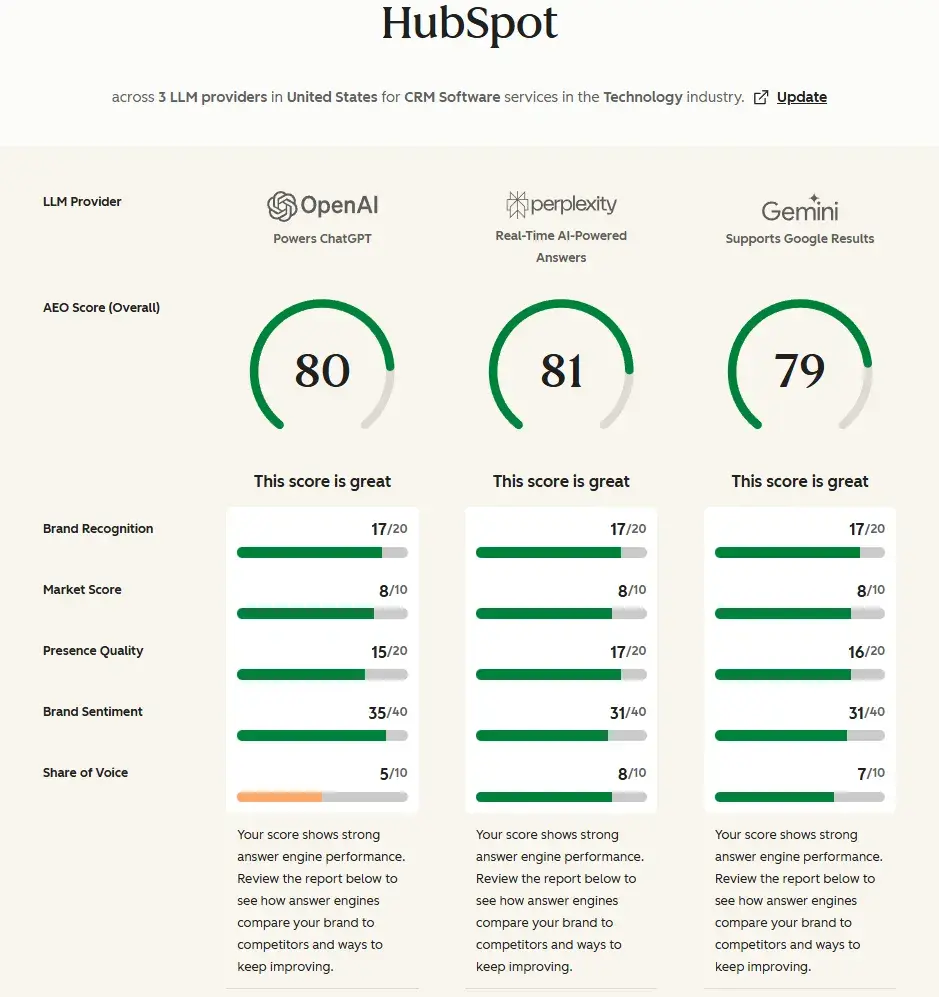
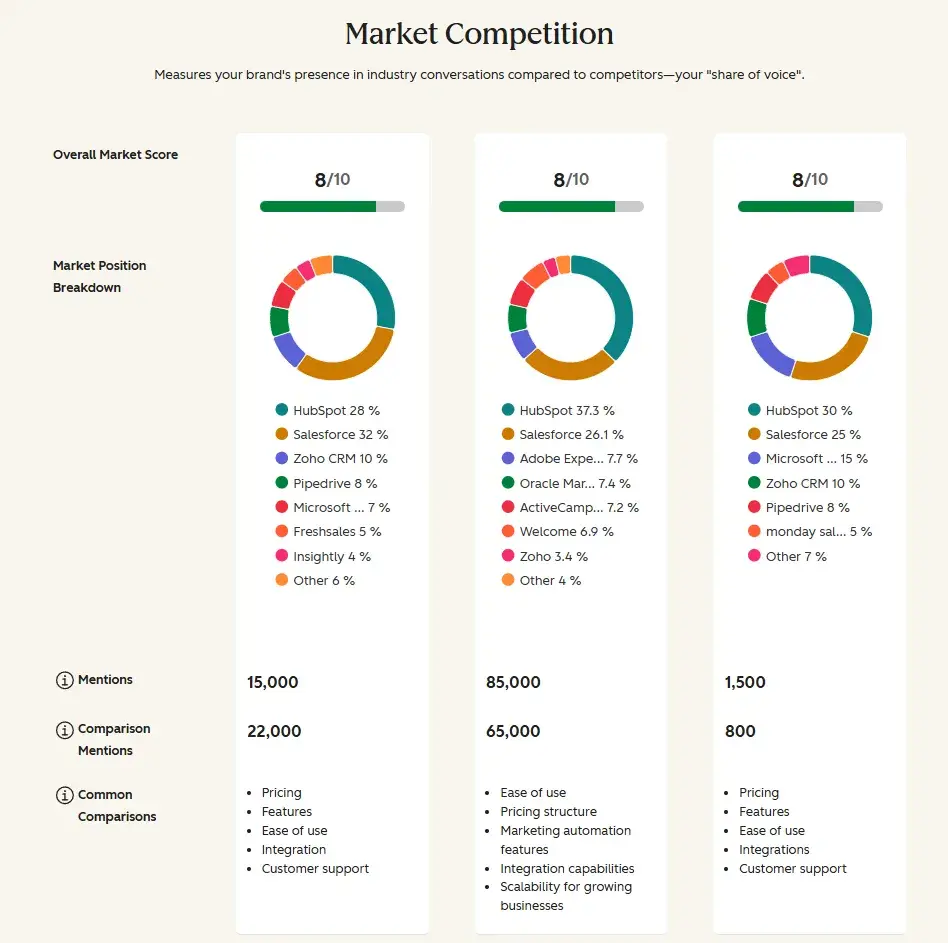
- Overview: A free diagnostic tool that provides an initial snapshot of any website’s Answer Engine Optimization (AEO) visibility across key AI platforms like ChatGPT, Perplexity, and Gemini. It serves as an excellent starting point for benchmarking.
- Key Strengths: Its zero-cost entry makes it ideal for initial assessment and competitive analysis without financial commitment. It offers structured, easy-to-read reports on competitive positioning, recognition strength, and market trajectory, alongside actionable recommendations for improvement.
- Best For: Teams seeking a free, low-risk baseline assessment of their AI search visibility before investing in paid solutions, or for quick competitive benchmarking.
2. XFunnel (Acquired by HubSpot):
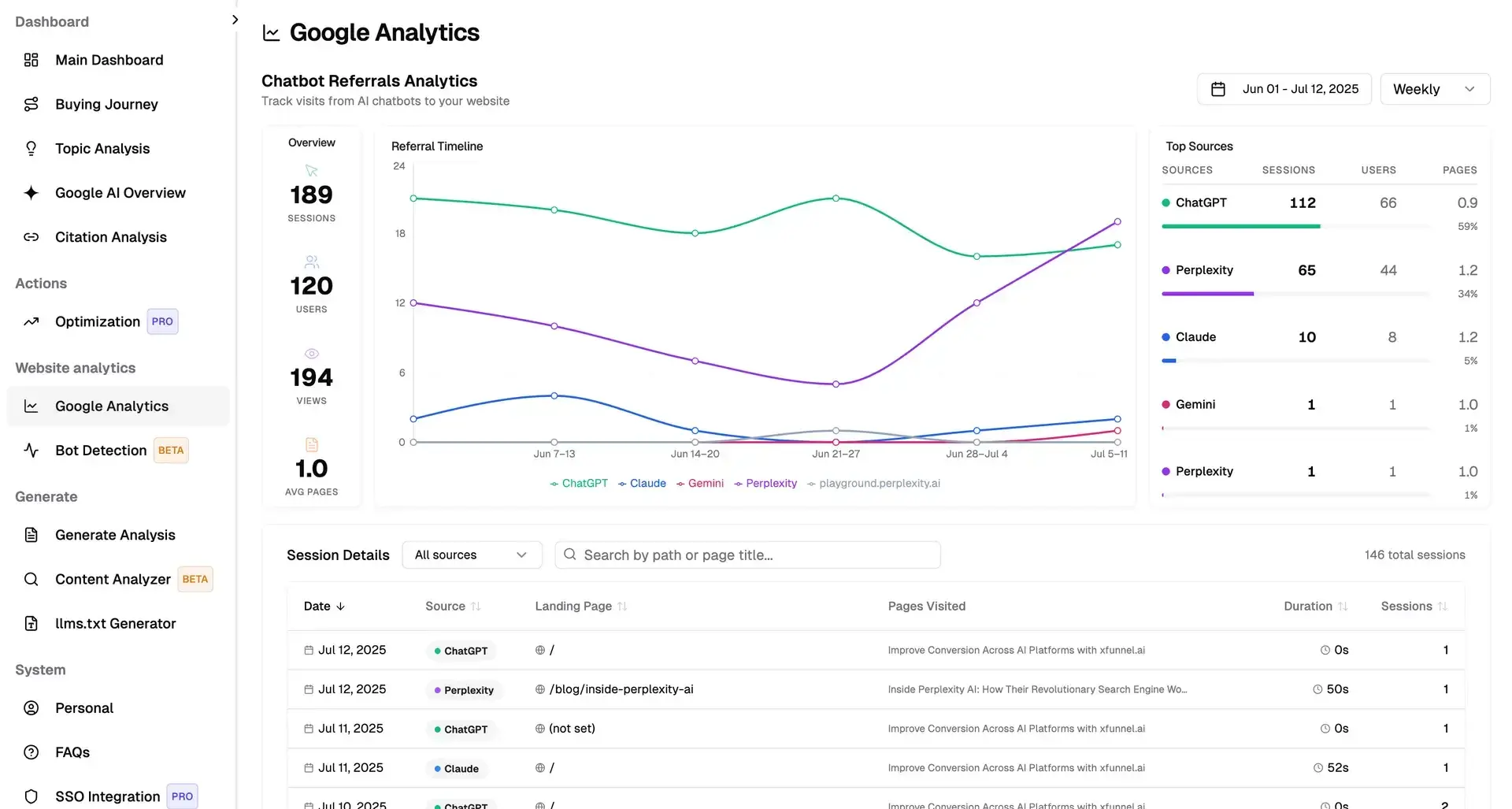
- Overview: Positioned as HubSpot’s advanced solution for in-depth AEO analysis and strategy, XFunnel moves beyond simple tracking to continuous monitoring, competitive intelligence, and controlled experimentation.
- Key Strengths: Features an “AI Query Simulation” engine that uses nine data sources to mimic real buyer queries, mapping the AI-driven customer journey. It integrates directly with Google Analytics 4, linking AI exposure to broader performance metrics. Its strength lies in providing prioritized, actionable AEO recommendations and tracking their impact over time.
- Best For: Enterprise-grade AEO strategy, continuous monitoring, and organizations that view AI visibility as a critical growth channel requiring sophisticated experimentation.
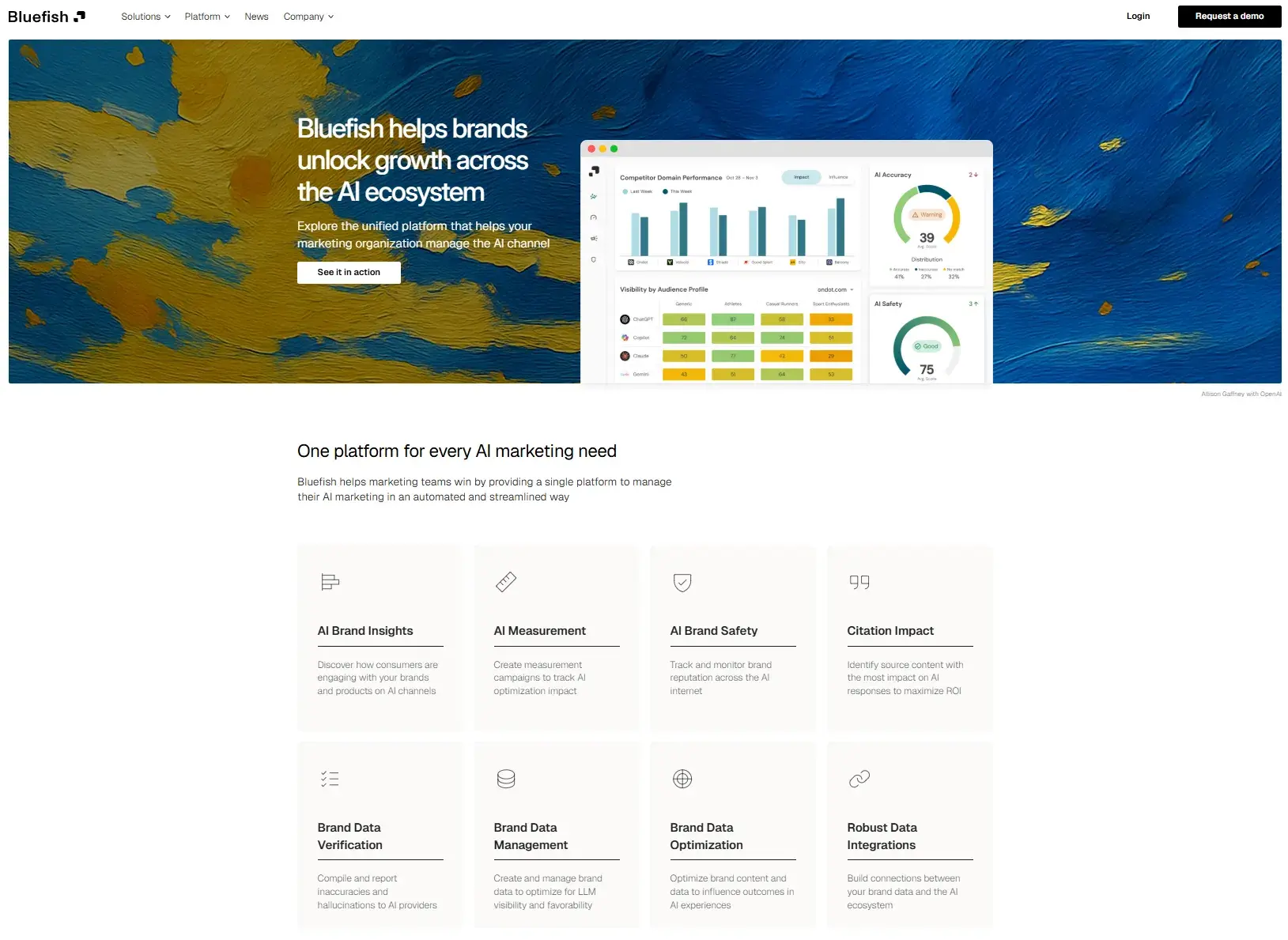
3. Bluefish.AI:
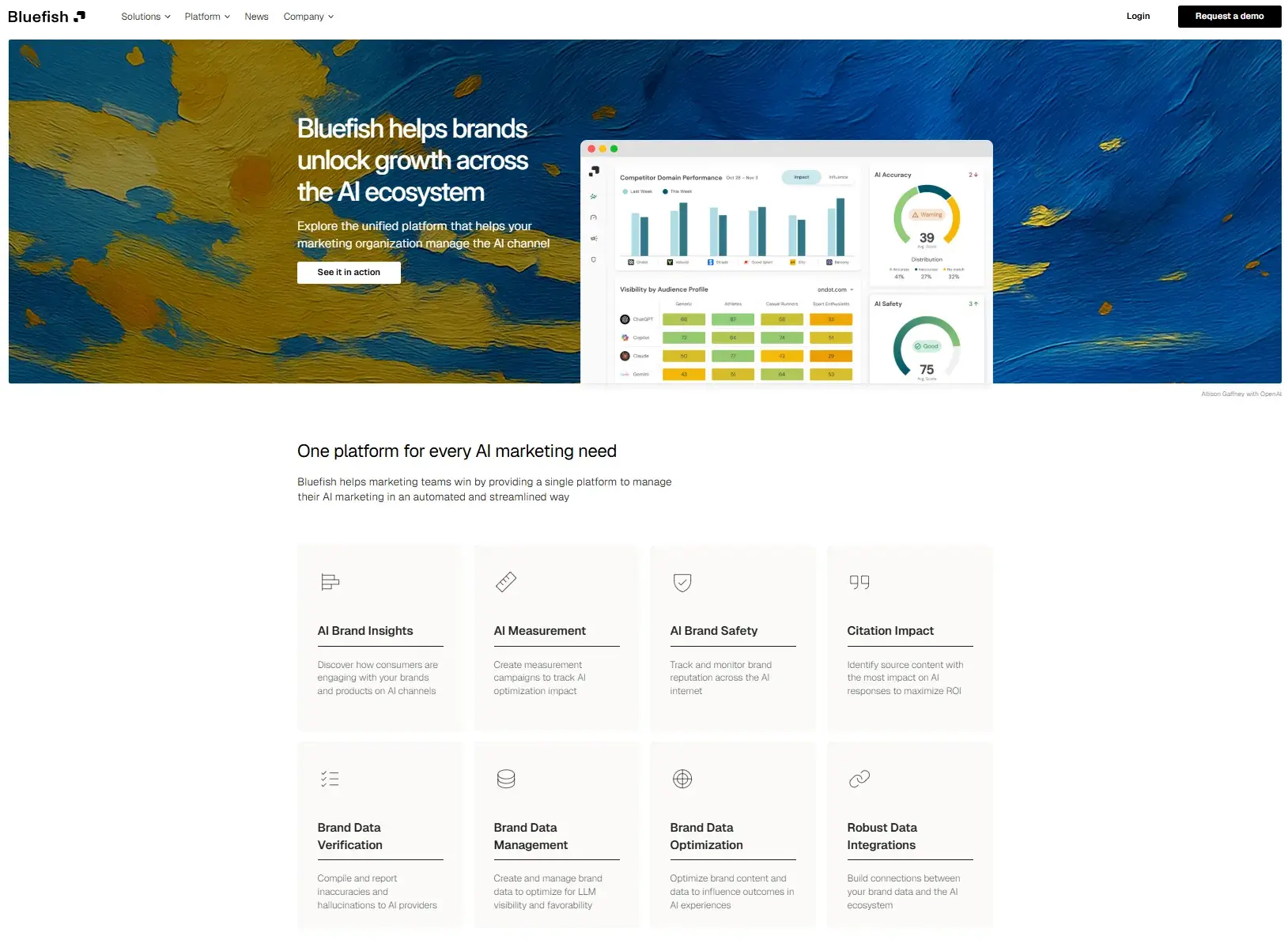
- Overview: An AI visibility and brand safety platform with a strong emphasis on governance, risk management, and ensuring accurate brand representation in AI responses.
- Key Strengths: Differentiates itself by focusing on misinformation alerts, contextual accuracy, and reputational oversight. Its real-time warning system helps marketers quickly address any misrepresentation or inaccurate information surfaced by AI systems.
- Best For: Regulated industries (healthcare, finance, legal) and large enterprises where brand reputation, compliance, and risk management in AI-generated content are paramount.
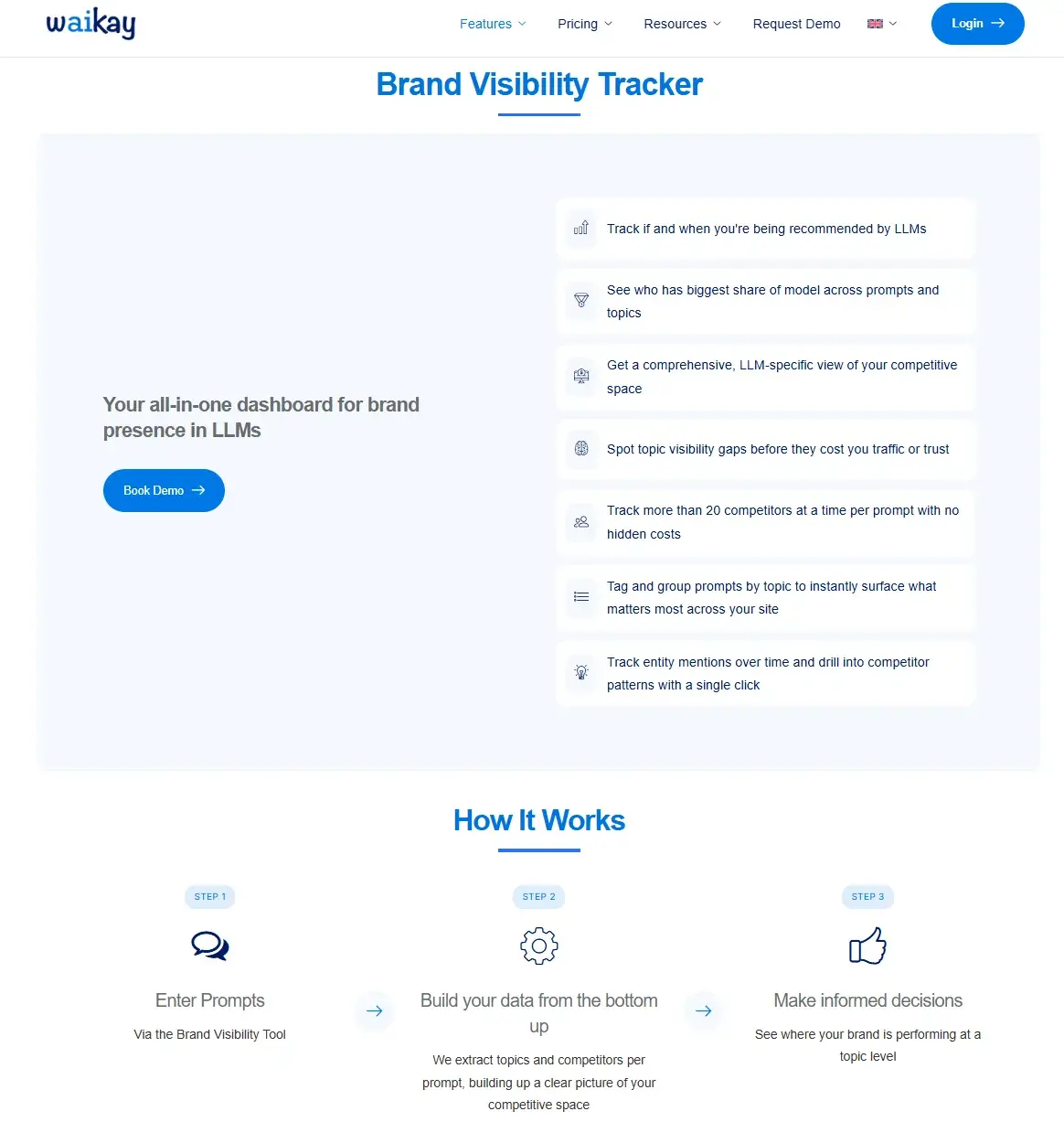
4. Waikay:
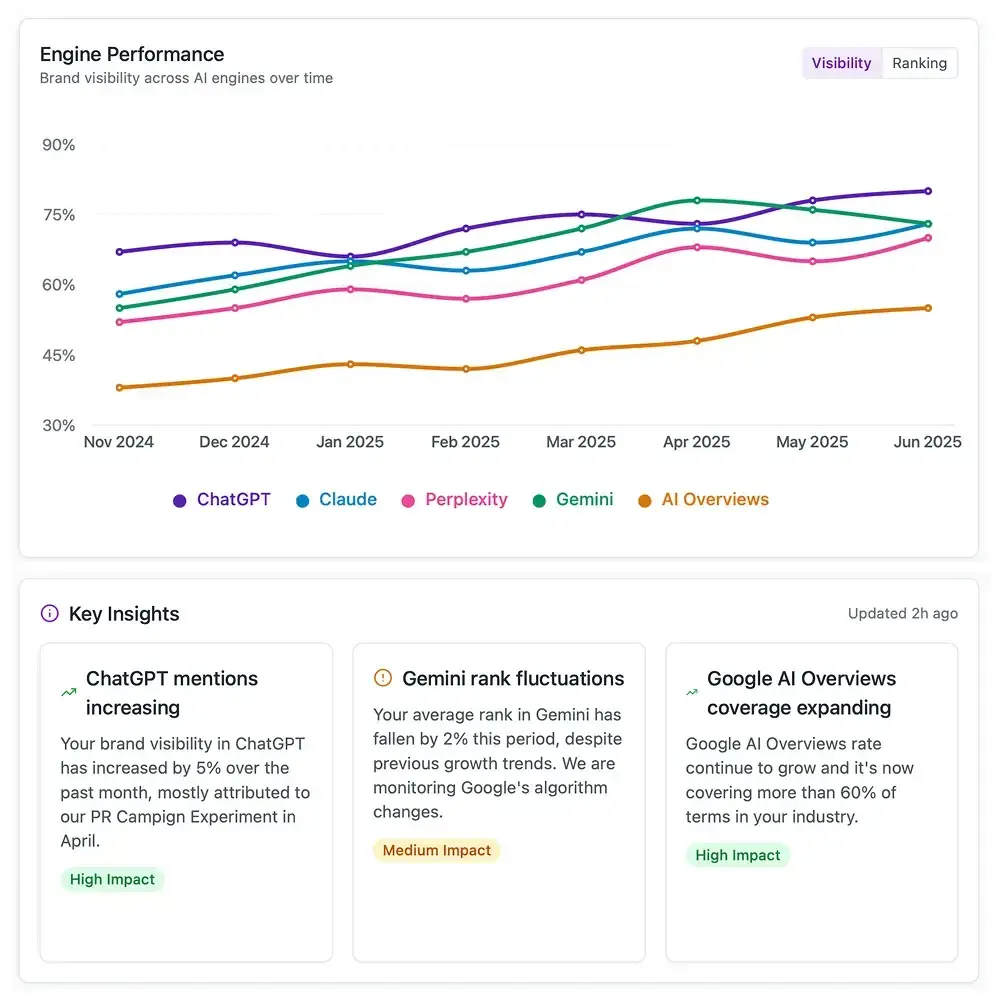
- Overview: Focuses on understanding “what AI systems actually understand and represent about a brand,” rather than just counting citations. It helps identify knowledge gaps in AI models’ comprehension of a brand.
- Key Strengths: Tracks brand presence across LLMs and provides prioritized action plans based on model outputs and underlying source data. It offers insights into the semantic understanding of AI models regarding a brand.
- Best For: Brands keen on auditing the depth of AI understanding of their entity, uncovering subtle knowledge gaps, and strategically influencing AI’s perception of their brand.
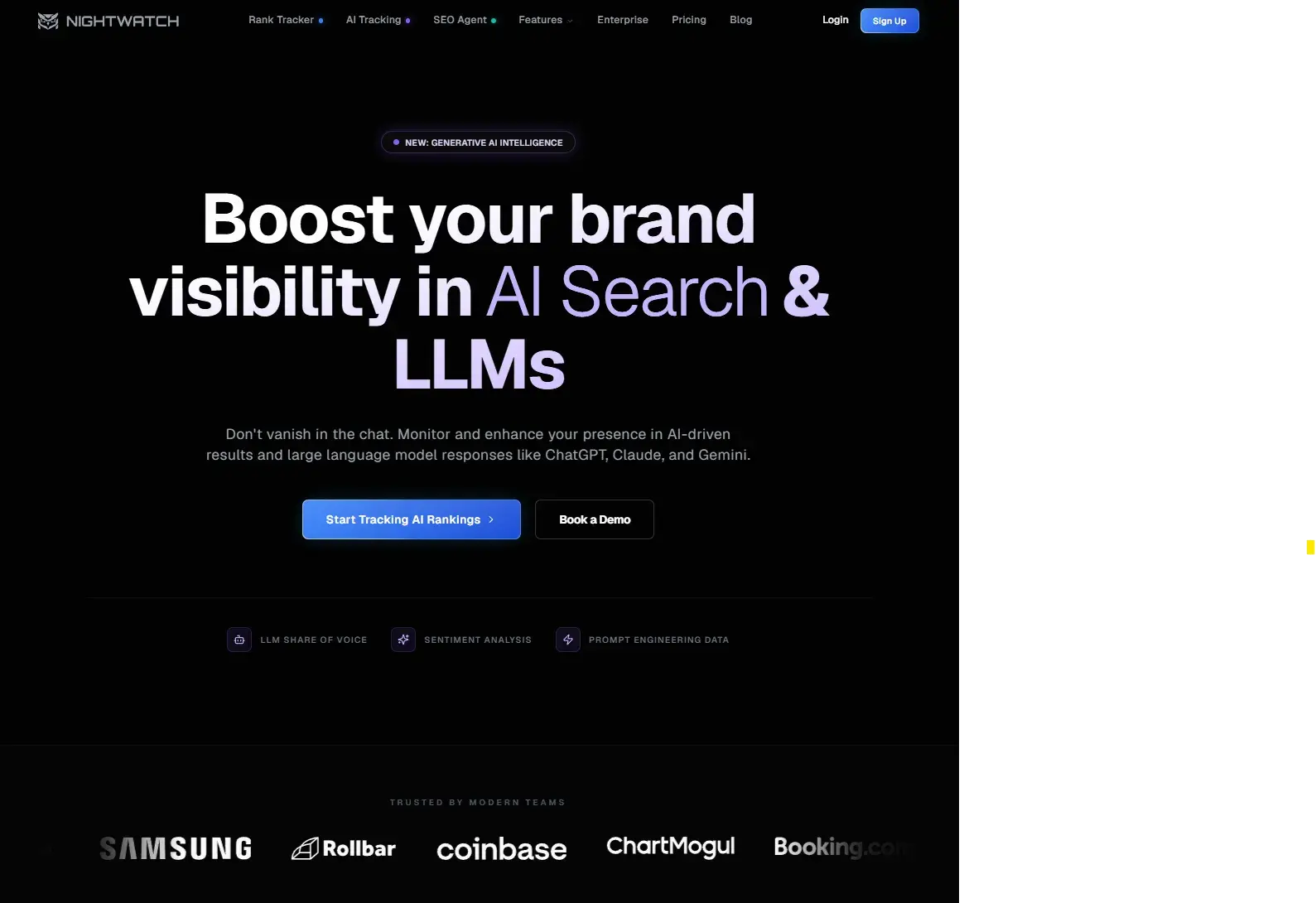
5. Nightwatch:
- Overview: A cost-effective, comprehensive platform combining AI visibility tracking with traditional SEO ranking monitoring, offering breadth across both search paradigms.
- Key Strengths: Unifies multi-model LLM monitoring with rank tracking across over 100,000 global locations, including live web search data. Its pricing model, where AI tracking is an add-on to existing SEO packages, makes it attractive for budget-conscious teams.
- Best For: Marketing teams seeking to consolidate AI visibility and traditional SEO tracking into one affordable platform, especially those with significant regional or global search presence.
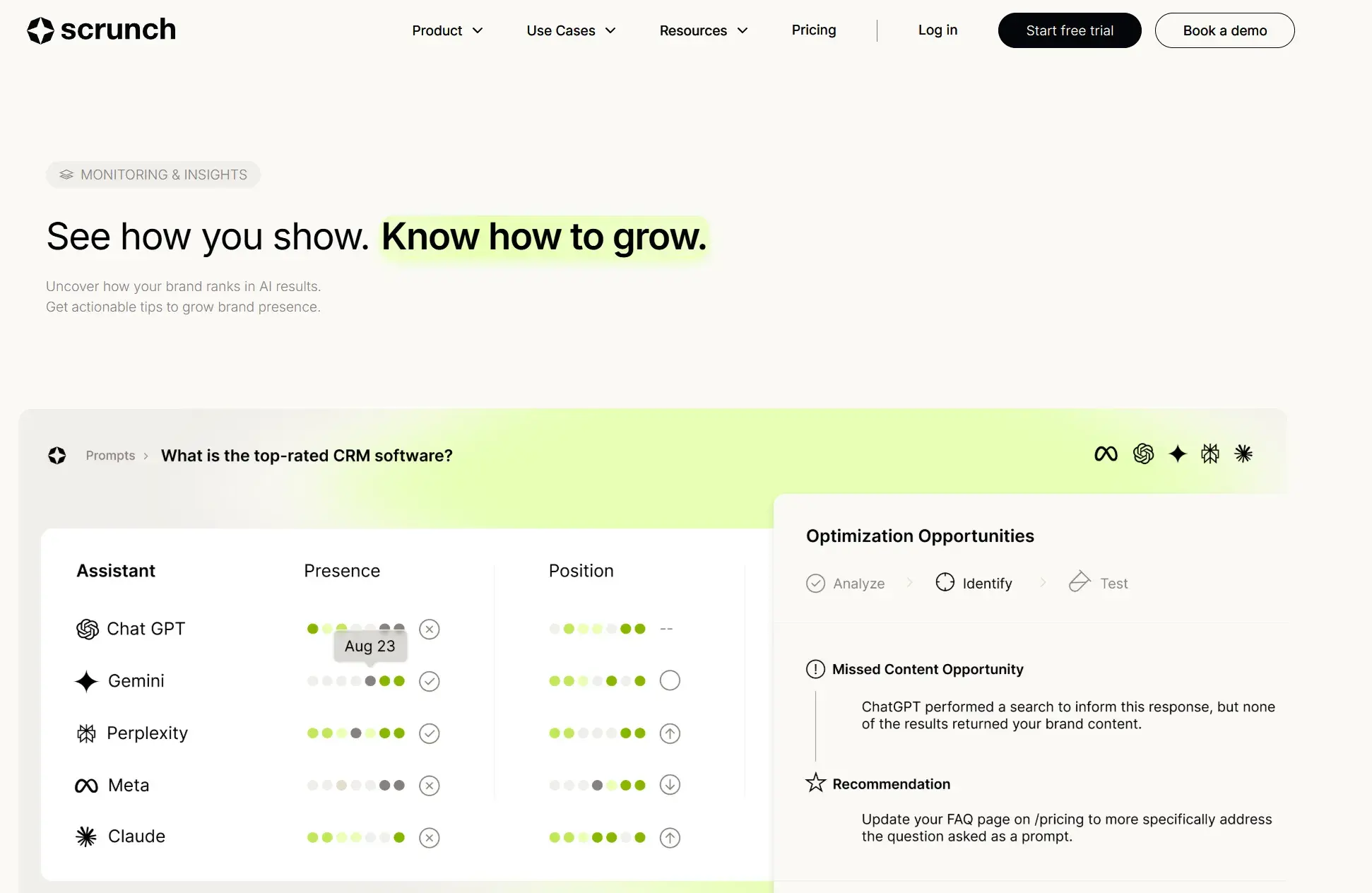
6. Scrunch AI:
- Overview: A brand visibility and optimization platform tailored for the AI search era, tracking how brands appear across various generative AI platforms.
- Key Strengths: Provides visibility into AEO trends, prompt performance, citations, and AI-driven traffic data. Its dashboards offer prompt analytics, competitor insights, and sentiment tracking, alongside early-stage optimization workflows.
- Best For: Mid-market and enterprise teams prioritizing multi-LLM brand visibility, competitor intelligence, and the ability to analyze sentiment within AI-generated responses.
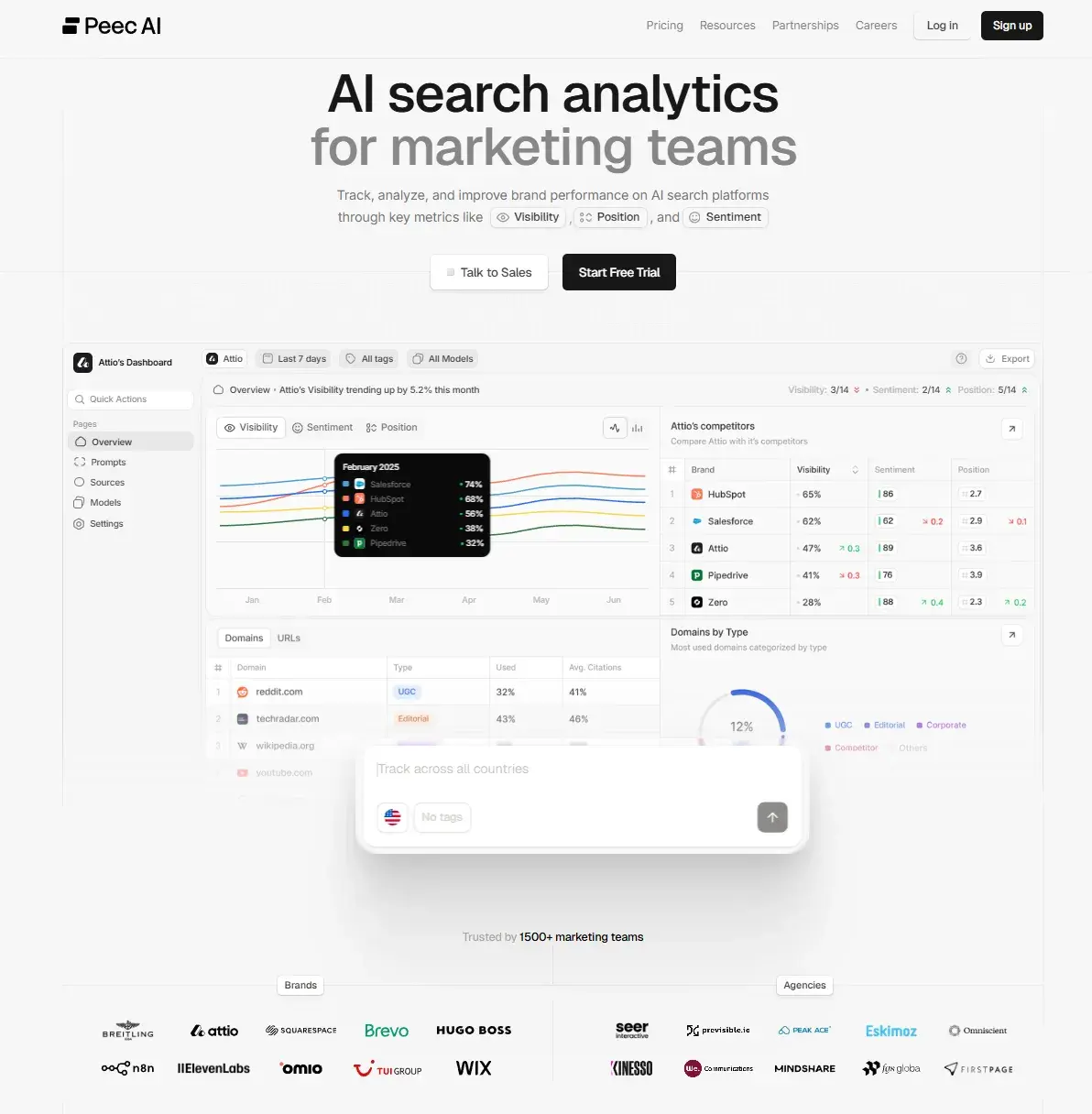
7. Peec AI:
- Overview: A budget-friendly AI visibility and search analytics platform designed for tracking brand appearances in AI-generated responses across ChatGPT, Perplexity, and Google AI Overviews.
- Key Strengths: Offers clear dashboards, competitive benchmarking, and structured recommendations at a more accessible price point than many competitors. It provides a practical middle ground for startups and mid-market teams.
- Best For: Cost-efficient multi-platform AI visibility tracking for startups, small to medium-sized businesses, and agencies looking to validate AEO performance without enterprise-level investment.
8. Semrush AIO (AI Overviews):
- Overview: An extension of the comprehensive Semrush SEO suite, now fully integrated with AI search landscape tracking, including Google AI Overviews, LLMs, and traditional SERP features.
- Key Strengths: Leverages Semrush’s deep and trusted search data infrastructure. It offers a unified view of traditional SEO performance alongside AI visibility, including keyword tracking, competitive analysis, and content optimization tools.
- Best For: Teams already using Semrush for SEO, or those seeking a comprehensive, industry-leading platform that seamlessly integrates both traditional SEO and advanced AI visibility tracking.
Expert Perspectives on Tool Selection and Implementation
Industry analysts emphasize that the “best” AI visibility tool is not a universal constant but rather a strategic alignment between a company’s unique needs, budget, and operational capabilities. “The biggest mistake marketers can make is investing in a sophisticated tool that doesn’t fit their team’s existing workflows or budget constraints,” notes a hypothetical marketing strategist. “Scalability, integration, and the ability to translate data into tangible actions are far more critical than an endless list of features.”
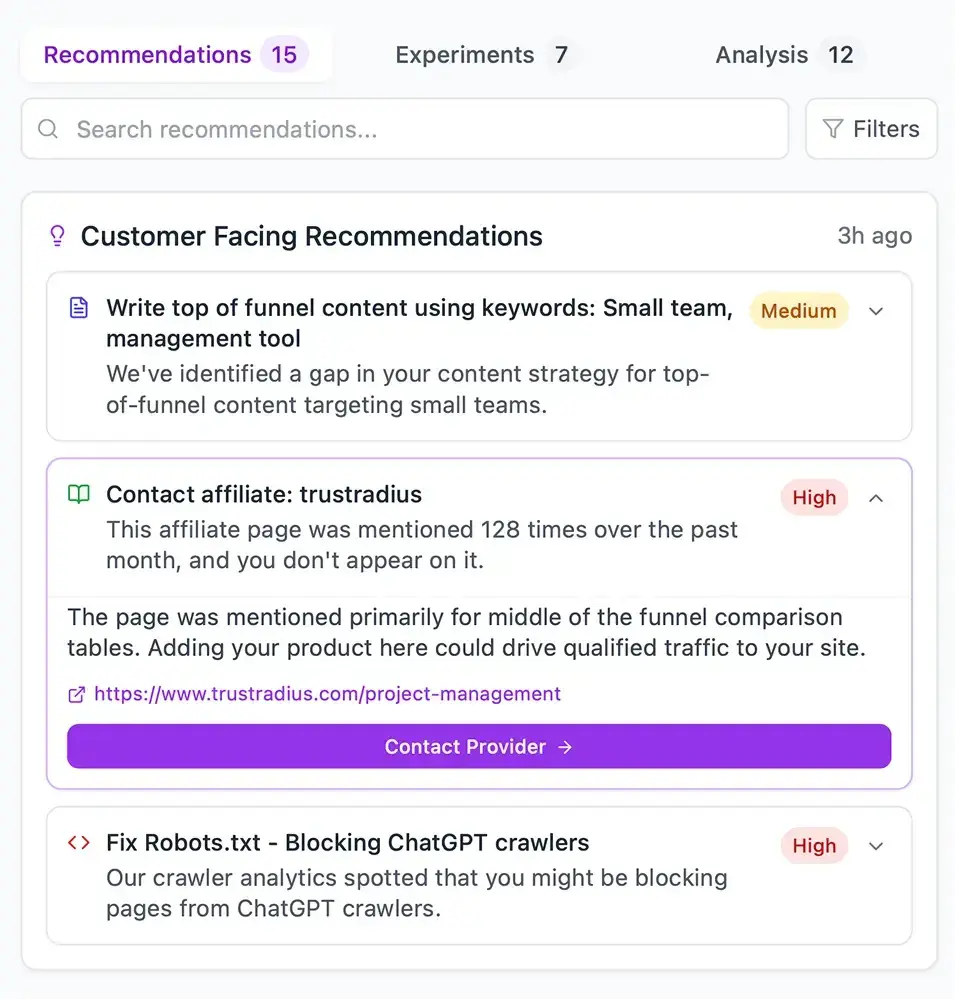
Finance leaders, often wary of fragmented tech stacks, echo the call for integrated solutions. “Every new tool adds to the operational overhead and demands clear ROI,” comments a hypothetical CFO. “Platforms that consolidate capabilities or integrate seamlessly with our CRM and analytics systems will always be prioritized, as they offer a clearer path to measurable business impact.” The consensus points towards solutions that not only track AI visibility but also empower marketing teams to act on those insights efficiently, avoiding data silos and reporting friction.
Strategic Considerations for Choosing an AI Visibility Solution
Selecting the right Profound AI alternative requires a methodical approach, moving beyond surface-level features to evaluate long-term fit:
- Budget and Pricing Structure: Look beyond the initial monthly fee. Scrutinize seat limits, prompt usage caps, regional add-on costs, data export restrictions, and how pricing scales with expanded monitoring needs. A seemingly cheaper option might become expensive quickly with growing requirements.
- Platform Coverage (LLMs and AI Search Engines): Confirm that the tool monitors the specific AI platforms where your target audience actively searches and consumes information. A tool focused solely on ChatGPT might miss critical brand mentions in Google AIO or Perplexity if those are dominant for your industry.
- Reporting Cadence and Export Capabilities: Assess how frequently data is updated and the flexibility of reporting. Can reports be customized for different stakeholders (e.g., SEO managers, CMOs, sales teams)? The ability to export data for deeper analysis or integration with business intelligence tools is crucial for actionable insights.
- Region Complexity and Prompt Localization: For global brands or those targeting diverse geographic markets, the ability to conduct location-based testing and use multilingual prompts is non-negotiable. Generic monitoring will fail to capture regional nuances in AI responses.
- Integration and Workflow Activation: The most effective AI visibility tools are those that integrate seamlessly into existing marketing and sales workflows. This means connecting insights to content creation platforms, CRM systems, and analytics tools. Platforms that enable marketers to move from “measurement” to “action”—such as generating content briefs from AI insights or automating tasks based on visibility data—offer superior value.
The Broader Implications: Redefining Content and Brand Strategy in the AI Era
The rise of AI search is not merely a technical update; it represents a fundamental redefinition of content strategy and brand management. Marketers must now prioritize “answer-ready” content—information that is concise, authoritative, and easily extractable by LLMs to form coherent answers. This necessitates a deeper understanding of user intent, a focus on factual accuracy, and a commitment to clear, structured data.
Proactive brand reputation management also takes on new urgency. With AI models synthesizing information from vast swathes of the internet, the potential for misinformation or misrepresentation of a brand within an AI-generated answer is significant. Tools that offer real-time alerts and sentiment analysis become critical for mitigating brand risk.
Ultimately, the competitive advantage in the AI era will belong to brands that not only track their AI visibility but also integrate these insights into a cohesive marketing strategy. This involves a convergence of traditional SEO, content marketing, public relations, and customer experience, all orchestrated to ensure that a brand is not just seen, but accurately and favorably represented, wherever and however customers seek answers.
Frequently Asked Questions About Profound Alternatives
What is the best alternative to Profound?
There isn’t a single “best” alternative; the ideal choice depends on your specific goals, budget, and existing tech stack. For comprehensive SEO and AI visibility, enterprise suites like Semrush AIO are strong. For pure multi-LLM monitoring and prompt testing, Peec AI or Bluefish.AI might be better suited. For a free starting point, HubSpot’s AEO Grader is excellent.
How much does Profound AI cost?
Profound AI’s tiered pricing starts at approximately $82.50/month for the Starter package (billed annually). The Growth package is around $332.50/month (billed annually). Custom Enterprise pricing applies for higher-tier needs.
Are there any free AEO tools similar to Profound?
Yes, HubSpot’s AEO Grader is a free AEO tool that provides a baseline diagnostic for AI search visibility. While useful for initial benchmarking, free tools typically lack the sustained monitoring, advanced features, or comprehensive export capabilities of paid platforms.
What tool should I use instead of Profound for small businesses?
Small businesses often benefit from more affordable or integrated platforms. Peec AI and Nightwatch offer more budget-friendly options for AI visibility. However, a comprehensive all-in-one SEO suite like Semrush One, which now includes AI tracking, can be more cost-effective in the long run by consolidating multiple tools.
Is Scrunch AI or Peec AI a better alternative to Profound?
Both Scrunch AI and Peec AI are viable alternatives. Peec AI excels in cost-efficient, multi-LLM monitoring and competitive benchmarking, making it strong for cross-platform visibility. Scrunch AI focuses on multi-LLM brand visibility, prompt analytics, and competitor insights, often with a broader scope that includes sentiment tracking. The “better” choice depends on whether your priority is budget-friendly, comprehensive monitoring (Peec AI) or more detailed brand/competitor insights (Scrunch AI).
Turn AI visibility into measurable growth.
The ability to track and influence a brand’s presence in AI-generated answers is rapidly transitioning from a nascent curiosity to a critical competitive advantage. However, mere tracking is insufficient; the true value lies in transforming these insights into actionable strategies that refine messaging, optimize content, prioritize relevant topics, and inform campaign planning.
For marketing leaders navigating this new frontier, starting with a foundational understanding is paramount. HubSpot’s AEO Grader offers a valuable, free baseline diagnostic of AI search visibility, allowing teams to benchmark their current standing without immediate financial commitment. This initial assessment provides clarity on how AI visibility currently impacts brand discovery and highlights existing gaps. With this data, marketers can make informed decisions about the necessity of advanced multi-LLM monitoring, region-based prompt analysis, or deeper reporting capabilities.
In practical terms, the most effective tools are those that are consistently utilized and seamlessly integrated into existing workflows. Investing in sophisticated platforms that subsequently gather dust on virtual dashboards represents a missed opportunity. Building internal adoption and embedding AI visibility tracking into routine reporting cycles, content planning, and campaign execution are crucial steps. When AI insights become an intrinsic part of daily operations, they cease to be isolated metrics and instead become powerful drivers of measurable growth, ensuring that brands remain discoverable, relevant, and authoritative in the ever-evolving landscape of AI-powered search.