Doug Lauretano, a seasoned veteran of the digital advertising landscape, has launched Tuple, a new Demand-Side Platform (DSP) aimed at tackling what he describes as a pervasive "trust gap" within the programmatic ecosystem. Lauretano, whose career spans prominent publishers like Fortune, The Wall Street Journal, and CNN Money, and includes significant tenures at supply-side programmatic giants OpenX and Media.net, identified the deep-seated animosity between the buy and sell sides of programmatic advertising during his time at data and advertising company CivicScience. It was while developing a deal ID and curation product at CivicScience that Lauretano gained firsthand insight into the mechanics of DSPs, leading him to the stark conclusion that "what I saw was pretty ugly."
This disillusionment with the status quo has propelled Lauretano to establish Tuple, which officially went live in March 2026. While the startup currently serves a modest eight customers, including an enterprise mobile brand that spoke to AdExchanger under condition of anonymity, its emergence signifies a growing sentiment for transparency and efficiency in a sector increasingly bogged down by complexity and mistrust.
The Fractured Landscape of Programmatic Advertising
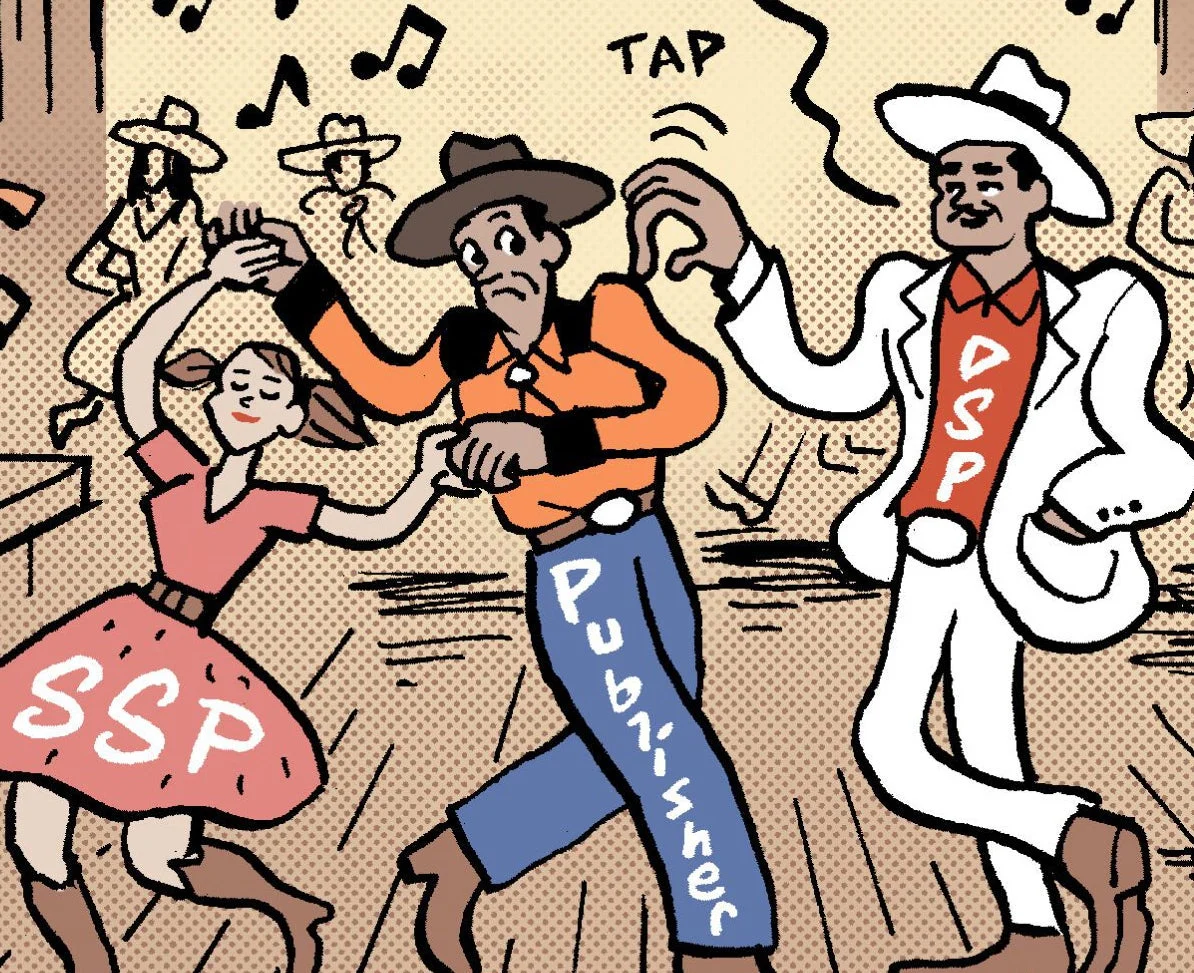
The launch of Tuple occurs at a critical juncture for third-party ad tech, a period characterized by heightened tension and technical evolution. Lauretano articulates this tension as a significant "animosity" between programmatic buyers and sellers. This animosity manifests in various ways, such as The Trade Desk’s controversial reclassification of Supply-Side Platforms (SSPs) as "resellers," a move perceived by many in the industry as an attempt to diminish the SSPs’ role and perceived value. Conversely, SSPs have been accused of employing tactics like "ID bridging" to illicitly inflate bid prices and circumvent crucial frequency capping rules, further eroding confidence.
"It’s almost like one is constantly trying to trick the other," Lauretano observed, painting a picture of an adversarial relationship rather than a collaborative one. This dynamic is further exacerbated by the rapid integration of artificial intelligence (AI) and the rise of cloud-based ad tech infrastructure, a trend often referred to as "containerization." This technological shift is enabling DSPs, custom algorithm providers, and even media buyers themselves to embed their algorithms directly within SSPs, bypassing the traditional DSP account seat for bidding.
Technical Upheaval and the Erosion of Visibility
Lauretano argues that these two trends—the inherent mistrust and the technical upheaval—are intrinsically linked. A significant contributor to the distrust between DSPs and SSPs stems from the opacity surrounding impression curation and throttling. SSPs, managing vast quantities of ad impressions, often ration the inventory they present to individual DSPs as a cost-management measure for handling global-scale traffic. This inherent throttling means that a DSP, and by extension its advertiser, may only see a fraction of the total available impressions, even for inventory that would perfectly align with campaign objectives.
Containerized bidding models, however, offer a potential solution by allowing buyers to witness every impression as it emerges from the SSP, circumventing the traditional query-per-second limitations that govern DSP-SSP interactions. This direct access can significantly enhance transparency and control. Lauretano emphasizes that establishing trust between buyers and SSPs is "almost as important" as the technical advancements themselves, suggesting that without trust, even the most sophisticated technology can fall short of its potential.
Tuple’s Differentiated Approach: Quality Over Quantity
Tuple’s strategic positioning in this complex market is rooted in its deliberate departure from the conventional DSP model. Unlike legacy DSPs that integrate with hundreds, if not thousands, of SSPs in a seemingly haphazard manner, Tuple is adopting a highly curated approach. Currently, Tuple is integrated with a single SSP: Media.net. This choice is driven by Lauretano’s existing familiarity and high degree of trust in the Media.net team and their deal ID setups.
"In the short term, Tuple may work with as many as five SSPs," Lauretano stated, "but the sweet spot will be to eventually work with just three SSPs, which will allow it to have visibility into every programmatically available impression." This strategy is based on the premise that a concentrated number of SSPs can indeed provide access to the vast majority of valuable programmatic inventory. Lauretano contends that "there are so few with exclusive supply," meaning that focusing on a select few high-quality SSPs can capture most of the relevant inventory without the redundancy and complexity of broader integrations.
The emphasis is on seeing each impression, but crucially, only once. Adding more SSPs, Lauretano believes, would not necessarily yield significant incremental supply and would only create unnecessary duplication and complexity for advertisers.
Reclaiming Transparency in AI-Driven Optimization
Lauretano also directs criticism at the prevalent use of "walled-garden-esque AI features" within many DSPs. He characterizes these as largely "black-box" products where advertisers input desired outcomes and bid prices, leaving the platform to manage the rest. This approach, he argues, forfeits one of the key advantages of walled gardens: enabling advertisers to optimize campaigns without needing sophisticated internal systems to navigate a tangled web of duplicate impressions and varying SSP responses.
"A platform with as little noise as possible has the best chance of being the best performer," Lauretano asserted. He further elaborates that AI-based optimization products in existing DSPs often sacrifice transparency. This lack of transparency is not confined to the largest players like Google’s Performance Max but is also prevalent among third-party programmatic DSPs.
For instance, even with an AI model operating within a traditional DSP, an advertiser might be unaware that conversions are primarily originating from a specific geographic region, like California, when their campaign objective is to expand into other markets. The DSP’s AI might also prioritize cheaper display ads, even if the advertiser expects higher-quality inventory. Lauretano explains that AI models are designed to follow performance metrics as they perceive them, potentially disregarding explicit buyer preferences without the buyer’s knowledge.
"When a DSP takes that access and visibility away from its buyers, it commits ‘the original sin’ of legacy tech," Lauretano concluded, directly linking this opacity to the need for agile startups like Tuple to emerge and offer a more transparent and controllable alternative.
The Underpinnings of Trust: A New Paradigm
Tuple’s operational philosophy is built on the principle that true programmatic efficiency is not merely about accessing the most inventory but about accessing the right inventory with maximum clarity. By intentionally limiting its SSP integrations, Tuple aims to achieve a level of transparency that is difficult to attain in the current multi-SSP, multi-DSP environment. This curated approach allows Tuple to:
- Enhance Visibility: With fewer, trusted SSP partners, Tuple can gain a more comprehensive view of the available inventory, reducing blind spots and the potential for missed opportunities.
- Minimize Redundancy: By avoiding integrations with hundreds of SSPs, Tuple sidesteps the issue of bidding on duplicated impressions, which can inflate costs and dilute campaign effectiveness.
- Improve Algorithm Performance: A cleaner, less noisy data stream allows Tuple’s algorithms to function more effectively. When algorithms are fed data with less duplication and obfuscation, they can make more accurate and impactful decisions.
- Increase Advertiser Control: By providing greater insight into how impressions are sourced and how bids are being placed, Tuple empowers advertisers to make more informed strategic decisions and maintain tighter control over their campaign performance.
Industry Reactions and Future Implications
The launch of Tuple and Lauretano’s candid critique of the programmatic ecosystem have resonated with various industry observers. While official statements from incumbent DSPs and SSPs remain scarce, the underlying issues of trust and transparency are widely acknowledged as critical challenges. Some industry analysts suggest that Tuple’s model, while potentially limiting in terms of immediate reach, could set a precedent for more quality-focused partnerships between DSPs and SSPs.
"The programmatic advertising market has been characterized by a race to the bottom in terms of cost and a race to the top in terms of complexity," commented Dr. Anya Sharma, a digital advertising strategist at the Global Media Institute. "Startups like Tuple are tapping into a growing demand for clarity and accountability. If they can prove that a more focused approach to SSP integration leads to demonstrably better outcomes and greater advertiser confidence, they could force incumbents to re-evaluate their own strategies."
The increasing adoption of containerization and the ongoing evolution of AI in ad tech further underscore the need for a more transparent framework. As algorithms become more sophisticated, the ability for advertisers to understand and influence their behavior becomes paramount. Tuple’s emphasis on transparency and control, therefore, appears well-timed to address these emerging industry needs. The success of Tuple will likely depend on its ability to scale its curated approach while delivering consistent performance and building a strong reputation for trust within the industry. The coming months will be crucial in observing how this new entrant navigates the complex and often contentious world of programmatic advertising.