The burgeoning digital economy has intensified the need for businesses to maintain robust online presences and engage effectively with their customer bases. At the forefront of this engagement are email marketing platforms, serving as critical conduits for communication, promotion, and relationship building. For many businesses, particularly small to medium-sized enterprises (SMEs) and burgeoning e-commerce ventures, the choice often narrows down to platforms that offer either integrated solutions or deep, specialized functionality. This article delves into a detailed comparison of Wix Email Marketing and Mailchimp, two prominent players in the email marketing sphere, to ascertain which platform best serves varying business needs and growth trajectories. While Wix positions itself as an all-encompassing solution for those whose digital operations are anchored to its website builder, Mailchimp caters to businesses seeking a more sophisticated, dedicated email marketing and automation ecosystem with extensive room for expansion. The fundamental question for prospective users is not merely about feature count, but rather about alignment with current operational workflows and scalability to accommodate future growth in subscriber lists and campaign complexity.
Our analysis will systematically evaluate Wix and Mailchimp across several critical dimensions: pricing models, feature sets, integration capabilities, email deliverability performance, and the quality of customer support. This structured approach aims to provide a clear, objective assessment, empowering businesses to make informed decisions tailored to their unique strategic objectives.
An Executive Summary: Wix vs. Mailchimp at a Glance
Preliminary findings indicate a nuanced landscape where each platform excels in specific areas. Wix generally holds an advantage in pricing and customer support accessibility, presenting a compelling option for businesses prioritizing cost-effectiveness and seamless integration within an existing Wix website infrastructure. Conversely, Mailchimp demonstrates clear superiority in the breadth and depth of its features, extensive integration ecosystem, and robust email deliverability mechanisms.
For entities seeking a straightforward, embedded email marketing tool that operates in harmony with their Wix-built website, Wix emerges as the more appropriate choice. Its integrated nature streamlines day-to-day operations, consolidating scheduling, contact forms, and email marketing within a single dashboard, as highlighted by users like Deinilys T. in July 2026, who praised its ability to "streamline day-to-day operations." This setup is particularly conducive to simple promotional campaigns and site-triggered automations, minimizing the need to juggle multiple tools.
However, for businesses anticipating advanced automation, intricate segmentation, rigorous A/B and multivariate testing, and a broader array of third-party integrations, Mailchimp stands out as the more powerful and flexible option. It represents the quintessential "grow into it" platform, designed for teams whose email marketing demands are expected to evolve into more sophisticated, high-volume strategies. Cristina J., in May 2026, noted Mailchimp’s initial intuitiveness, suggesting its appeal even for those new to advanced email marketing.
Pricing Structures and Value Proposition
The financial implications of an email marketing platform are often a primary consideration for businesses. In a direct comparison, Wix Email Marketing generally presents a more cost-effective solution, particularly at entry-level and higher-volume tiers.
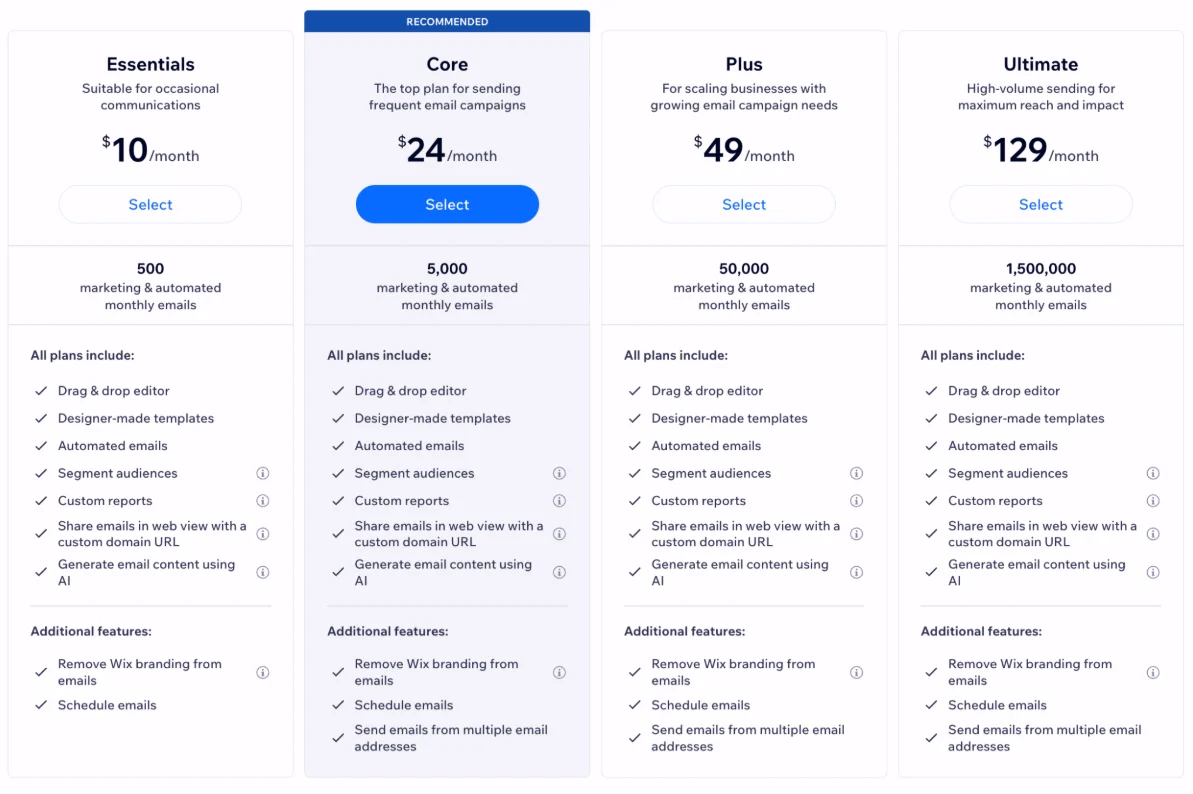
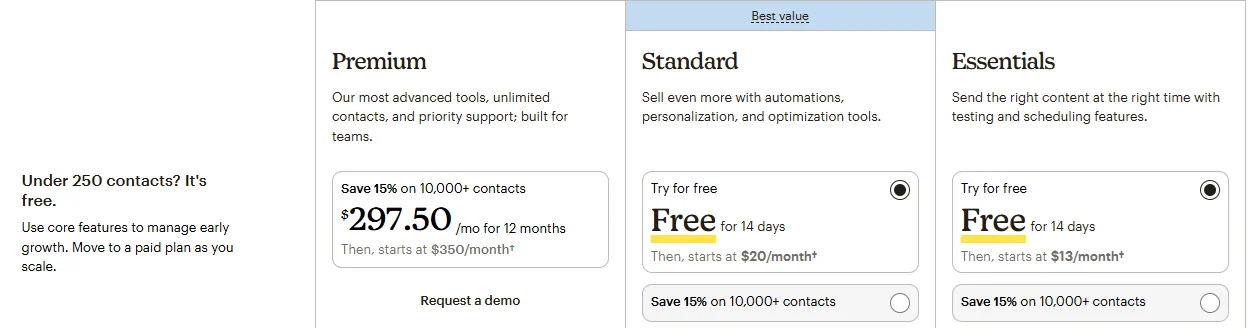
Wix’s Essentials plan starts at $12 per month, offering 500 emails, while Mailchimp’s Essentials plan begins at $13 per month for 500 contacts and 5,000 emails. While this initial difference is marginal, the disparity becomes substantial at higher tiers. For instance, Wix’s Advanced plan at $59 per month provides a generous 1,000,000 emails per month, dwarfing Mailchimp’s Premium plan, which costs $350 per month (or $297.50 for the first year) for 150,000 emails per month.
A critical differentiator lies in their pricing models: Wix employs a flat-rate, email-based system, whereas Mailchimp’s pricing is contact-based. This means Mailchimp’s costs escalate directly with the growth of a subscriber list, irrespective of sending volume, which can lead to rapidly increasing expenses for businesses with expanding audiences but moderate sending frequency. Wix’s model, conversely, is more predictable for businesses with consistent sending patterns relative to their website size.
Both platforms recognize the need for accessibility, offering free plans with limited functionalities. Wix’s free tier allows for 200 emails per month, while Mailchimp’s free plan supports up to 250 contacts and 500 sends per month, providing a foundational entry point for new businesses or those testing the waters.
Wix Email Marketing Pricing Plans:
Wix’s plans are structured to cater to small businesses and those deeply embedded within the Wix ecosystem, emphasizing a low entry cost and transparent email marketing packages.
- Free Plan: 200 emails/month, basic campaign creation.
- Essentials Plan ($12/month): 500 emails/month, enhanced features over free.
- Core Plan ($29/month): 5,000 emails/month, recommended by Wix for covering basics with extra capabilities.
- Advanced Plan ($59/month): 1,000,000 emails/month, comprehensive features for high-volume senders.
Wix also offers multi-year payment options for further discounts and a 14-day money-back guarantee, underscoring its commitment to customer satisfaction. The monthly email balance model ensures that once the limit is reached, new sends halt until the balance resets or an upgrade occurs, making it suitable for businesses whose sending needs align with their site’s scale rather than complex lifecycle programs.
Mailchimp Pricing Plans:
Mailchimp’s contact-based pricing model, while offering greater flexibility for diverse campaign needs, can become significantly more expensive as subscriber lists expand.
- Free Plan: Up to 250 contacts and 500 sends/month, basic features.
- Essentials Plan (starts at $13/month): Includes free plan features plus all email templates, custom branding, A/B testing, and 24/7 email and chat support.
- Standard Plan (starts at $20/month): Builds on Essentials with advanced segmentation, multivariate testing, dynamic content, and send-time optimization.
- Premium Plan (starts at $350/month): Offers the most comprehensive suite, including phone and priority support, advanced audience insights, and robust collaboration tools.
Mailchimp’s model, while providing sophisticated tools, may incur overage charges if contact or sending limits are exceeded, necessitating careful budget management. The platform does offer a two-week trial for Standard and Essentials plans, though the Premium tier lacks a trial option.
Feature Depth: Editor, Templates, Automation, A/B Testing, and Segmentation
While Wix has steadily enhanced its email marketing capabilities, Mailchimp maintains a significant lead in the sophistication and breadth of its features, particularly in areas crucial for advanced digital marketing strategies.
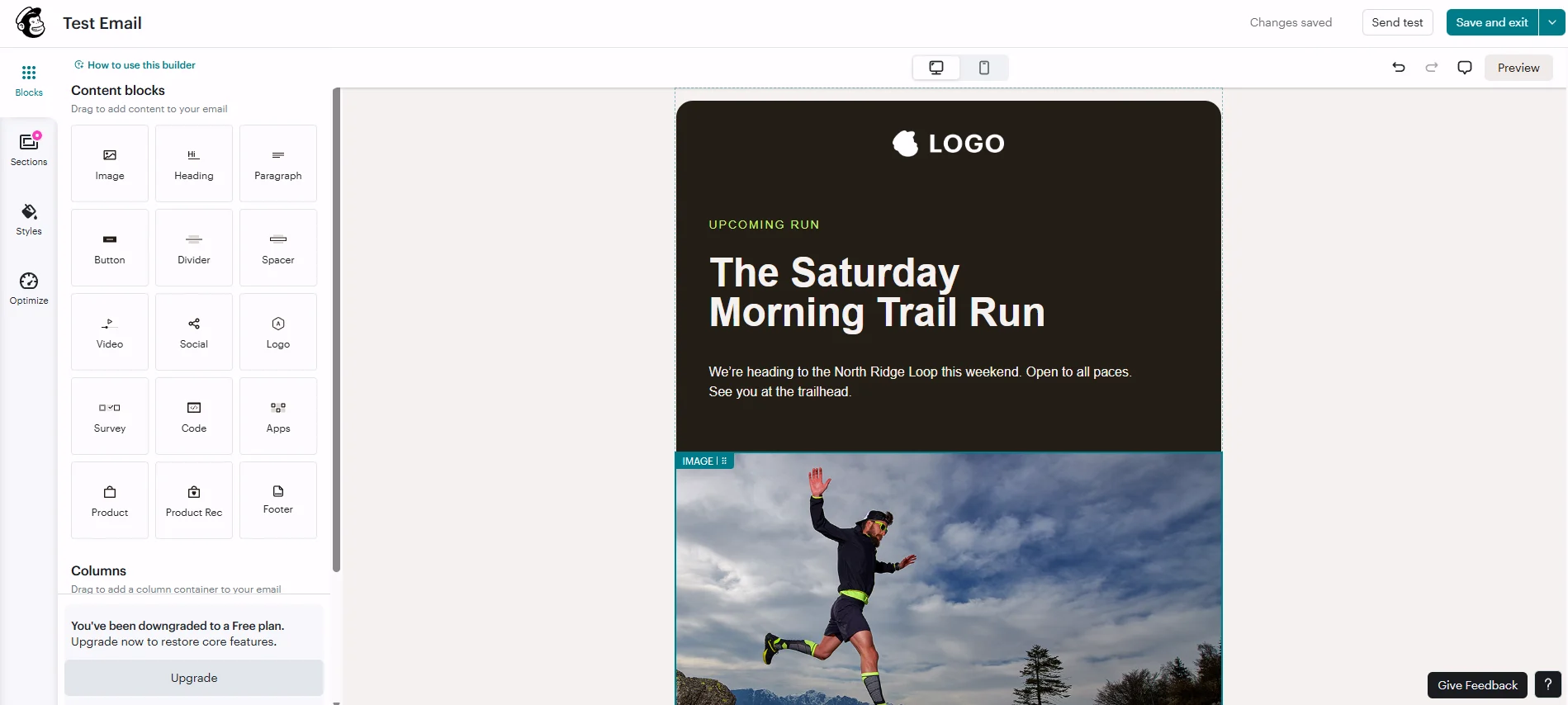
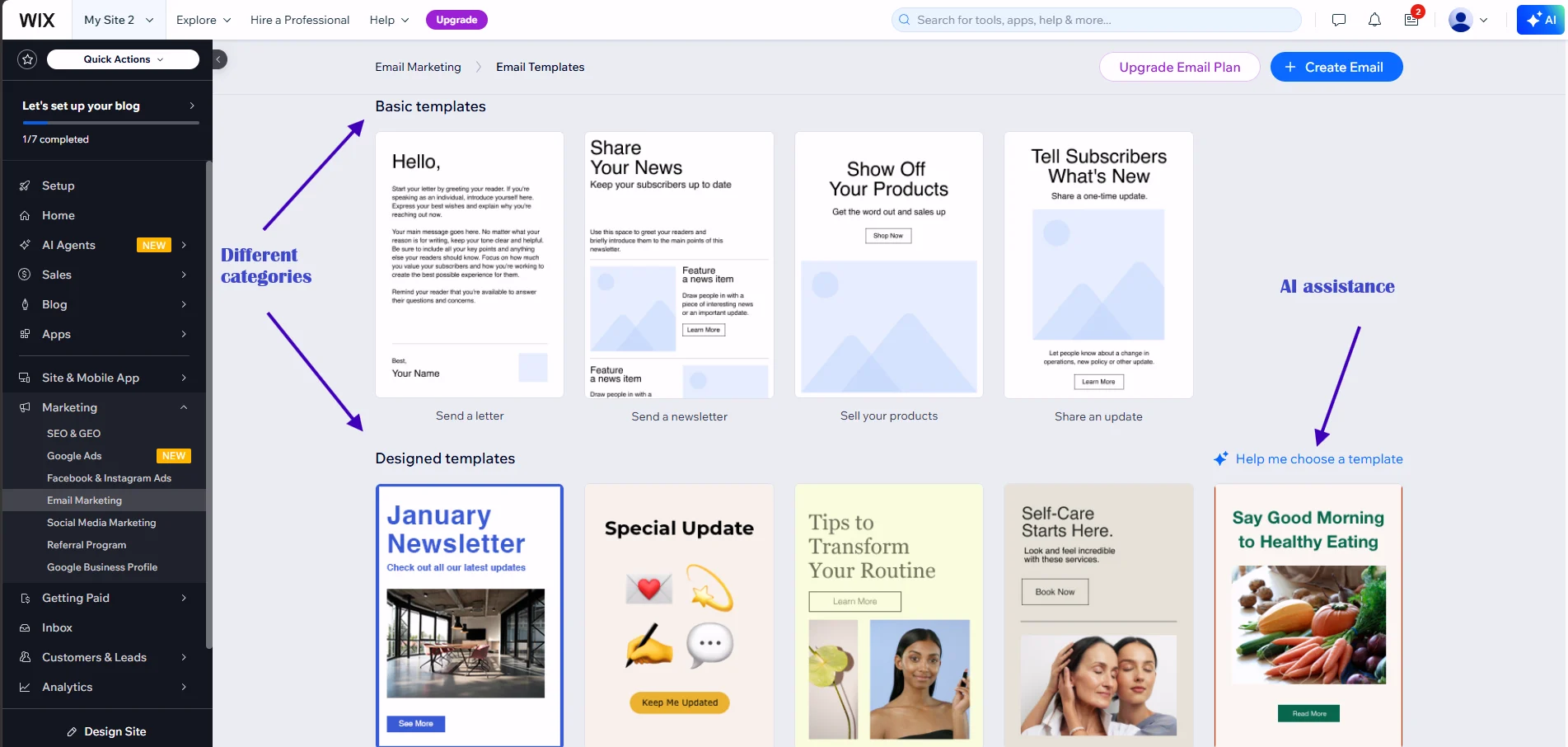
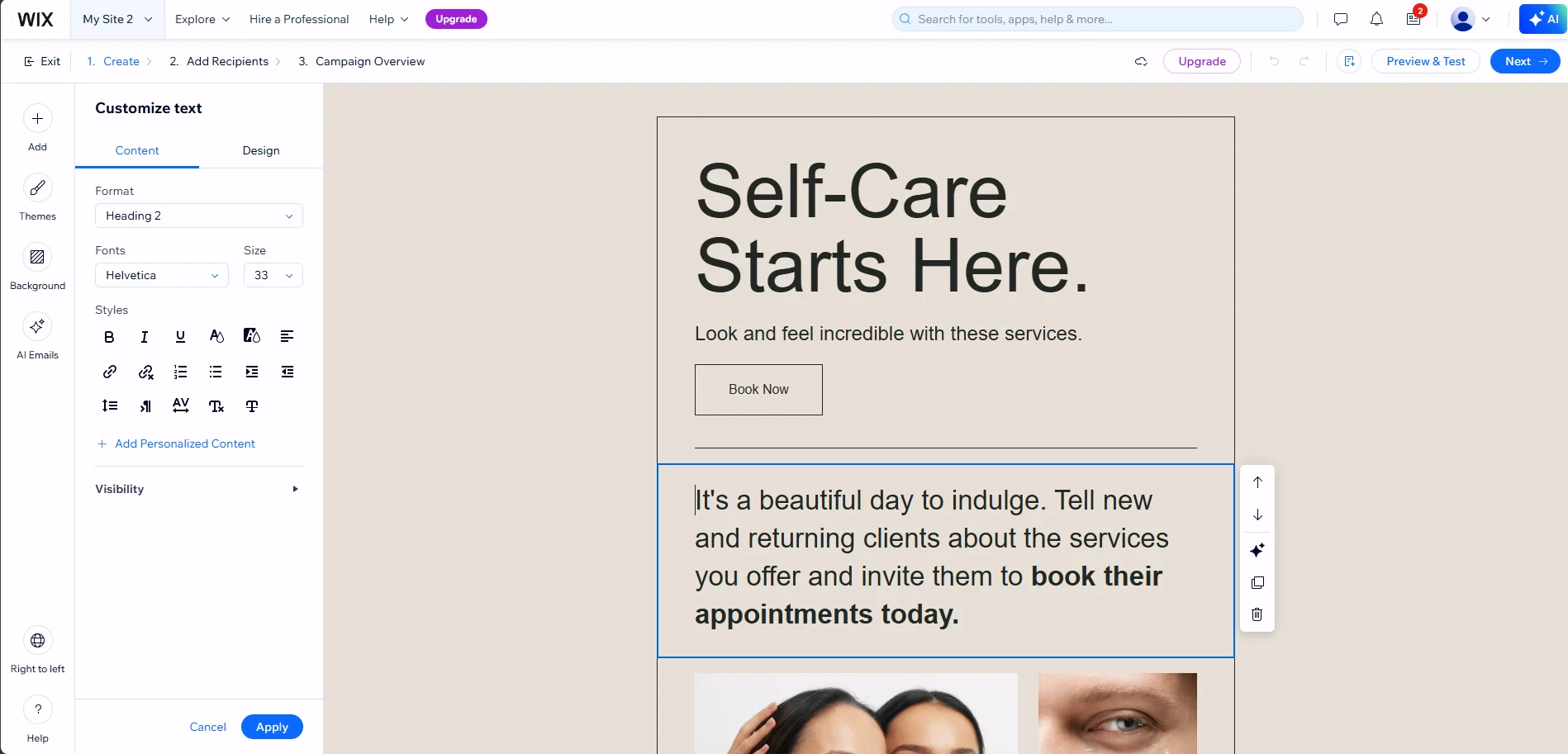
Email Editor: Both platforms utilize intuitive drag-and-drop editors, but their underlying philosophies differ. Wix’s editor is inherently integrated with its website builder workflow, offering a seamless experience for existing Wix users. This approach prioritizes speed and consistency within the Wix ecosystem. Mailchimp’s editor, especially on paid plans, offers more granular control over design, supporting custom-coded and a vast array of pre-built templates, catering to users who demand greater creative freedom and flexibility in their email layouts.
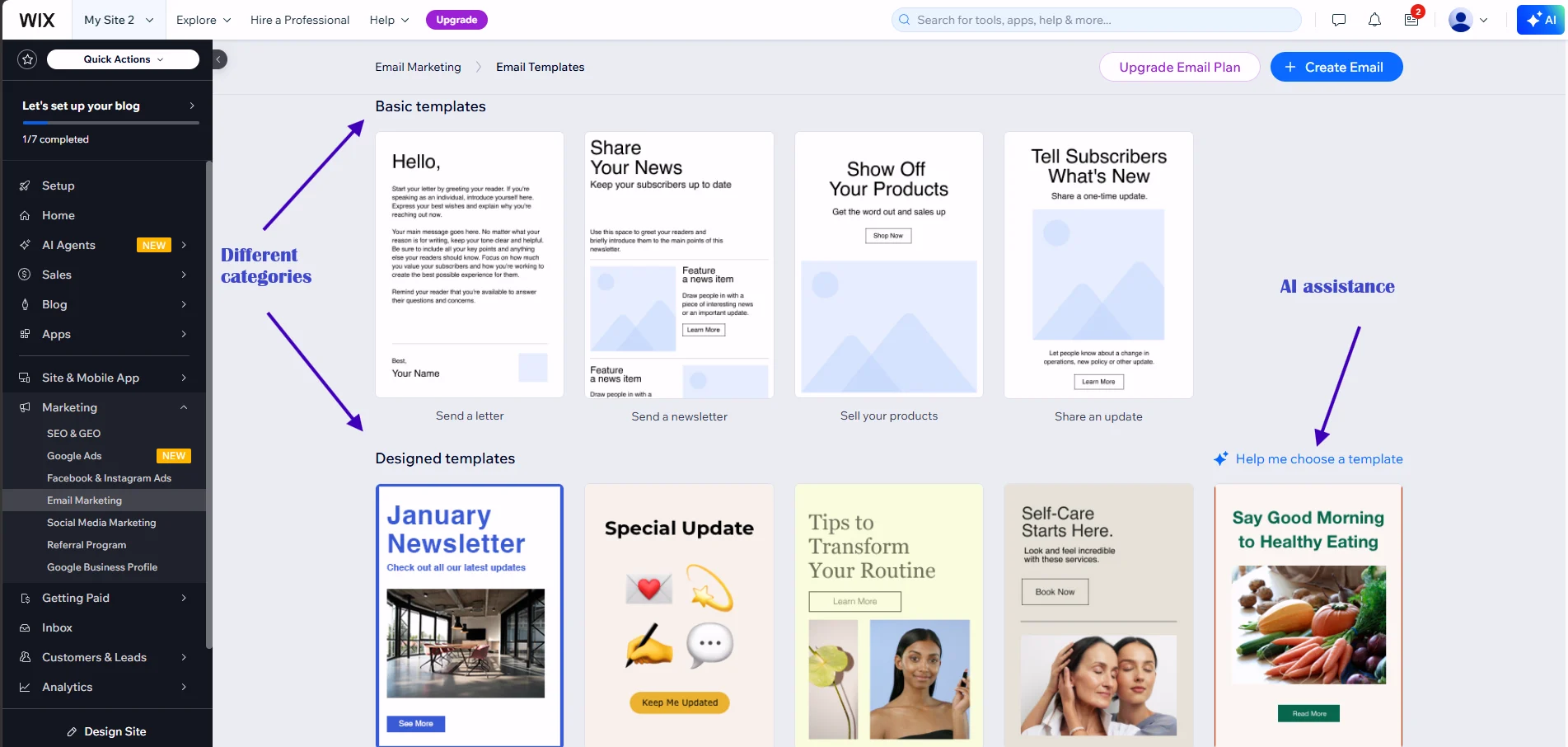
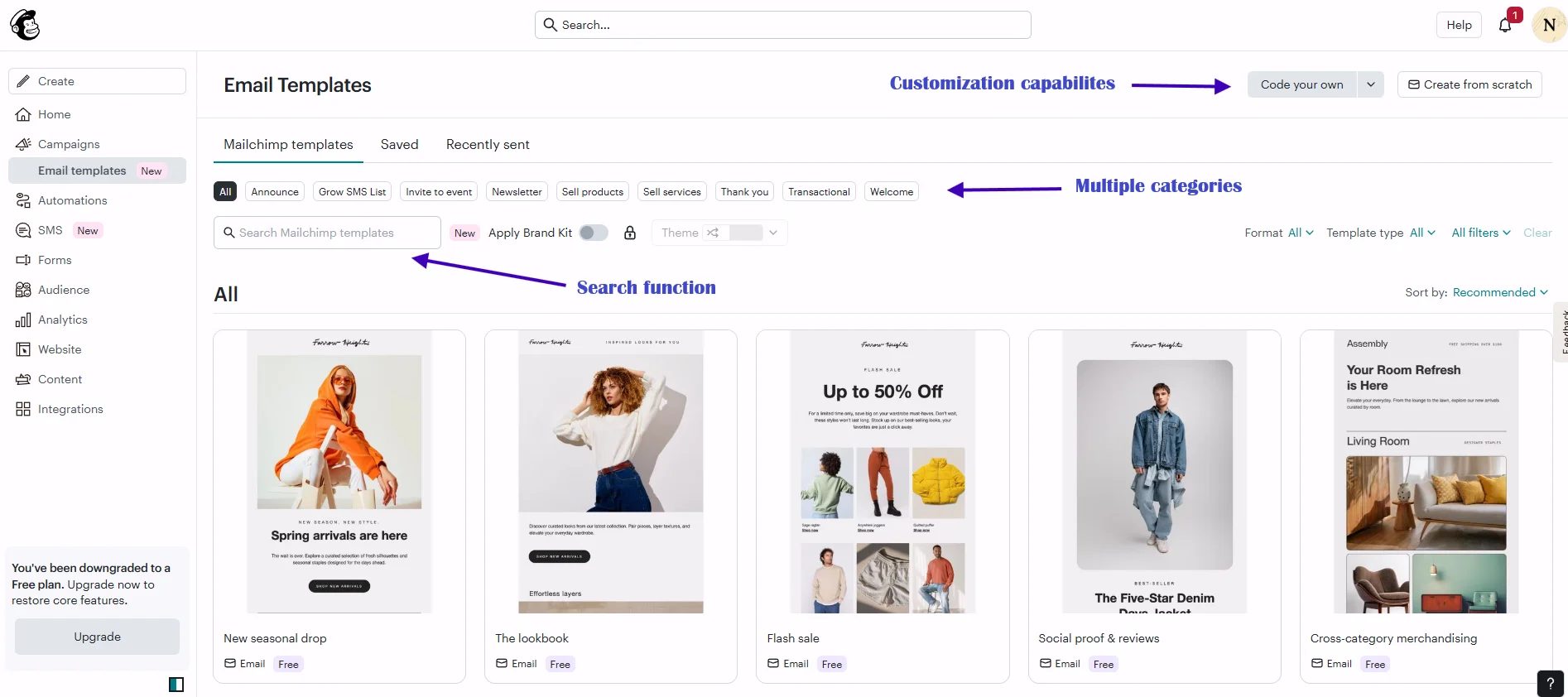
Templates: The disparity in template offerings is stark. Wix provides approximately 23 designer-made email templates for common campaign types, which are suitable for basic needs. Mailchimp, however, boasts over 250 templates, alongside options to save and reuse custom designs. This extensive library offers unparalleled flexibility, allowing businesses to rapidly deploy diverse campaign types without the need for extensive design work from scratch.
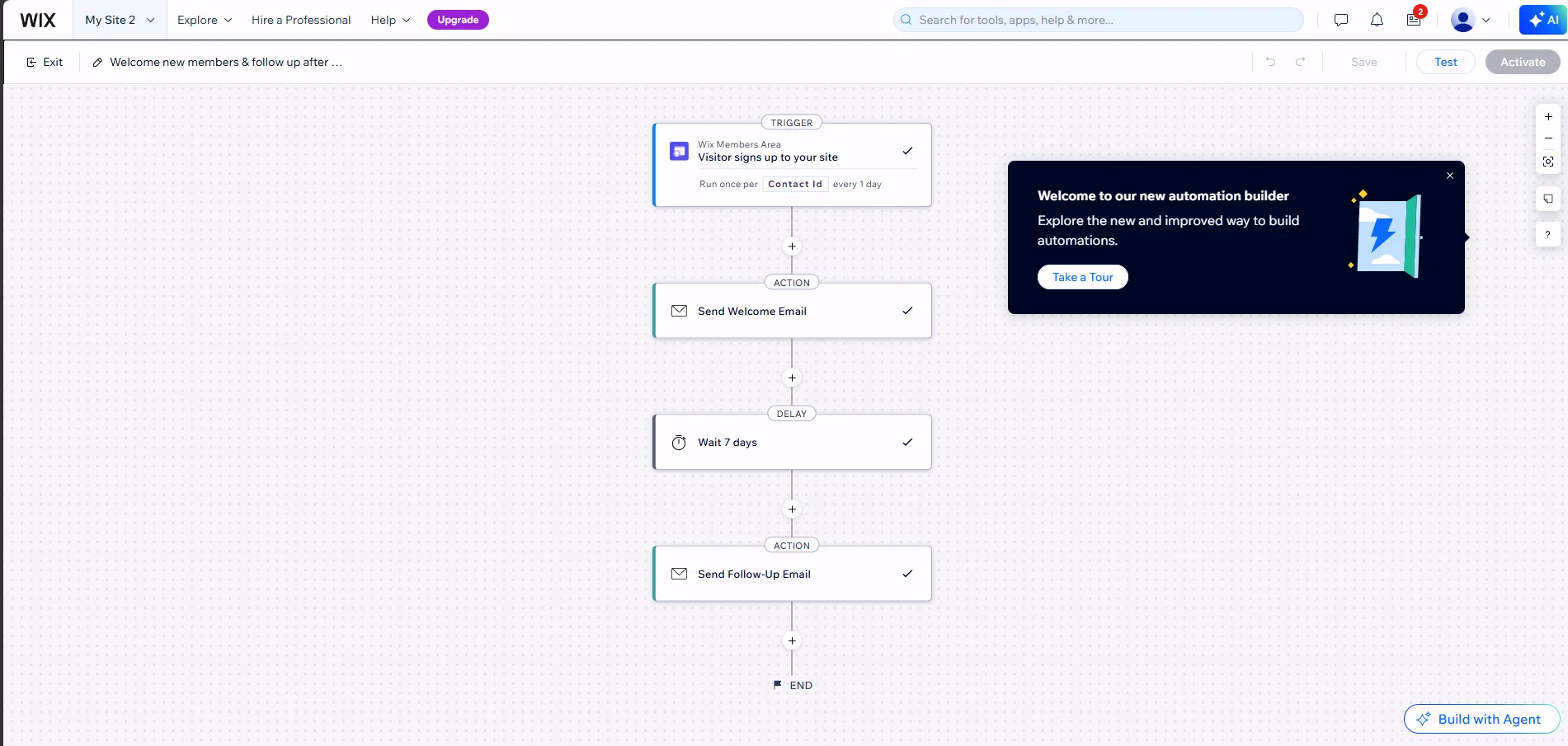
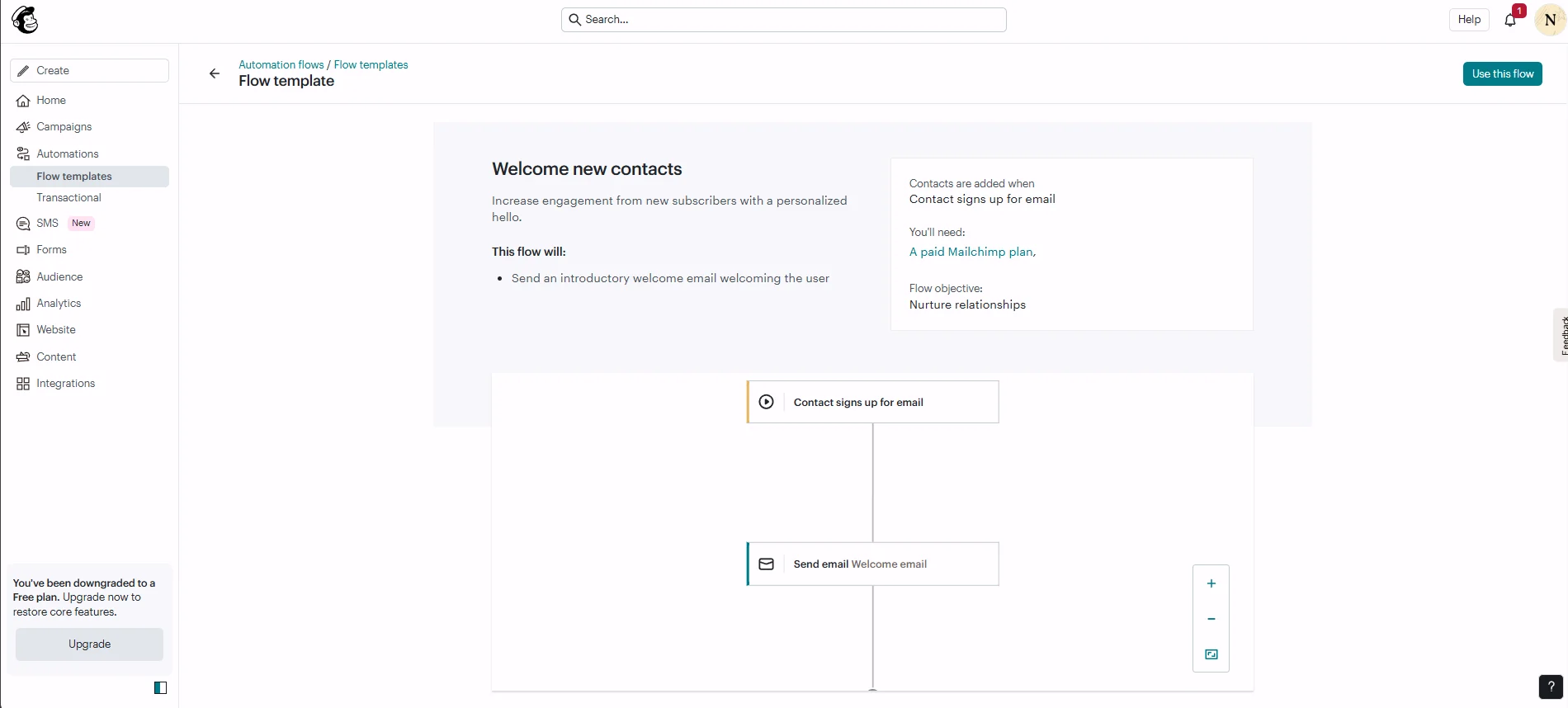
Automation: Wix has evolved its automation features beyond simple welcome emails, now supporting triggers for abandoned carts, form submissions, and purchase follow-ups, with custom email types and statistics. This level of automation is highly beneficial for businesses seeking to automate key customer touchpoints directly linked to their website activity. Mailchimp, however, offers a significantly deeper stack through its "Marketing Automation Flows" (rebranded in June 2025 from its previous customer journey builder). These flows support multiple triggers, branches, and actions, enabling the creation of highly complex, multi-step customer journeys, dynamic content personalization, and advanced lifecycle messaging.
A/B Testing: This is an area where Mailchimp holds a decisive advantage. Mailchimp integrates A/B testing across its plans for subject lines, content, "From" names, and send times, with multivariate testing available at higher tiers. This robust testing environment empowers marketers to optimize campaign performance through data-driven experimentation. Wix, in contrast, does not offer A/B testing for email marketing campaigns, limiting its users’ ability to systematically refine and improve email effectiveness.
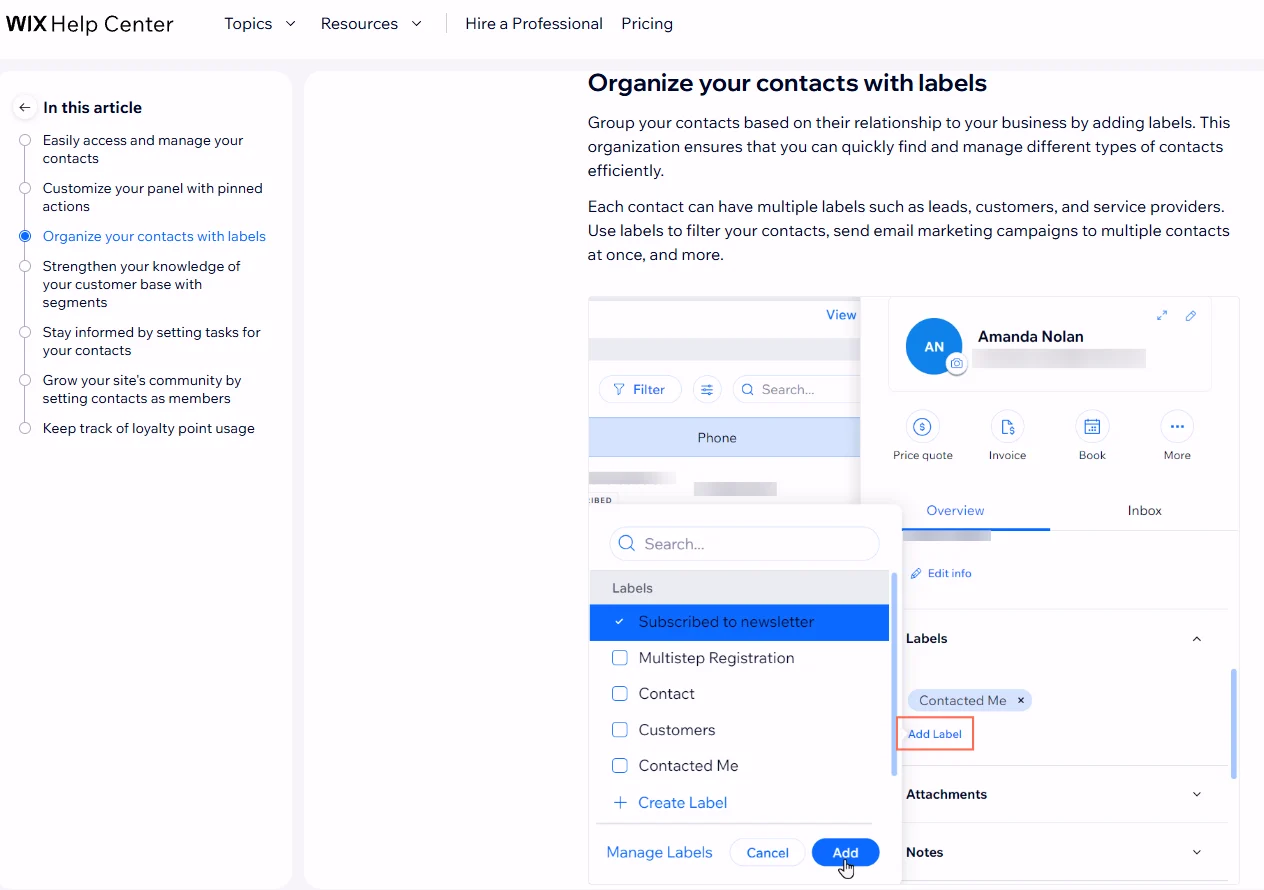
Segmentation: Wix provides advanced segmentation capabilities based on contact attributes, labels, form submissions, purchases, abandoned carts, and site activity, allowing for targeted campaigns. Mailchimp, however, elevates segmentation to a more sophisticated level. Its platform offers predictive segmentation, which leverages AI to forecast customer behavior, alongside advanced tools based on audience data, campaign engagement, purchase behavior, and app usage. This granular control over audience targeting enables highly personalized and relevant communication strategies.
Ecosystem and Integrations
In the contemporary digital marketing landscape, the ability of a platform to seamlessly integrate with other tools is paramount. Mailchimp clearly leads in this domain, offering a vast ecosystem of third-party integrations, while Wix’s email marketing primarily thrives within its proprietary environment.
Wix Email Marketing Integrations: Wix excels when a business’s entire digital operation, including its website, CRM, and marketing efforts, is consolidated within the Wix ecosystem. Its built-in marketing integrations and tracking are intrinsically linked to Wix website data, creating a clean, cohesive stack. Key integrations include Google Tag, Meta Pixel, Google Tag Manager, and TikTok Pixel, along with native CRM and analytics tools. This integrated approach simplifies management for users who prefer an all-in-one solution, minimizing the complexity of managing disparate systems.
Mailchimp Integrations: Mailchimp boasts a significantly broader and more diverse integration network, listing over 300 direct connections in its app directory. This extensive reach allows Mailchimp to connect with a wide array of e-commerce platforms (e.g., Shopify, WooCommerce), social media channels, payment gateways, and reporting tools beyond a single website builder. For businesses that operate across multiple platforms or require specialized tools for various aspects of their operations, Mailchimp’s expansive integration capabilities offer unparalleled flexibility and power. The platform’s ability to act as a central hub for marketing data across diverse business tools makes it a strategic asset for complex, multi-channel marketing efforts.
Email Deliverability and Reputation Management
The efficacy of any email marketing campaign hinges on its ability to reach the recipient’s inbox rather than being diverted to spam folders. Mailchimp demonstrates a more explicit and robust commitment to email deliverability, offering deeper tooling and guidance compared to Wix.
Wix Email Marketing Deliverability: Wix provides essential deliverability reporting, including metrics on delivery, bounces, spam complaints, opens, and clicks. Its help center also offers guidance on sender reputation and best practices to improve inbox placement. While these basic tools are helpful, the platform’s focus is lighter on advanced deliverability tooling that dedicated email service providers often offer.
Mailchimp Deliverability: Mailchimp takes a more proactive and in-depth approach. It publishes extensive dedicated resources on deliverability, clearly outlining how sender reputation impacts inbox placement, and proudly claims a deliverability rate of 99% or higher. Furthermore, Mailchimp integrates deliverability considerations into its segmentation and audience management guidance, providing users with actionable levers to continuously improve their email performance. This includes tools for list hygiene, email authentication (SPF, DKIM, DMARC), and proactive monitoring, all of which are crucial for maintaining a strong sender reputation and ensuring messages consistently reach their intended audience. For businesses sending high volumes of emails or managing critical campaigns, Mailchimp’s comprehensive deliverability support is a significant advantage.
Customer Support and User Experience
The quality and accessibility of customer support can significantly impact a user’s overall experience, especially for small business owners who may lack dedicated IT or marketing teams. Here, Wix offers a more broadly accessible support structure, while Mailchimp’s premium support tiers are notably robust.
Wix Email Marketing Customer Support: Wix prioritizes widespread support accessibility. Its extensive help center is complemented by readily available live chat and callback support options across all its plans, with the company asserting 24/7 customer care. This "customer-first" approach ensures that assistance is not contingent on a user’s subscription tier. As a verified Wix user from the NGO sector noted in February 2026, Wix representatives are often "some of the best, most patient, and courteous support people," even if immediate resolution isn’t always possible, there’s a clear commitment to follow-up. This level of consistent access is invaluable for small business owners managing multiple facets of their online presence. Wix holds a G2 rating of 4.2/5, reflecting general satisfaction with its platform and support.
Mailchimp Customer Support: Mailchimp’s support model is tiered, with premium support benefits reserved for higher-paying customers. Its free plan includes email support for only the first 30 days. Essentials and Standard plans upgrade to 24/7 email and chat support, while the Premium plan offers phone and priority support, along with dedicated onboarding sessions. This structure ensures that high-value customers receive comprehensive, expedited assistance. While some users, particularly those on free or lower-tier plans, have expressed frustration with reliance on AI chat and difficulty in reaching live agents, those with access to higher tiers, like Daniel C. in July 2026, commend Mailchimp’s "competent and capable" live support, even at unusual hours. Mailchimp’s overall G2 rating stands at 4.3/5, indicative of strong satisfaction among its broader user base, particularly those benefiting from its more comprehensive support packages.
Strategic Positioning and Target Audience
The ultimate choice between Wix Email Marketing and Mailchimp hinges on a business’s operational philosophy, growth aspirations, and existing technological stack.
Wix’s email marketing solution is strategically designed for businesses that are already deeply integrated into the Wix ecosystem. For these users, the value lies in simplicity, convenience, and a unified dashboard for all online activities. Small businesses, solo entrepreneurs, and those with relatively straightforward email marketing needs will find Wix’s low entry cost, flat-rate pricing, and native integration highly appealing. It minimizes the learning curve and the overhead of managing multiple platforms, allowing users to focus on content creation and basic customer engagement within a familiar environment.
Mailchimp, conversely, targets businesses with more ambitious and complex email marketing objectives. Its platform is built for scalability, offering advanced features that facilitate sophisticated customer journeys, deep personalization, and rigorous performance optimization. E-commerce businesses, digital agencies, and larger organizations that require granular control over their campaigns, extensive data analytics, and the flexibility to integrate with a myriad of third-party tools will find Mailchimp’s robust capabilities indispensable. It is the platform for those who view email marketing not just as a communication channel, but as a critical, data-driven revenue driver requiring continuous optimization and strategic evolution.
Emerging Alternatives and Future Outlook
The email marketing landscape is dynamic, with new solutions continually emerging to address specific market gaps. For businesses whose needs extend beyond the offerings of Wix or Mailchimp, particularly in the realm of e-commerce and omnichannel marketing, platforms like Omnisend warrant consideration.
Omnisend, with a starting price of $16/month, positions itself as a comprehensive marketing automation platform tailored for e-commerce. It differentiates itself by offering:
- Pre-built e-commerce automation workflows for welcome series, abandoned carts, and post-purchase follow-ups.
- Advanced segmentation based on deep e-commerce data.
- Integrated SMS and web push notifications for true omnichannel engagement.
- Sophisticated reporting and analytics focused on e-commerce metrics.
- Seamless integrations with major e-commerce platforms like Shopify, WooCommerce, and BigCommerce.
For e-commerce brands prioritizing a unified marketing toolkit that encompasses email, SMS, and web push notifications within a single platform, Omnisend presents a compelling alternative. Its specialized focus on e-commerce marketing automation often surpasses the e-commerce capabilities of more generalized platforms, offering tools specifically designed to drive online sales and customer lifetime value.
Final Verdict
In the comprehensive comparison of Wix Email Marketing and Mailchimp, Mailchimp emerges as the overall winner for its superior feature depth, broader integration capabilities, advanced automation, sophisticated segmentation, and robust deliverability tooling. While Wix certainly presents a strong case for its ease of use, cost-effectiveness, and seamless integration within its proprietary website builder ecosystem, Mailchimp’s specialization and extensive toolset cater to a more demanding and growth-oriented email marketing strategy.
Wix is undoubtedly the better fit for individuals and small businesses who are already invested in the Wix platform and prioritize a consolidated, low-friction digital presence. Its straightforward pricing and accessible customer support make it an excellent choice for managing basic email communications alongside website operations. However, for businesses where email marketing is expected to drive significant revenue and requires deep analytical insights, extensive A/B testing, and complex customer journey mapping, Mailchimp offers the necessary power and flexibility. The strategic decision ultimately rests on a business’s current operational scale, future growth ambitions, and the level of sophistication required from their email marketing platform.