Instapage, a long-standing leader in landing page technology, has officially announced its transition into a comprehensive, end-to-end AI-powered marketing platform. This strategic evolution marks a significant departure from its origins as a specialized landing page builder, reflecting a broader industry shift toward integrated artificial intelligence solutions that manage the entire customer journey from initial engagement to lead nurturing. Since its founding in 2012, the company has consistently expanded its capabilities, moving from a high-performance builder to a complete Conversion Rate Optimization (CRO) and marketing suite. The latest announcement signals the culmination of years of iterative development, introducing sophisticated AI tools designed to eliminate the friction between creative ideation and technical execution.
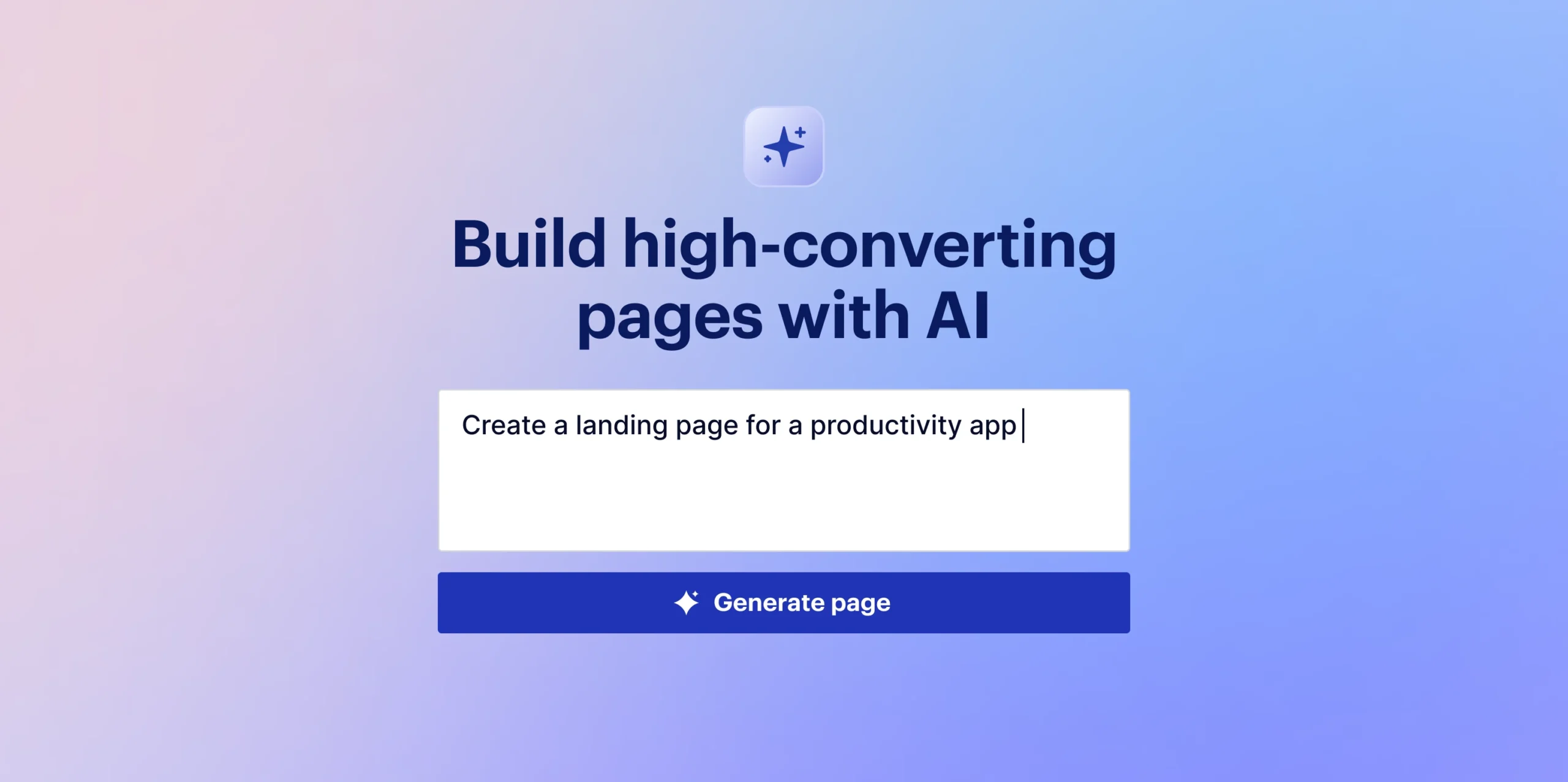
The core of the new offering revolves around three primary pillars: AI page generation, AI email generation, and AI Collections. These tools are designed to solve the "blank page" problem—a common bottleneck where marketing teams possess the necessary strategic vision but struggle with the manual labor required for layout, copywriting, and technical configuration. By leveraging generative AI, Instapage now allows users to describe their campaign goals in natural language, which the platform then translates into a fully functional, conversion-ready landing page in a matter of seconds. This advancement is positioned as a direct response to the increasing complexity of the modern digital landscape, where marketers are expected to produce hyper-personalized content across multiple channels with diminishing resources.
A Decade of Evolution: From Builder to Platform
The history of Instapage mirrors the broader trajectory of the digital marketing industry. Established in 2012, the company initially focused on providing a more intuitive alternative to the rigid content management systems of the time. In the mid-2010s, as digital advertising costs began to rise, the company pivoted toward "Post-Click Automation," emphasizing that the experience a user has after clicking an ad is just as important as the ad itself. This led to the introduction of advanced features such as heatmaps, A/B testing, and dynamic text replacement.
By the early 2020s, the rise of large language models and generative AI provided the necessary infrastructure for Instapage to begin embedding intelligent automation into its workflow. The company’s trajectory has moved from manual design tools to automated experimentation, and finally to the current state of generative creation. This chronology highlights a shift in the value proposition of MarTech (Marketing Technology) providers: moving away from providing "tools" and toward providing "outcomes."
Industry analysts note that this transition is timely. According to recent market data, the average enterprise marketing team now utilizes over 90 different software tools in their daily operations. This fragmentation often leads to "data silos" and significant time lost in manual handoffs between different platforms. Instapage’s move to consolidate landing pages, websites, personalization, experimentation, email, and analytics into a single AI-driven ecosystem is seen as a direct challenge to this fragmentation.
Technical Analysis: AI Page Generation and the "Pixel-Perfect" Distinction
One of the most significant hurdles in AI-assisted design has been the lack of granular control. Many standalone AI page generators utilize "black box" systems where the AI produces a static layout that is difficult to modify without regenerating the entire asset. Instapage’s new AI page generation tool seeks to solve this by integrating the AI output directly with its "pixel-perfect" drag-and-drop builder.
In this workflow, the AI acts as a foundational architect rather than a final designer. Once the AI generates the initial layout and copy based on the user’s prompt, the user retains full creative control to adjust any element—from typography and spacing to complex interactive widgets—without needing to write code or trigger new AI prompts. This hybrid approach addresses a major pain point in the industry: the "regeneration loop." In traditional AI tools, every minor adjustment often requires a new prompt, consuming tokens and time. By allowing manual refinement on top of AI-generated foundations, Instapage claims to reduce the time-to-market for new campaigns by up to 80%.
Furthermore, the AI page generation tool is not merely creating aesthetic layouts; it is trained on over a decade of conversion data. The layouts produced are inherently optimized for user experience and conversion, drawing on the company’s historical database of high-performing landing pages. This data-driven approach ensures that the AI-generated pages are "conversion-ready" rather than just visually appealing.
Bridging the Gap with AI-Powered Email Follow-Ups
The second major component of the platform’s expansion is the integration of AI-powered email generation. Historically, the transition from a lead capturing a form on a landing page to receiving a follow-up email has been a point of failure for many marketing teams. This process typically involves exporting leads to a third-party Email Service Provider (ESP), mapping fields, and manually drafting follow-up sequences.

Instapage’s new system internalizes this entire workflow. The AI email generator allows users to select a specific goal—such as lead qualification, webinar registration, or product demo scheduling—and define the target audience, tone, and desired length. The AI then drafts a series of tailored messages that align with the messaging on the landing page, ensuring brand consistency.
By housing the landing page and the email automation in the same environment, the platform eliminates the need for manual lead exports and reduces the risk of lead leakage. For lean marketing teams, this consolidation is particularly impactful. In the current economic climate of 2024-2026, where many departments are operating with reduced headcounts, the ability to automate the entire post-click journey—from landing to lead nurturing—is a critical competitive advantage.
Economic Impact and Market Implications
The launch of these AI features comes at a time when the marketing industry is facing a "productivity paradox." Despite the abundance of tools, marketers are reporting higher levels of burnout and lower efficiency due to the complexity of managing those tools. Instapage’s internal research suggests that by 2026, teams that do not adopt integrated AI solutions will be "underwater," unable to meet the high expectations of hyper-personalization required by modern consumers.
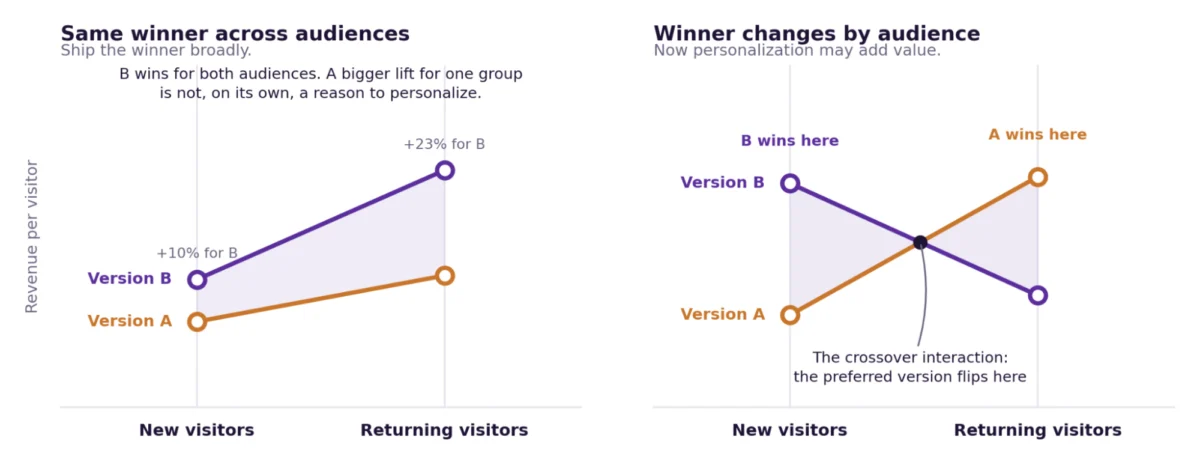
Supporting data from various industry reports indicates that personalized marketing can increase conversion rates by as much as 10% to 15%. However, the manual effort required to create thousands of personalized variations has historically limited this strategy to large enterprises with massive budgets. Instapage’s AI Collections and personalization tools aim to democratize this capability, allowing smaller businesses to scale their marketing efforts without a corresponding increase in headcount.
Financial analysts in the SaaS sector observe that Instapage is positioning itself against both traditional landing page builders like Unbounce and broader marketing clouds like HubSpot. By focusing specifically on the high-intent "conversion" stage of the funnel and powering it with native AI, Instapage is carving out a niche that prioritizes speed and measurable ROI over general-purpose CRM functionality.
Official Responses and Future Outlook
While specific executive statements were not included in the initial announcement, the company has emphasized that this rollout is part of a broader commitment to making sophisticated marketing technology accessible. A company spokesperson noted that the goal is to "eliminate the gaps between tools," ensuring that no lead falls through the cracks due to technical friction.
The company has also clarified the availability of these new features. Currently, several AI capabilities are in a beta phase, with a gradual rollout planned across the user base. This cautious approach is common in the deployment of generative AI, allowing the company to monitor system performance and refine the AI models based on real-world user interactions.
Looking forward, the implications of an end-to-end AI marketing platform are profound. As AI continues to evolve, the role of the marketer is shifting from "doer" to "editor." The technical barriers to entry for creating high-performance digital campaigns are lower than ever, but the importance of strategic oversight and brand identity remains paramount. Instapage’s new platform is designed to handle the "heavy lifting" of design and copy, theoretically freeing up marketers to focus on higher-level strategy and audience insights.
The platform is currently offering a 14-day free trial for new users to experience the AI-powered workflow firsthand. As the industry moves further into the AI era, the success of Instapage’s transformation will likely be measured by its ability to maintain its "pixel-perfect" reputation while delivering the speed and scale promised by generative artificial intelligence. For now, the move represents a significant milestone in the evolution of MarTech, signaling the end of the era of fragmented point solutions and the beginning of the integrated, intelligent marketing ecosystem.