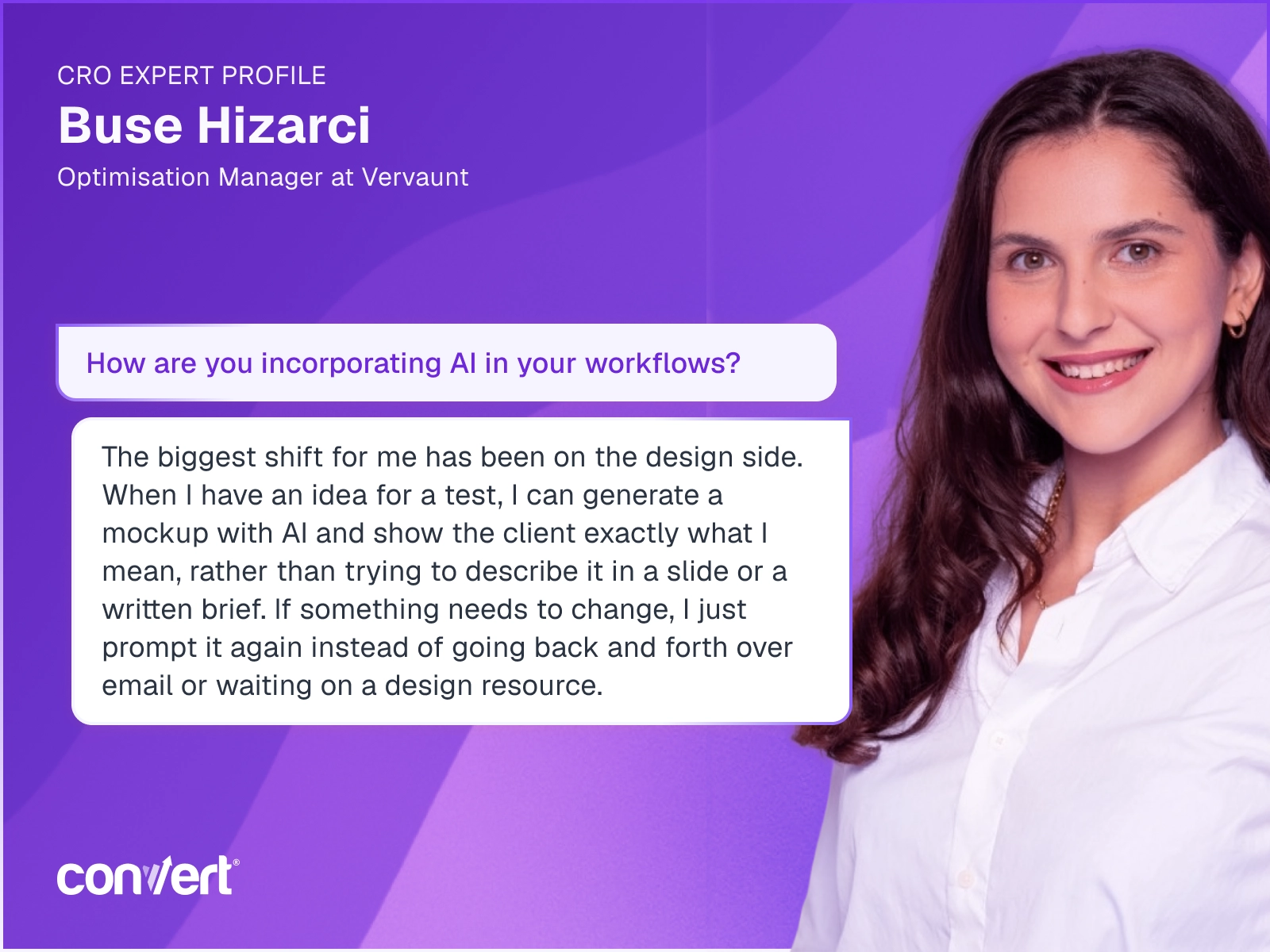
Buse Hizarci, the Optimisation Manager at Vervaunt, has detailed a transformative approach to digital experimentation that prioritizes long-term customer understanding over short-term conversion wins. As a central figure at the UK-based Direct-to-Consumer (DTC) ecommerce consultancy and paid media agency, Hizarci oversees testing programs for high-profile brands including Adanola, Ancient & Brave, AU Vodka, and YETI UK. Her methodology, rooted in a transition from technical development to user experience (UX) design, reflects a broader industry shift toward evidence-based decision-making and the strategic deployment of artificial intelligence to streamline operational workflows.
Vervaunt’s position in the London-based consultancy market places it at the intersection of performance marketing and technical optimization. In an era where customer acquisition costs (CAC) continue to rise across social and search channels, the role of Conversion Rate Optimization (CRO) has evolved from a secondary tactic to a primary driver of profitability. Hizarci’s philosophy—defined simply as turning assumptions into evidence—serves as the foundation for how modern DTC brands navigate the complexities of user behavior in a saturated digital marketplace.

The Professional Trajectory from Development to Optimization
The career path of Buse Hizarci provides significant context for her analytical approach to CRO. Beginning her career as a developer, she initially focused on the technical execution of web architecture. However, her focus shifted toward the psychological and behavioral aspects of the pages she was constructing. This transition from "how a page is built" to "how a page is perceived" led her to an in-house UX role, where she began advocating for the user’s perspective.
This hybrid background in development and UX is a hallmark of the new generation of optimization professionals. By understanding the technical constraints of a platform like Shopify while simultaneously analyzing GA4 (Google Analytics 4) data, Hizarci bridges the gap between creative design and technical feasibility. Her tenure at Vervaunt has allowed her to scale this expertise across a diverse portfolio of brands, each requiring a bespoke approach to testing based on unique user demographics and product cycles.
The Strategic Integration of Artificial Intelligence
The integration of Artificial Intelligence (AI) within the CRO workflow has moved beyond theoretical application into practical execution. Hizarci identifies two primary areas where AI has fundamentally altered the experimentation landscape: design prototyping and analytical automation.

In the traditional CRO model, the gap between a hypothesis and a live test often spanned weeks due to design bottlenecks. Hizarci utilizes AI to generate mockups, allowing clients to visualize proposed changes instantly. This shift reduces the "time-to-buy-in," enabling brands to iterate on design directions in real-time during stakeholder meetings rather than navigating protracted email chains. This use of generative AI does not replace the designer but rather acts as a communication catalyst, ensuring that the strategic intent of a test is understood before resources are committed to production-level assets.
Furthermore, AI has been integrated into the rigorous mathematical side of experimentation. Hizarci utilizes interactive tools preloaded with client-specific traffic and conversion data to automate Minimum Detectable Effect (MDE) calculations. By pulling data directly from Shopify and GA4, these tools provide objective timelines for test duration. This level of automation ensures that testing cycles are grounded in statistical reality, preventing the common industry pitfall of ending tests prematurely or running underpowered experiments that yield inconclusive results.
Chronology of a Successful Experiment: The Interstitial Cross-Sell
To illustrate the practical application of her methodology, Hizarci points to a specific strategic intervention designed to increase Average Order Value (AOV) and customer retention. The project focused on a high-performing acquisition category for a DTC brand. While the category was successful in attracting new users, the challenge lay in deepening the customer’s initial investment.
- Identification of the Problem Area: Analysis showed that new customers were purchasing single items without exploring broader collections, leading to lower-than-optimal initial basket values.
- Hypothesis Development: The team hypothesized that surfacing complementary items immediately after the "add to bag" action—rather than waiting for the cart page—would capitalize on high-intent moments.
- Design and Execution: An interstitial popup was designed to appear post-action, showcasing pieces from the same collection. The offer was framed around reaching the "free shipping threshold," providing a logical and financial incentive for the user to add more to their order.
- Results and Implementation: The test proved successful, resulting in a permanent site implementation. The success was attributed not just to the design, but to the timing of the intervention, which addressed the user’s "investment" in a specific aesthetic.
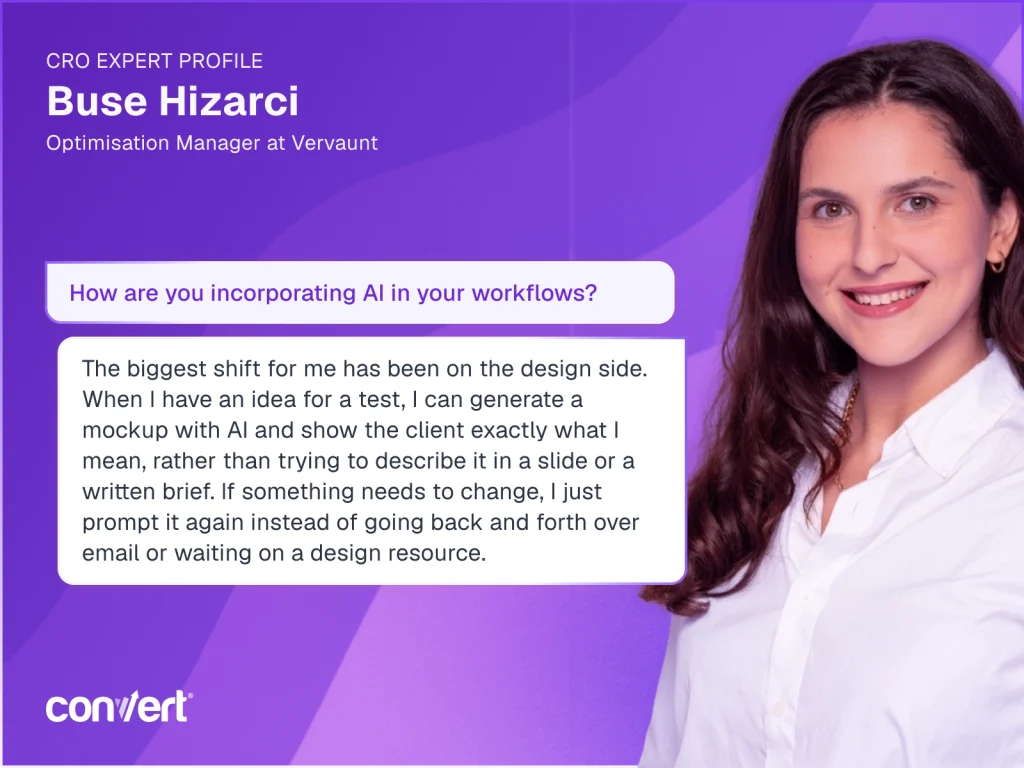
This case study highlights a critical shift in CRO: moving away from "what to change" to "why to change." The focus was on the psychological state of the user during the acquisition journey, rather than merely moving a button or changing a color.
Moving Toward a Knowledge-Based Hierarchy
A core tenet of the Vervaunt approach, as described by Hizarci, is the rejection of the "flat backlog." In many organizations, CRO is treated as a list of disconnected ideas to be checked off. Hizarci advocates for a proper hierarchy that connects every individual test to a broader business objective.
The Vervaunt hierarchy follows a structured descent:
- Business Metric: The high-level goal (e.g., Increase LTV or AOV).
- Broad Objective: The strategy to move that metric (e.g., Deepen collection engagement).
- Specific Problem Areas: Identified friction points on the site.
- Hypothesized Solutions: Strategic ideas to fix those problems.
- Individual Tests: The tactical execution of those solutions.
This structure ensures that even a "losing" test provides value. When a test fails to reach significance or shows a negative result, it is used to update the organization’s understanding of the problem area. This prevents the "filing away" of results and instead allows the test history to shape future priorities. This systematic approach transforms CRO from a series of gambles into a cumulative knowledge engine.
Operational Efficiency and the Future of Agency Work
Beyond the strategy of testing, AI has significantly impacted the administrative and operational aspects of Hizarci’s role. The "commoditization of execution" through AI has freed up time for high-level strategic thinking.
For instance, the onboarding process for new clients, which previously required manual research and document structuring, has been streamlined through AI-assisted templates. Additionally, the automation of post-call tasks—such as turning meeting notes into actionable tickets—ensures that no strategic insights are lost during high-volume work weeks. This shift suggests that the value of an Optimisation Manager is increasingly found in their judgment and ability to interpret data, rather than their ability to perform repetitive administrative tasks.
Broader Impact and Industry Implications
The insights shared by Buse Hizarci signal a maturing CRO industry. As AI continues to lower the barrier to entry for executing tests, the competitive advantage for brands will lie in the quality of their insights and the rigor of their experimentation frameworks.
The industry is moving toward a model where "winning" is defined by how much a company learns about its customers over a twelve-month period, rather than the percentage lift of a single A/B test. This long-term view is essential for DTC brands facing volatile market conditions and shifting consumer preferences. By focusing on "turning assumptions into evidence," practitioners like Hizarci are helping brands build more resilient, data-driven cultures that are capable of sustained growth.
In conclusion, the evolution of digital experimentation at firms like Vervaunt reflects a sophisticated blend of human psychology, technical expertise, and AI-driven efficiency. As the discipline continues to professionalize, the emphasis will remain on the "why" behind user actions, ensuring that every digital interaction is an opportunity for both revenue growth and deeper consumer understanding. The "Testing Mind Map" provided by Hizarci serves as a blueprint for this modern approach, highlighting that in the world of optimization, the most valuable asset is not the test itself, but the evidence it produces.