The landscape of marketing and customer relationship management (CRM) platforms is highly competitive, with two prominent players, Brevo and HubSpot, frequently positioned against each other. Both offer robust toolsets designed to streamline sales, marketing, and customer service operations, yet they cater to distinct business needs and budgetary frameworks. Brevo, formerly Sendinblue, is generally recognized as a cost-effective solution for businesses prioritizing high-volume email marketing and foundational sales CRM capabilities. HubSpot, conversely, positions itself as an expansive, full-stack CRM platform with integrated marketing functionalities, best suited for organizations seeking deep analytical insights and a holistic view of their customer journey. This detailed comparison delves into their offerings, pricing structures, unique features, and optimal use cases to guide businesses in selecting the most appropriate platform.
Background and Core Philosophies
HubSpot, founded in 2006, pioneered the inbound marketing methodology, building its platform around attracting, engaging, and delighting customers. Its philosophy is deeply embedded in providing a comprehensive suite that covers the entire customer lifecycle, from initial contact to post-sale support. This approach necessitates a strong, integrated CRM at its core, allowing all customer interactions to be tracked and analyzed centrally. HubSpot’s modular design, comprising Marketing Hub, Sales Hub, Service Hub, CMS Hub, and Operations Hub, reflects its ambition to be the single source of truth for business operations.
Brevo, established in 2012 as Sendinblue, initially focused on email marketing and transactional email services. Over time, it evolved into a broader marketing messaging platform, integrating SMS, chat, and eventually, a basic CRM and sales pipeline management. Brevo’s core philosophy revolves around providing powerful, multi-channel marketing tools at an accessible price point, particularly appealing to small to medium-sized businesses (SMBs) and those with large contact lists but potentially infrequent sending patterns. Its recent rebranding to Brevo signifies a broader ambition to offer a more unified communication and relationship management experience.
Pricing Structures and Economic Considerations
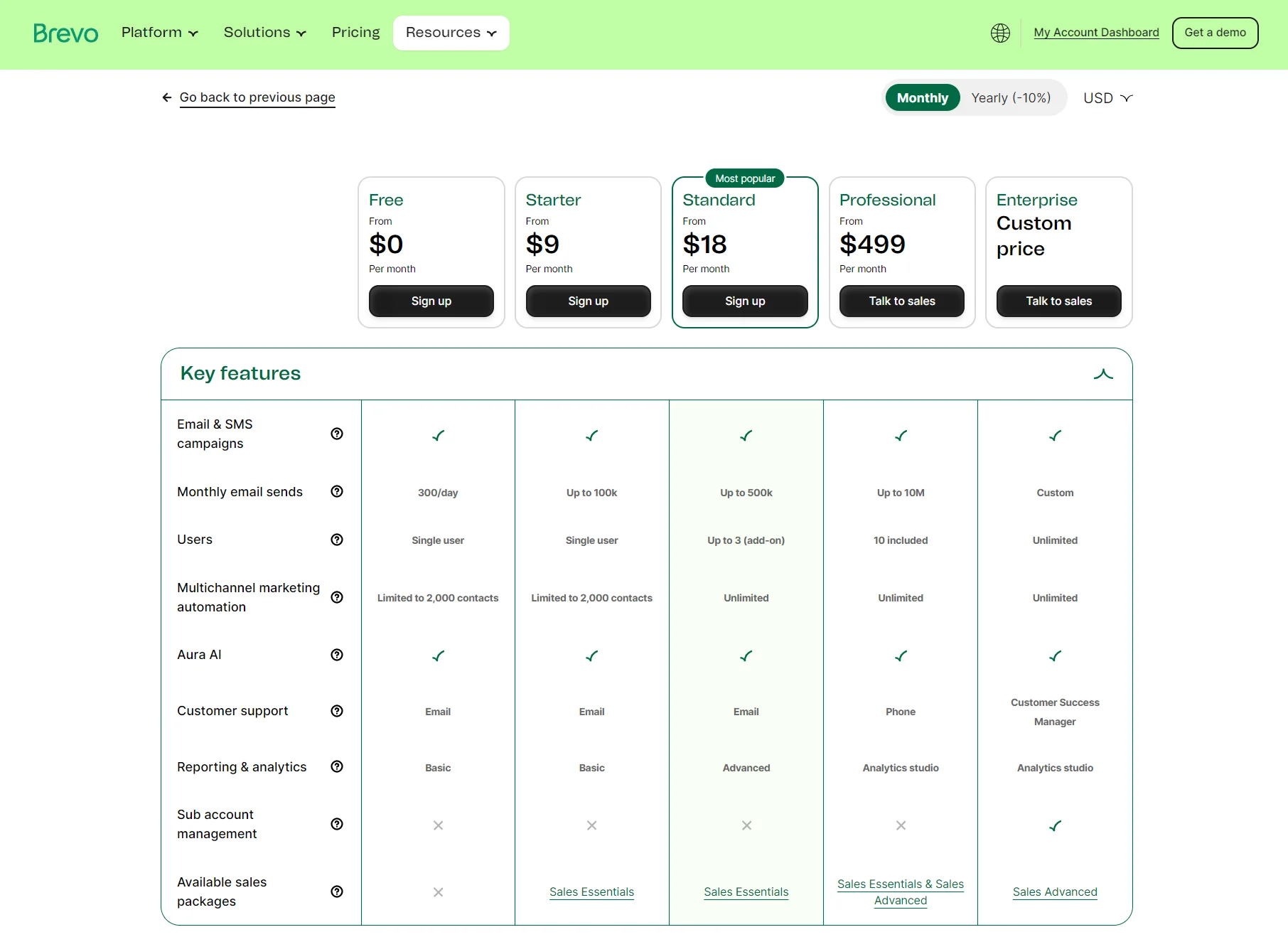
The divergent philosophies of Brevo and HubSpot are most evident in their pricing models, which directly influence their suitability for different businesses. Brevo’s pricing is predominantly based on monthly email volume, with contact caps per tier, allowing for flexibility for businesses with fluctuating sending needs or large, less frequently engaged lists. Its paid plans start at an attractive $9/month for 5,000 emails and 500 contacts on the Starter plan, offering a 10% discount for annual payments. Even at higher volumes, Brevo remains competitive; for instance, $32/month provides 20,000 emails and storage for up to 500,000 contacts. The Professional plan, starting at $499/month, extends email limits significantly, up to 10 million, with a flat 2 million contact cap.
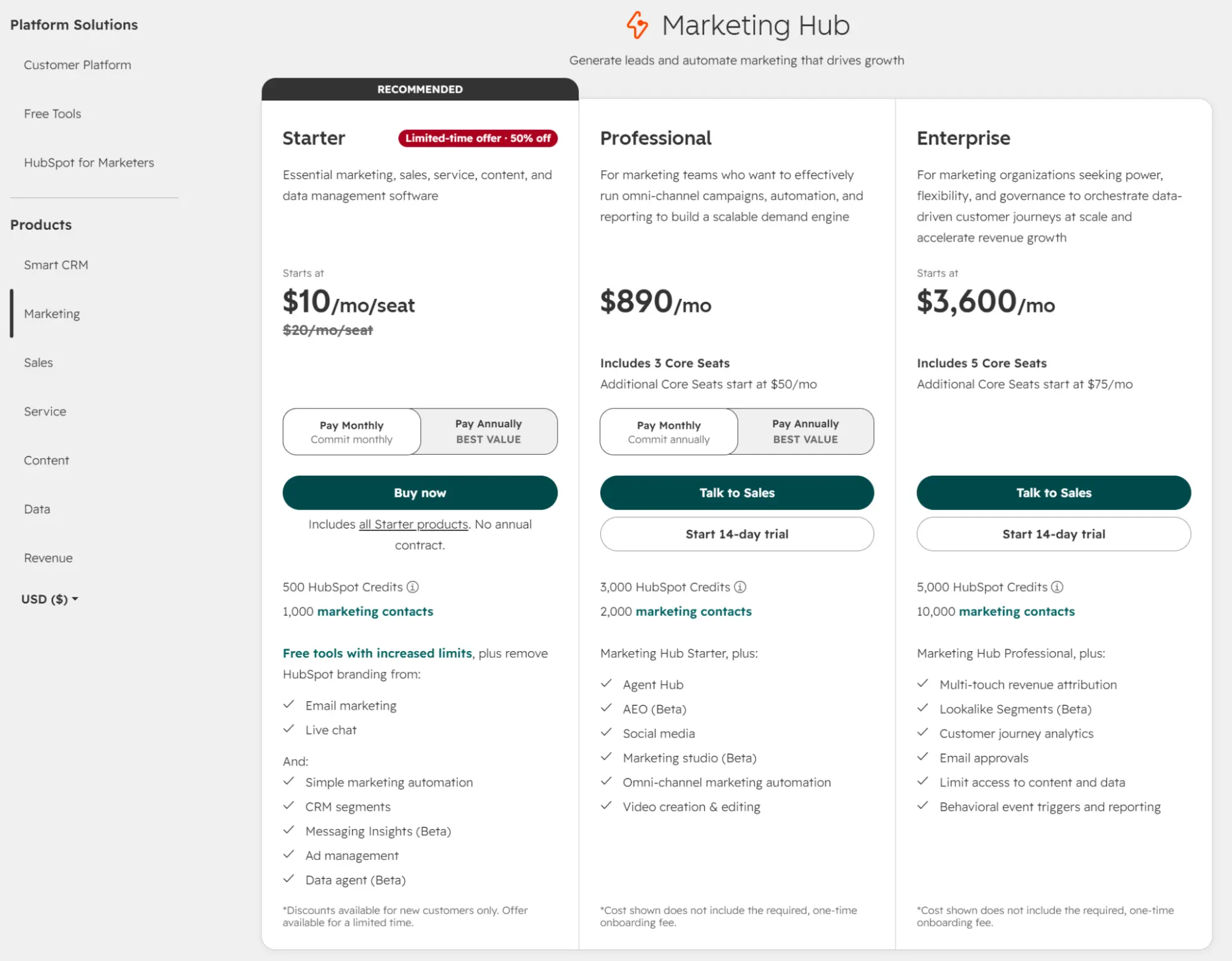
HubSpot, in contrast, employs a contact-based pricing model, where the cost scales with the number of marketing contacts (contacts you actively market to). Non-marketing contacts can be stored for free up to 15 million in paid plans. The Marketing Hub Starter plan begins at $20/month per seat for 1,000 marketing contacts, with additional contact blocks progressively decreasing in cost per 1,000. For businesses with 20,000 contacts, HubSpot Starter costs $810/month, a significant leap compared to Brevo’s $32/month for the same contact volume. Higher tiers like Professional (starting at $890/month for three seats and 2,000 marketing contacts) and Enterprise ($3,600/month for five seats and 10,000 marketing contacts) include substantial onboarding fees ($3,000 for Professional, $7,000 for Enterprise), underscoring HubSpot’s focus on larger, more committed organizations requiring extensive setup and support.
Free Plans: A Gateway to Each Ecosystem
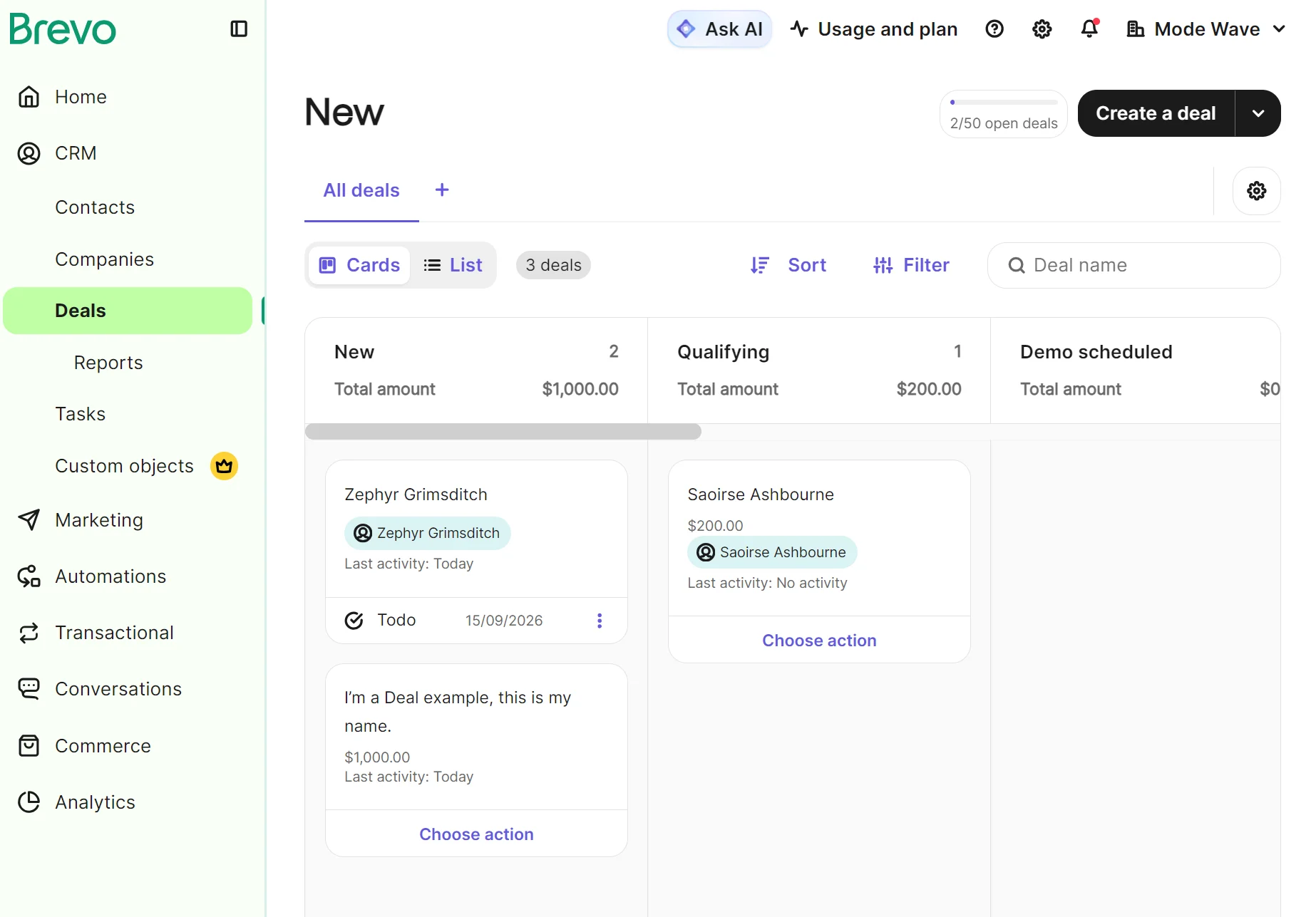
Both platforms offer free plans, serving as an entry point into their respective ecosystems, though with differing limitations. Brevo’s Free plan is generous, allowing one user to manage up to 100,000 contacts and send approximately 9,000 emails/month (300 emails/day), albeit with Brevo branding. It includes the Sales Free package, offering one sales pipeline and 50 open deals, and supports transactional email and SMS (with prepaid credits). However, marketing automations are capped at 2,000 contacts.
HubSpot’s Free plan supports two users and stores 1,000 contacts, allowing 2,000 emails/month with HubSpot branding. It provides one deal pipeline, 10 dashboards, and a single automated action, making it suitable for basic CRM and email marketing needs for very small businesses or startups. The core difference here highlights Brevo’s email-centric value proposition versus HubSpot’s CRM-first approach, even at the free tier.
Core CRM and Sales Capabilities
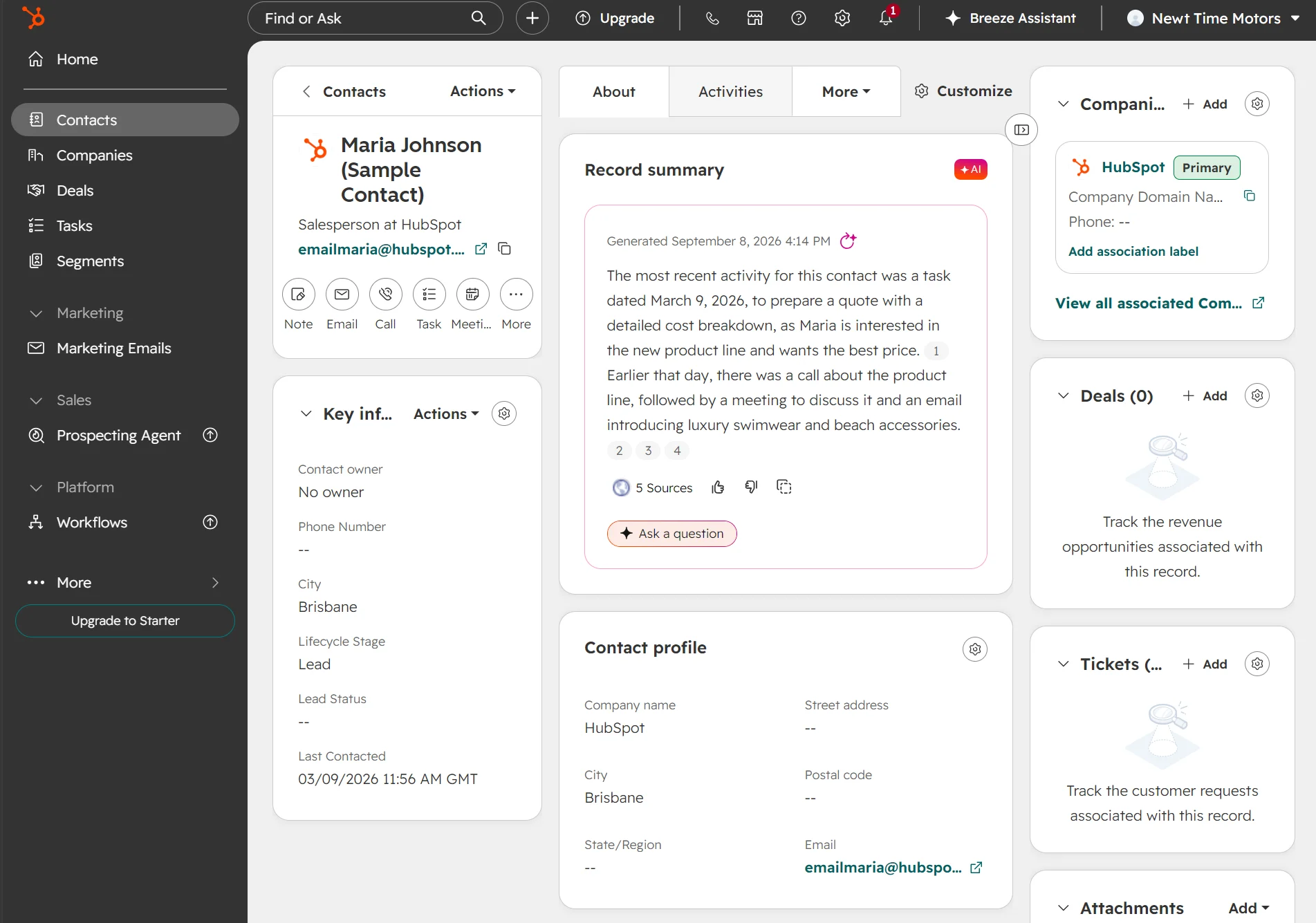
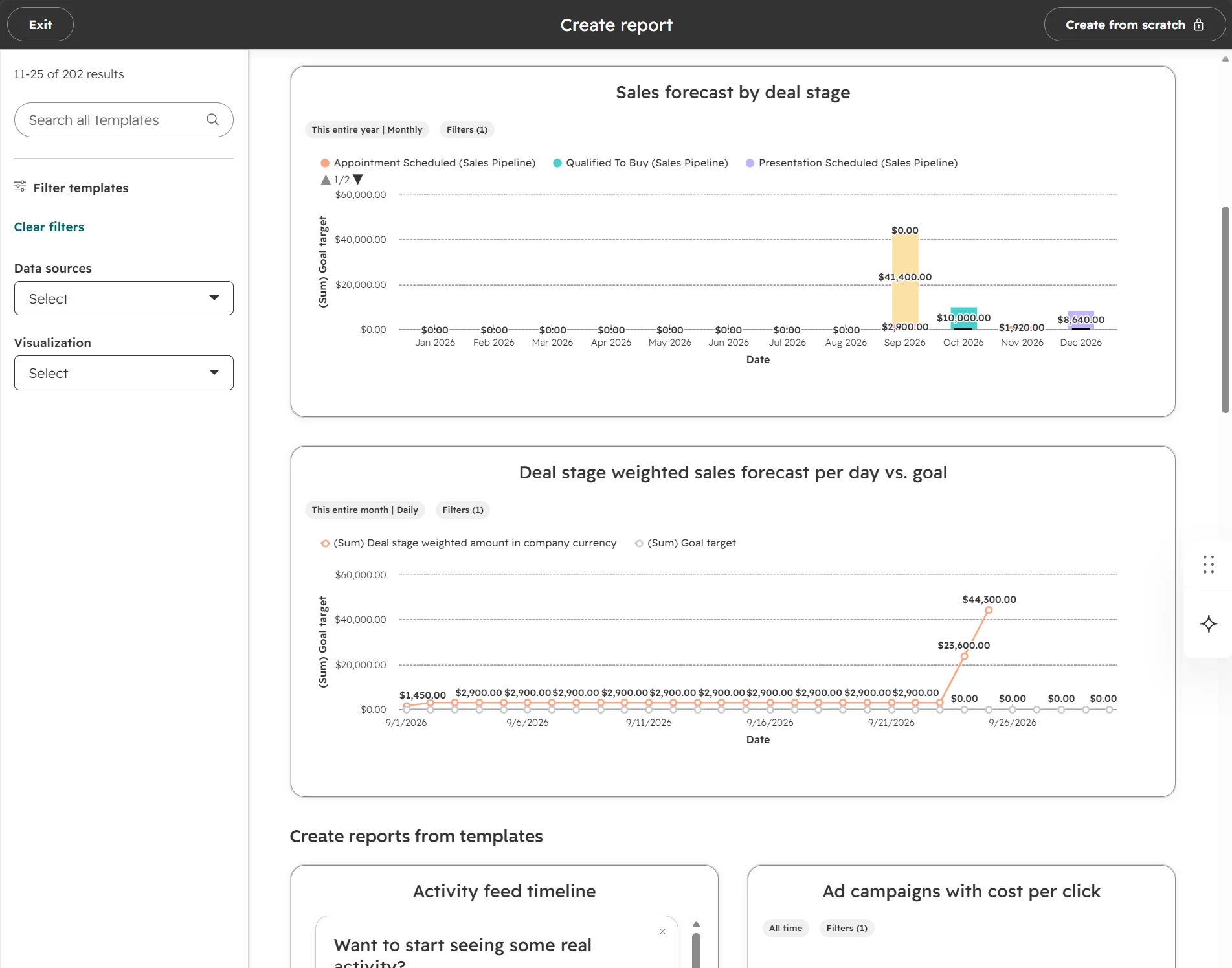
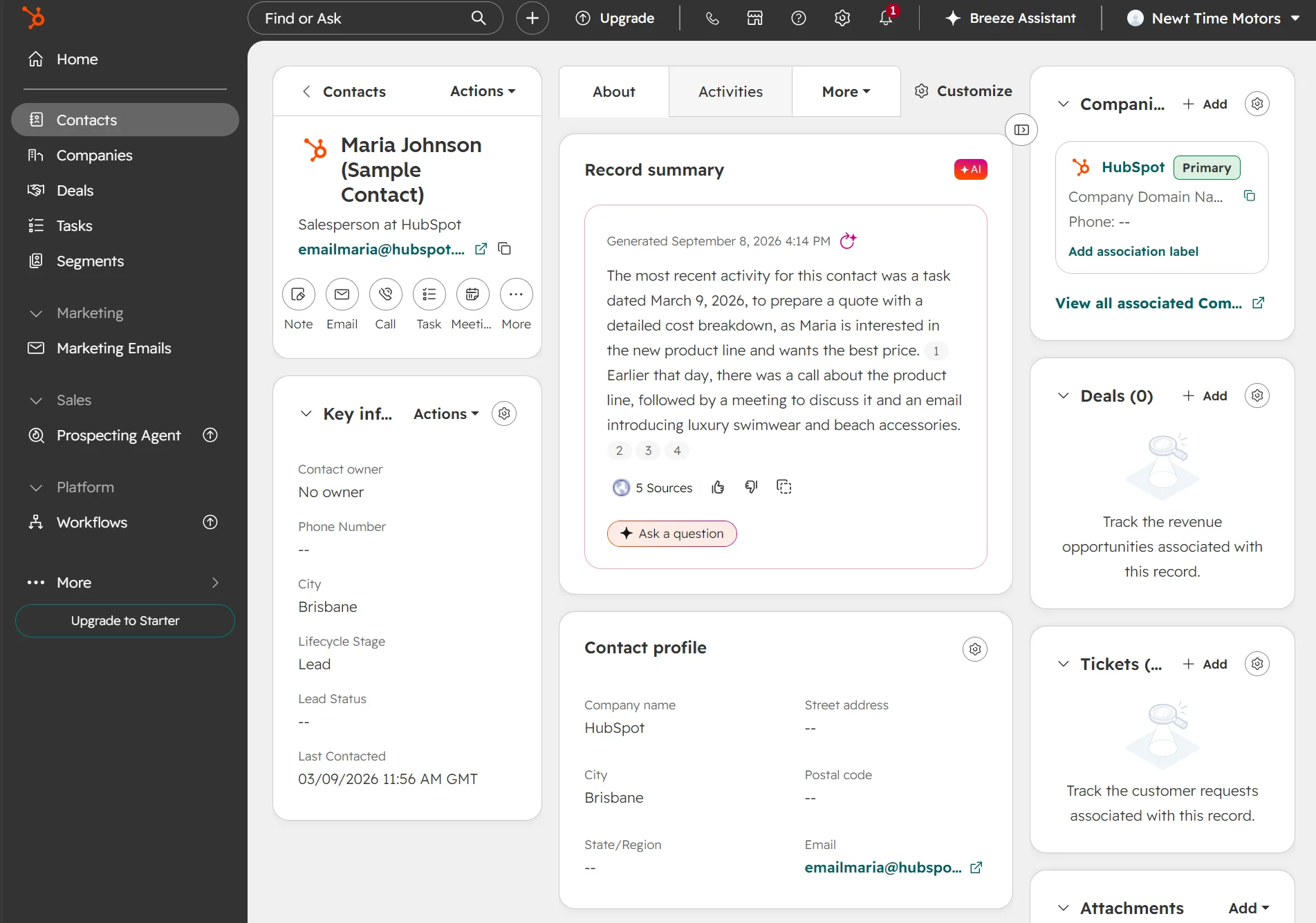
HubSpot is built as a comprehensive CRM platform, where marketing capabilities are integrated on top. This means its CRM is inherently more sophisticated and deeply intertwined with sales, service, and content management. Features like a custom report builder, enabling cross-referencing of contact, company, and deal data, start at the Professional tier ($890/month). The Professional plan offers 100 custom reports, while Enterprise provides 500, with extensive event tracking. HubSpot’s AI record summaries in contact and company profiles provide a quick overview of recent activity and allow users to query the AI for specific information, enhancing data utility and saving time. Multi-touch attribution, crucial for understanding marketing ROI, is an Enterprise-level feature ($3,600/month), offering seven attribution models and tracking up to 10,000 interactions per contact. Lead scoring, based on behavior, campaign interactions, and demographics, is also more advanced in HubSpot, with AI recommendations in the Enterprise plan.
Brevo’s CRM is more geared towards managing sales pipelines and deals as an outcome of marketing efforts. The Sales Free package, included in all plans, offers contacts, companies, deals, and tasks management. It provides one pipeline with up to 20 stages and 50 open deals, along with meeting scheduling synchronized with Google and Outlook. While Brevo offers three deal reports (revenue, sales cycle, and team performance), it lacks the deep exploratory environment for deals and pipelines that HubSpot provides. Its Analytics builder covers campaigns, contacts, and e-commerce data but does not extend to the granular deal-level analysis seen in HubSpot. Brevo’s AI, Aura AI, primarily focuses on summarizing individual calls and conversations rather than comprehensive record analysis. For advanced sales features like unlimited open deals, sales workflows, and AI contact/company enrichment, Brevo requires paid add-ons like Sales Essentials ($31/month) or Sales Advanced ($65/month), which also introduce VoIP and multi-currency support.
Marketing Automation and Email Building Experience
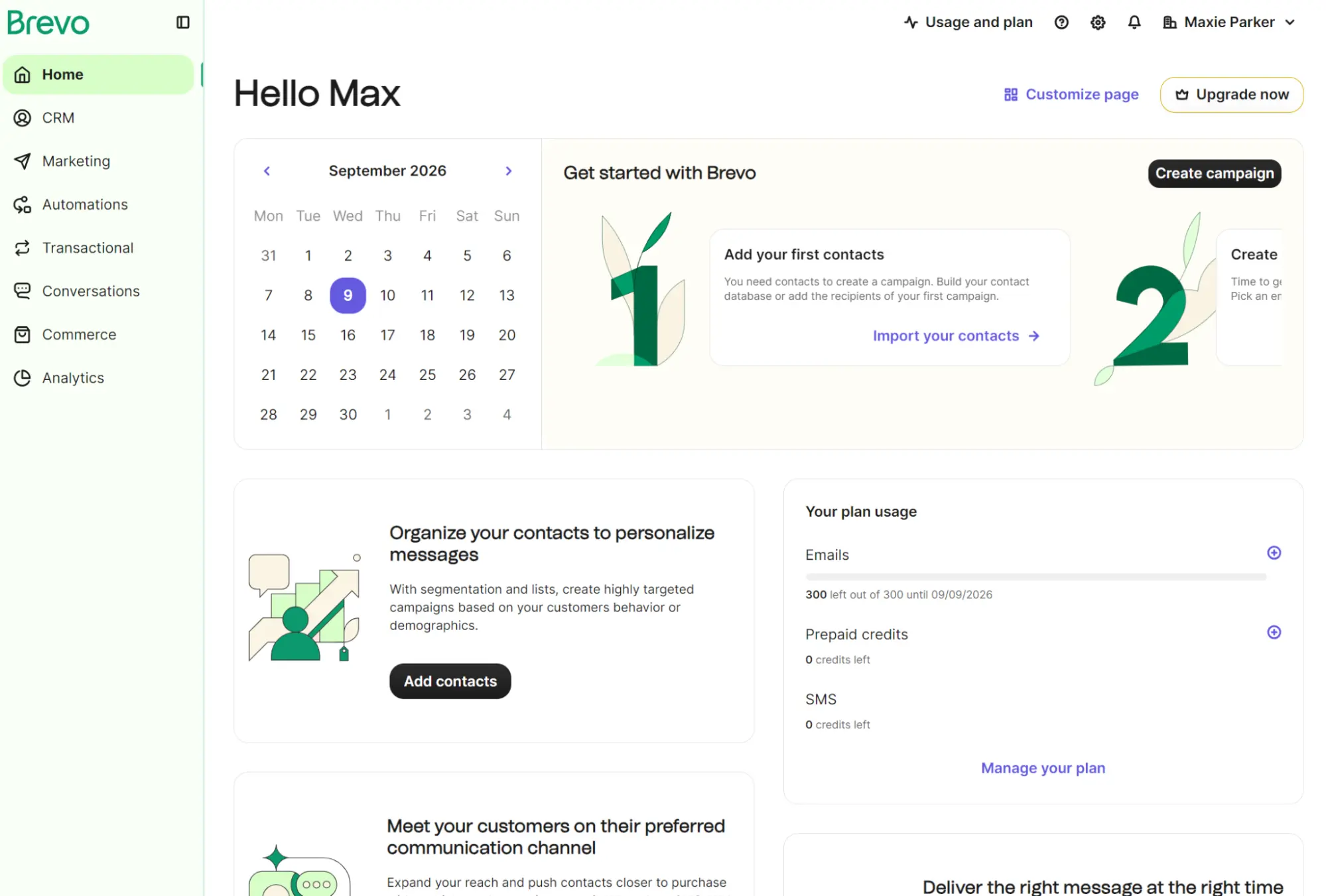
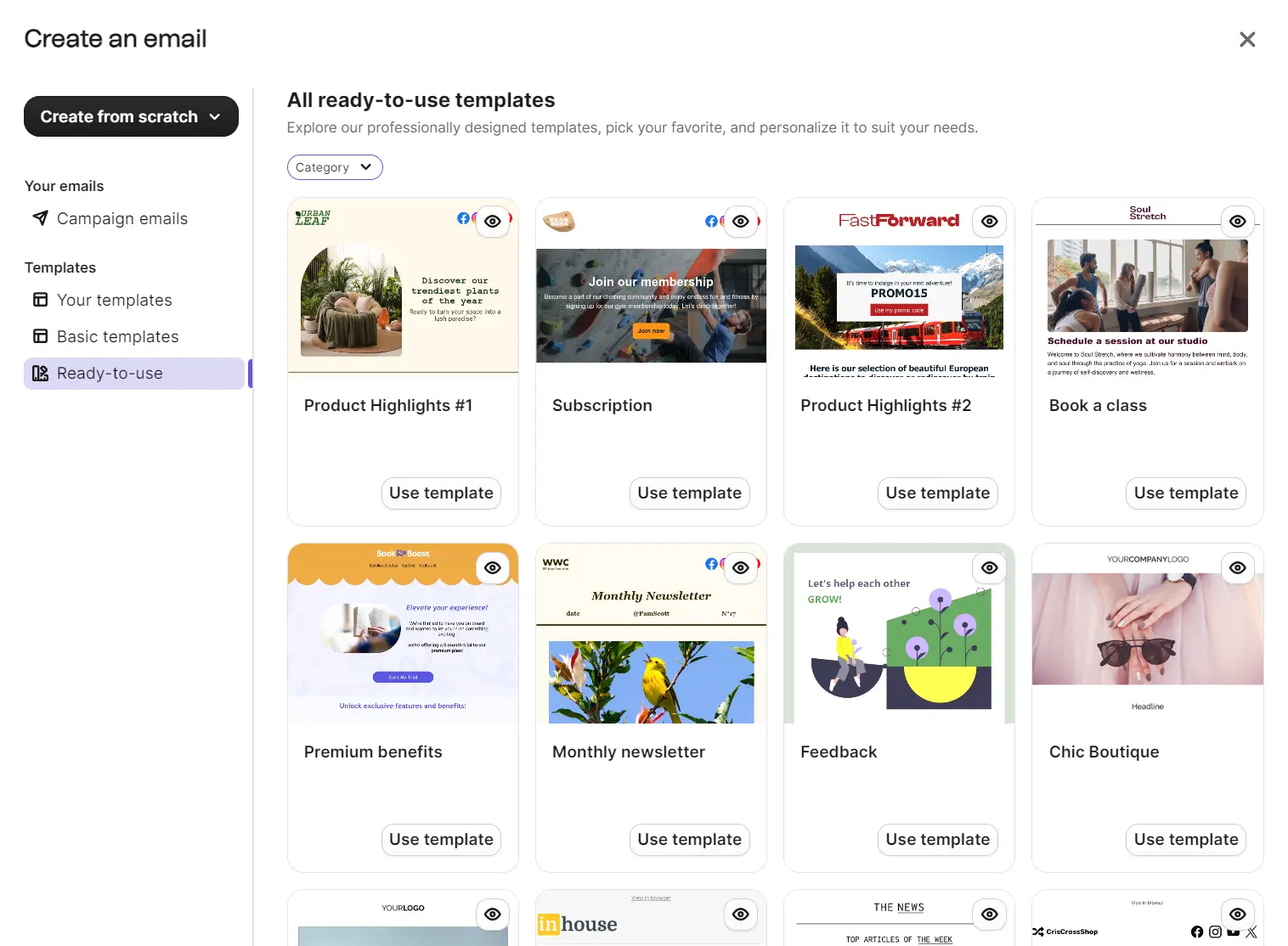
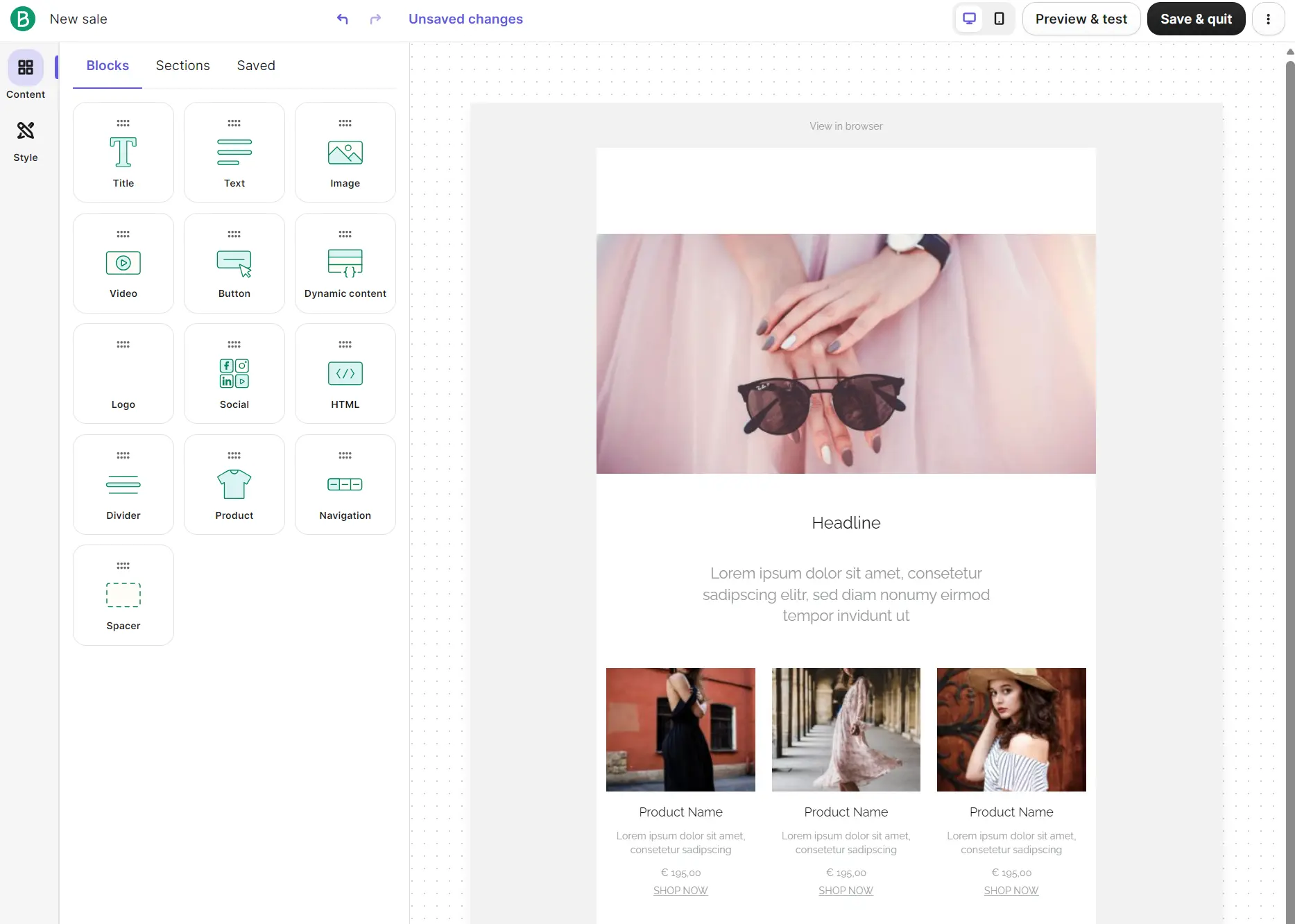
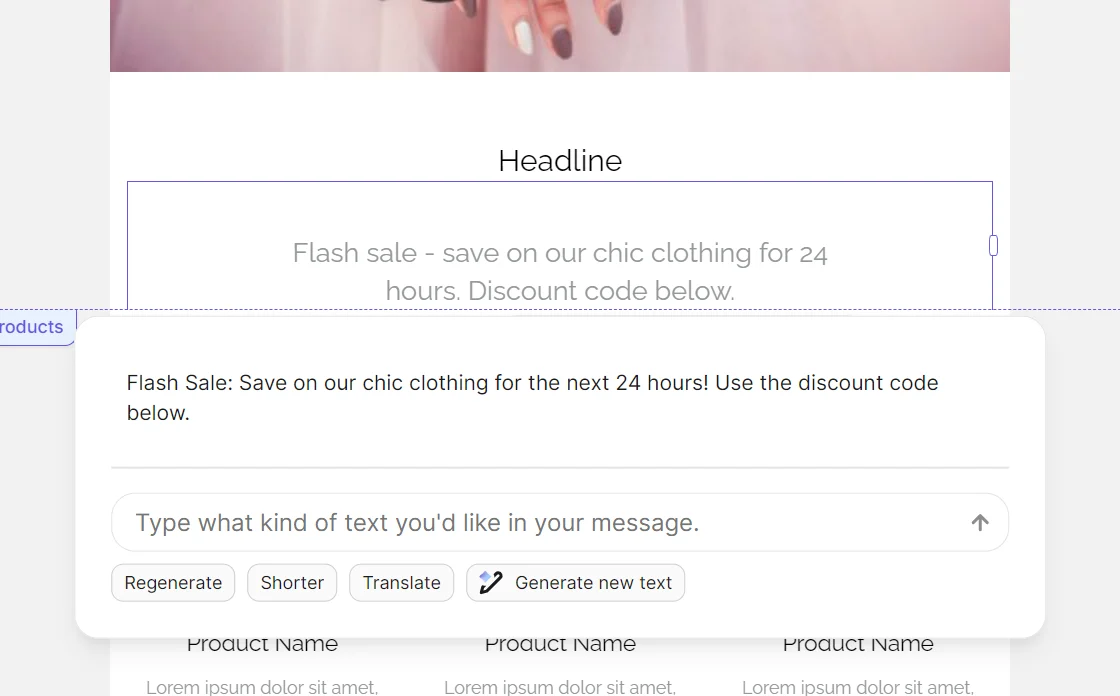
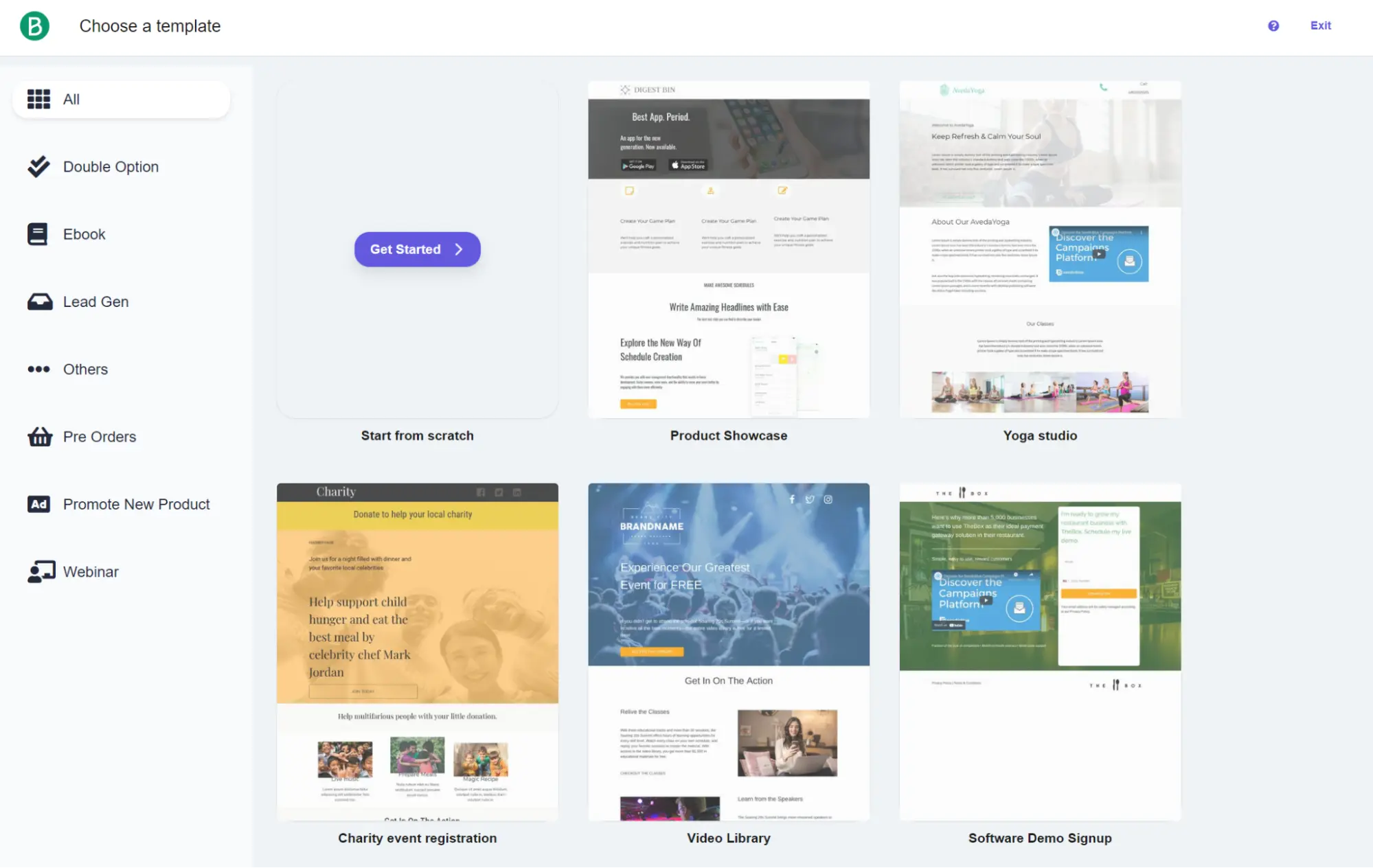
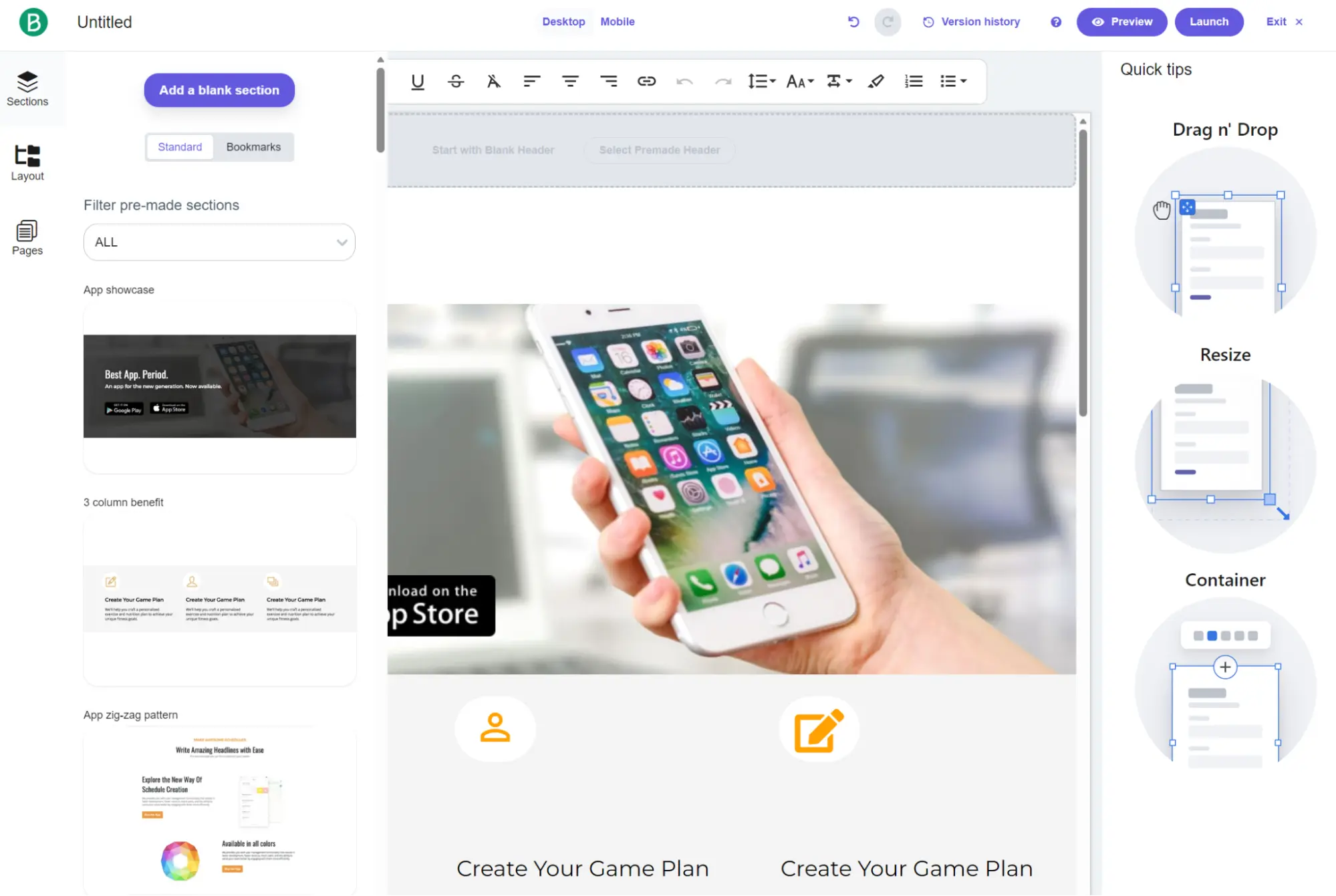
When it comes to marketing automation, Brevo offers a more accessible entry point. All Brevo plans include an automation builder with a canvas, though capped at 2,000 contacts for Free and Starter plans. This means even lower-tier users can set up essential e-commerce automations like welcome series or abandoned cart emails. Brevo provides 15 pre-built e-commerce automation templates, covering common scenarios across email and SMS. Its email editor is user-friendly, offering 48 ready-to-use templates and a diverse range of drag-and-drop blocks (including a product block available in all plans) and sections for layout customization. Brevo’s Aura AI content generator, available in all plans, assists with rephrasing or generating text directly within the email editor.
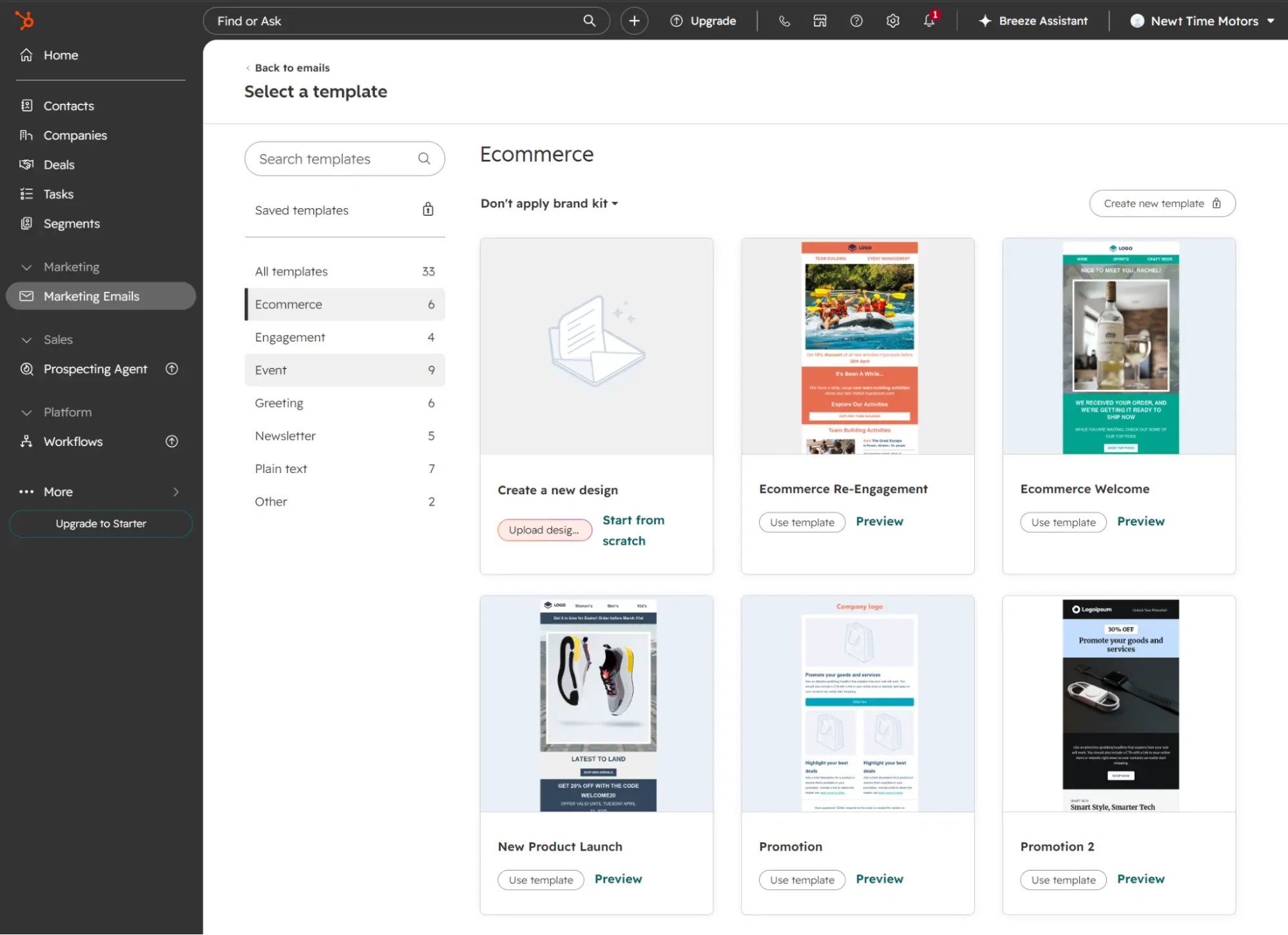
HubSpot’s automation capabilities are more gated. The Starter plan only allows 10 follow-up actions per form, and the full workflows canvas, essential for complex automations, is exclusive to the Professional plan ($890/month). This is a significant limitation for e-commerce businesses that rely heavily on automated sequences for customer engagement and recovery. HubSpot’s email editor is also drag-and-drop, with 33 templates (including six e-commerce options) and a robust AI Assistant for content generation. However, the manual transfer of AI-generated content into text blocks can be less seamless than Brevo’s in-line editing.
E-commerce Specialization and Integrations
For online stores, the choice between Brevo and HubSpot often hinges on specific needs and budget. Brevo demonstrates a stronger focus on e-commerce, evident in its highly-rated Shopify app (Brevo PushOwl, 4.8/5) compared to HubSpot’s (1/5). Brevo PushOwl offers comprehensive two-way syncing of customers, products, orders, browsing events, and cart events, and uniquely, syncs product variants as distinct entities. It also boasts native WooCommerce integration, whereas HubSpot relies on partner-maintained solutions for WooCommerce. Brevo’s plans include e-commerce integration across all tiers, with transactional email and SMS also universally available. Web push notifications are available from the Starter plan, and WhatsApp campaigns start at Professional ($499/month).
HubSpot’s Shopify integration (Shopify Data Sync) offers two-way syncing for contacts, companies (on Shopify Plus), and products, with one-way syncing for orders and abandoned checkouts into HubSpot. A notable limitation is its inability to sync Shopify product variants. While basic order tracking and email personalization are available in free plans, custom field mappings require Data Hub Starter. HubSpot’s transactional email is a $600/month add-on, and SMS campaigns require a $75/month Long Code add-on, both available only from Professional and above. Pop-ups, a crucial lead capture tool for e-commerce, are available in HubSpot’s paid plans via the CTAs tool, while Brevo restricts pop-ups to its Professional plan.
User Experience and Onboarding
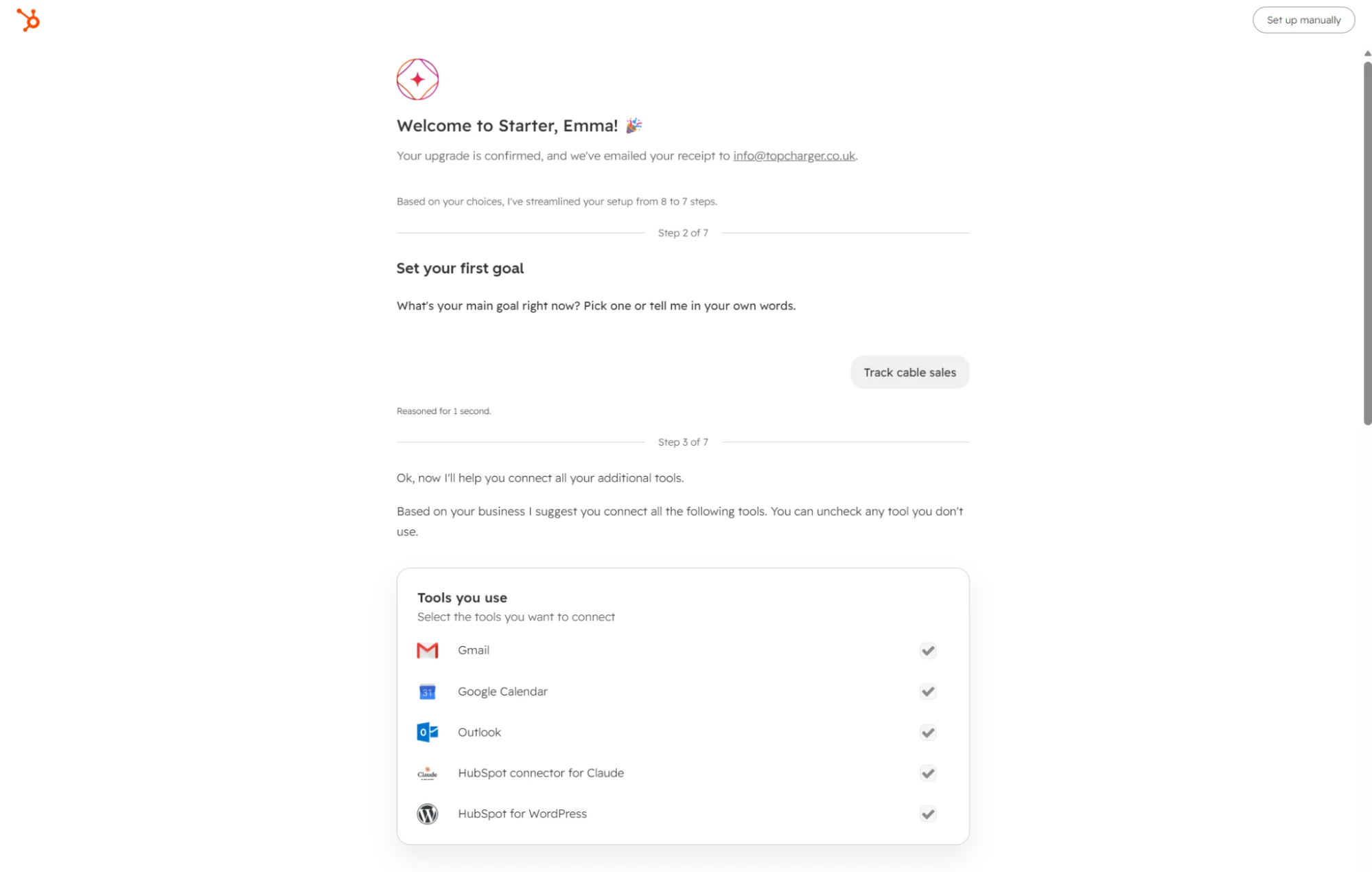
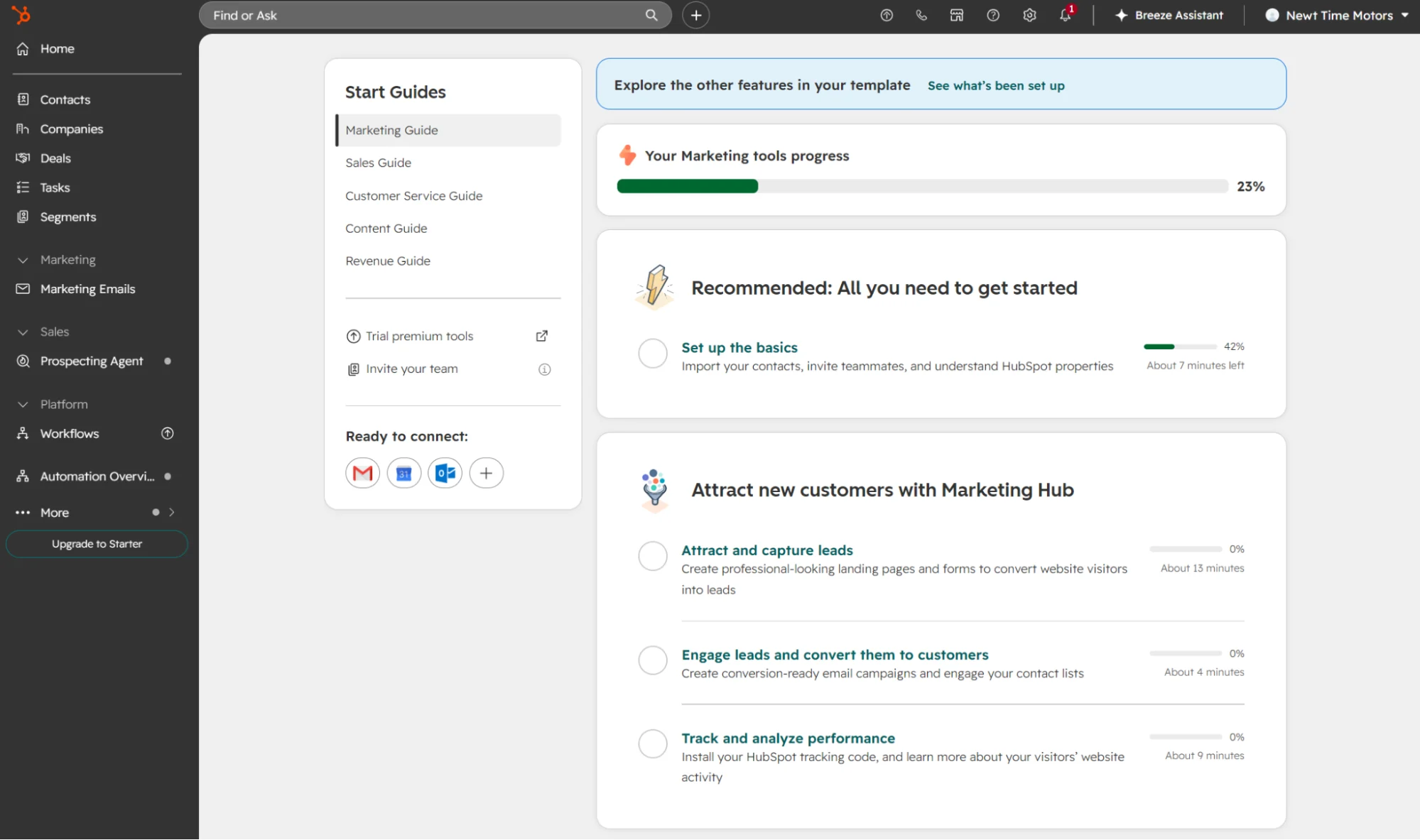
The initial user experience also reflects the platforms’ core philosophies. HubSpot features the "Breeze Assistant," an AI-guided setup process upon purchasing a paid plan. This assistant helps users define goals, connect tools, and builds a customized dashboard, offering a tailored onboarding that can feel more supportive for new users navigating a complex platform. Unfinished setup steps are conveniently available in the "Start Guides" sidebar.
Brevo offers a more direct, less guided onboarding experience, immediately directing users to the Home screen with basic "Get started" steps for adding contacts and creating campaigns. While this offers quicker access to core functions, it might require more self-direction for users unfamiliar with marketing platforms. The email editor in Brevo is generally considered intuitive, while its landing page editor, with its dual sidebars and extensive categories, can be more challenging. HubSpot’s landing page builder is structurally similar to its email editor, keeping all elements on one side, which can contribute to a more consistent user experience. However, its AI landing page generation feature is locked behind plans higher than Starter.
Strategic Implications and Use Cases
- For cost-conscious businesses with large contact lists: Brevo stands out. Its volume-based pricing model means storing hundreds of thousands of contacts is significantly cheaper, especially if sending frequency is moderate. A business with 500,000 contacts sending 20,000 emails monthly would pay $32/month with Brevo Starter, a fraction of HubSpot’s cost for the same contact volume.
- For sales teams requiring deep CRM insights and collaborative deal management: HubSpot is the clear winner. Its robust custom reporting, AI record summaries, and advanced lead scoring provide unparalleled visibility into the sales process and customer interactions across the lifecycle, empowering sales teams to work deals effectively over extended periods.
- For e-commerce businesses focused on integrated marketing channels and automation: Brevo offers a more accessible and feature-rich solution at lower tiers. Its comprehensive e-commerce integrations, availability of core automations (like abandoned cart and welcome series) in Standard plans, and native support for transactional email and SMS make it a powerful tool for driving online sales.
- For businesses prioritizing multi-touch attribution and complex customer journey analytics: HubSpot’s Enterprise plan provides the tools necessary to meticulously track and attribute revenue across various touchpoints and map intricate customer journeys. This level of detail is crucial for large organizations with complex sales cycles and diverse marketing channels.
- For small businesses or startups needing a basic CRM and email without extensive automation: Both free plans offer value. Brevo provides more email volume and contact storage, while HubSpot offers a slightly more integrated (though limited) CRM experience with two users.
Alternatives: Omnisend for E-commerce First
For businesses where neither Brevo nor HubSpot perfectly aligns with their needs, especially in the e-commerce space, platforms like Omnisend offer a compelling alternative. Omnisend is an e-commerce-first multichannel marketing automation platform designed to maximize revenue and retention through native email, SMS, and web push notifications within a single workflow. Unlike Brevo and HubSpot, which have broader CRM or marketing messaging foundations, Omnisend’s contact management is specifically tailored for retail, emphasizing features like AI customer lifecycle maps based on RFM (Recency, Frequency, Monetary value) analysis. This allows businesses to segment contacts based on purchase behavior automatically, with 30+ pre-built segments available in all plans, including a Free Forever option.
Omnisend offers crucial e-commerce features like cart recovery, product recommendations, and back-in-stock alerts across all its plans, which are often gated in higher tiers or require add-ons in Brevo and HubSpot. Its pricing, like Brevo’s, is more aligned with the needs of e-commerce businesses, and it provides 24/7 live chat and email support across all plans, a level of accessibility often reserved for premium tiers in other platforms. In 2025, Omnisend customers reported an impressive 79:1 ROI across their email, SMS, and web push campaigns, highlighting its effectiveness as a dedicated e-commerce marketing solution.
Conclusion
The choice between Brevo and HubSpot ultimately depends on a business’s specific priorities, budget, and growth stage. Brevo excels as a cost-effective, multi-channel marketing platform ideal for businesses with large contact lists and a primary focus on email volume and foundational sales processes. Its robust e-commerce integrations and accessible automation features make it a strong contender for online stores. HubSpot, on the other hand, is a premium, comprehensive CRM designed for businesses seeking deep analytical capabilities, advanced sales pipeline management, and a holistic view of the customer lifecycle across various departments. Its higher price point and feature gating reflect its strategic positioning for larger organizations with more complex needs and a willingness to invest in a full-stack solution. Businesses must carefully evaluate their marketing objectives, sales processes, budget constraints, and long-term strategic vision to determine which platform best serves their current and future requirements. For those whose needs fall outside the primary strengths of these two giants, specialized alternatives like Omnisend offer compelling, e-commerce-focused solutions.