The digital advertising landscape is undergoing a seismic shift with the official launch of OpenAI’s advertising platform, a groundbreaking development that places branded messages directly within the context of ChatGPT’s widely used conversational AI responses. While still in its nascent stages, this innovative advertising channel offers brands an unprecedented opportunity to reach millions of users at a pivotal moment of engagement and inquiry. Most brands, however, have yet to fully grasp the potential of this emerging advertising frontier.
The strategic rollout of OpenAI’s advertising capabilities began in March 2026, with initial access granted to businesses in Australia and New Zealand. This was followed by the full self-service platform becoming available to advertisers in the United States on May 5, 2026. The expansion continued into June 2026, with Japan, South Korea, and the United Kingdom — the first European market — gaining access to ChatGPT ads. This phased introduction allowed OpenAI to refine its platform and gather initial insights before a broader global release.
Despite the rapid adoption of AI technologies, the inner workings of Large Language Models (LLMs) like ChatGPT remain somewhat opaque to many. This inherent mystery has, in turn, cast a shadow of uncertainty over OpenAI’s advertising platform for some potential advertisers. However, seasoned digital marketers emphasize that the fundamental logic of advertising remains consistent across platforms. As one media buyer noted, "Once you master one advertising platform, others become significantly easier to navigate because the core principles and operational logic are largely transferable." This sentiment extends to OpenAI’s Ads Manager and its campaign setup process, which, while unique in its placement, adheres to familiar advertising paradigms.

Navigating the OpenAI Ads Manager
Upon accessing the OpenAI Ads Manager, advertisers are greeted with a Performance Trend dashboard. This central hub provides a clear overview of key campaign metrics, including spend, impressions, clicks, and cost per click (CPC), visualized across customizable date ranges. Users can select predefined periods such as 7, 14, or 30 days, or opt for bespoke date selections to analyze performance with precision.
The dashboard offers further depth through segmentation and filtering options. Advertisers can dissect their data by device type or geographical location, enabling a granular understanding of campaign reach and engagement across different audience segments.
A comprehensive menu resides on the left-hand side of the Ads Manager interface, offering access to various campaign management tools. Beyond the Overview, this menu typically includes sections for:
- Campaigns: To create, manage, and monitor all active and past campaigns.
- Ad Groups: To organize ads into thematic units for targeted delivery.
- Ads: To design and deploy individual advertisements.
- Audiences: To define and refine target demographics and interests.
- Reporting: For in-depth performance analysis and custom report generation.
- Billing: To manage payment methods and view transaction history.
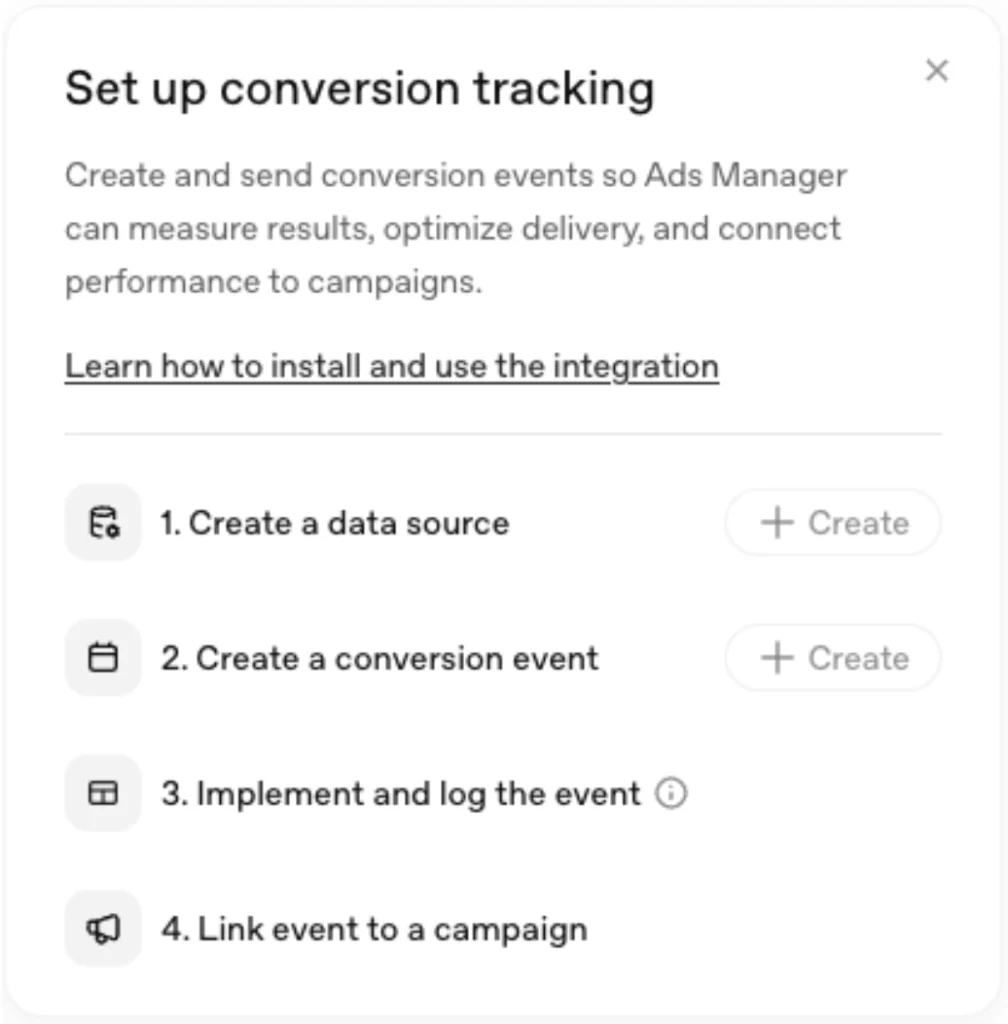
- Tools: A crucial section that often houses conversion tracking setup, API key management, and other advanced functionalities.
Within the "Tools" section, API keys play a pivotal role. These keys serve as secure credentials, enabling developers and advertisers to integrate their applications and tools with OpenAI’s models. This programmatic access allows for the automation of critical tasks such as generating ad copy variations, analyzing campaign performance in real-time, and seamlessly embedding AI capabilities into broader marketing workflows. In essence, an API key acts as an authorized gateway for leveraging OpenAI’s AI power through custom integrations.

The Campaign Creation Framework
The process of establishing a campaign within OpenAI’s Ads Manager is designed to be intuitive and mirrors the foundational structure found on most other major advertising platforms. The hierarchical approach involves creating a campaign, followed by an ad group, and finally, the individual ads.
The initial step in campaign creation is naming. While some marketers might overlook this seemingly minor detail, a well-considered campaign name is paramount for effective tracking and maintaining organizational hygiene within an ad account. Clear and descriptive naming conventions are essential for later analysis and optimization.
Following the campaign name, advertisers must select an objective. OpenAI’s platform typically offers key objectives such as Reach, Clicks, or Conversions. The choice of objective is critical, as it dictates the AI’s optimization strategy. If the goal is to maximize reach, the algorithm will strive to show the ad to as many unique users as possible. For a click-based objective, the focus will be on driving traffic to a specified destination. When conversions are the primary goal, the AI will prioritize users most likely to complete a desired action on the advertiser’s website or app.
For campaigns targeting conversions, it is a prerequisite to first establish conversion events within the "Tools" section of the Ads Manager. This setup allows OpenAI to accurately track and attribute desired outcomes.

A notable departure from some other platforms is the placement of the location targeting setting. In OpenAI’s Ads Manager, location is configured at the campaign level rather than within the ad group. Currently, advertisers can target their campaigns across seven distinct geographical regions, reflecting OpenAI’s phased global expansion.
The final crucial step at the campaign level is budget allocation. Advertisers can choose between a daily budget, which sets a maximum daily spend, or a campaign total budget, which defines the overall expenditure for the campaign’s duration. It is important to note that once a campaign is launched, the budget type cannot be altered, although the budget amount can be adjusted.
Structuring Ad Groups for Precision
Within the campaign framework, the ad group serves as a vital organizational layer. Similar to campaign naming, adopting a simple yet informative naming convention for ad groups is recommended to clearly denote their purpose and target audience.
The subsequent step involves setting bids, which are directly influenced by the chosen campaign objective. For instance, a "Clicks" objective might require a Cost Per Click (CPC) bid, while a "Conversions" objective might utilize a Cost Per Acquisition (CPA) bid. OpenAI’s platform offers a helpful interface that provides guidance on bid amounts, indicating whether a particular bid is likely to be competitive and deliver sufficient impressions and traffic for the ad group. Visual cues, such as "Strong Delivery" or "May not deliver," offer immediate feedback on bid competitiveness.

A lower bid might signal a risk of limited delivery, whereas a higher bid suggests a greater likelihood of reaching the target audience effectively. This real-time feedback mechanism empowers advertisers to make informed bidding decisions.
The next crucial element at the ad group level is the default destination URL. This URL will serve as the landing page for any new ads created within this ad group, though specific destination URLs can be defined at the ad creation stage.
An optional but highly recommended step is the inclusion of "Context Hints." These hints allow advertisers to describe the conversations, topics, or keywords where their products or services are most relevant. It is crucial to understand that context hints are not exact-match targeting rules; rather, they serve as guides to help the AI better understand the intended context for ad delivery, thereby improving ad relevance.
Crafting Compelling Ads
The final stage before launching a ChatGPT advertising campaign involves the creation of individual ads. As with campaigns and ad groups, assigning a descriptive ad name is essential for effective tracking and optimization. This naming convention can also be integrated into UTM parameters for more detailed performance analysis using third-party tracking tools like Google Analytics. While automatic UTM generation is not yet available in OpenAI’s Ads Manager, appending static UTMs to your destination URLs is a standard practice for robust tracking.

The ad creation process involves defining three core components:
- Visual: This refers to the image or creative asset that will accompany the ad. The visual plays a critical role in capturing user attention.
- Headline: A concise and compelling headline designed to grab the user’s interest and communicate the core message of the ad.
- Primary Text: The main body of the ad copy, providing more detailed information about the product or service, its benefits, and a clear call to action.
Advertisers have the flexibility to create multiple ads within an ad group. This can be achieved by duplicating an existing ad and modifying specific elements, such as the visual, or by creating entirely new ads from scratch. This iterative approach allows for A/B testing of different creative elements to identify what resonates best with the target audience.
Once all campaigns, ad groups, and ads are configured, advertisers proceed to a "Review" stage. Here, a comprehensive summary of the campaign setup is presented for final verification. Upon confirming accuracy, the campaign can be published, and advertisers can then monitor its performance through the Ads Manager dashboard.
Key Considerations for Campaign Setup
Several critical moments demand particular attention during the campaign setup process:

- Objective Alignment: Ensuring the chosen objective accurately reflects desired business outcomes is paramount. Mismatched objectives can lead to inefficient ad spend and suboptimal results.
- Budget Strategy: Deciding between a daily or total campaign budget requires careful consideration of cash flow and campaign duration. Once set, this cannot be changed post-launch.
- Location Targeting Precision: Selecting the appropriate geographical regions ensures that ad spend is directed towards relevant markets.
- Context Hints Optimization: Thoughtful use of context hints can significantly improve ad relevance and user experience, leading to higher engagement rates.
- Creative Testing: Developing multiple ad variations and testing them allows for continuous improvement and optimization of ad performance.
- Tracking Implementation: Correctly setting up conversion tracking and utilizing UTM parameters are vital for measuring ROI and understanding campaign effectiveness.
Monitoring Competitive Activity on ChatGPT
As brands increasingly recognize the advertising potential of ChatGPT, understanding competitor strategies becomes essential. While OpenAI does not currently offer a built-in "Ad Library" for competitor analysis, third-party tools are emerging to fill this gap.
One such platform, Trendos.com, provides valuable insights into competitive advertising on ChatGPT. Their "Ad Radar" tool reveals which competitors are actively advertising, their impression share, and the overall volume of ads appearing in AI responses. Users can analyze this data by date range, prompt groups, specific prompts, and country. The tool offers a detailed view of competitors’ ad copy, visuals, and destination URLs, providing a comprehensive competitive intelligence report.
Recent research from Trendos indicates a significant surge in brands advertising on ChatGPT, with a reported 315% increase in active advertisers between May and June 2026. This rapid growth underscores the escalating competition within this new advertising space. As the platform becomes more saturated, the ability to discern and adapt to competitor digital strategies will be increasingly critical for brands seeking to maintain visibility and achieve their marketing objectives.
The Evolving Landscape of Conversational Advertising
As ChatGPT solidifies its position as a trusted information source for millions worldwide, it is simultaneously evolving into a vital channel for brands seeking to build awareness and forge connections with their target audiences. The success in this new advertising paradigm hinges on the ability of marketers to translate their expertise and accumulated knowledge from established advertising platforms and adapt these strategies to the unique context of conversational AI.

The integration of advertising within AI-generated responses presents a novel approach to user engagement. Unlike traditional ad placements that can sometimes interrupt user flow, ads positioned contextually within a ChatGPT conversation have the potential to feel more organic and relevant, provided they are well-targeted and offer genuine value. This symbiotic relationship between AI-driven information and targeted advertising marks a significant evolution in digital marketing, promising to redefine how brands interact with consumers in the age of artificial intelligence. The early adopters who embrace this platform and master its nuances are poised to gain a significant competitive advantage in the rapidly expanding realm of conversational advertising.