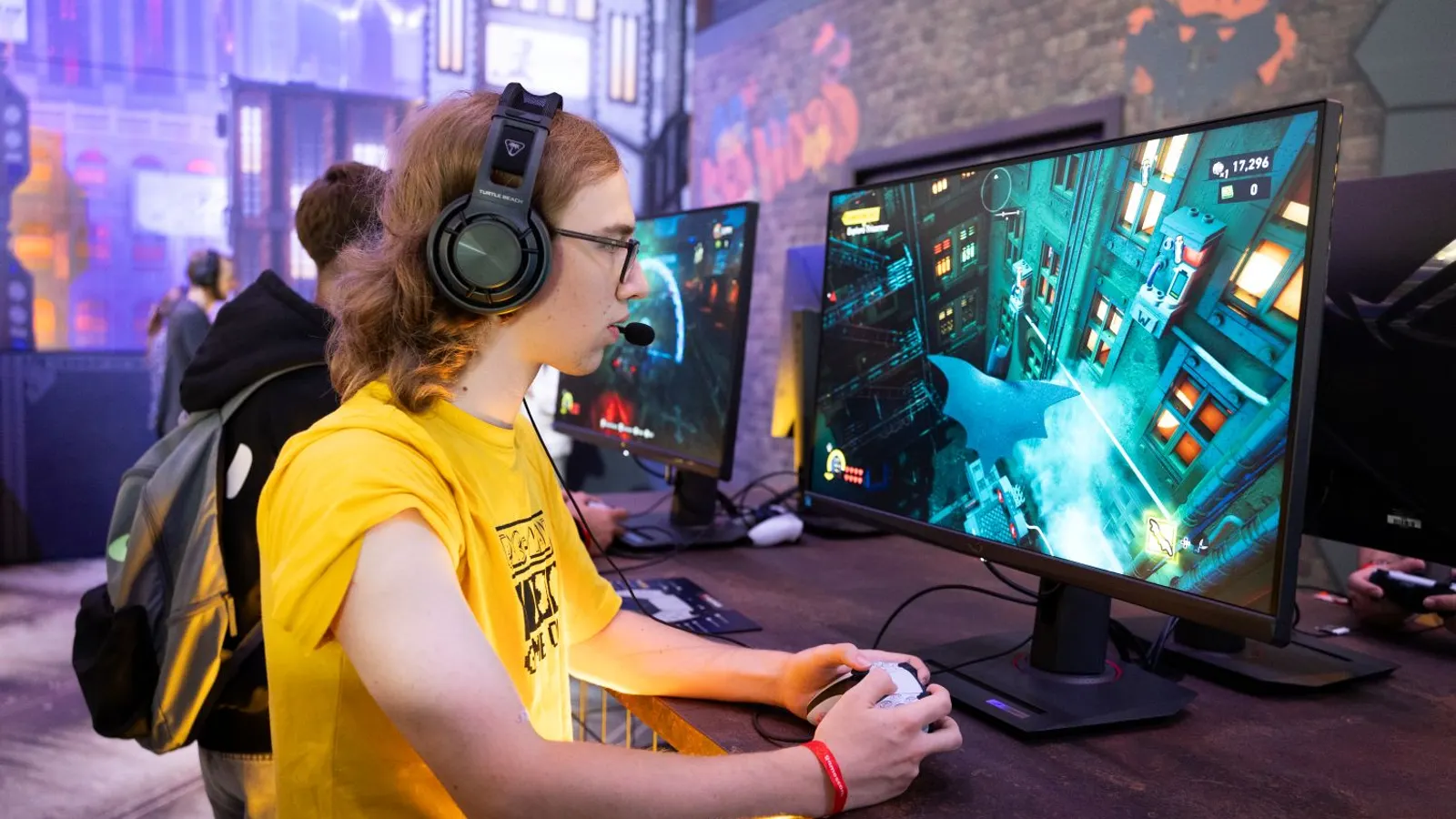
NEW YORK – The persistent disconnect between gaming’s massive, highly engaged audience and its comparatively meager share of advertising budgets was a central theme at the Interactive Advertising Bureau’s (IAB) PlayFronts, a recent industry gathering in New York that brought together marketers, platforms, developers, and other stakeholders. For years, the gaming industry has touted its expansive reach, with consistent messaging highlighting a predominantly young, deeply invested demographic ripe for advertising. Despite technological advancements on both the advertising and in-game fronts, pushing beyond traditional rewarded video and mobile pop-up ads, the financial commitment from advertisers has lagged significantly, commanding only a fraction of overall ad spend despite a global player base of 3.6 billion.
Cintia Gabilan, senior vice president of Centers of Excellence & Industry Initiatives at the IAB, articulated this ongoing challenge during her keynote address at the PlayFronts on September 17th. "For the past several years, gaming has been singing this very familiar song. The audience is enormous. The engagement is extraordinary and the advertising dollars are not following," Gabilan stated, underscoring the industry’s frustration. The PlayFronts event served as a critical forum for dissecting this paradox, exploring the reasons behind the continued underinvestment despite significant growth and innovation within the gaming sector. Discussions spanned mobile gaming’s dominance, advancements in measurement methodologies, and strategies to bridge the gap between potential and realized advertising revenue.
The Audience is Undeniable, But Practicality Prevails
The sheer scale of the gaming audience is no longer the point of contention for marketers. Data from the Entertainment Software Association (ESA) indicates that as of 2026, an impressive two-thirds of Americans, spanning ages 5 to 90, engage in gaming for at least an hour per week. This widespread participation, coupled with the highly immersive nature of gaming—where players are typically not multitasking on secondary screens, unlike with traditional media like television—has always been a strong draw. However, the conversation has shifted from acknowledging the audience’s size and receptiveness to addressing the practical challenges of integrating gaming into broader media strategies.
"The conversation around gaming is now centered around practicality," Gabilan explained. Key questions for senior leadership, often unfamiliar with the gaming landscape, include how to effectively explain its value proposition, how gaming fits within an overall media plan, and the crucial aspect of how to measure its effectiveness. Gabilan drew a parallel to the evolution of connected TV (CTV), noting that while Americans dedicate approximately 20% of their media time to CTV, it only commands about 7.7% of media spend. "The gap is still closing, but it’s a channel that we all already consider mainstream," she remarked. "Gaming has exactly the same shape of problem, if you will. It’s just very much earlier in the curve." This analogy highlights that while gaming faces similar adoption hurdles as other emerging or evolving media channels, it is still in a nascent stage of widespread marketing integration.
Mobile Gaming: The Foundational Pillar
Mobile gaming continues to be the bedrock of gaming advertising, and for compelling reasons. Marian Thomas, senior director of partnerships, research, and measurement at mobile game developer Zynga, highlighted that approximately 62% of mobile gamers fall within the Gen Z or millennial demographics, making it an ideal channel for brands targeting younger consumers. Furthermore, a significant portion of mobile gamers are heads of households (82%) and parents (54%), indicating a broader demographic reach beyond just the youth market.
Interactive and rewarded video ads have become the standard in mobile game advertising. These formats are designed to offer value to the player, such as in-game currency or content, in exchange for viewing an advertisement. This approach transforms ads from mere interruptions into engaging experiences that foster positive brand perceptions. "It works because it’s a highly engaged audience. They’re attentive, they’re active, they’re receptive. Those rewarded and interactive ads drive deeper engagements and stronger responses, and higher attention scores," Thomas stated. However, this very engagement can also be a double-edged sword. Benjamin Chua, client media lead at WPP Media, cautioned during a discussion with Jorge Prado, co-founder and CEO of Admazing Co., that the ease of integrating ads in mobile gaming can lead to oversaturation. "It’s highly engaging, but at the same time, if you do it too much, it becomes an annoyance," Chua observed. This delicate balance between engagement and irritation is a key consideration for advertisers in the mobile gaming space.
Navigating the "Gaming Golden Age" and Shifting Player Habits
The current era is characterized by an unprecedented availability of well-crafted and deeply engaging video games. Contrary to a simplistic view that players remain loyal to a single title, experts emphasize that the gaming landscape is far more dynamic. Shahar Sorek, CMO of Overwolf, a company specializing in user-generated content and in-game applications, explained that the old model of marketers targeting a specific game to reach a defined audience is obsolete. "That model is gone because there are more games than ever, and more good games than ever," Sorek stated.
This proliferation of titles and the fluid movement of players across them presents a complex, yet ultimately advantageous, scenario for marketers. While it complicates the ability to track a single user across a static game, it also offers a unique opportunity to engage with players consistently as they transition between different gaming experiences. Sorek pointed out the industry’s "perception problem," suggesting that the increased complexity of the gaming map can make it appear more challenging to navigate from a marketing perspective. "The map got more complex, so the buy looks harder. None of that is a statement about the medium. It’s a statement about how the medium is being read… 2.4% of [media] spend against 67% of the country playing every week, it’s not a stable equilibrium. The only question is who fixes it early and who is still catching up." This stark statistic underscores the significant gap between the market’s potential and its current investment.
The Imperative of Unified Measurement
As with any advertising channel, robust measurement is paramount for gaming to gain traction and secure its rightful place in media plans. The lack of standardized and proven measurement methodologies has often relegated gaming to the status of an experimental or risky investment for many senior marketing executives. Establishing consistent metrics for success is crucial to demonstrating the channel’s efficacy and ROI.
"The audience moves across many titles, so your plan has to move with it. And proof: measure what matters. Not that they clicked during playtime, but did it change what they did afterward," advised Sorek, emphasizing the need to move beyond vanity metrics to measure true impact on consumer behavior. Andy Martinson, senior marketing manager at H&R Block, noted that clarity on measurement frameworks can significantly aid marketers in advocating for gaming budgets internally. He stressed that a one-size-fits-all approach to measurement is ineffective, as not all gaming experiences are created equal. "There are so many different ways to measure gaming," Martinson commented. "You’ve got gaming that is like programmatic… you have displayed in-game pieces and then you’ve got interactive games." This diversity necessitates tailored measurement strategies that align with specific brand objectives.
Unpacking the Budgetary Conundrum: Where Does the Money Go?
The core of the gaming advertising conundrum lies in the stark disparity between its audience size and its allocated budget. However, the IAB PlayFronts discussions brought to light a critical question: is gaming truly being overlooked, or is its investment simply obscured within other budget categories? For instance, are activations on platforms like Twitch classified as gaming spend, or do they fall under social media? Similarly, partnerships with gaming creators—are these funded by dedicated gaming budgets, or are they categorized under influencer marketing?
The answers to these questions are not always clear-cut, reflecting the evolving nature of digital media consumption and marketing allocation. Despite this ambiguity, industry experts urge brands not to let budgetary classification deter them from exploring the gaming space. The multitude of options available for marketers to experiment with, regardless of how they are labeled, remains a significant advantage. "Since it’s an emerging platform, there’s so many different options, there’s so many ways to build into gaming and do interesting new things," Martinson observed. He added, "You don’t always have to sit in a box… [Gaming] is new, it’s cheap, which is the best possible thing for a market." This perspective suggests that the current undervaluation, while a challenge, also presents an opportunity for early adopters to gain a competitive edge and innovate within a cost-effective and highly engaging environment. The ongoing dialogue at events like PlayFronts signals a growing momentum towards demystifying gaming for advertisers and integrating it more strategically into the broader marketing mix.