The landscape of creative production is undergoing a dramatic transformation, with artificial intelligence emerging as a powerful engine for accelerating concept generation, design iteration, and asset creation. AI can now produce concepts in mere seconds, generate dozens of variations from a single design, and condense tasks that once spanned days into mere hours. However, a recent analysis of over 25 million assets produced using Rocketium AI Studio reveals a critical disconnect: while the generation of creative assets is undeniably faster, the overall operation of creative production often remains sluggish. This disparity stems from persistent bottlenecks in the pre-production and post-production stages, highlighting that speed in one area does not automatically translate to efficiency across the entire workflow.
The core issue, as identified by industry observations and data analysis, is that advancements in AI’s generative capabilities have outpaced the streamlining of fundamental creative operational processes. The initial brief, the crucial review and approval stages, and the stringent adherence to brand, legal, and retailer requirements all continue to consume significant time and resources, effectively capping the speed at which creative campaigns can be launched. This phenomenon is not unique to any single organization but represents a broad challenge faced by marketing and creative departments globally as they integrate increasingly sophisticated AI tools.
The "Slow Brief" Phenomenon: A Foundation for Inefficiency
The adage "garbage in, garbage out" holds particularly true in creative production, and a poorly defined brief is a primary culprit behind operational delays. Even when AI can generate an asset in a matter of minutes, the process can be derailed by a lack of clarity regarding essential project parameters. Requests that appear straightforward on the surface often require extensive clarification before any actual creation can begin. Teams frequently find themselves dedicating substantial project time to deciphering the target audience, specific retailer requirements, approved marketing claims, or the intended call to action. This investigative phase, born from an incomplete initial brief, can lead to a cascading series of unanswered questions, consuming valuable hours and delaying the entire creative cycle.
An in-depth analysis of hundreds of creative briefs conducted by Rocketium has consistently identified recurring issues that contribute to this "slow brief" problem. These briefs often lack vital information, leading to what can be categorized as "six flavors of a bad brief":
- Vague Objectives: The overall goal of the creative asset is unclear, making it difficult to align design choices with business outcomes.
- Undefined Target Audience: Without a precise understanding of who the creative is intended for, messaging and visual elements can miss the mark.
- Missing Key Information: Critical details such as product features to highlight, specific messaging points, or desired emotional tone are omitted.
- Unspecified Retailer or Platform Constraints: Failure to outline platform-specific requirements (e.g., aspect ratios, file formats, character limits) leads to rework.
- Ambiguous Calls to Action (CTAs): The desired next step for the consumer is not clearly articulated, hindering effective campaign strategy.
- Lack of Brand Context: Insufficient information about brand guidelines, tone of voice, or past campaign successes can result in off-brand creative.
Data from Rocketium’s creative operations metrics further quantifies the impact of these inefficiencies. In one illustrative case, a creative cycle that was nominally ten days long involved only approximately six hours of actual creative work. The remaining time was consumed by waiting for clarifications, engaging in iterative feedback loops, and undergoing review processes, all of which could have been mitigated by a more robust initial brief.
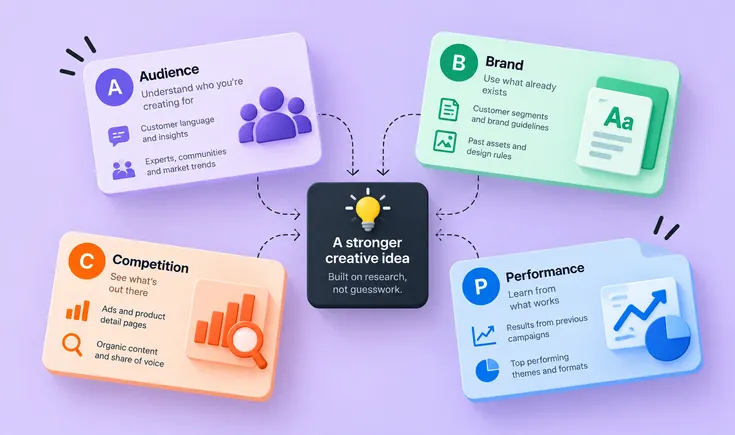
The solution lies in establishing a foundation where the brief effectively settles crucial questions upfront. Frameworks like Rocketium’s ABCP (Audience, Brand, Campaign, Platform) approach aim to systematically gather and organize the necessary context. While AI can assist in collecting and structuring much of this information, the ultimate responsibility for defining campaign objectives and making critical business trade-offs rests with human campaign owners.
Redefining Review: Leveraging AI for Smarter Oversight
A significant portion of the delay in creative operations can be attributed to the review and approval process. The challenge lies not in the absence of reviews, but in determining which assets are truly worthy of senior oversight and how to conduct these reviews efficiently without scrutinizing every minute detail of every generated variation. This often leads to time being lost through familiar, yet inefficient, feedback patterns.
Vague feedback, such as "make it pop," identifies a perceived problem but offers no actionable guidance for improvement. Reviewers may focus on minor aesthetic adjustments, like logo placement, without first verifying that the asset aligns with the core brief or brand guidelines. Furthermore, latecomers to the review process can introduce new directions or re-open discussions after significant progress has been made, leading to extensive rework and further delays.
To address these issues, Rocketium has developed an AI-powered design critique tool. This system translates common feedback patterns into specific, actionable checks. It systematically evaluates assets for adherence to the brief, brand consistency, visual hierarchy, overall craft, aesthetic quality, any discernible AI artifacts, and final output quality.
Consider the simple yet effective "squint test." By reducing the visibility of an asset until the text is unreadable, one can observe what elements remain prominent. This simple test reveals where the eye is drawn first, whether the product remains identifiable, and if the overall composition holds together. AI can automate such checks across vast volumes of creative assets, identifying rule-based issues before they even reach human reviewers.
However, it is crucial to acknowledge the limitations of AI in this context. While AI can rigorously enforce established rules and identify objective flaws, it cannot definitively determine if a creative piece is sufficiently distinctive, perfectly aligned with a nuanced brand identity, or the most effective creative concept for a given campaign. These subjective and strategic decisions remain firmly within the purview of human expertise, requiring individuals with deep contextual understanding and accountability.
Proactive Compliance: Integrating Rules Early in the Workflow
The complexities of modern marketing campaigns often involve a multitude of rules governing logo placement, typography, safe zones for critical information, approved claims, specific file specifications, and varied retailer requirements across different markets and platforms. Manually ensuring compliance with these intricate guidelines becomes an arduous and error-prone task, especially at scale.
Research into brand compliance conducted by Rocketium underscores the difficulties inherent in manual review processes. Human reviewers, under time pressure, can typically assess between 50 to 100 creative assets per day with an accuracy rate of approximately 85%. In contrast, Rocketium’s automated compliance system can process over 10,000 creatives daily with an accuracy exceeding 90% by enforcing predefined rules before human review commences.
The impact of integrating automated compliance checks early in the workflow is substantial. NIVEA, for instance, experienced a dramatic reduction in platform rejections by incorporating retailer guidelines and automated quality checks into their creative production process. Across more than 20 retail platforms, this proactive approach led to a remarkable 98% decrease in platform rejections. This case study exemplifies the power of shifting compliance from a late-stage gatekeeping function to an embedded, continuous check. The goal is to identify and rectify compliance issues while the asset is still in development, rather than after the entire team believes it is finalized.
The Evolving Nature of Creative Operations
The cumulative experience from producing over 25 million assets reinforces a consistent pattern: while faster asset generation is a welcome development, the overall speed of creative production is intrinsically linked to the efficiency of the surrounding processes. The research, decision-making, rigorous checks, and timely approvals that precede and follow AI-driven generation remain the critical determinants of operational velocity.
The implication for businesses is clear: simply adopting AI for creative asset generation without addressing the foundational operational challenges will not unlock the full potential for speed and efficiency. Organizations must invest in streamlining their brief-writing processes, refining their review and approval workflows, and integrating compliance checks proactively. This holistic approach, combining the power of AI with robust operational frameworks, is essential for truly accelerating creative output and achieving impactful marketing outcomes in today’s fast-paced environment. The future of creative operations lies not just in smarter tools, but in smarter processes that leverage these tools to their maximum potential.