The global landscape of digital commerce is undergoing a fundamental restructuring as generative artificial intelligence redefines how consumers discover, evaluate, and purchase products. For more than two decades, the digital "path to purchase" followed a predictable, linear trajectory: a user initiated a search via a traditional engine like Google, navigated through various browser tabs to compare products, read a series of independent reviews, and eventually landed on a brand’s website to make a final decision. However, this traditional funnel—defined by awareness, consideration, and conversion—is being replaced by a non-linear, AI-mediated experience that front-loads the research phase and shifts the point of decision-making away from the brand’s primary digital real estate.
The emergence of large language models (LLMs) and conversational AI tools such as ChatGPT, Google’s Gemini, and Perplexity AI has fundamentally altered the "search and browse" behavior that once dictated internet traffic. Today, consumers frequently begin their journey with a complex, descriptive prompt in an AI interface rather than a keyword in a search bar. By the time a user clicks through to a brand’s website, they are no longer in the "discovery" phase; they are often seeking final confirmation for a decision that has already been largely formed through AI-synthesized data. This shift necessitates a complete overhaul of how digital experiences are designed, moving the focus from information provision to confidence building and friction removal.
The Chronology of Digital Discovery and the Rise of Generative Search
To understand the current shift, one must examine the chronological evolution of the consumer’s relationship with the internet. In the early 2000s, the journey was destination-driven, where users visited specific URLs or portals. The 2010s were defined by the "Search Engine Optimization (SEO) Era," where brands competed for visibility on a results page, and the consumer’s role was to filter through various links to assemble their own narrative. By 2023, the introduction of consumer-facing generative AI marked the beginning of the "Synthesis Era."
In this current phase, the research that once required dozens of browser tabs and hours of manual comparison now occurs in seconds. AI-powered search systems are capable of breaking down multifaceted queries into multiple search streams, synthesizing the results in real-time, and presenting a unified recommendation. The timeline of this adoption has been unprecedented. In late 2022, ChatGPT reached 100 million users in just two months. By 2024, Perplexity AI was processing approximately 780 million queries monthly, and ChatGPT’s weekly active users surged to 800 million. This rapid adoption has created a new standard for information gathering that traditional websites are now struggling to match.
Statistical Landscape: A Data-Driven Shift in Consumer Behavior
The impact of AI on the digital funnel is supported by emerging industry data that highlights a significant shift in consumer trust and intent. In 2023, only 25% of consumers reported using generative AI for product recommendations; by late 2024, that figure had climbed to 58%. This indicates that a majority of the buying public now relies on AI to filter their choices before ever interacting with a brand’s own platform.
Furthermore, user behavior data reveals a paradox in engagement metrics. Initial observations suggested that AI-referred traffic spent 25% less time on websites compared to traditional organic search traffic, which many marketers initially interpreted as a sign of lower engagement. However, deeper analysis conducted in early 2025 revealed a different reality. While the total time on site decreased as AI adoption matured, the conversion rates for these users increased significantly. This suggests that AI-referred visitors are higher-intent customers. They spend less time "browsing" because they arrive with a specific set of questions aimed at validating the recommendation they received from the AI. They are not looking for a sales pitch; they are looking for specific data points—such as real-time inventory, shipping speed, and return policies—to finalize an "add-to-cart" action.
The New Role of the Website: From Discovery to Confirmation
As the discovery phase moves to external AI platforms, the brand website must pivot its strategic role. It can no longer function primarily as a discovery engine designed to introduce the brand to the world. Instead, it must become a "confidence-confirming machine." When a visitor arrives via an AI recommendation, they are essentially asking the website to prove that the AI was correct.
Industry experts identify several critical "confirmation questions" that modern websites must answer instantly:

- Does this product genuinely solve the specific problem I described to my AI assistant?
- Are the reviews consistent with the summary provided by the AI?
- Are there any hidden costs, such as shipping or taxes, that the AI could not see?
- What is the level of effort required if the product needs to be returned?
If a website fails to provide these answers clearly and quickly, the friction created can lead to immediate abandonment, regardless of how strong the initial AI recommendation was. Consequently, the emphasis for web developers and digital marketers is shifting toward optimizing the Product Detail Page (PDP) and the checkout flow, ensuring that the "last mile" of the customer journey is as seamless as the AI-driven "first mile."
Technological Pillars: Semantic Search and AI-Powered Assistance
To accommodate this new class of highly informed visitors, brands are increasingly investing in two core technologies: semantic search and AI-powered shopping assistants. Traditional keyword-based search is proving insufficient for users who have grown accustomed to the natural language capabilities of LLMs. Semantic search uses vector-based technology to understand the intent and context behind a query, rather than just matching words. For example, a user searching for "the best hiking boots for wide feet in rainy conditions" expects a curated list based on those specific constraints, not a generic page of all hiking boots.
Similarly, AI shopping assistants are replacing static chatbots. These modern assistants act as digital sales associates, capable of engaging in nuanced conversations, explaining technical differences between products, and adapting recommendations in real-time. This level of personalization is becoming a baseline expectation. According to a recent industry report, products that require high levels of consideration—such as electronics, luxury goods, or technical equipment—see the highest lift from these tools, as they provide the final layer of expert guidance needed to convert a high-intent visitor into a customer.
Official Responses and Industry Analysis: The Case for Experimentation
The shift in the customer journey has prompted a response from major digital experience platforms. In a recent collaborative webinar between the analytics firm TRKKN and the optimization platform AB Tasty, researchers shared empirical evidence of the effectiveness of AI-integrated features. In one travel industry case study, the implementation of AI-generated review summaries led to a 6% increase in booking rates and a 6% rise in booking form visits. By identifying recurring themes in thousands of customer reviews and surfacing them as concise summaries, the brand reduced the cognitive load on the visitor, making the information easier to trust.
However, industry analysts warn that there is no "one-size-fits-all" solution to the AI disruption. Currently, only 16% of brands systematically track their performance within AI search environments. The consensus among digital strategists is that the only viable path forward is a robust culture of experimentation. Because consumer behavior is evolving so rapidly, strategies that worked six months ago may no longer be effective. Brands must continuously test how different segments of AI-referred traffic respond to various landing page layouts, personalized offers, and AI-driven features.
Broader Impact and Long-Term Implications
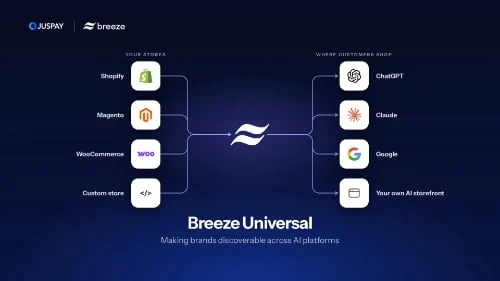
The long-term implications of the AI-driven customer journey extend beyond simple website optimization; they represent a fundamental shift in the value of brand data. To stay relevant, brands must ensure that their data—product specs, customer reviews, and inventory levels—is structured in a way that AI crawlers can accurately interpret and synthesize. This "Optimization for AI" (GEO – Generative Engine Optimization) is becoming as critical as traditional SEO once was.
Furthermore, the rise of AI-driven research places a premium on brand trust and transparency. Since AI models often aggregate sentiment from across the web, a brand’s reputation is no longer something it can fully control through its own marketing channels. The "truth" of a brand is now a composite of every review, social media mention, and third-party analysis available online. In this environment, the winners will be the brands that prioritize authentic customer satisfaction and maintain a high degree of data transparency.
In conclusion, while AI has altered the starting point of the customer journey, the ultimate objective of digital commerce remains unchanged: to provide an experience that makes the consumer feel confident and understood. The journey is not ending; it is simply beginning in a new, more complex digital ecosystem. Brands that embrace a mindset of experimentation, invest in intent-based technologies, and focus on the "confirmation" phase of the website experience will be best positioned to thrive in this AI-first world. The transition from being a destination for discovery to a destination for confirmation is the defining challenge for the next era of digital commerce.