


The landscape of digital experimentation has undergone a radical transformation over the past twenty-four months, moving from manual statistical validation to an era increasingly defined by autonomous agents and large language model (LLM) integrations. A comprehensive audit conducted in June 2026, which scrutinized 14 leading A/B testing platforms and 59 distinct AI-branded features, reveals a significant discrepancy between marketing rhetoric and technical reality. While 71% of these vendors prominently feature “AI” as a core value proposition on their homepages, the underlying technology varies wildly in its utility and architectural depth. The study indicates that the industry has split into three distinct tiers: chat-based wrappers that simplify existing workflows, domain-specific models that provide new predictive insights, and a nascent category of fully agentic systems that manage the entire experimentation lifecycle without human intervention.

The 2026 Experimentation Audit: Methodology and Core Findings
The research, finalized in mid-2026, involved a granular review of official vendor documentation, product release notes, and live platform demonstrations. Each feature marketed as “AI-powered” was tagged based on its actual capability rather than its promotional label. The findings suggest that the term “AI” in the experimentation space has become as ubiquitous and ambiguous as the term “smart” was for consumer electronics a decade ago.
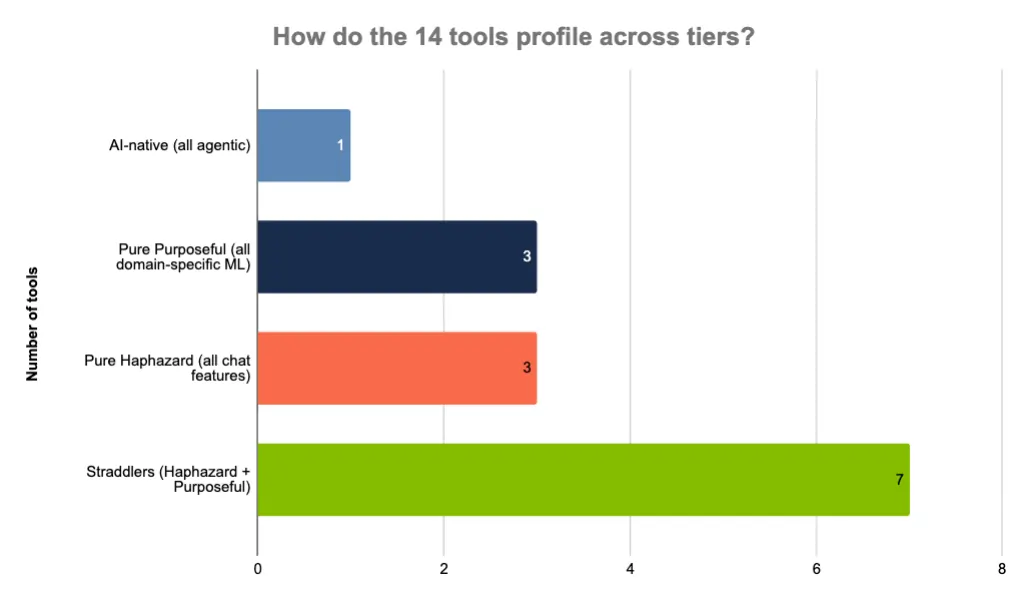
Of the 14 tools audited, 10 (71%) lead their digital presence with AI-centric messaging. However, only 43% have integrated AI into their primary homepage headlines, suggesting that while AI is a major selling point, many established vendors are still relegating these features to sub-pages or secondary feature lists. One notable outlier avoids the term “AI” entirely, opting for technical descriptions like “hybrid statistics” or “adaptive traffic allocation,” while another platform, recently acquired, maintains its “AI-native” claim only within its acquisition announcement banner rather than its active product copy.
The 59 features identified across these platforms follow four broad functional patterns. The most prevalent is chat-based experiment creation, which accounts for 58% of the features tagged. This is followed by predictive scoring and visitor intelligence (37%), and a small but growing segment of autonomous optimization (5%).
A Chronology of Integration: From Classical ML to Agentic Workflows
To understand the current state of the market, one must look at the timeline of how these technologies were integrated into experimentation platforms.
In the pre-2023 era, “AI” in A/B testing was largely synonymous with classical machine learning. Tools like Adobe Target (via Adobe Sensei) and Dynamic Yield utilized regression models and multi-armed bandit algorithms to automate traffic allocation. These were “black box” systems designed for efficiency rather than conversation.
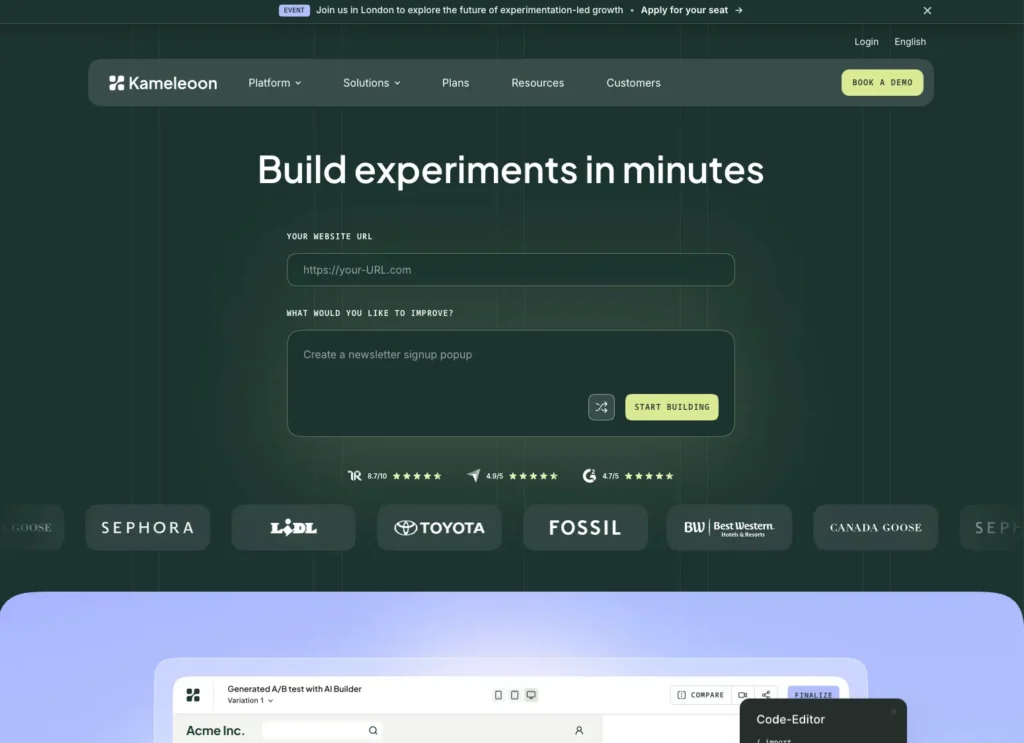
The 2023-2024 period saw the “LLM Explosion,” where vendors rushed to integrate generative AI. This resulted in the first wave of “Haphazard” AI—chat interfaces layered over existing software. Features like VWO Copilot and Kameleoon’s Prompt-Based Experimentation (PBX) emerged during this time, allowing users to describe tests in plain language.
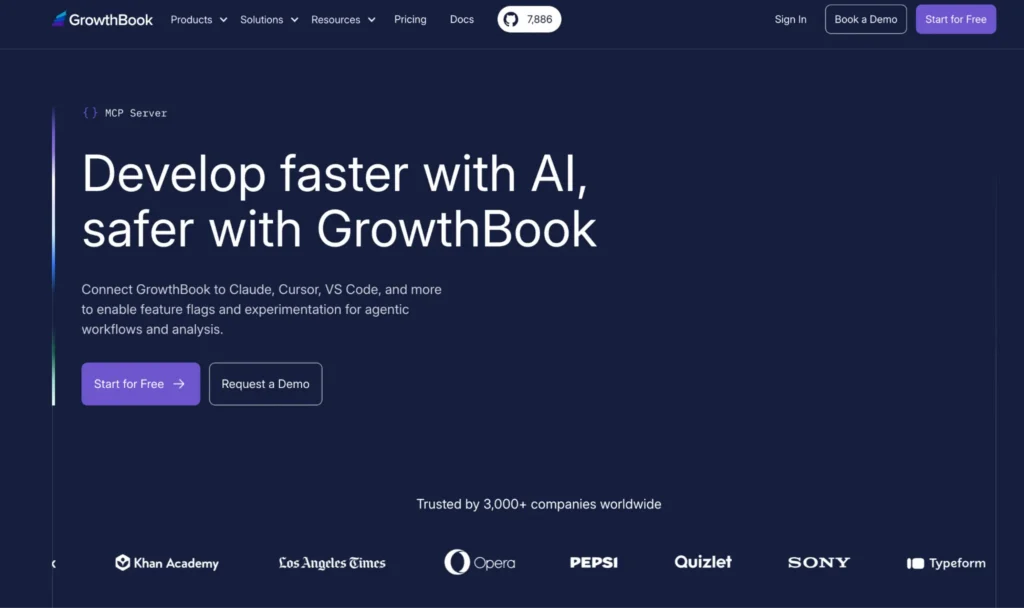
By 2025, the industry moved toward the “Model Context Protocol” (MCP) era. Lead by GrowthBook and Statsig, this phase focused on meeting developers where they worked, allowing external AI clients like Claude Code or Cursor to communicate directly with experimentation backends. This shift began to commoditize the chat interface, moving the focus back to the underlying data.
Entering 2026, the market has seen the launch of the first truly agentic tools, such as Runner AI. Founded by former Google DeepMind engineers, these platforms represent the “AI-native” tier, where the system identifies friction, designs the variant, and rolls out the winner autonomously.
The Three Tiers of AI Capability
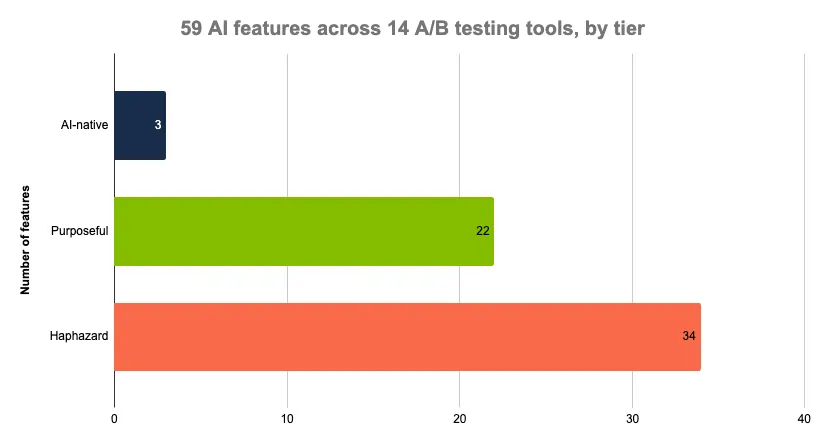
The audit categorizes the 59 features into three tiers based on a “mechanism test,” which determines the depth of the AI integration.
Tier 1: Haphazard AI (58% of Features)
This tier consists of chat interfaces layered on top of existing product functionalities. These tools translate natural language into software commands. For instance, a user might tell a copilot to “create a 50/50 split test on the checkout page for mobile users,” and the AI executes the steps the user would have otherwise performed manually. While these features reduce “time-to-test,” they do not offer capabilities that the platform didn’t already possess. If the chat box were removed, the core product remains unchanged. Optimizely’s Opal is a prime example, utilizing specialized agents to review configurations and summarize metrics—tasks that improve productivity but do not fundamentally change the nature of the experiment.

Tier 2: Purposeful AI (37% of Features)
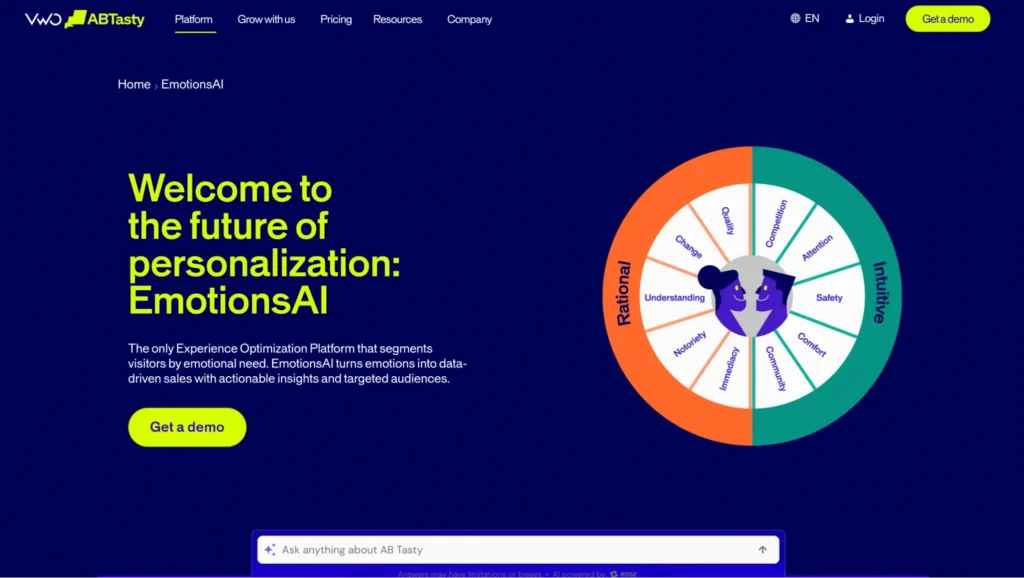
Purposeful AI represents features that the platform could not provide without domain-specific models trained on proprietary data. These are not mere wrappers but are deeply integrated into the data processing layer. Examples include AB Tasty’s EmotionsAI, which segments visitors based on emotional-needs cohorts, and Kameleoon’s Conversion Score (KCS), which predicts the likelihood of conversion for individual visitors within days of deployment. These models rely on the vendor’s unique dataset, making them impossible to replicate with a generic LLM subscription.
Tier 3: AI-Native (5% of Features)
The most advanced tier involves agentic systems where the AI manages the entire experimentation loop. In this model, the “storefront is the agent.” The system monitors live traffic, identifies points of friction, proposes multivariate tests, and implements winners without human triggers. Runner AI, which launched in early 2026, is currently the primary occupant of this category. In these products, the AI is not a feature; it is the infrastructure itself.
Market Consolidation and the Shift Toward Experience Platforms
The audit highlights a significant trend of market consolidation, with four of the 14 audited tools changing ownership in the last year. AB Tasty and VWO merged under Wingify, Eppo was acquired by Datadog, SiteSpect was absorbed by Monetate, and Convertize was acquired by Glassbox.
This consolidation has profound implications for AI roadmaps. As independent tools are folded into larger “Experience Platforms,” AI features are often rebranded or integrated into broader suites (e.g., Datadog Experiments). For the end-user, this creates a risk of “feature drift,” where specialized AI capabilities may be diluted to serve a wider, less experimentation-focused audience.
Industry analysts suggest that this consolidation is a response to the “commoditization of the wrapper.” As MCP servers allow developers to use their own AI assistants to manage experiments, the value of a proprietary vendor chat box diminishes. Consequently, vendors are seeking scale and deeper data moats to protect their market share.
Data Sovereignty and the “Sovereign AI” Movement
A burgeoning point of contention identified in the audit is the management of customer data. While many tools utilize enterprise versions of OpenAI or Gemini, which promise not to use customer data for training, some vendors are taking a more aggressive stance on data privacy.

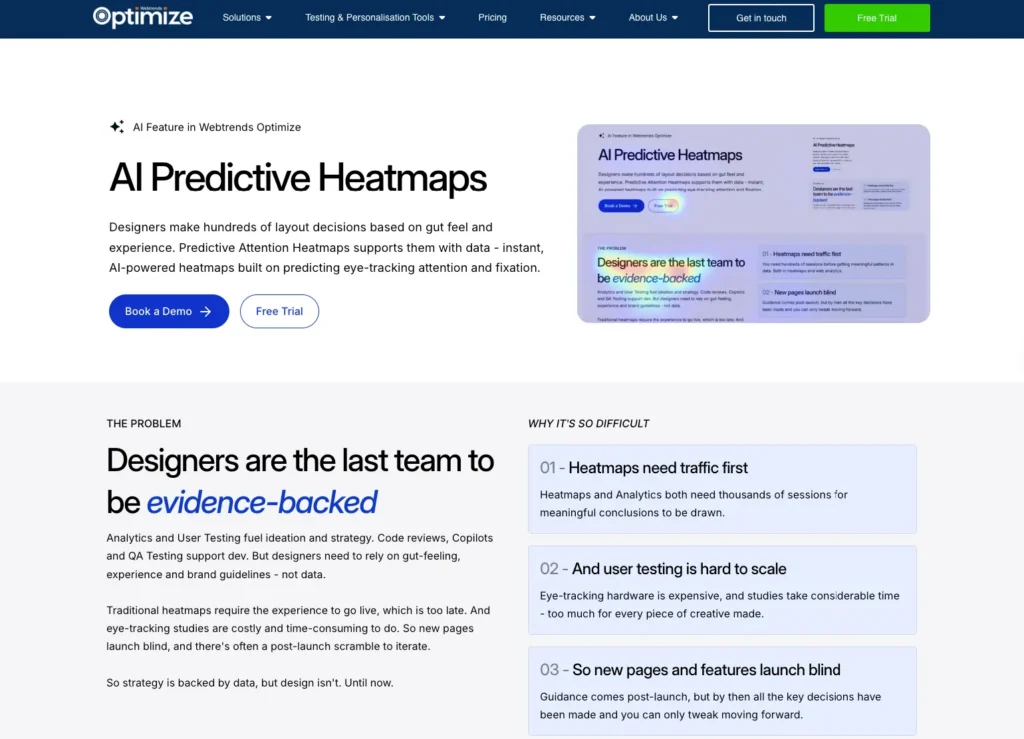
Webtrends Optimize has championed the concept of “Sovereign AI,” running local models on proprietary hardware rather than making third-party API calls. Their argument centers on the fact that sending experiment data—which often includes sensitive business logic and user behavioral patterns—to external LLMs constitutes a disclosure risk that many enterprise clients are not yet fully aware of. This “local-first” AI approach is becoming a significant differentiator for privacy-conscious organizations in the financial and healthcare sectors.
Strategic Implications for Digital Teams
For organizations evaluating A/B testing tools in 2026, the audit suggests that the “Haphazard” layer of AI should be viewed as a table-stakes convenience rather than a competitive advantage. The true value lies in the “Purposeful” layer—the proprietary models that can predict user behavior in ways a general-purpose AI cannot.

Convert Experiences, for example, has adopted a “foundations first” strategy. Their roadmap focuses on building robust infrastructure—version control, approval workflows, and audit trails—before deploying autonomous agents. This approach addresses the primary fear of enterprise stakeholders: the “black box” problem where an AI makes changes to a production environment without a clear record of why or how.
As experimentation moves toward an agentic future, the role of the human optimizer is shifting from “executor” to “governor.” The focus is no longer on building the test, but on setting the guardrails, defining the primary metrics, and auditing the AI’s hypotheses.

Conclusion: The Moat is the Data, Not the Prompt
The 2026 audit confirms that the experimentation industry is at a crossroads. The initial excitement over generative AI “copilots” is giving way to a more sober assessment of technical depth. While chat interfaces have made tools more accessible, they have not necessarily made them more powerful.
The “moat” for A/B testing vendors in the coming years will not be the sophistication of their natural language processing, but the quality of their domain-specific models and the integrity of their data infrastructure. As fully agentic tools like Runner AI begin to prove their ROI, the industry will likely see a further shift away from traditional “testing” and toward “continuous autonomous optimization.” For now, however, the majority of the market remains in the “Haphazard” tier, using AI to polish existing workflows rather than reinventing the science of conversion.







