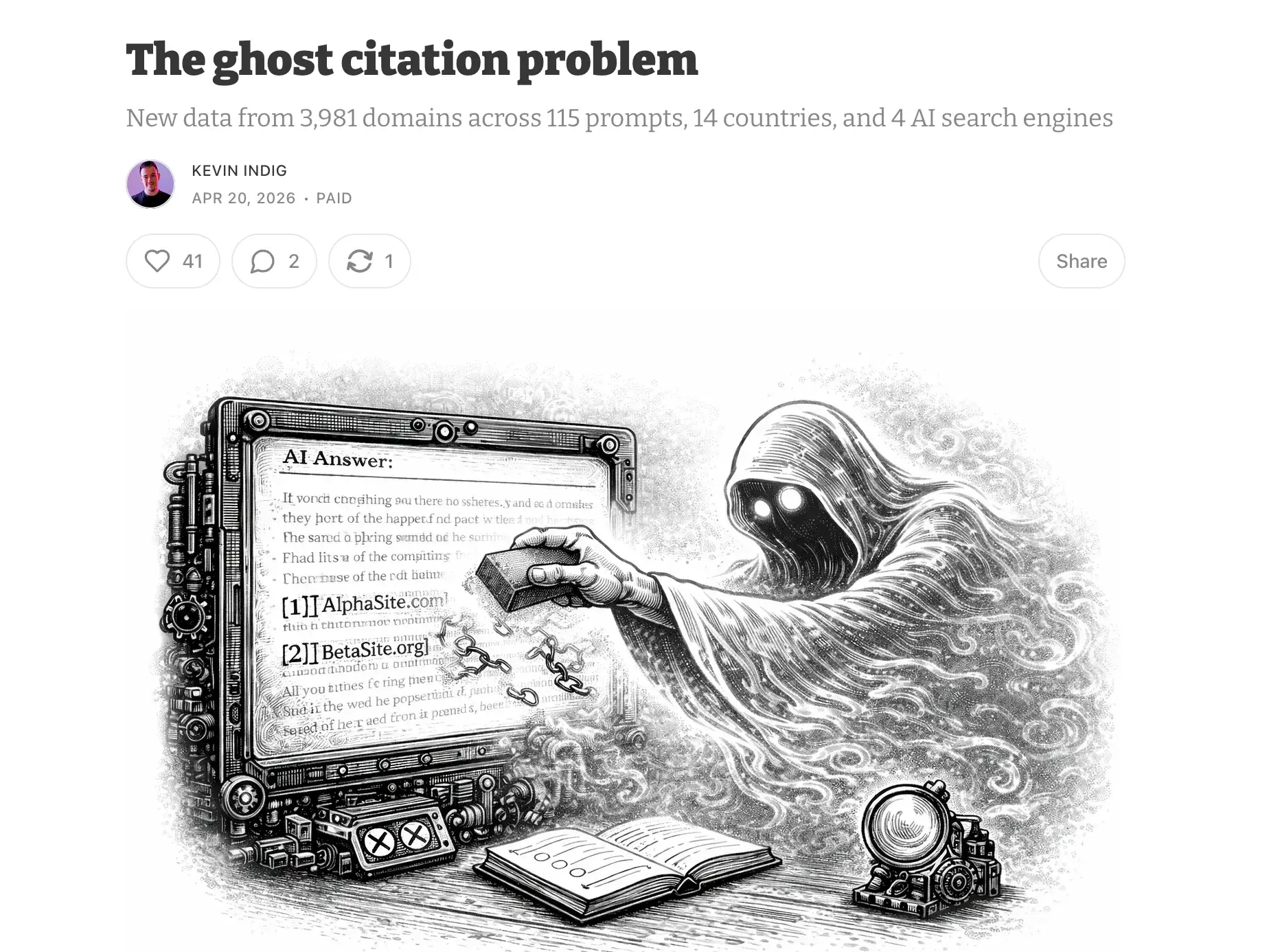
The landscape of online information discovery is undergoing a profound transformation, far exceeding a mere algorithmic update or an incremental optimization cycle. Artificial intelligence is fundamentally reshaping how users interact with the internet, moving from traditional keyword-based queries to conversational, context-aware AI systems that directly answer questions and anticipate needs. This seismic shift heralds the obsolescence of outdated SEO playbooks, compelling marketers to embrace a new paradigm of content strategy, measurement, and authority building to remain visible and relevant in an increasingly AI-driven digital ecosystem.
The Dawn of Conversational Search: A Brief History
For decades, online search was synonymous with Google’s "ten blue links." Users typed keywords, and search engines returned a ranked list of websites. The art of Search Engine Optimization (SEO) revolved around understanding these ranking algorithms, optimizing content for specific keywords, and building backlinks to signal authority. This model, while effective for its time, was inherently reactive, requiring users to explicitly articulate their needs.
The emergence of Large Language Models (LLMs) and generative AI marked a pivotal turning point. While research into AI-driven natural language processing has been ongoing for years, the public launch of OpenAI’s ChatGPT in November 2022 democratized access to powerful conversational AI. This event triggered a rapid acceleration in AI integration across major tech platforms. Google, recognizing the existential threat and opportunity, quickly responded with its Search Generative Experience (SGE), now known as AI Overviews, integrating generative AI directly into its core search product. Microsoft similarly enhanced Bing with OpenAI’s technology, and dedicated AI answer engines like Perplexity AI gained traction by prioritizing synthesized, sourced answers over traditional link lists. This rapid evolution, unfolding over just a few years, has set the stage for a dramatic redefinition of digital discovery by 2026.
Prediction 1: AI Answer Engines Will Become the Default Search Experience
By 2026, the familiar "ten blue links" of traditional search will persist but assume a secondary role. AI answer engines, exemplified by Google’s AI Overviews, ChatGPT, Gemini, and Perplexity, are rapidly becoming the primary interface for initial information discovery. These systems excel at synthesizing information from a multitude of disparate sources – including publisher content, brand-owned assets, and third-party reference materials – to deliver direct, consolidated answers. This represents a fundamental shift from a "search engine" to a "search ecosystem," where multiple AI platforms contribute to the discovery process, even as Google continues to hold significant sway.
The core implication for marketers is that visibility is no longer solely about achieving a top ranking on a search results page. Instead, it revolves around content being retrievable and trusted enough to be utilized as input by these AI systems. Data suggests that a significant portion of users interacting with AI Overviews may not click through to source websites, as the AI often provides a comprehensive answer directly. Early reports from companies monitoring Google SGE have indicated a potential decrease in organic click-through rates for certain queries, reinforcing the need to adapt. This necessitates a renewed focus on structured data (Schema.org markup), clear and explicit sourcing within content, and robust signals of expertise, experience, authoritativeness, and trustworthiness (E-E-A-T). These elements are transitioning from best practices to table stakes. Content that is not designed for citation and synthesis by AI systems, lacking verifiable claims and clear provenance, risks being overlooked in the decision-making process. The breadth of a brand’s consistent publication and recognition as an authority across various reputable channels will increasingly matter, as AI systems weigh multiple inputs to form their responses.
Prediction 2: Search and Recommendation Will Collapse Into a Single Discovery System
The traditional distinction between "search" (user-initiated query) and "recommendation" (system-initiated suggestion) is rapidly dissolving. By 2026, this separation will largely be academic, as AI systems become adept at inferring user needs before they are explicitly articulated. This convergence is already evident across major platforms: YouTube proactively queues relevant explainers, LinkedIn surfaces posts aligned with professional roles and interests, TikTok’s algorithm predicts engaging content within seconds, and Amazon anticipates purchasing needs based on past behavior.
For marketers, this convergence presents both unprecedented opportunities and new risks. Content can now reach highly relevant audiences without the need for a single keyword ever being typed. A well-researched industry analysis, a compelling case study, or a meticulously designed explainer video can travel far beyond the confines of traditional search results, propelled by intelligent recommendation algorithms. However, content that is not "legible" to these AI systems – meaning it doesn’t align with their native formats, signals, or underlying semantic understanding – will fail to gain traction. A study by Statista in 2023 highlighted that social media platforms are increasingly used for product discovery, demonstrating the blurring lines between explicit search and passive recommendation.
Marketers must evolve from designing content solely for explicit demand to creating for "inferred need." This requires a deep understanding of how different platforms evaluate relevance, the creation of content that seamlessly integrates with native platform formats (e.g., short-form video for TikTok, detailed articles for LinkedIn, structured FAQs for AI overviews), and an acceptance that discovery is increasingly driven by AI systems making decisions for users, based on their behavioral profiles and latent interests.
Prediction 3: Personalization Will Get a Memory
A significant advancement in AI platforms is the integration of persistent conversational history and user-level memory. Platforms like ChatGPT, Gemini, and Perplexity now retain context from past interactions, saved preferences, and accumulated knowledge. This evolving memory profoundly shapes the content and information presented to users, leading to an unprecedented level of personalization in discovery.
The implications are far-reaching. A user who has extensively explored a topic at an advanced technical level will receive vastly different AI-generated responses and content recommendations than a novice encountering the subject for the first time. Prior clicks, conversational patterns, and even explicit feedback all contribute to an individual’s "memory profile," influencing the AI’s outputs. This creates audience fragmentation on a scale previously unimaginable; the same query from two different users can surface entirely distinct content based on their unique interaction histories and inferred expertise. Data from AI research labs shows that contextual memory significantly improves the relevance and accuracy of AI responses, underscoring its growing importance.
To navigate this fragmented landscape, marketers must adopt more modular content strategies. This means developing content designed to serve various knowledge levels – beginner, intermediate, expert – with clear entry points and logical progressions. Content should be architected as a cohesive journey, with explicit signals that help AI systems understand the target audience and expertise level for each piece. This might involve tagging content with audience levels, creating interconnected series, or developing dynamic content that adapts based on user history. The goal is to provide AI systems with the necessary cues to surface the right content to the right user at the right stage of their personal discovery journey.
Prediction 4: Attribution Models Will Break, but New KPIs Will Emerge
The rise of AI search is dismantling traditional click-based attribution models, making it increasingly challenging for brands to trace the direct path from content exposure to conversion. When AI systems synthesize answers, users may gain the information they need without ever visiting a website, thus bypassing conventional analytics tracking. This breakdown necessitates a fundamental re-evaluation of how content performance is measured.
Click-through rates (CTRs), long a foundational metric for search performance, will become less reliable as primary Key Performance Indicators (KPIs). Instead, a new suite of metrics will emerge to quantify influence in an AI-dominated environment. Citation frequency – how often a brand’s content is referenced by AI systems – will become a crucial signal of authority and relevance. Model recall rates and excerpt usage patterns will provide insights into which specific pieces of content, or parts thereof, are deemed most valuable by AI for inclusion in summaries. Structured data adoption rates will indicate how well content is optimized for AI understanding. Dwell time within AI-generated summaries could offer a proxy for engagement, even if direct website visits are low.
Perhaps the most significant new benchmark will be "share of answers." Analogous to "share of voice" in public relations, share of answers will quantify how frequently a brand appears in AI-generated responses relative to its competitors. This metric will allow performance teams to gauge competitive visibility and influence within the AI discovery layer. Forecasting models will need to integrate these new signals, developing sophisticated frameworks that capture the nuances of AI-mediated influence, even when direct last-click attribution proves impossible. Industry groups and analytics providers are already exploring new methods for measuring "zero-click" engagement and brand salience in this evolving environment.
Prediction 5: Authority Signals Will Become the New Ranking Factors
As LLMs grow increasingly sophisticated and cautious about sourcing and citation quality, traditional SEO factors are being superseded by verifiable authority signals as the primary determinants of content visibility. In an era where AI can generate plausible but inaccurate information, trust, accuracy, and demonstrable expertise have become the invaluable currency that dictates whether a brand’s content is surfaced at all.
This shift directly reflects the evolving internal evaluation mechanisms of AI systems. They prioritize verifiable claims, content authored by named experts, transparent publication practices, and clear information provenance. "High-signal" pages – those rich in factual accuracy, specificity, structured arguments, and consensus alignment – receive preference over high-volume, generic content lacking depth or originality. Google’s explicit emphasis on E-E-A-T (Experience, Expertise, Authoritativeness, Trustworthiness) in its Quality Rater Guidelines provides a clear roadmap for this shift. Updates to AI model training, retrieval layers, and safety guardrails are all pushing systems towards what can be described as "safe precision," rewarding brands that substantiate their claims with evidence and penalizing those that do not. The era of thin aggregation, keyword-stuffed filler content, and purely quantitative SEO tactics is unequivocally ending.
For marketers, this means substance will consistently triumph over mere scale. Original research, direct quotes from subject matter experts (SMEs), and first-party insights are gaining substantial value. Brands must invest heavily in establishing and signaling their credentials: detailed author bios showcasing relevant experience, proper and consistent citations, transparent disclosure statements, and robust expert review processes for all published content. The widely circulated Wall Street Journal article on companies hiring "storytellers" underscored the renewed premium on human expertise and authentic narrative in a world saturated by AI-generated text. Cultivating and showcasing genuine human expertise is not just a best practice; it is becoming a competitive imperative.
Preparing for the Search Landscape Ahead
The transformation of search into an AI-driven discovery ecosystem represents both an formidable challenge and an immense opportunity. Marketers who rigidly adhere to legacy approaches will find their strategies increasingly ineffective and their brands invisible. Conversely, those who proactively adapt and innovate will position their brands for sustained organic growth and influence in this new era.
The time for preparation is now. Organizations must undertake a comprehensive audit of their existing content to assess its "answer-readiness" and "AI-friendliness." This involves evaluating content for clarity, factual accuracy, structured data implementation, and the presence of explicit expertise signals. Investment in advanced structured data implementation, robust E-E-A-T indicators, and transparent sourcing practices is paramount. Furthermore, brands must develop new measurement frameworks that capture influence and brand salience beyond traditional clicks, embracing metrics like citation frequency, share of answers, and engagement within AI summaries. The foundations laid today will critically determine a brand’s visibility and success in the AI-driven discovery era of 2026 and beyond.
Frequently Asked Questions (FAQs)
If clicks are declining, how do we prove content is working?
Measurement is transitioning from a focus on direct traffic to broader influence. Key Performance Indicators (KPIs) like citation frequency (how often AI systems reference your content), excerpt reuse, and "share of answers" (your brand’s presence in AI-generated responses relative to competitors) are becoming more meaningful. While these metrics may not offer the clean, last-click attribution of traditional analytics, they provide a clearer picture of how content shapes user decisions upstream, even when traditional tracking cannot directly observe it. Integrating these new signals into multi-touch attribution models will be essential.
What kinds of content perform best in AI-driven discovery?
Content that is clear, specific, defensible, and factually robust tends to perform best. AI systems favor structured explanations, verifiable claims, content authored by named experts with demonstrable credentials, and material with well-defined scopes. Original research, expert commentary, first-party data, and tightly framed explainers consistently outperform broad, generic material or keyword-driven filler content. The emphasis is on quality, depth, and trustworthiness rather than sheer volume.
How should teams adapt their content strategy for personalization and memory?
Teams must adopt a modular content strategy, moving beyond the "one-size-fits-all" asset. This involves creating content that caters to different knowledge levels (e.g., beginner, intermediate, advanced) and clearly signals its intended audience. Content should be designed as a logical progression, with clear entry points for new users, deeper follow-ons for those seeking more detail, and advanced perspectives for experts. Utilizing structured content hierarchies, internal linking, and explicit metadata can help AI systems understand the relationships between content pieces and surface the most relevant material based on a user’s individual history and expertise profile.