

The landscape of digital marketing is undergoing a fundamental shift as brands move away from high-stakes, one-off campaign launches in favor of a continuous, data-driven methodology known as iterative testing. This transition reflects a broader trend in the global economy where agility and evidence-based decision-making are prioritized over traditional creative intuition. While standard A/B testing has long been the industry benchmark for optimizing conversion rates, industry experts and data scientists now argue that a linear, iterative approach—where each experiment serves as a foundational building block for the next—is essential for maintaining competitiveness in an increasingly volatile market.
Iterative testing is defined as a systematic process of repeatedly testing, measuring, and refining marketing assets based on incremental data insights. Unlike traditional testing, which often concludes after a single winner is declared between two variables, the iterative model treats marketing as a living ecosystem. This approach, borrowed from decades of software development and agile product management, allows marketing teams to adapt to shifting consumer behaviors in real-time, effectively plugging the "slow leaks" in advertising budgets that occur when campaigns fail to evolve alongside their audiences.
The economic impetus for this shift is significant. As customer acquisition costs (CAC) continue to rise across major platforms such as Meta, Google, and LinkedIn, the margin for error in digital advertising has narrowed. According to recent industry benchmarks, including the 2024 Conversion Benchmark Report, the difference between a high-performing landing page and a failing one often hinges on granular details rather than massive overhauls. For instance, data indicates that landing pages written at a 5th-to-7th-grade reading level convert at a rate of 11.1%, which is more than double the conversion rate of pages utilizing professional or academic-level prose. This specific insight highlights the value of the iterative process: identifying a small, evidence-based change that yields exponential returns.
The Chronology of Optimization: From Static to Fluid
To understand the rise of iterative testing, one must look at the evolution of conversion rate optimization (CRO). In the early 2000s, digital marketing was largely static, with "gut-feel" creative decisions dominating the space. By the 2010s, the democratization of A/B testing tools allowed marketers to compare two versions of a page. However, these tests were often siloed events. A team might test a button color, record the winner, and then never revisit the asset again.

The modern era, beginning roughly in 2022, has seen the emergence of "Agile Marketing." In this current phase, the feedback loop has shrunk from months to days. The integration of machine learning and artificial intelligence has further accelerated this timeline. Tools such as Unbounce’s Smart Traffic now allow for optimization to begin after as few as 50 visits, a sharp contrast to the thousands of visitors previously required to reach statistical significance. This technological advancement has made iterative testing accessible not only to enterprise-level corporations but also to small-to-medium enterprises (SMEs) with lower traffic volumes.
A Strategic Framework for Iterative Implementation
The transition to an iterative testing model requires a disciplined six-step framework designed to eliminate guesswork and maximize return on investment (ROI).
Step 1: The Development of Focused Hypotheses
The primary failure point for many marketing departments is the "shotgun approach," where multiple variables—headlines, images, and calls to action—are changed simultaneously. Iterative testing demands a laser-focused hypothesis. A valid hypothesis must be specific and measurable, such as: "Changing the primary headline from a feature-based benefit to a pain-point-based benefit will increase click-through rates by 10%." By isolating a single variable, marketers gain a clear understanding of what actually drives user behavior.
Step 2: Impact versus Effort Prioritization
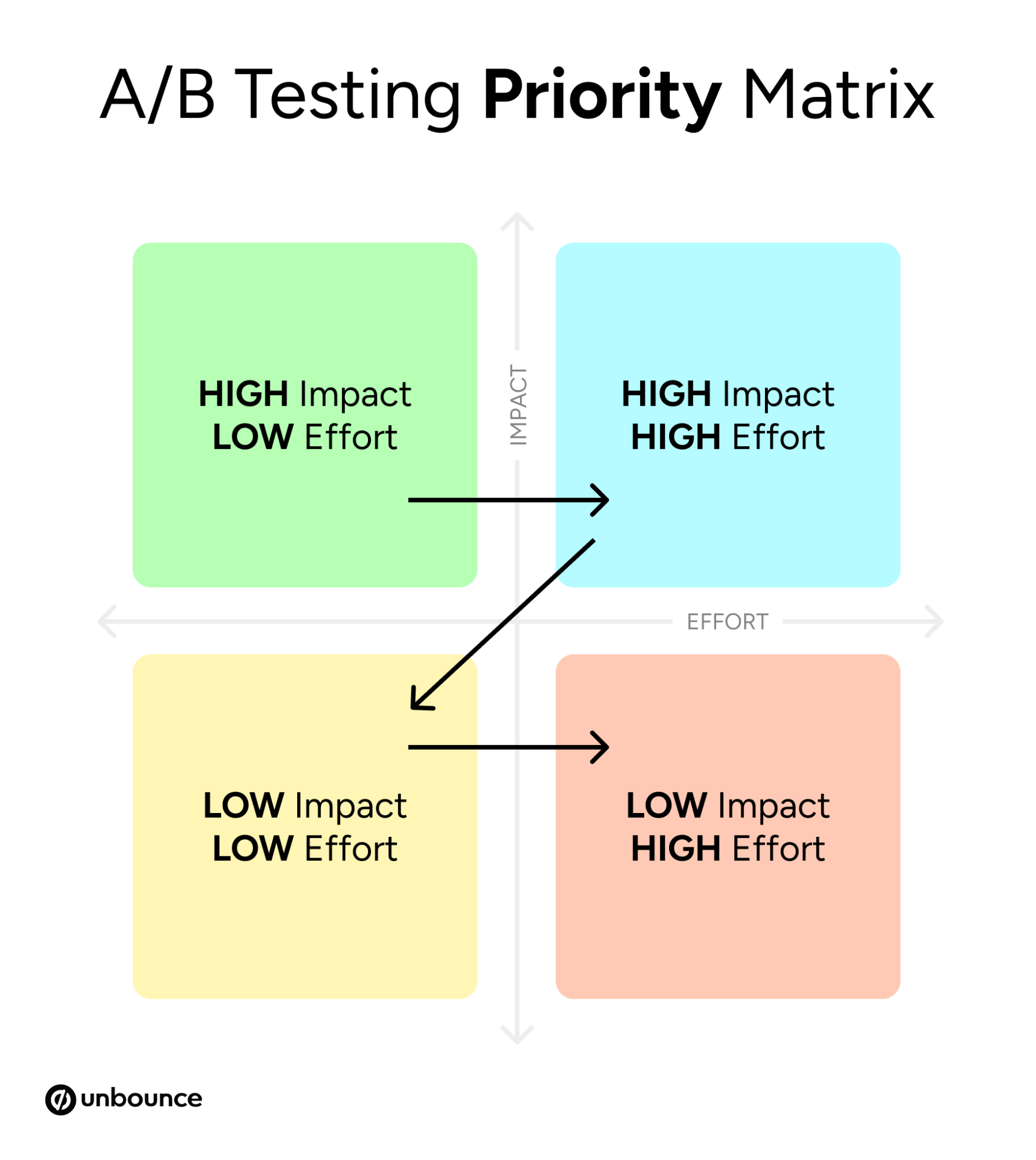
Resource allocation is a critical component of the iterative process. Marketing teams often utilize a 2×2 priority matrix to categorize potential tests. "Quick Wins" are identified as changes that require low effort but promise high impact, such as adjusting a headline or simplifying a lead-generation form. Conversely, "Big Projects" require significant development time and are only pursued once smaller iterations have validated the core concept. This prioritization ensures that the testing program maintains momentum and delivers early wins to secure stakeholder buy-in.
Step 3: Minimal Testable Variations
In alignment with the "Minimum Viable Product" (MVP) philosophy, iterative testing advocates for minimal but testable variations. Rather than redesigning an entire website, a team might duplicate a control page and change only the word complexity. This reduces the "noise" in the data and allows for a faster execution cycle without the need for extensive developer intervention.

Step 4: Data Collection and Statistical Validation
One of the most rigorous aspects of this process is the adherence to statistical significance. This mathematical threshold ensures that test results are the product of genuine user preference rather than random chance. Industry standards suggest that a test should reach at least a 95% confidence level before a winner is declared. Furthermore, tests must run for a sufficient duration—typically at least one to two full business cycles—to account for "day-of-the-week" effects and other external variables.
Step 5: Extraction of Actionable Insights
The analysis phase goes beyond identifying which version "won." It seeks to understand the "why" behind the data. For example, if a test reveals that a simpler headline outperformed a clever one, the broader insight may be that the target audience values clarity and speed over brand personality. This insight is then documented and used to inform not just the next landing page, but also email subject lines, social media copy, and ad creative.
Step 6: Scaling and Continuous Evolution
The final step is the "iteration" itself. Successful results are scaled across other channels, while unsuccessful tests are viewed as valuable data points that narrow the path toward optimization. A rejected hypothesis provides context on what does not resonate with the audience, which is considered equally important as a successful test in the long-term growth of the brand.
Supporting Data and Industry Implications
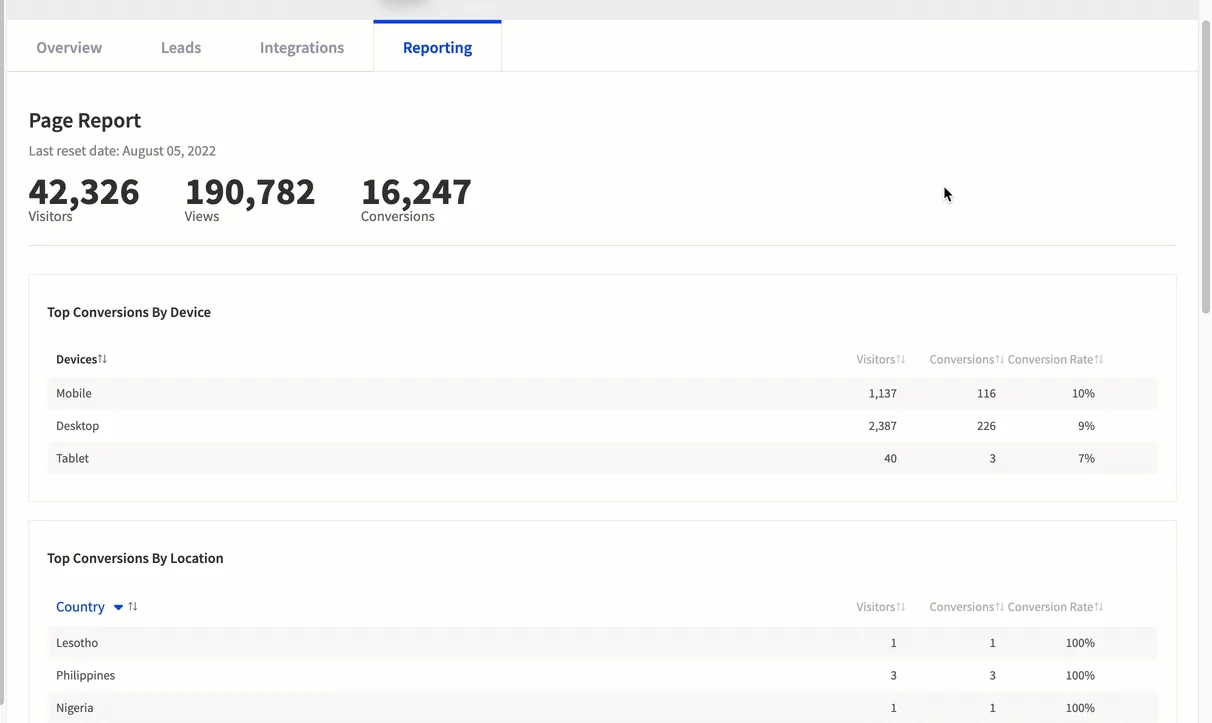
The shift toward iterative testing is supported by alarming data regarding current digital performance. Research shows that while 83% of landing page visits now occur on mobile devices, desktop conversion rates remain 8% higher on average. This discrepancy suggests that most marketing assets are not yet fully optimized for the mobile-first era. An iterative approach allows teams to test device-specific messaging and layouts, closing the gap between mobile traffic and desktop revenue.
Furthermore, the negative correlation between word complexity and conversion rates—calculated at -24.3% in recent studies—serves as a cautionary tale for brands that prioritize "professionalism" over accessibility. Iterative testing allows these brands to experiment with language simplification in a controlled environment, proving the financial benefits of clearer communication before committing to a total brand voice overhaul.
Official Responses and Organizational Impact
Corporate leadership is increasingly viewing iterative testing as an operational necessity rather than a tactical choice. Chief Marketing Officers (CMOs) at leading SaaS and e-commerce firms have noted that a culture of experimentation leads to higher employee engagement and better cross-departmental collaboration. When support teams, sales departments, and product designers all contribute to the testing backlog, the resulting experiments address real-world user friction points rather than marketing hunches.
"Marketing does not happen in a vacuum," noted one industry analyst. "The most successful programs are those that tap into the collective intelligence of the organization. If a customer support rep notices a recurring question about pricing, that becomes the next iterative test. This creates a feedback loop that extends from the front lines of customer service directly into the revenue-generating assets of the company."
Broader Impact and Future Outlook
As we look toward the latter half of the decade, the role of iterative testing will only expand. The integration of "Smart Traffic" AI, which automatically routes visitors to the variant most likely to convert based on their individual profile, represents the next frontier. In this environment, the marketer’s role shifts from "executor" to "strategist," focused on feeding the testing engine with high-quality hypotheses and creative variations.
The broader implication for the global business community is clear: the era of the "big reveal" marketing campaign is ending. In its place is a more scientific, humble, and ultimately more profitable approach. By embracing small, consistent improvements that compound over time, businesses can build more resilient marketing engines that are capable of navigating the complexities of modern consumer behavior. Iterative testing is no longer just a tool for conversion rate optimization; it is the fundamental framework for growth in the digital age. Success will belong to the organizations that can learn the fastest, fail the smallest, and iterate the most consistently.







