In the contemporary landscape of software development and digital product management, the ability to decouple code deployment from feature release has become a cornerstone of high-performing engineering organizations. As businesses move away from monolithic architectures toward agile, microservices-oriented environments, the terminology surrounding product optimization has grown increasingly complex. Central to this evolution are three distinct yet interconnected concepts: feature flags, feature rollouts, and feature testing. While these terms are frequently used interchangeably in casual discourse, they represent different strategic approaches to managing the lifecycle of a software product. Understanding the nuances between them is essential for developers, product managers, and growth specialists aiming to mitigate risk and maximize user impact through full-stack experimentation.
Full-stack experimentation represents a paradigm shift from traditional client-side testing. While client-side A/B testing—often performed via the browser—allows for visual modifications such as changing header copy or button colors, it is limited by its inability to influence the underlying logic of an application. Furthermore, client-side testing is prone to the "flicker effect," where a user briefly sees the original content before the browser swaps it for a variation. Full-stack experimentation eliminates these hurdles by operating at the server or application level. Users are bucketed into variants before the interface is rendered, allowing for deep-level testing of search algorithms, pricing models, API responses, and infrastructure performance. This sophisticated approach is powered by feature flags, which serve as the foundational architecture for both rollouts and feature tests.
The Architectural Foundation: What Are Feature Flags?
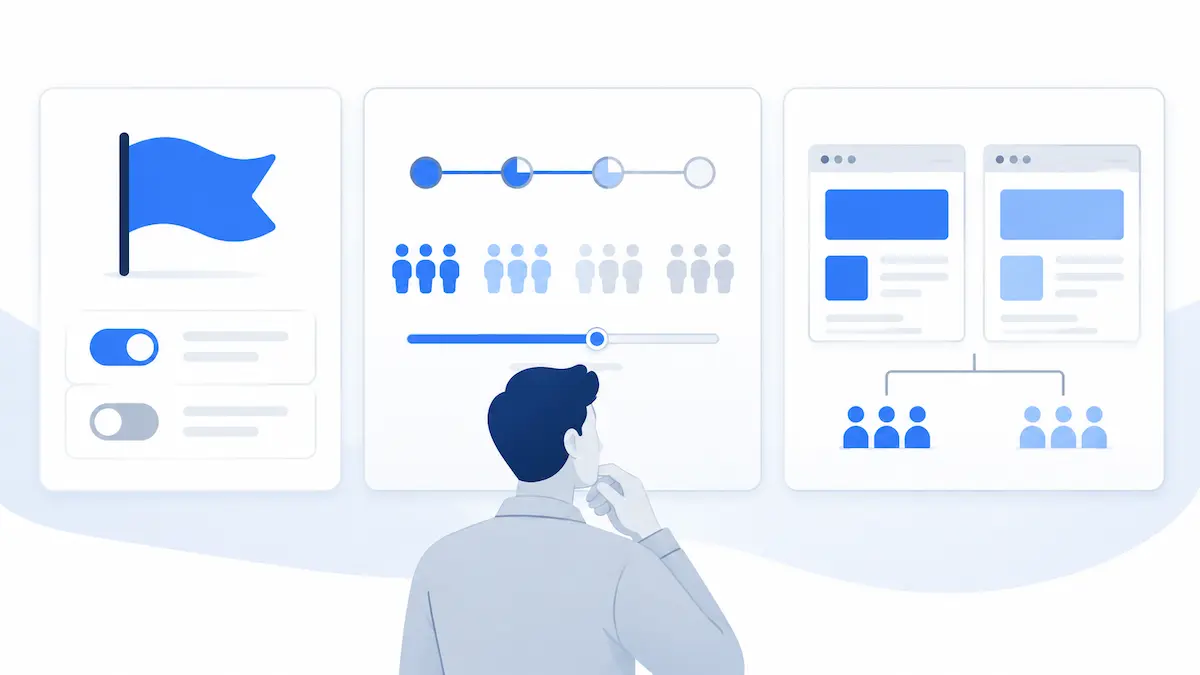
At its core, a feature flag is a conditional logic statement embedded within the source code that allows developers to toggle specific functionality on or off at runtime without requiring a new deployment. This mechanism enables a "dark launch," where code is pushed to production but remains invisible to the end-user until a remote configuration is updated. The implications of this are profound for DevOps efficiency. Historically, a bug discovered in a new feature would necessitate a full code rollback, a process that could take hours and disrupt the entire system. With a feature flag, the offending feature can be deactivated in seconds via a "kill switch," effectively neutralizing the threat while the engineering team works on a fix.
Feature flags are generally categorized by their intended lifespan and purpose. Short-term flags, such as those used for release toggles, are removed once a feature is fully integrated. In contrast, long-term flags may persist for years, serving as permission gates for premium features or operational toggles for managing system load. Industry data suggests that the implementation of robust feature flagging can increase deployment frequency by up to 50%, as teams no longer fear that a single buggy line of code will paralyze the entire platform. However, the proliferation of flags requires diligent management; "flag sprawl" or stale logic can lead to technical debt, where the codebase becomes cluttered with abandoned conditional branches that are difficult to maintain.
Strategic Exposure: The Mechanics of Feature Rollouts
While a feature flag is a binary switch, a feature rollout is a strategic "dimmer" that manages the gradual exposure of a new feature to a wider audience. The primary objective of a rollout is risk mitigation. Instead of a "big bang" release where 100% of the user base receives a new update simultaneously, a rollout allows a company to release the feature to a small, controlled segment—perhaps 5% or 10%—to monitor system stability and performance metrics.

The chronology of a typical feature rollout follows a structured progression. It often begins with internal testing, where the flag is enabled only for employees (canary testing). Once validated, the exposure is increased to a small percentage of the general public. During this phase, engineering teams closely monitor "guardrail metrics," such as error rates, latency, and server load. If these metrics remain stable, the rollout expands to 25%, 50%, and eventually 100% of the traffic. This incremental approach ensures that if a performance regression occurs, the "blast radius" is limited to a fraction of the user base. In platforms like Convert Experiences, a rollout is defined as a specific experience type—a "feature_rollout"—where there is no control group, only a variation that is gradually ramped up based on real-time data and safety checks.
Scientific Validation: Feature Testing vs. Traditional QA
Feature testing, often confused with Quality Assurance (QA), serves a fundamentally different purpose in the product lifecycle. While QA testing is designed to ensure that a feature functions according to technical specifications, feature testing—in the context of experimentation—is designed to determine if the feature actually improves the user experience or drives business value. It is a comparative experiment, utilizing A/B/n methodology at the backend level.
In a feature test, traffic is split between an original version (the control) and one or more variations. Unlike a rollout, where the goal is simply to reach 100% exposure safely, the goal of a feature test is to gather enough data to make a statistically significant decision. For instance, an e-commerce platform might test two different checkout algorithms. Variant A might prioritize speed, while Variant B includes a "recommended products" section. By running these as a full-stack feature test, the company can measure which version leads to a higher average order value (AOV) without the risk of visual flickering or performance lags.
According to data from Microsoft and Google, approximately 60% to 90% of ideas tested do not improve the metrics they were intended to move. This reality highlights the importance of feature testing; without a controlled comparison, companies risk shipping features that are neutral or even detrimental to their bottom line, simply because they "seemed like a good idea" during the design phase.
Comparative Analysis: Identifying the Right Tool for the Objective
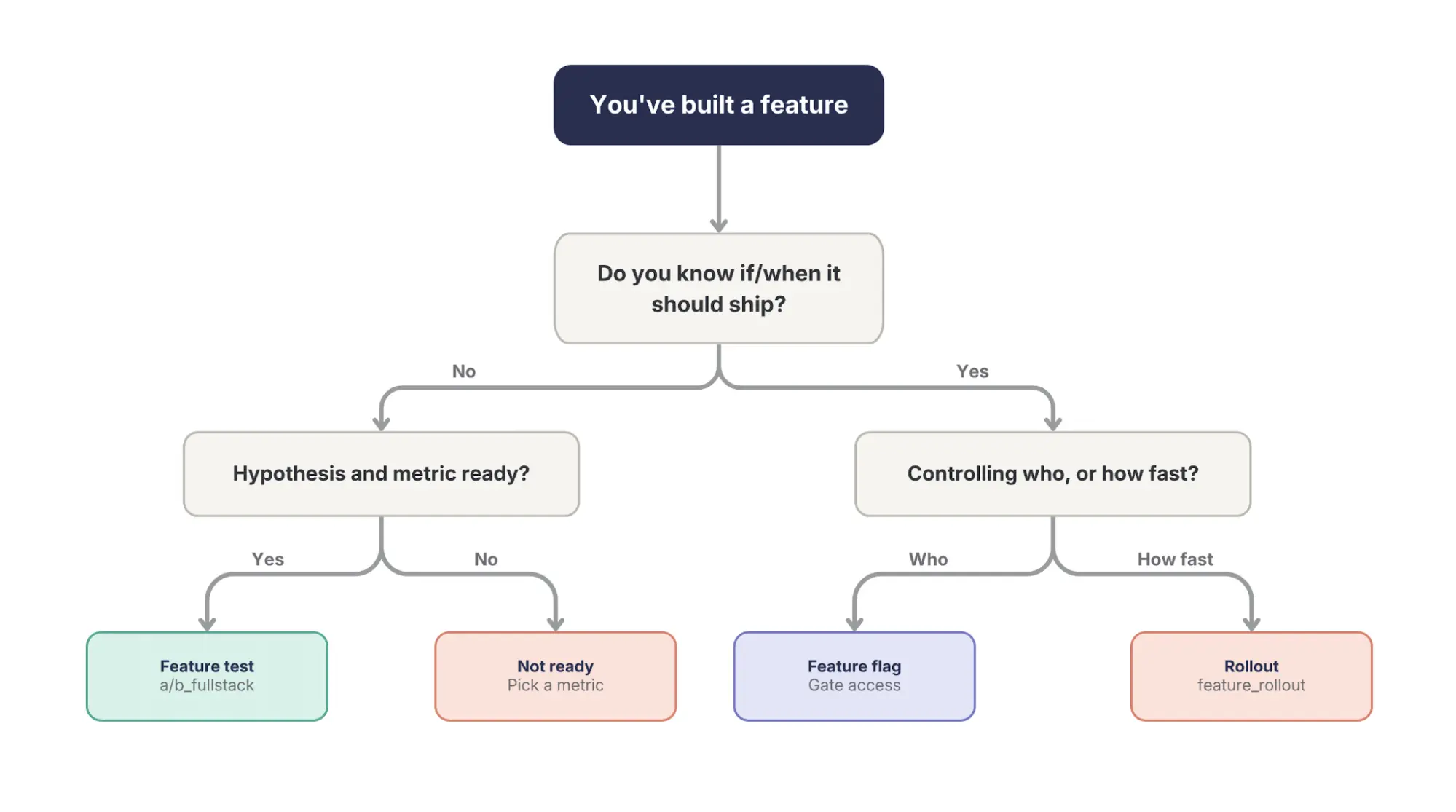
Choosing between a flag, a rollout, and a test depends entirely on the question being asked by the product team. To assist in this decision-making process, it is helpful to view them through the lens of their primary functions:
- Feature Flags (The Switch): Used when the decision to ship has already been made, but the timing or accessibility needs to be controlled. They answer: "Can this be switched on for a specific user?"
- Rollouts (The Dimmer): Used when the decision to ship is made, but the technical safety of the deployment is unknown. They answer: "Is it safe to widen the exposure of this feature?"
- Feature Testing (The Measuring Scale): Used when the value of the feature is unknown. They answer: "Does this variation perform better than the current version?"
The operational responsibility also shifts depending on the tool. Feature flags are primarily managed by engineering for system stability. Rollouts often involve a collaboration between engineering and product management to ensure a smooth transition. Feature testing is typically driven by growth teams, CRO (Conversion Rate Optimization) specialists, and product managers who are focused on KPIs and data-driven validation.

Technical Implementation and Global Consistency
For organizations to implement these strategies effectively, they must utilize a full-stack experimentation platform that offers consistent bucketing across various environments. Convert Experiences, for example, provides six SDKs—JavaScript/TypeScript, PHP, Python, Ruby, iOS, and Android—to ensure that a user’s experience remains uniform whether they are accessing a service via a mobile app, a web browser, or an edge environment like Cloudflare Workers.
The importance of consistent bucketing cannot be overstated. If a user is assigned to a "discounted pricing" variant on a mobile app but sees "standard pricing" on a desktop because the SDKs are not synced, the integrity of the experiment is compromised, and the brand’s reputation may be damaged. Full-stack platforms solve this by using deterministic hashing algorithms, ensuring that a specific user ID always maps to the same variation across all platforms and languages.
Broader Implications for the Software Industry
The adoption of feature flags, rollouts, and feature testing marks the end of the traditional "release cycle" as we once knew it. In the past, software updates were infrequent, high-stakes events that required "all hands on deck." Today, the industry is moving toward a state of continuous delivery where code is shipped hundreds of times a day, but features are released only when they are proven to be safe and effective.

This shift has significant implications for business agility. Organizations that master these three components can respond to market changes with unprecedented speed. They can "kill" failing features instantly, test radical new business models with minimal risk, and ensure that every update contributes to the company’s growth. As the digital marketplace becomes increasingly competitive, the ability to experiment at the full-stack level is no longer a luxury for tech giants like Netflix or Amazon; it is a necessity for any company that wishes to remain relevant in a data-driven world.
In summary, while feature flags provide the technical "wiring," rollouts and feature tests provide the strategic framework for modern product development. By integrating these tools into a unified full-stack experimentation strategy, businesses can transition from a culture of "guessing" to a culture of "knowing," ultimately delivering superior experiences to their users while safeguarding their technical infrastructure.