Amsterdam, Netherlands – Yoast, a leading developer of SEO plugins for WordPress, has issued a critical security update, version 27.6.1, for its premium products, addressing a significant vulnerability found in the Redirect Manager. The update primarily impacts users who have configured their redirect method to utilize the .htaccess file, a common server configuration file. While Yoast emphasizes that the "vast majority of users are not impacted," the vulnerability could, in the most severe cases, lead to remote code execution (RCE), making the immediate update for affected users paramount.
The Vulnerability Unpacked: Authenticated Arbitrary Configuration Injection
The security flaw, identified as an authenticated arbitrary configuration injection vulnerability, resided within the Redirect Manager feature of Yoast SEO Premium, Yoast WooCommerce SEO, and Yoast SEO AI+. Specifically, an authenticated user – meaning someone with legitimate access to the WordPress administration panel – could craft a malicious redirect containing special characters. These characters, when processed by the plugin, could be improperly sanitized and subsequently injected into the site’s .htaccess file.
The .htaccess file, short for "hypertext access," is a directory-level configuration file supported by Apache web servers. It allows for decentralized management of web server configuration, enabling features like URL rewriting (which redirects are part of), access control, custom error pages, and more, all without altering the main server configuration files. Due to its powerful nature, any unauthorized or malicious modification to the .htaccess file can have severe consequences.
In this particular vulnerability, the potential impact ranged from a site crash, where the website becomes entirely inaccessible due to misconfigured server directives, to the most critical scenario: remote code execution (RCE). RCE allows an attacker to execute arbitrary code on the server hosting the website, granting them full control over the site’s files, database, and potentially the entire server. This level of compromise could lead to data theft, website defacement, the injection of malware, or the use of the compromised server for further attacks.
Yoast’s internal review of a sample of sites using the affected configuration has revealed no evidence of exploitation, and there are no known cases of abuse reported to date. This suggests that while the vulnerability was severe, it may not have been widely discovered or exploited by malicious actors before the patch was released. However, the absence of evidence does not negate the inherent risk, and proactive patching remains the strongest defense.
Identifying and Mitigating Risk: Are You Affected?
Yoast has provided clear criteria for users to determine if their site is potentially at risk. A site is vulnerable only if all three of the following conditions are met:
- The user is a customer of Yoast SEO Premium, Yoast WooCommerce SEO, or Yoast SEO AI+. These are the specific products containing the vulnerable Redirect Manager.
- The Redirect Manager feature within the plugin is enabled and actively in use.
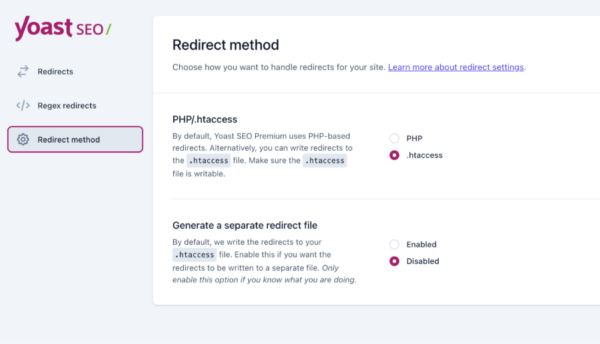
- Crucially, the redirect method configured in the Redirect Manager is set to
.htaccessmode. Other redirect methods, which might involve PHP-based redirects, are not susceptible to this specific vulnerability.
To check their redirect settings, users can navigate directly to [www.yoursite.com]/wp-admin/admin.php?page=wpseo_redirects#/redirect-method within their WordPress admin panel. If the interface does not show .htaccess mode enabled, the site is not at risk from this particular vulnerability. Even if not directly affected, Yoast strongly recommends updating to version 27.6.1 as a general best practice for maintaining a secure and stable WordPress environment.

Yoast’s Swift Response and Enhanced Protection
Upon discovering the vulnerability, Yoast acted swiftly to develop and deploy a comprehensive fix. The patch included in version 27.6.1 implements three distinct layers of protection designed to prevent similar issues in the future:
- Robust Input Validation: This ensures that any data entered into the redirect fields is strictly checked against predefined rules before being processed. Malicious characters or patterns are identified and rejected at the input stage.
- Sanitization and Escaping: Even if malicious input somehow bypasses initial validation, sanitization processes clean the data, removing or neutralizing any potentially harmful code. Escaping then prepares the data for safe output to the
.htaccessfile, ensuring that special characters are treated as literal text rather than executable commands. - Improved
.htaccessGeneration Logic: The underlying code responsible for generating and modifying the.htaccessfile has been hardened to prevent arbitrary injection. This likely involves more stringent templating and stricter control over what can be written to the file, irrespective of the input.
These multi-layered defenses aim to create a formidable barrier against injection attacks, significantly bolstering the security posture of the Redirect Manager. Yoast’s commitment to security is evident in its rapid response and transparent communication with its user base, reassuring customers that their trust is valued.
A Call to Action for Web Administrators and Developers
The immediate and most critical action for all users of Yoast SEO Premium, Yoast WooCommerce SEO, or Yoast SEO AI+ is to update to version 27.6.1 without delay. The update process is straightforward and can typically be completed by a site administrator in under two minutes from the WordPress plugins screen. For those meeting the three aforementioned conditions for being at risk, this update is essential for safeguarding their websites.
Even for those not directly impacted by this specific .htaccess vulnerability, maintaining up-to-date plugins is a fundamental security practice. Software vulnerabilities are constantly being discovered, and developers regularly release patches to address these weaknesses. Neglecting updates leaves websites exposed to known exploits, making them easy targets for attackers.
Understanding Yoast SEO and Its Ecosystem
Yoast SEO is one of the most widely used WordPress plugins, boasting millions of active installations. It provides a comprehensive suite of tools designed to help website owners optimize their content for search engines, improving visibility and driving organic traffic. Features include content analysis, XML sitemaps, breadcrumbs, schema markup, and crucially, redirect management. Given its extensive reach, a vulnerability in such a prominent plugin carries significant weight across the entire WordPress ecosystem.
WordPress itself powers over 40% of all websites on the internet, making it the most popular Content Management System (CMS) globally. Its open-source nature, vast plugin directory, and ease of use contribute to its widespread adoption. However, this popularity also makes it a prime target for cybercriminals. While the WordPress core software is rigorously tested and generally secure, the vast ecosystem of third-party plugins and themes often introduces potential vulnerabilities.
The Broader Landscape of WordPress Security
This incident serves as a stark reminder of the ongoing challenges in maintaining web security, particularly within dynamic CMS platforms like WordPress. Plugins, while offering extended functionality and customization, are frequently identified as the primary vector for attacks on WordPress sites. Statistics consistently show that a significant percentage of WordPress security breaches originate from vulnerabilities in outdated or poorly coded plugins and themes.
The nature of this vulnerability – requiring an authenticated user – highlights a specific threat model. While unauthenticated vulnerabilities (exploitable by anyone without login credentials) are generally considered more critical due to their broader attack surface, authenticated vulnerabilities are still highly dangerous. They can be exploited if an attacker manages to compromise an administrator account through phishing, brute-force attacks, or other credential theft methods. Furthermore, they can be exploited by malicious insiders or disgruntled employees with legitimate access.
The process of responsible disclosure, where security researchers privately report vulnerabilities to developers, allowing them to create and release patches before public disclosure, is crucial in minimizing risk. While Yoast has not yet published a full security advisory detailing the discovery process, their prompt action suggests an effective internal or external reporting mechanism was in place.
Implications for Website Owners and Developers
For website owners, this incident underscores several key security principles:
- Proactive Updating: Regularly update all WordPress core files, plugins, and themes. Enable automatic updates for minor releases where possible.
- Choosing Reputable Plugins: Opt for plugins from well-established developers with a strong track record of security and regular updates, like Yoast.
- Principle of Least Privilege: Grant users only the minimum necessary access levels. Avoid giving administrator privileges to individuals who don’t absolutely need them.
- Regular Backups: Implement a robust backup strategy to ensure that a clean version of the website can be restored quickly in case of a breach.
- Security Scanning: Utilize security plugins or services that scan for vulnerabilities, malware, and suspicious activity.
- Web Application Firewalls (WAFs): Consider implementing a WAF to filter malicious traffic before it reaches the website.
For developers, this incident reinforces the need for rigorous security testing, secure coding practices, and comprehensive input validation and sanitization at every stage of development. The complexity of handling server-level configuration files like .htaccess necessitates extreme caution and robust error handling to prevent injection vulnerabilities.
Timeline of Events (Inferred)
While specific dates are not provided by Yoast, a typical timeline for such a security incident would involve:
- Early May 2024: Discovery of the vulnerability, either through internal auditing by Yoast’s security team or via a responsible disclosure by an external security researcher.
- Mid-May 2024: Yoast’s development team begins work on a patch, simultaneously assessing the scope and severity of the vulnerability.
- Late May 2024: Internal testing of the fix is conducted to ensure effectiveness and prevent regressions.
- May 29, 2024 (approximate): Release of Yoast SEO Premium 27.6.1 with the security fix.
- May 29, 2024: Initial public announcement via blog post, urging users to update.
- Future: Publication of a full security advisory with more technical details for the security community.
Conclusion: Vigilance and Trust
The release of Yoast SEO Premium 27.6.1 with its critical security fix serves as a powerful reminder of the dynamic nature of cybersecurity. While Yoast has acted commendably in identifying and patching this vulnerability, the ultimate responsibility for website security is a shared one. Users must remain vigilant, prioritize updates, and adhere to best practices to protect their digital assets. Yoast’s transparency and prompt action reinforce its position as a trusted partner in the WordPress ecosystem, demonstrating a clear commitment to the security and stability of its users’ websites. For any questions or concerns regarding this update, Yoast’s support team remains available to assist users.