The marketing industry is undergoing an unprecedented transformation, with a staggering seventy percent of marketers reporting that the sector has evolved more in the past three years than in the preceding five decades. This rapid pace of change necessitates an equivalent adaptation in the marketing automation platforms that underpin modern B2B strategies. Against this backdrop, Pardot, a long-standing fixture in the B2B marketing automation landscape, is experiencing a significant exodus of users, prompting businesses to actively seek more contemporary and future-proof alternatives. The primary drivers behind this migration include a perceived lack of ongoing development, growing concerns over the platform’s long-term viability, and inherent limitations in critical areas such as revenue attribution and reporting.
Pardot, rebranded as Marketing Cloud Account Engagement in 2022, is a B2B marketing automation platform owned by Salesforce. Its integration with the broader Salesforce ecosystem has long been a selling point, particularly for organizations already leveraging Salesforce’s CRM capabilities. However, according to Tom Ryan, founder of MarCloud and a seasoned Pardot consultant since 2016, a pervasive fear among users is the platform’s eventual discontinuation. Ryan observes, "There’s no development on the platform. There’s a clear migration path." To him, it feels like "it’s just a case of ‘when’ not ‘if’." This sentiment is echoed across a segment of the B2B market, leading to proactive searches for more robust and continually evolving solutions.
Beyond the existential concerns, practical pain points significantly contribute to user dissatisfaction. Ryan highlights revenue attribution and reporting as particularly challenging aspects. Achieving accurate revenue attribution within Pardot is "incredibly difficult if you do not know how to do it," often requiring users to "wrestle with the Pardot-Salesforce sync." This complexity arises from Pardot often functioning as a separate, albeit connected, system rather than being natively built on the Salesforce core platform. Similarly, reporting capabilities are frequently cited as inflexible. "The reports are not customizable in Pardot and therefore, people cannot get the reports they need. Clear reporting in general is very difficult for people to achieve, without consultant-level knowledge," Ryan explains. This lack of agility in data analysis hinders marketers’ ability to demonstrate ROI and optimize campaigns effectively.
The Evolution of Pardot and Salesforce’s Broader Strategy
Pardot was founded in 2006, quickly establishing itself as a specialized marketing automation solution tailored for B2B companies. Its acquisition by Salesforce in 2013 was a strategic move to bolster Salesforce’s offerings in the rapidly expanding marketing technology space, complementing its dominant position in CRM. For years, Pardot served as Salesforce’s dedicated B2B marketing automation arm, integrating with Sales Cloud to provide lead nurturing, scoring, and campaign management functionalities.
However, the tech landscape is dynamic, and Salesforce’s own marketing cloud strategy has evolved significantly. The rebranding of Pardot to Marketing Cloud Account Engagement in 2022 was part of a broader effort to unify Salesforce’s diverse marketing products under the overarching "Marketing Cloud" umbrella. This consolidation aimed to offer customers a more cohesive suite of tools, from B2C-focused Marketing Cloud Engagement (formerly ExactTarget) to the B2B-centric Account Engagement. Yet, for many long-time Pardot users, this rebranding signaled a shift rather than a renewed investment. The perception of limited new feature development post-acquisition and rebranding has fueled speculation about its long-term strategic importance within Salesforce’s portfolio, especially as the company increasingly promotes its newer, more integrated offerings built on the Data Cloud.

Salesforce is actively directing customers towards "Marketing Cloud Next," a platform designed to run natively on Data Cloud, aiming to eliminate the data silo issues that plague many legacy connected systems, including Pardot. This strategic push, while offering advanced capabilities for deeply integrated Salesforce ecosystems, inadvertently positions Pardot as a transitional product. As Ryan points out, this often prompts a "wider tech review" among customers, rather than a straightforward migration to Marketing Cloud Next. Many users see this as an opportune moment to re-evaluate their entire marketing technology stack, considering solutions that might offer a more comprehensive, user-friendly, or cost-effective approach outside the immediate Salesforce orbit. This broader industry trend towards consolidated platforms and simplified user experiences puts pressure on specialized, complex tools like Pardot.
Key Drivers for Seeking Alternatives: A Deeper Dive
The decision to migrate from a well-established platform like Pardot is rarely taken lightly. Beyond the overarching fear of discontinuation, several specific pain points exacerbate the situation for B2B marketers:
-
Data Silos and CRM Integration Challenges: While Pardot integrates with Salesforce CRM, it often operates as a separate system that requires careful synchronization. This can lead to data latency, inconsistencies, and a lack of a single source of truth for customer interactions. Modern marketers demand seamless, real-time data flow between their marketing automation and CRM systems to enable hyper-personalization and efficient sales-marketing alignment. The "wrestling with the Pardot-Salesforce sync" described by Ryan highlights this inherent architectural challenge.
-
Reporting and Analytics Limitations: In an era where data-driven decision-making is paramount, inflexible reporting tools are a major handicap. The inability to customize reports means marketers often struggle to extract the specific insights needed to optimize campaigns, demonstrate ROI, and forecast future performance. This forces reliance on external analytics tools or manual data manipulation, adding complexity and increasing the margin for error. The demand for clear, customizable, and actionable reporting is a critical factor driving migrations.
-
User Experience and Ease of Use: Compared to newer platforms designed with modern UI/UX principles, some legacy systems, including Pardot, can feel less intuitive and more complex to navigate. The need for "consultant-level knowledge" to perform basic functions or achieve specific reporting outcomes indicates a barrier to entry and efficient operation for many marketing teams. The market is increasingly prioritizing platforms that empower marketers to build, test, and iterate without constant developer intervention or extensive training.
-
Pace of Innovation and Feature Development: The perception of a slowdown in new feature releases and significant platform enhancements within Pardot leads users to believe they might be missing out on cutting-edge capabilities available in competing platforms. Features like advanced AI-driven personalization, sophisticated multi-channel orchestration, and intuitive drag-and-drop builders are becoming standard, and platforms that lag in these areas risk obsolescence.

Evaluating Pardot Alternatives for B2B Teams
When B2B teams embark on the journey of evaluating Pardot alternatives, a comprehensive set of criteria must be considered to ensure the chosen platform aligns with current needs, future growth, and strategic objectives. The most critical evaluation points extend beyond basic feature comparisons to encompass the entire operational ecosystem.
-
CRM Integration: This is arguably the most crucial factor. Seamless, native two-way synchronization with a CRM system is non-negotiable. Platforms like HubSpot and Zoho offer full CRM capabilities, making them attractive for businesses considering a complete departure from Salesforce. Marketo and ActiveCampaign maintain robust native Salesforce syncs for teams committed to their existing Salesforce CRM. Salesforce Marketing Cloud Next, by being built natively on Data Cloud, eliminates the traditional sync challenge altogether, offering an integrated experience for those deep within the Salesforce ecosystem. The goal is to eliminate data silos and ensure a unified view of the customer across sales and marketing.
-
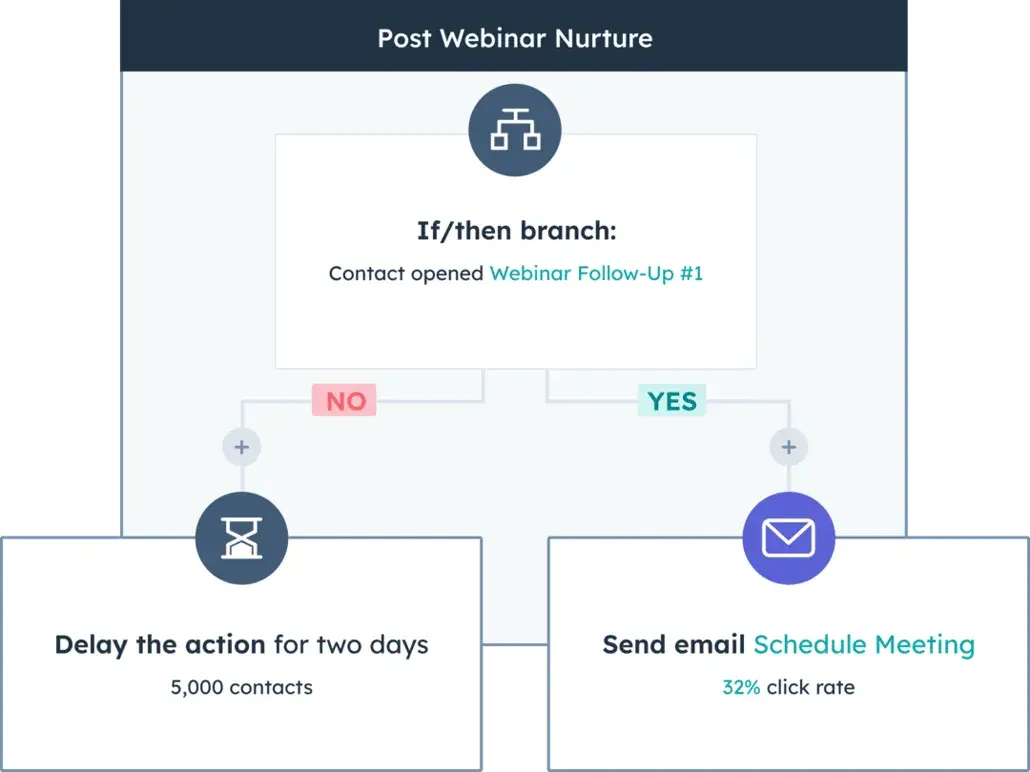
Automation Capabilities: The ability to build sophisticated, multi-step B2B nurture workflows that trigger based on behavior, lifecycle stage, or CRM data is fundamental. This includes email automation, lead scoring, progressive profiling, dynamic content, and multi-channel campaign orchestration. The platform should offer flexibility in designing complex customer journeys and adapting them as strategies evolve.
-
Reporting and Analytics: Beyond basic dashboards, the alternative must provide customizable, actionable reporting on campaign performance, lead generation, revenue attribution, and overall marketing ROI. Granular insights, easy data visualization, and the ability to integrate with other analytics tools are vital for continuous optimization.
-
Ease of Use and User Experience (UX): A modern, intuitive interface with drag-and-drop functionality, clear navigation, and minimal need for coding is highly desirable. This empowers marketing teams to be more agile and less reliant on technical support, fostering faster campaign execution and iteration.
-
Scalability and Pricing Model: The platform should be able to scale with the business’s growth in terms of contacts, users, and complexity of campaigns without prohibitive cost increases. Understanding the pricing tiers, hidden fees (e.g., onboarding, implementation), and how costs escalate with additional features or contacts is essential for long-term budgeting.
-
Integrations Ecosystem: Beyond CRM, consider integrations with other critical tools in the marketing stack, such as webinar platforms, social media management tools, content management systems (CMS), and advertising platforms. A rich integration ecosystem ensures flexibility and reduces vendor lock-in.
-
AI and Advanced Features: The inclusion of AI-powered capabilities for personalization, content generation, predictive analytics, and conversational marketing is increasingly becoming a differentiator, enhancing efficiency and effectiveness.
Leading Pardot Alternatives: A Detailed Review
The market offers a diverse range of marketing automation platforms, each with unique strengths. For businesses seeking to move beyond Pardot, several contenders stand out:
1. HubSpot Marketing Automation
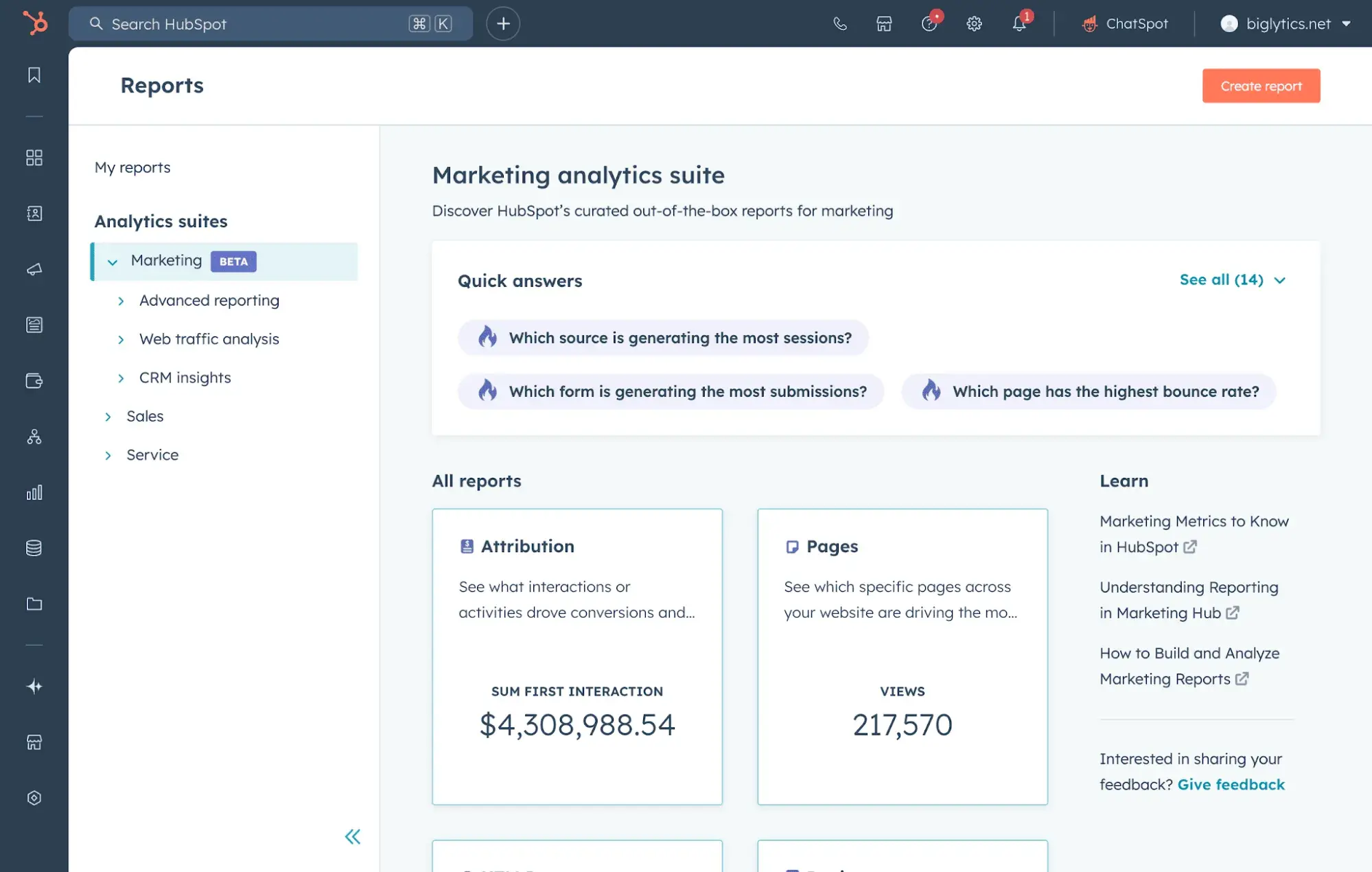
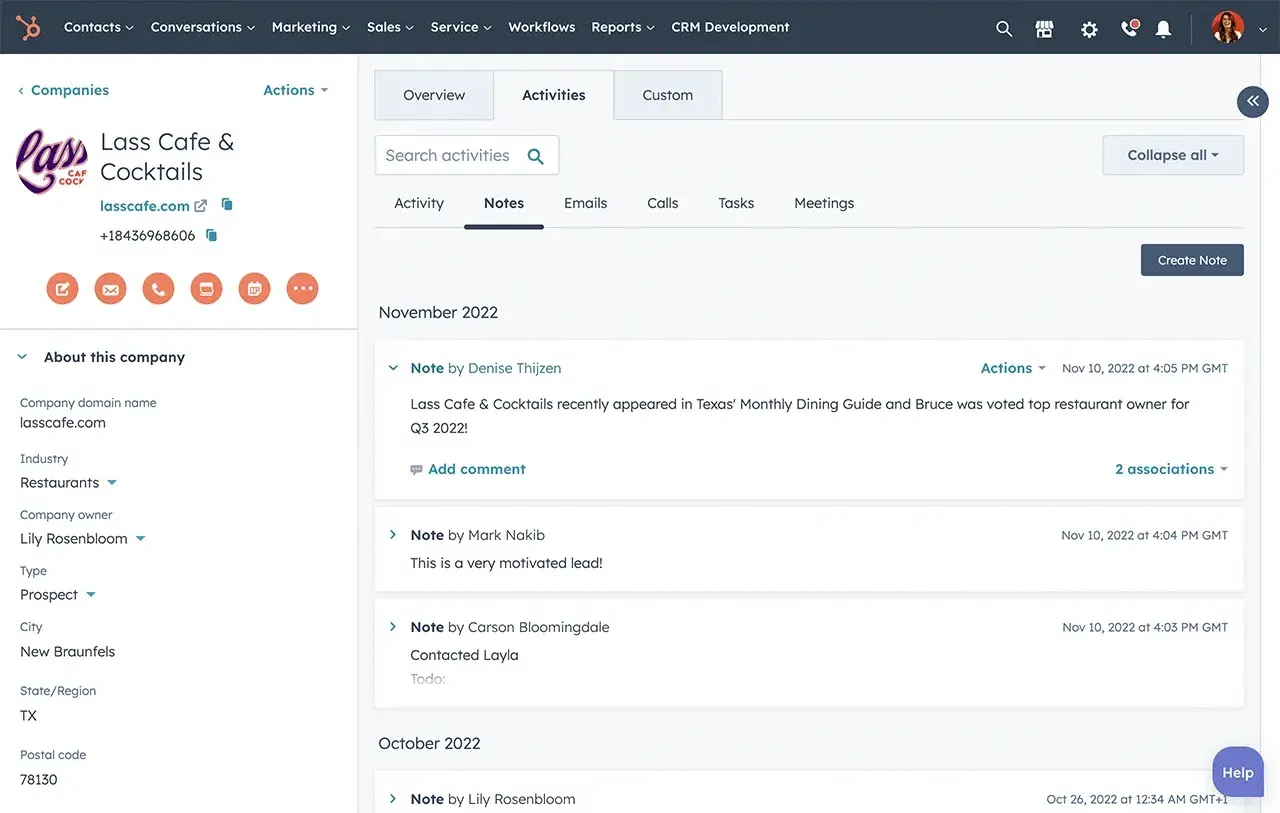
HubSpot Marketing Automation is consistently cited by experts like Tom Ryan as the most common destination for businesses migrating from Pardot. Its appeal lies in its "all-in-one" platform philosophy, which consolidates marketing, sales, service, and CRM data under one roof. This alleviates the persistent pain points of Pardot’s siloed design and complex data synchronization. Marketers can leverage HubSpot’s Smart CRM or utilize its robust native two-way sync to maintain alignment with an existing Salesforce CRM, ensuring contacts, companies, deals, and activity history are consistent across platforms.
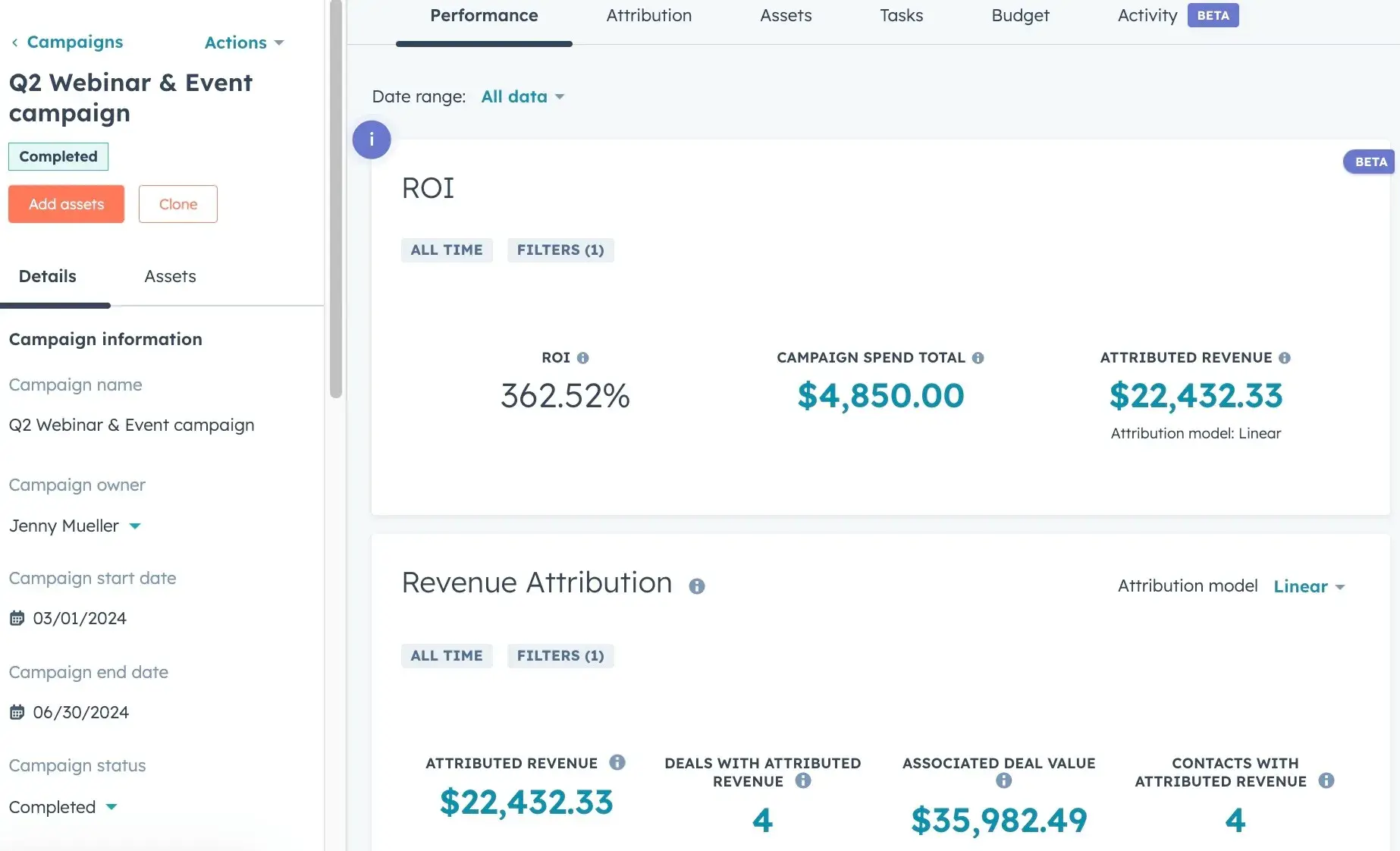
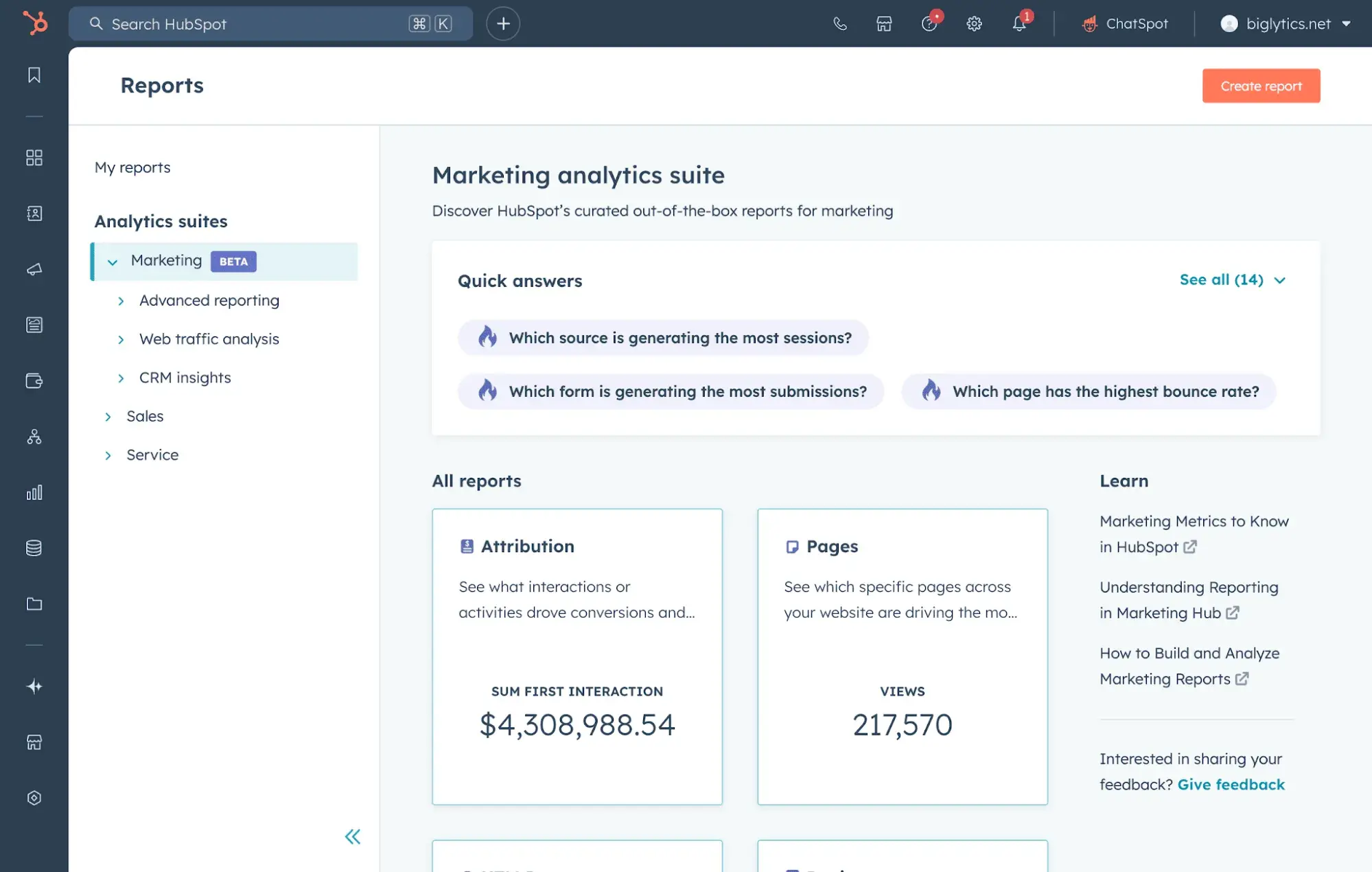
Key HubSpot Features: HubSpot excels in building multi-step B2B nurture workflows triggered by behavior, lifecycle stage, or CRM data. Its drag-and-drop email and campaign builders are highly intuitive, enabling rapid iteration and execution without developer dependency. The platform boasts comprehensive marketing analytics, including ROI tracking and attributed revenue metrics, offering clear insights into campaign performance. Contact management, lead scoring, segmentation, and robust reporting capabilities are central to its offering. HubSpot’s modern interface and user-friendly design are frequently praised, making it accessible to marketers of varying technical proficiencies.
Reviews: G2 reviews consistently highlight HubSpot Marketing Hub’s ease of use, email marketing capabilities, automation, and intuitive design as its top strengths. Common constructive feedback points to a learning curve for new users, especially when fully leveraging its extensive feature set, and occasional requests for highly niche functionalities.
Pricing: HubSpot offers a free plan for up to two users, with paid plans starting at $10/month/seat, scaling based on features, contacts, and users. Its modular pricing allows businesses to expand capabilities as needed.
Analysis: HubSpot is ideal for businesses that prioritize an integrated, user-friendly, and continually evolving platform. Its strong reporting, comprehensive feature set, and focus on inbound methodology make it a powerful tool for scaling B2B marketing efforts. The seamless integration with its own CRM is a significant draw for those looking to simplify their tech stack entirely, while its robust Salesforce integration caters to those who wish to retain their existing CRM.
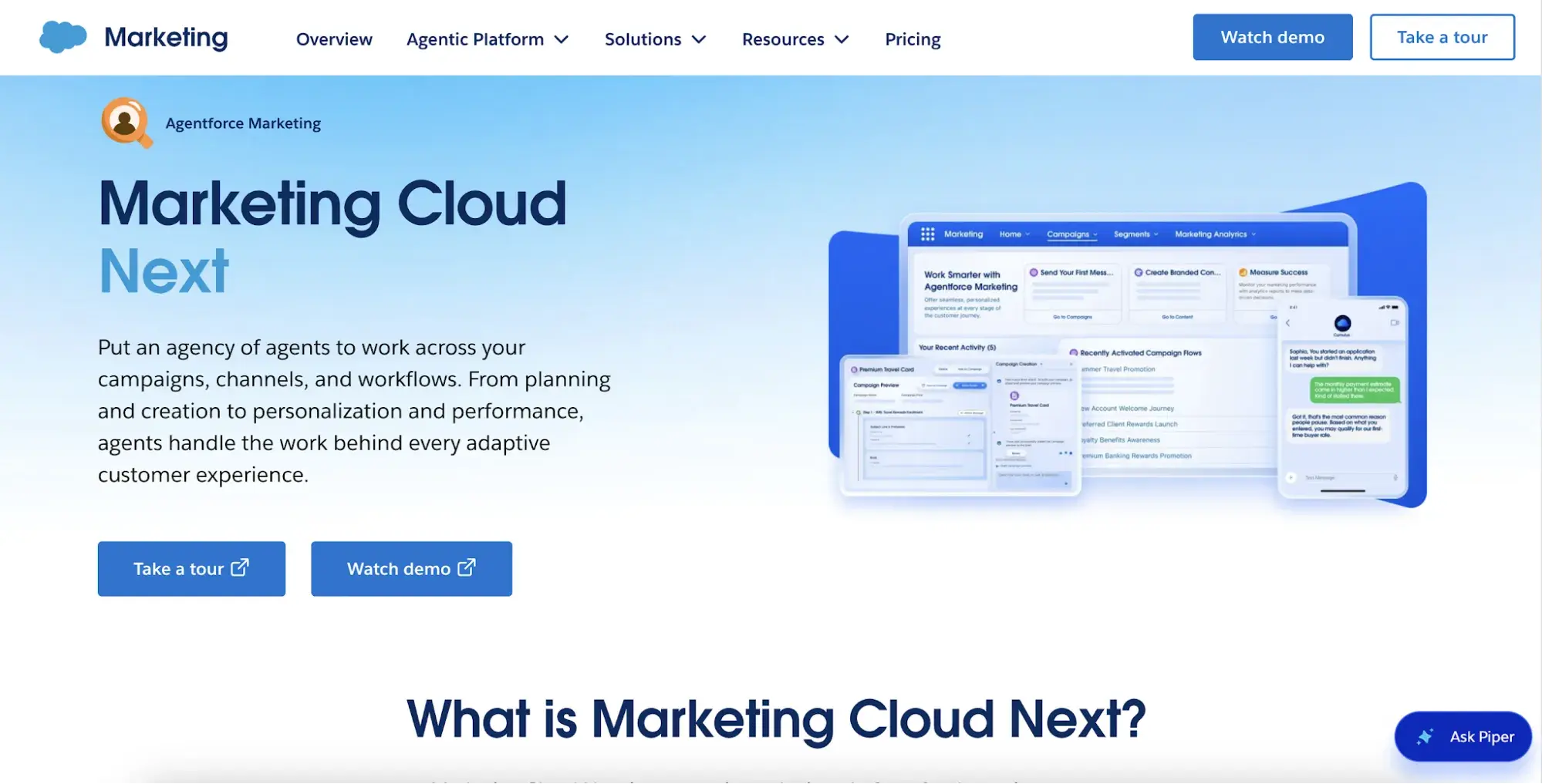
2. Salesforce Marketing Cloud Next
Salesforce Marketing Cloud Next represents Salesforce’s strategic future for marketing automation, particularly for its existing enterprise customer base. Positioned as the successor to legacy tools like Pardot, it is built natively on Salesforce’s Data Cloud. This architecture fundamentally changes the integration paradigm, eliminating the need for separate system syncing that characterized Pardot.
Key Marketing Cloud Next Features: Marketing Cloud Next promises deeper, more native integration with the broader Salesforce ecosystem, including Sales Cloud, Service Cloud, and Data Cloud. It aims to leverage unified customer data for advanced personalization, real-time engagement, and AI-driven insights. Its native architecture is designed to streamline data flow and provide a more cohesive view of the customer journey across all Salesforce interactions.
Reviews: Reviews for Agentforce Marketing (which encompasses Marketing Cloud Next) on platforms like G2 present a mixed picture regarding usability. While some users appreciate its capabilities and integration potential, others express concerns about its learning curve and inherent complexity, suggesting it’s a massive tool requiring significant investment in setup and expertise.
Pricing: The Growth Edition pricing for Marketing Cloud Next starts at $1,500/organization/month, reflecting its enterprise-grade positioning.
Analysis: Marketing Cloud Next is best suited for large enterprises deeply entrenched in the Salesforce ecosystem that wish to consolidate all their customer data and interactions within Salesforce’s own platform. It is a powerful, albeit complex and expensive, solution designed for organizations that want to avoid giving up their other Salesforce integrations and are prepared to invest heavily in implementation and ongoing management. However, as Tom Ryan notes, many Pardot customers view this as an opportunity for a "wider tech review" rather than an automatic migration, often opting for alternatives like HubSpot.
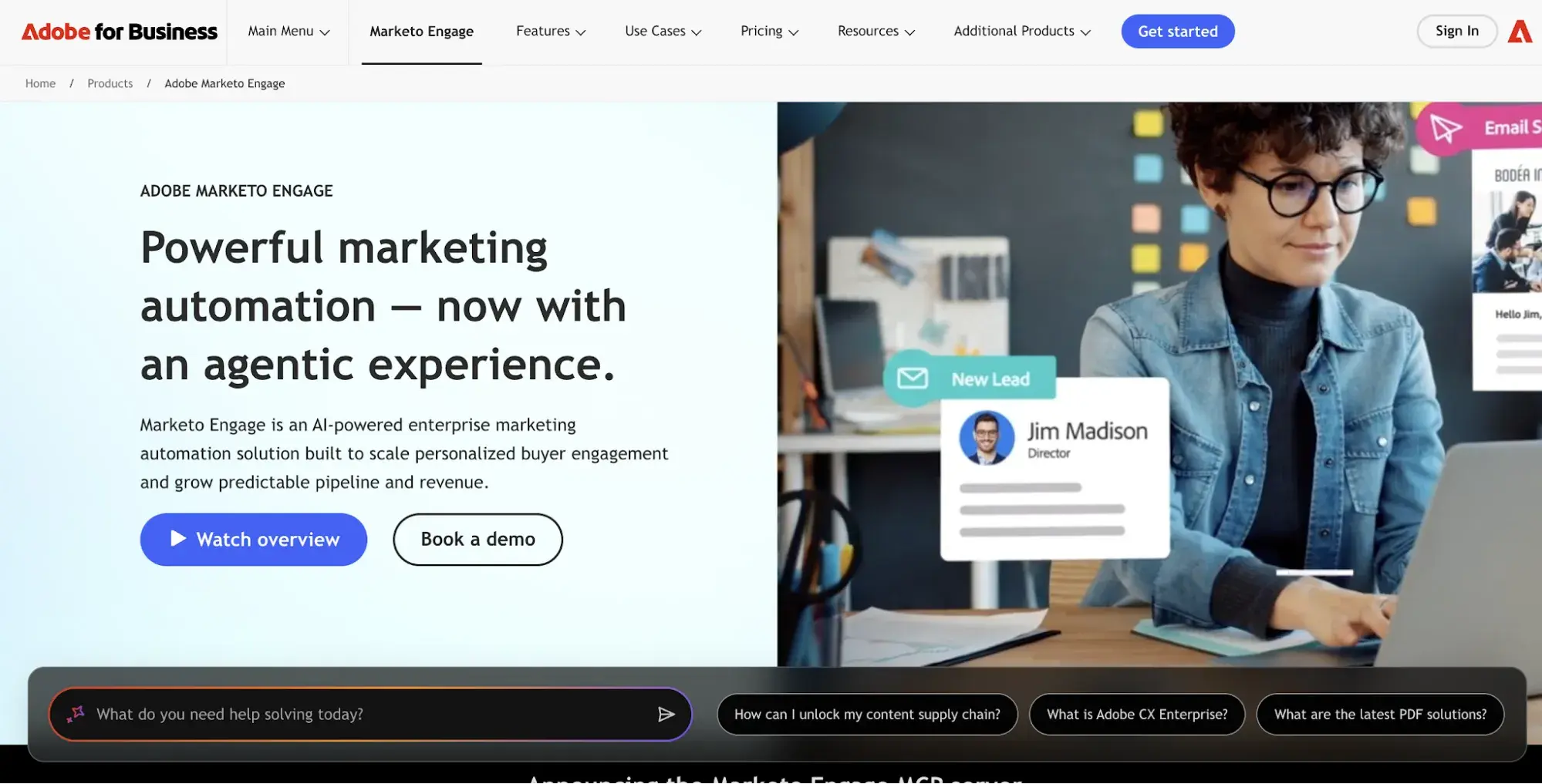
3. Adobe Marketo Engage
Marketo Engage is a robust, enterprise-grade marketing automation software owned by Adobe. It is often considered by businesses that have outgrown the functionalities of platforms like Pardot and require more sophisticated automation, lead management, and analytics capabilities, particularly in complex, multi-channel environments.
Key Marketo Engage Features: Marketo offers advanced lead nurturing, scoring, and management, extensive email marketing tools, and sophisticated campaign orchestration capabilities. Its strength lies in its ability to handle intricate B2B sales cycles and provide detailed analytics for enterprise-level reporting. Marketo also boasts an AI-driven "conversational interface" that allows teams to test and write code directly within the platform, reducing reliance on developers for specific customizations. It maintains a native two-way Salesforce sync, appealing to teams that wish to retain their Salesforce CRM.
Reviews: Users on G2 frequently praise Marketo’s powerful automation features and its ability to manage complex campaigns. However, a recurring theme in reviews is its steep learning curve, unintuitive design for some functions, and overall complexity, which can be a barrier for new users or teams with limited resources. It generally prioritizes features and depth over ease of use.
Pricing: Adobe does not publicly disclose Marketo’s pricing, requiring businesses to engage in a consultation to obtain a customized quote. This suggests a higher price point typically associated with enterprise solutions.
Analysis: Marketo Engage is an excellent fit for large, complex B2B organizations with significant budgets and dedicated resources for implementation and ongoing management. Teams that require highly customized workflows, advanced analytics, and have the internal expertise to leverage a feature-rich platform will find Marketo a powerful tool. It’s not for the faint of heart or those seeking a plug-and-play solution.
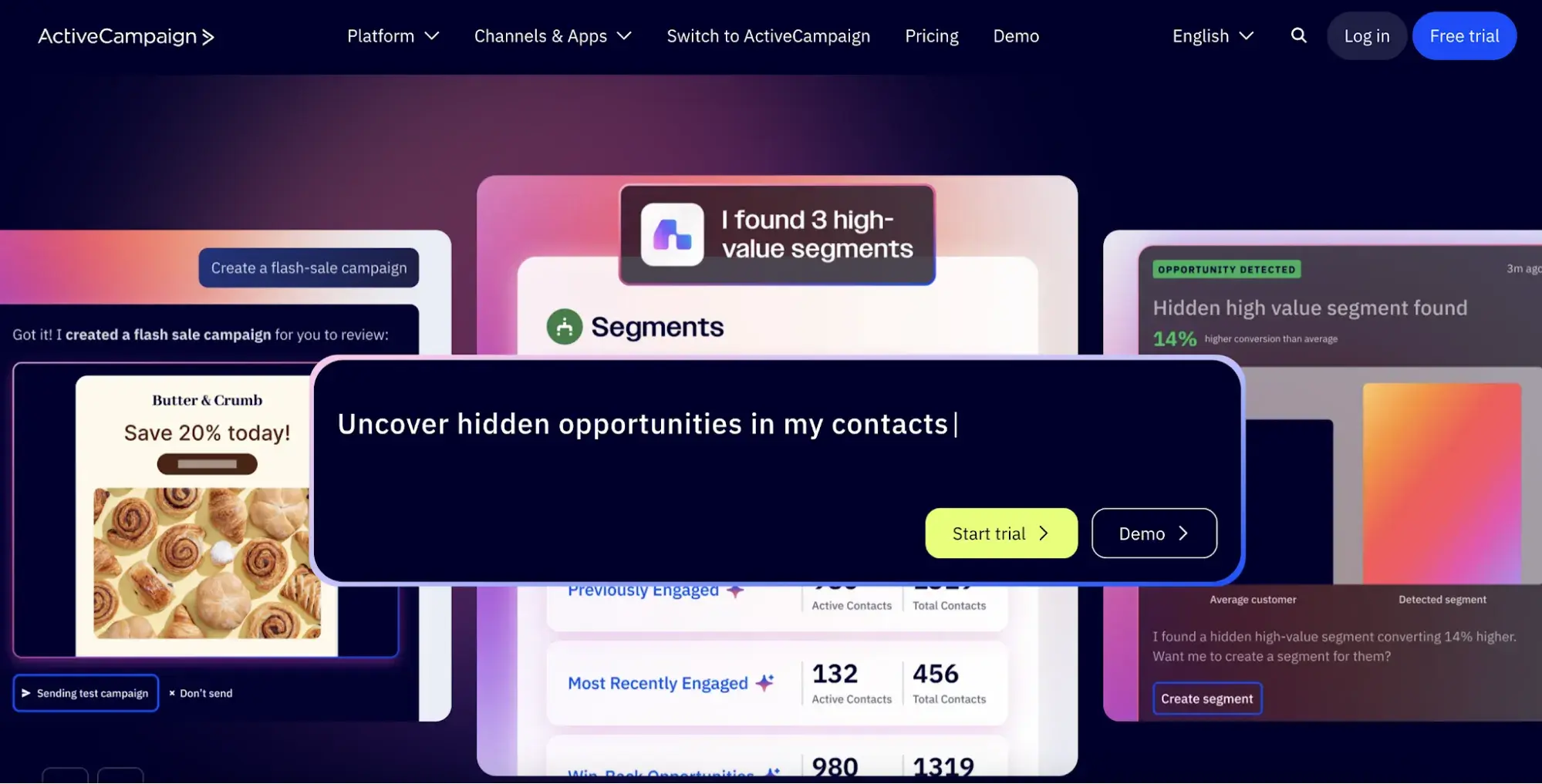
4. ActiveCampaign
ActiveCampaign is an AI-forward marketing automation platform that stands out for its multi-channel capabilities and includes a lightweight CRM. It offers a compelling option for small to mid-sized teams seeking simplicity and advanced automation features without the enterprise-level complexity and cost of some alternatives.
Key ActiveCampaign Features: The platform provides robust email marketing, marketing automation, CRM functionalities, and multi-channel messaging (SMS, site messages). It features a native two-way Salesforce sync, making it a viable option for those who want to keep their Salesforce CRM while upgrading their marketing automation. ActiveCampaign’s "active intelligence" feature allows users to leverage spoken language prompts for AI-driven assistance across various features, marking a significant departure from code-heavy designs. Its strengths lie in personalized customer experiences through automation, lead scoring, and segmentation.
Reviews: G2 users commend ActiveCampaign for its ease of use and powerful automation features. However, common complaints include a learning curve for advanced features and limitations in reporting, with specific pain points noted regarding the depth and customizability of reporting features. Pricing jumps between tiers are also a consideration for scaling businesses.
Pricing: Plans for ActiveCampaign start at $15/month, but costs can escalate quickly with an increasing contact count and access to higher-tier features.
Analysis: ActiveCampaign is well-suited for smaller to mid-sized businesses that prioritize ease of use, multi-channel automation, and AI-driven personalization. Its lightweight CRM can be beneficial for teams looking to consolidate, while its Salesforce sync provides flexibility for those wishing to maintain their existing CRM. It offers a good balance of features and accessibility, though businesses should carefully evaluate its reporting capabilities against their specific needs and anticipate potential cost escalations with growth.
5. Zoho Marketing Automation
Zoho Marketing Automation is a budget-friendly Pardot alternative that integrates natively with Zoho’s own CRM and across various marketing channels. It caters primarily to small businesses and those looking for a comprehensive, yet affordable, solution to manage their marketing efforts.
Key Zoho Marketing Automation Features: The platform utilizes customer data to score leads, generate campaigns, and personalize outreach. It offers email marketing, campaign management, lead management, social media marketing, and website tracking. Its native integration with Zoho CRM simplifies data flow for businesses within the Zoho ecosystem, providing a unified view of customer interactions.
Reviews: G2 reviews indicate that users appreciate Zoho Marketing Automation’s core automation solutions and its affordability. However, common criticisms revolve around customer service responsiveness and limitations in reporting features, suggesting it may not be as robust or flexible as some higher-tier competitors for complex analytics needs.
Pricing: Plans for Zoho Marketing Automation start at $19/month for 1,000 contacts, making it one of the more accessible options on the market.
Analysis: Zoho Marketing Automation is an excellent choice for small businesses or those with straightforward data needs and a limited budget. It provides a solid foundation for marketing automation and CRM integration, particularly for companies that are either already using Zoho’s broader suite of products or are looking to completely move away from the Salesforce ecosystem to a more cost-effective, integrated solution. While it may lack the advanced features and customization of enterprise platforms, its value proposition for its target market is strong.
Navigating the Migration from Pardot with Minimal Risk
Migrating from a complex marketing automation platform like Pardot is a significant undertaking that demands meticulous planning and execution to minimize risks and ensure business continuity. Tom Ryan emphasizes that underestimating the "translation factor" between platforms is one of the most common mistakes.
Critical Migration Phases and Considerations:
-
Data Mapping and Migration: This involves carefully planning the transfer of historical data, including contact records, lead scores (which will need to be rebuilt but historical values can be retained for segmentation), activity history, and custom fields. Understanding how data structures differ between Pardot and the new platform is crucial. Ryan advises that while lead scoring models cannot be directly ported, they should be "retained when migrating to a new platform, for segmentation reasons," and treated as "an opportunity to rebuild the model with the learns gained from Pardot."
-
Workflow and Automation Translation: Engagement Studios and other automations in Pardot do not directly port to new systems. This phase involves painstakingly recreating existing campaigns, email templates, landing pages, forms, and nurture sequences on the new platform. A key consideration, as Ryan highlights, is "to carefully track where prospects are in a given journey, as they should continue where they left off in any new system." This often requires a phased rollout approach.
-
CRM Integration and Reporting Setup: Establishing the new platform’s integration with Salesforce CRM (if retained) or setting up the new native CRM is critical. This includes configuring two-way syncs, field mapping, and ensuring data consistency. Subsequently, new reporting dashboards and analytics configurations must be established to provide the necessary insights from day one.
-
Campaign Attribution Modeling: This is a particularly complex area. Ryan explains, "A Salesforce campaign is a completely different object from a HubSpot campaign… so there’s a translation there." Businesses must strategically decide where campaign attribution modeling will primarily reside – in the new marketing automation platform, in Salesforce, or a combination – and whether existing Salesforce campaign hierarchies are worth preserving and replicating. These decisions have long-term implications for reporting accuracy and sales-marketing alignment.
Strategic Priorities for a Successful Migration:
Ryan distills the migration process into three core priorities:
- Data Integrity: Ensuring all essential historical data is accurately transferred and mapped.
- Functional Parity: Recreating critical campaigns and automations to maintain operational continuity.
- Future Scalability: Setting up the new platform with best practices to support future growth and evolving marketing strategies.
With proper planning, discovery, and potentially the assistance of a specialized migration partner (like MarCloud, which shifted its focus to HubSpot migrations due to demand), a typical Pardot migration can take 2-3 months, with fast-track projects completed in as little as one month.
Budgeting for a New Platform:
Beyond the platform’s list price, businesses must budget for:
- Expected Growth: Account for anticipated increases in contacts and users, as these often trigger jumps to higher-priced tiers.
- Onboarding and Implementation Fees: Many platforms charge mandatory fees in the first year for setup and training.
- Consultancy/Partner Costs: Engaging experts for complex migrations can be a wise investment to ensure a smooth transition and optimal setup.
The Broader Impact and Future Outlook
The ongoing migration away from Pardot underscores a broader industry trend towards more integrated, user-friendly, and data-driven marketing automation solutions. As marketing channels proliferate and customer expectations for personalized experiences rise, businesses cannot afford to be constrained by outdated or under-developed tools. The shift reflects a strategic imperative for B2B organizations to empower their marketing teams with platforms that offer robust automation, accurate reporting, and seamless integration with their entire tech stack.
While Pardot has served many businesses effectively for years, the market’s rapid evolution demands platforms that are continuously innovating. The diverse range of alternatives, from the all-in-one appeal of HubSpot to the enterprise power of Marketo and the budget-friendly approach of Zoho, offers B2B teams ample choice. The key for any organization is a thorough assessment of its unique budget, current operational needs, growth projections, and feature requirements. Making the switch from Pardot is not merely a change in software; it is an investment in the future agility, efficiency, and effectiveness of a business’s marketing engine. With the right planning and strategic choice, businesses can leverage these modern platforms to drive significant growth and stay ahead in an ever-changing digital landscape.


 Nana
Nana
 Laily UPN