The landscape of corporate digital transformation has shifted from a focus on simple feature deployment to a sophisticated culture of continuous experimentation. As major retailers and tech giants face increasing pressure to optimize user experiences while mitigating financial risk, the role of the Conversion Rate Optimization (CRO) leader has evolved into that of a platform strategist. This transition is exemplified by the work of Apurva Sandbhor, Manager of Platform and Product Experimentation at The Home Depot. Based in Atlanta, Sandbhor has become a leading voice in the movement to scale experimentation programs across massive product ecosystems without succumbing to the operational friction that typically plagues large-scale organizations.
At the heart of modern experimentation is a fundamental challenge: how to increase the volume and velocity of testing without compromising the integrity of the data or the quality of the decisions derived from it. In the 25th installment of the CRO Perspectives series, Sandbhor outlines a roadmap for shifting from a reactive, manual testing model to a platform-first strategy that leverages automation, statistical guardrails, and executive alignment to drive long-term business value.
The Structural Shift: Scaling Without Compounding Friction
For many enterprise organizations, the initial response to a need for more testing is to increase headcount. However, industry data suggests that adding personnel to a flawed system often results in diminishing returns. Sandbhor argues that scaling a team without first scaling the platform architecture simply compounds existing friction. When organizations rely on a centralized team to manually build, QA, and analyze every test, they eventually hit a ceiling where human capacity becomes the primary bottleneck.

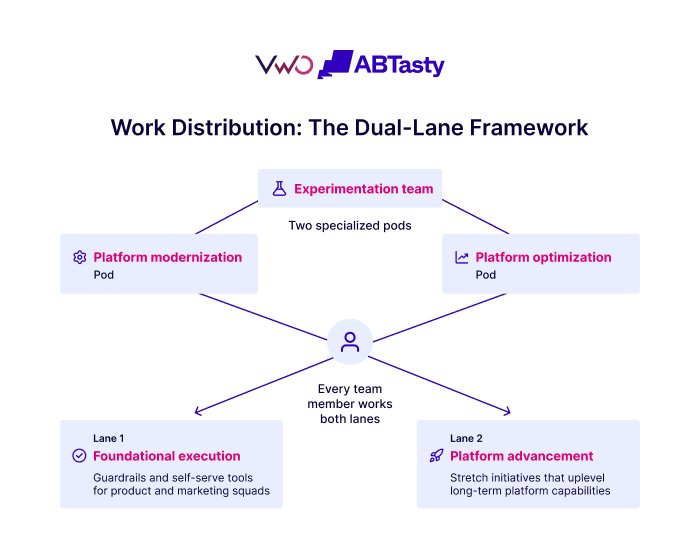
To address this, leading organizations are adopting a "Dual-Lane" framework for work distribution. This model decouples day-to-day enablement from core innovation. The first lane focuses on "Self-Service Enablement," providing product squads with the tools and automated guardrails necessary to run their own experiments. The second lane is dedicated to "Platform Innovation," where the centralized experimentation team focuses on building the infrastructure, advanced statistical engines, and automation pipelines that act as force multipliers for the rest of the company.
This structural evolution marks a departure from the traditional "center of excellence" model toward a "platform-as-a-service" model within the enterprise. By shifting the focus from manual execution to infrastructure development, organizations can increase their testing velocity exponentially while maintaining a lean, strategic core team.
Engineering Velocity: Cutting the Experimentation Lifecycle in Half
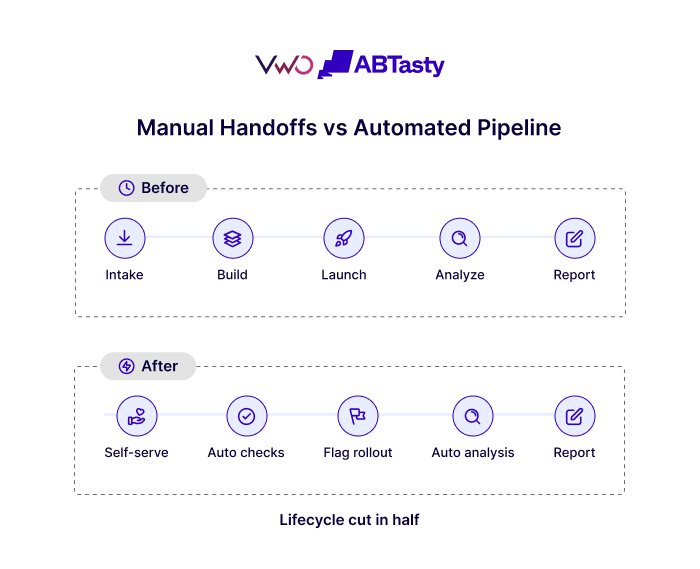
In the competitive retail sector, the speed of insight is a critical differentiator. Traditionally, the end-to-end lifecycle of a single experiment—from hypothesis to deployment—could take weeks or even months due to manual handoffs between product managers, engineers, and data analysts. Sandbhor’s approach emphasizes re-architecting the enterprise platform to cut this lifecycle by half.
True velocity is achieved not by rushing the process, but by automating the operational and statistical guardrails directly into the platform architecture. This includes:

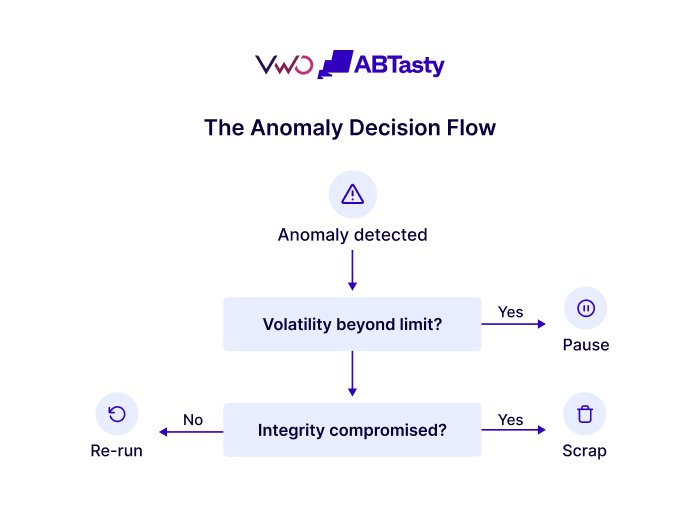
- Embedded Statistical Guardrails: Integrating proprietary statistical engines into the data ingestion pipeline allows for real-time monitoring of Sample Ratio Mismatch (SRM) and traffic anomalies. By automating these checks, teams can identify flawed tests within hours rather than days, preventing the waste of traffic and engineering resources.
- End-to-End Pipelines: Replacing fragmented workflows with automated pipelines ensures that data flows seamlessly from the experimentation tool to the analytics dashboard. This reduces the risk of human error during data synthesis and ensures that every stakeholder is looking at a "single source of truth."
- Hybrid Architecture: Moving toward a model that supports both client-side and server-side experimentation allows for greater flexibility. While client-side testing is effective for front-end UI changes, server-side testing enables more complex architectural changes and deeper product experimentation without the performance "flicker" often associated with traditional A/B testing tools.
The Transition to Server-Side Experimentation
As organizations mature, the move to server-side experimentation becomes a necessary evolution. Unlike client-side testing, which executes in the user’s browser, server-side testing happens at the application level. This allows for testing of core logic, such as search algorithms, recommendation engines, and pricing models.
However, Sandbhor cautions that this transition requires a robust cultural foundation. Before investing in server-side infrastructure, an organization must have a mature data-driven culture and clear stakeholder incentives. The technical requirements are significant, involving deep integration with backend systems and a shift in how engineers approach feature flagging and deployment. The "decoupling" of deployment from activation is a key component here; features are deployed to the codebase but only activated for specific user segments through the experimentation platform, allowing for "dark launches" and controlled rollouts.
Redefining Success: Moving Beyond Win Rates
One of the most provocative insights from Sandbhor’s perspective is the rejection of "win rates" as a primary metric for success. In many organizations, a "successful" experimentation program is one that reports a high percentage of positive results. However, this creates a perverse incentive structure.
When teams are measured by win rates, they become risk-averse, focusing on low-impact "color of the button" tests that are likely to succeed but unlikely to move the needle on corporate strategy. As Harvard Business School Professor Stefan Thomke notes in his research, for every online experiment that succeeds, nearly ten do not. A program with a 90% win rate is likely not testing bold enough ideas.
Sandbhor proposes three alternative metrics that more accurately reflect the health of an enterprise program:
- Learning Velocity: The speed at which an organization generates high-integrity insights that inform product roadmaps.
- Risk Mitigation ROI: The financial value of preventing a flawed feature—which might have been backed by strong internal opinions—from being fully rolled out.
- Decision Integrity: The degree to which experiments provide clear, actionable data that reduces ambiguity for executive leadership.
Case Study: The Algorithmic Recommendation Pivot
The value of this approach was demonstrated during a high-visibility checkout optimization project at a major retailer. The team had developed an algorithmic recommendation engine designed to cross-sell accessories during the checkout process. Initial data, however, showed an unexpected drop in overall cart conversion rates.
In a traditional "win/loss" culture, the project might have been abandoned as a failure. However, by leveraging deep segment analysis, the team discovered a behavioral nuance: the algorithm worked well for product discovery but caused "decision paralysis" when presented as multiple choices during the high-intent checkout phase.
The team pivoted, testing a single "bundle" option instead of multiple individual choices. This follow-up test validated the new hypothesis, resulting in a net revenue lift. This case study highlights the importance of the "insight-to-hypothesis loop," where the goal of a test is not just to win, but to understand user behavior deeply enough to inform the next iteration.
The Role of AI and the Future of Leadership
As Artificial Intelligence (AI) begins to commoditize the execution layer of experimentation—automating data pulls, building test variants, and flagging anomalies—the role of human leadership is shifting. AI can optimize the path, but it cannot choose the mountain.
Sandbhor argues that human judgment remains irreplaceable in three specific areas:
- Ethical and Strategic Boundaries: Determining where and how it is appropriate to test, ensuring that experimentation aligns with brand values and long-term customer trust.
- Psychological Synthesis: Translating complex user behaviors and emotions into novel, high-impact hypotheses that an AI, trained on historical data, might never conceive.
- Stakeholder Alignment: Building the narrative that connects experimentation data to corporate vision, ensuring that the organization remains committed to a culture of learning even when tests fail.
Executive Engagement and Strategic Risk Avoidance
To maintain executive buy-in, experimentation leaders must change how they communicate with the C-suite. Sandbhor suggests that the most impactful slide in an executive presentation is often the "Strategic Risk Avoidance" slide. This calculates the estimated revenue loss prevented by stopping a heavily-backed but flawed feature.
By framing experimentation as an "ironclad insurance policy" against strategic missteps, leaders can justify the investment in platform infrastructure even when individual tests do not result in immediate wins. This approach shifts the executive perception of experimentation from a tactical tool for "tweaking" to a fundamental component of corporate risk management and innovation strategy.
Conclusion and Broader Implications
The perspectives shared by Apurva Sandbhor signal a broader trend in the tech and retail industries: the professionalization of experimentation. As the field moves away from "growth hacking" tactics toward robust platform engineering, the focus is increasingly on building sustainable systems that can support thousands of simultaneous tests across global teams.
For organizations looking to follow this path, the message is clear: prioritize the platform over headcount, value learning over winning, and use automation to protect the integrity of every decision. In an era of AI-driven workflows, the ultimate competitive advantage is not just the ability to run tests, but the ability to uncover business truths faster than the competition while protecting the enterprise from costly strategic errors. The future of product growth belongs to those who treat experimentation not as a series of projects, but as a core, automated capability.