A fundamental shift is underway in how individuals and businesses seek information online, challenging decades-old paradigms of web discovery and necessitating a rapid evolution in marketing strategies. The era of meticulously clicking through pages of "blue links" on traditional search engines is rapidly ceding ground to the efficiency and directness of AI-powered answer engines. Platforms like ChatGPT, Perplexity, and Google’s Gemini are transforming user expectations, offering synthesized, direct answers rather than curated lists of websites. This profound change is forcing marketers to re-evaluate their entire approach, moving beyond the singular goal of traditional search engine optimization (SEO) to embrace the emerging field of Answer Engine Optimization (AEO). The critical question for brands is no longer merely "Do we rank?" but rather, "Are AI search tools even mentioning us?"
The genesis of this transformation can be traced to the rapid advancements in large language models (LLMs) and generative AI, which burst into public consciousness with the widespread adoption of tools like ChatGPT in late 2022. Prior to this, search engines had already begun evolving from simple keyword matching to more sophisticated semantic search, attempting to understand user intent rather than just keywords. However, the advent of generative AI introduced a new capability: the ability to synthesize information from vast datasets and present it in a conversational, human-like format. This marked a pivotal moment, pushing the boundary of search from mere information retrieval to comprehensive answer generation.
The Paradigm Shift in Information Discovery
For decades, Google’s PageRank algorithm and subsequent refinements dictated online visibility. Businesses poured resources into SEO, meticulously optimizing keywords, building backlinks, and crafting content to climb the search engine results pages (SERPs). Success was measured by organic traffic, click-through rates, and conversion paths initiated by users navigating from search results to brand websites. This established ecosystem, however, is now experiencing seismic shifts.
The primary driver of this change is user behavior. Consumers and B2B buyers alike are increasingly valuing immediacy and directness. Instead of sifting through multiple articles, they prefer a single, concise answer to their queries. This preference is accelerating the "zero-click" phenomenon, where users find their answers directly within the search results or AI summary, negating the need to visit an external website. According to Bain & Company, a staggering 60% of searches now conclude without a user progressing to a click, with AI search identified as a significant contributor to this trend. This metric underscores a critical challenge for brands: even if their content is highly ranked, it may not be seen if the AI answers the user’s question directly.

Transformative Impact on Buyer Research
The impact of AI search tools on the buyer’s journey is profound and well-documented. Forrester’s research highlights that 94% of B2B buyers leveraged AI during recent purchase processes. The depth of this integration is striking: 55% used AI to compare vendors, 54% for product research, and 47% to construct internal business cases. Crucially, a significant portion of this research occurs before a single sales representative is contacted, compressing the traditional sales funnel and shifting the point of initial brand discovery. AI answer engines have, in fact, ascended to become the number one source for vendor research, surpassing traditional vendor websites, direct sales representatives, and even product experts.
This trend is not confined to the B2B sector. McKinsey research indicates that approximately 50% of consumers across all demographics, including older generations, now employ AI-powered search for their purchasing decisions. Adobe Digital Insights further corroborates this, reporting a 56% usage of generative AI among US consumers during the 2023 holiday shopping season—a substantial 45% increase from the previous year. This widespread adoption across diverse user groups signals a permanent change in consumer habits, making AI search a critical touchpoint for both B2B and B2C marketers. By the time a potential buyer fills out a demo request form or responds to outreach, they have likely already engaged deeply with an AI engine, having answered many of their initial questions and narrowed down their options.
Categorization of AI Search Tools and Their Strategic Significance
To navigate this evolving landscape, marketers must understand the distinct categories of AI search tools. While often conflated, these tools serve different purposes and require tailored strategies.
1. Answer Engines: These are the public-facing, conversational AI interfaces like ChatGPT, Perplexity, and Google Gemini. Users engage with them using natural language queries, receiving synthesized answers drawn from vast datasets and real-time web connections. The goal is to provide a single, definitive response, diverging from traditional search engines that present a list of resources. While some answer engines diligently cite their sources (e.g., Perplexity), others are less transparent. This opacity presents both opportunities and challenges for brands seeking to influence the information presented. Beyond consumer use, HubSpot’s AI Trends Report reveals that 40% of marketers utilize answer engines for research, data analysis, and content generation, making them the most popular AI tool among marketing professionals. For marketers, the objective is to influence what these engines say about their brand through Answer Engine Optimization (AEO) and by creating credible, well-sourced content that is likely to be cited.

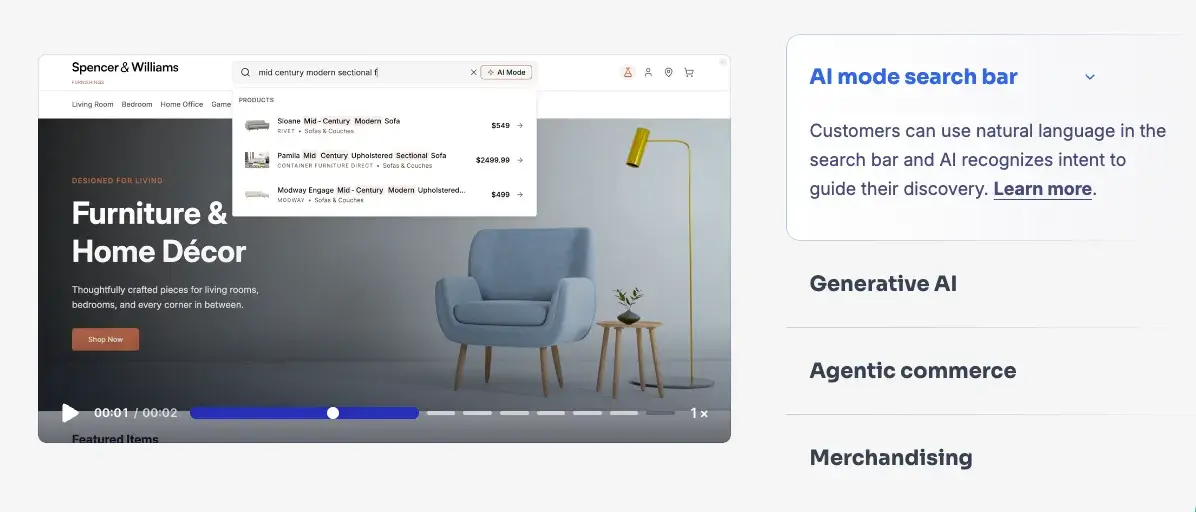
2. AI Site Search Tools: These tools are embedded within a company’s own digital properties—websites, applications, or internal knowledge bases. Platforms such as Algolia, Coveo, and Elasticsearch leverage AI to enhance internal search functionality, helping users find specific pages, products, or answers without leaving the immediate environment. For e-commerce brands, SaaS companies, and large enterprises with extensive content libraries, robust AI site search is paramount. If users struggle to find information on a brand’s own platform, they are highly likely to turn to an external answer engine, potentially diverting traffic and engagement away from the brand. These tools improve user experience, reduce bounce rates, and can significantly impact conversion rates and customer satisfaction.
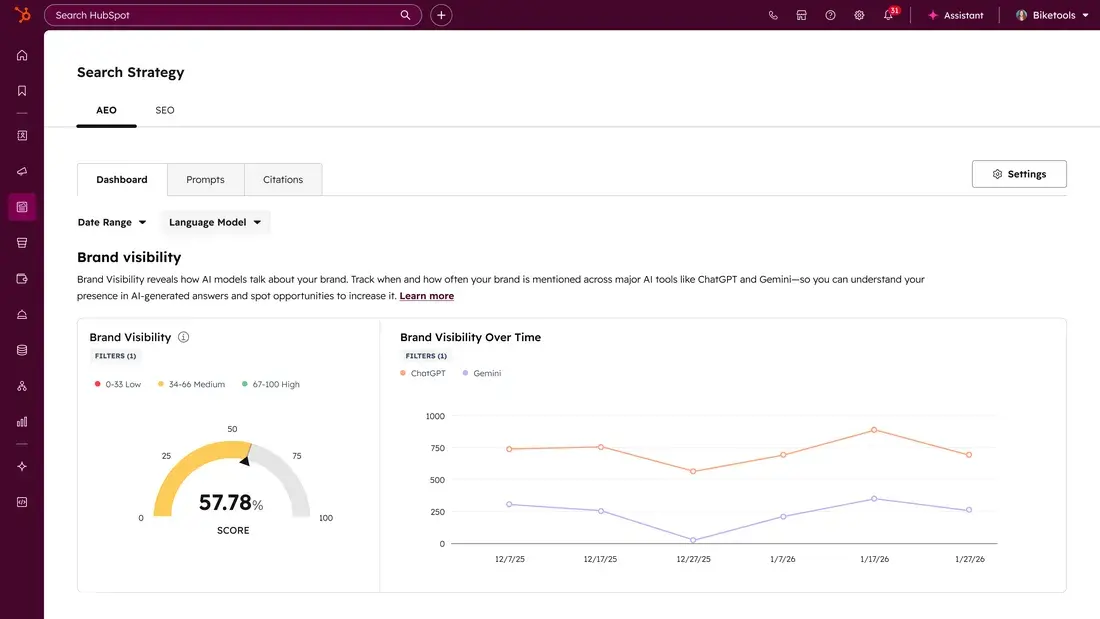
3. AEO (Answer Engine Optimization) Tools: This category represents the marketer’s response to the rise of answer engines. AEO tools are specialized platforms designed to track, measure, and improve a brand’s visibility within AI-generated answers. They monitor how often a brand is mentioned, compare its presence against competitors, and offer actionable recommendations to enhance its standing. As traditional search analytics fail to capture AI search visibility, AEO tools fill a critical void. They simulate user queries, analyze AI responses for brand citations, and track trends over time. With 60% of searches now ending without a click, brands must appear in AI-generated answers to remain discoverable.
Leading AI Search Tools by Use Case
Selecting the appropriate AI search tool depends entirely on the specific marketing objectives. The market is dynamic, with new tools and features emerging constantly, necessitating careful evaluation beyond superficial feature lists.
Best for Measuring Brand Visibility in Answer Engines: HubSpot AEO
HubSpot AEO is a dedicated platform for marketers, designed to track brand visibility across major answer engines like ChatGPT, Perplexity, and Gemini, including emerging features such as Google’s AI search overviews. What distinguishes HubSpot AEO is its integration with a brand’s CRM data. This allows it to predict and prioritize the specific prompts and queries that actual buyers are most likely to use, grounding its recommendations in real customer insights rather than generic industry assumptions. Customers leveraging the AEO beta have reported significant gains, with AI referral traffic growing by 20% even as overall organic traffic experienced a 27% year-over-year decline. This demonstrates the critical shift in traffic sources and the importance of adapting to new discovery channels. HubSpot AEO is available with Marketing Hub Pro and Enterprise, or as a standalone offering, with a free AI Search Grader providing an initial diagnostic snapshot.
Best for Everyday Research and Content Generation: ChatGPT
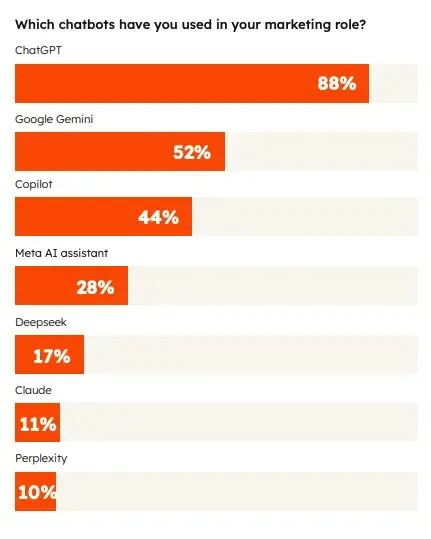
OpenAI’s ChatGPT remains the most ubiquitous and widely recognized AI tool globally. Processing over 2.5 billion prompts daily, it serves as an indispensable research partner for marketers, writers, and analysts. Its versatility spans competitive intelligence, content brainstorming, multi-step analysis, and creative writing. HubSpot’s research indicates an 88% adoption rate among marketers, far surpassing its nearest competitor. Bain & Company’s findings show that 68% of LLM users rely on these platforms for research, information gathering, and summarization, with 42% using them for shopping recommendations. While powerful, users must be mindful of its training data cutoff and potential for inaccuracies if not connected to real-time web search. HubSpot offers a deep research connector with ChatGPT, enabling users to integrate CRM customer data for more relevant insights.
Best for Credibility and Cited Answers: Perplexity AI
Perplexity AI has rapidly gained traction, particularly among B2B buyers conducting thorough vendor evaluations, due to its unwavering commitment to source citation. In May 2023 alone, Perplexity processed 780 million queries, demonstrating substantial month-over-month growth. Unlike many other answer engines, every Perplexity response includes inline citations, making sources a fundamental component of the user experience. The Columbia Journalism Review, in an assessment of eight AI search tools, identified Perplexity as having the lowest error rate for citations at 37%, positioning it as the most reliable option for tasks demanding accuracy and verifiable information. This makes Perplexity invaluable for fact-checking, competitive analysis, and research on academic or technical subjects.
Best for Internal and Site Search: Algolia or Coveo
For organizations grappling with users unable to find specific information on their websites or within internal documentation, specialized AI site search tools are essential. Algolia excels in speed and developer flexibility, powering search for high-volume websites and applications, particularly in e-commerce and SaaS. Its recent expansion into generative AI with NeuralSearch and Ask AI features further enhances its capabilities. Coveo, conversely, is tailored for enterprise environments with complex knowledge bases, offering robust integrations with platforms like Salesforce and SAP. Coveo’s strength lies in delivering personalized recommendations across customer-facing portals and streamlining access to internal documentation, removing significant integration burdens for enterprise teams. Investing in these tools ensures that qualified visitors remain within a brand’s ecosystem, improving engagement and reducing support costs.
Evaluating AI Search Tools: A Marketer’s Framework

The rapidly evolving AI search tool landscape can be overwhelming. Marketers must look beyond superficial feature lists and evaluate tools based on criteria that truly impact strategic outcomes:
- Accuracy and Reliability: Especially for answer engines, the precision and verifiability of information are paramount.
- Real-time Capabilities: The ability to access and synthesize up-to-date information from the live web is crucial.
- Integration Ecosystem: How well does the tool integrate with existing CRM, CMS, and marketing automation platforms?
- Data Privacy and Security: Understanding how data is used, stored, and protected is vital, particularly with sensitive customer information.
- Scalability: Can the tool handle growing query volumes and evolving needs?
- Customization and Control: The degree to which marketers can influence outputs, particularly for brand messaging.
- Source Transparency: For answer engines, the clarity of source attribution is critical for credibility.
- Actionable Insights: For AEO tools, the quality of recommendations and the ability to translate data into strategic actions.
- Vendor Roadmap and Support: The commitment of the provider to ongoing development and customer assistance in a fast-changing market.
Broader Impact and Future Outlook
The rise of AI search tools heralds a new era for digital marketing, fundamentally altering content strategy, SEO, and performance measurement. Traditional SEO, while still relevant for foundational web presence, is no longer sufficient. Brands must now think about "answerability"—how their content can be easily understood and synthesized by AI. This demands a focus on structured data, clear and concise messaging, and establishing strong topical authority that AI models can trust and cite.

Challenges remain, including issues of AI "hallucinations" (generating plausible but incorrect information), the ethical implications of data usage for training models, and copyright concerns regarding source material. The "black box" nature of some AI models also raises questions about bias and fairness in information delivery. Regulators globally are beginning to grapple with these issues, hinting at a future where AI transparency and accountability become legal requirements.
However, the opportunities are equally vast. Marketers can leverage AI tools for hyper-personalization, creating more relevant and engaging customer experiences. New content formats, such as AI-optimized summaries and highly structured information, will emerge. Specialized AI assistants could provide deeper customer service and sales support. The shift also democratizes access to complex data analysis, empowering marketers to derive insights previously only accessible to data scientists.
Conclusion: The Urgency for Marketers
The transition to AI-powered search is not a future possibility but a present reality. Answer engines have become the primary gateway for B2B buyers comparing vendors, consumers researching products, and anyone seeking direct answers without the traditional investigative journey. While many marketers acknowledge this shift, fewer have actively adapted their strategies. This creates a strategic advantage for those who act decisively.
The tools outlined in this article address three critical functions: general-purpose answer engines for daily research and content generation, AI site search to optimize on-site user experience, and AEO tools to measure and enhance brand visibility within AI-generated answers. Marketers are not required to adopt every tool simultaneously. The strategic imperative is to identify and address the most immediate need. For many, this begins with understanding their current standing in the AI search landscape.
If a brand is not yet tracking its visibility in ChatGPT, Perplexity, or Gemini, that is the most significant gap to close. Leveraging tools like HubSpot’s free AI Search Grader can provide an immediate diagnostic snapshot, while ongoing platforms like HubSpot AEO offer continuous tracking and actionable insights. The search for the right tools is over; the time for strategic action and adaptation to the new era of online discovery is now.