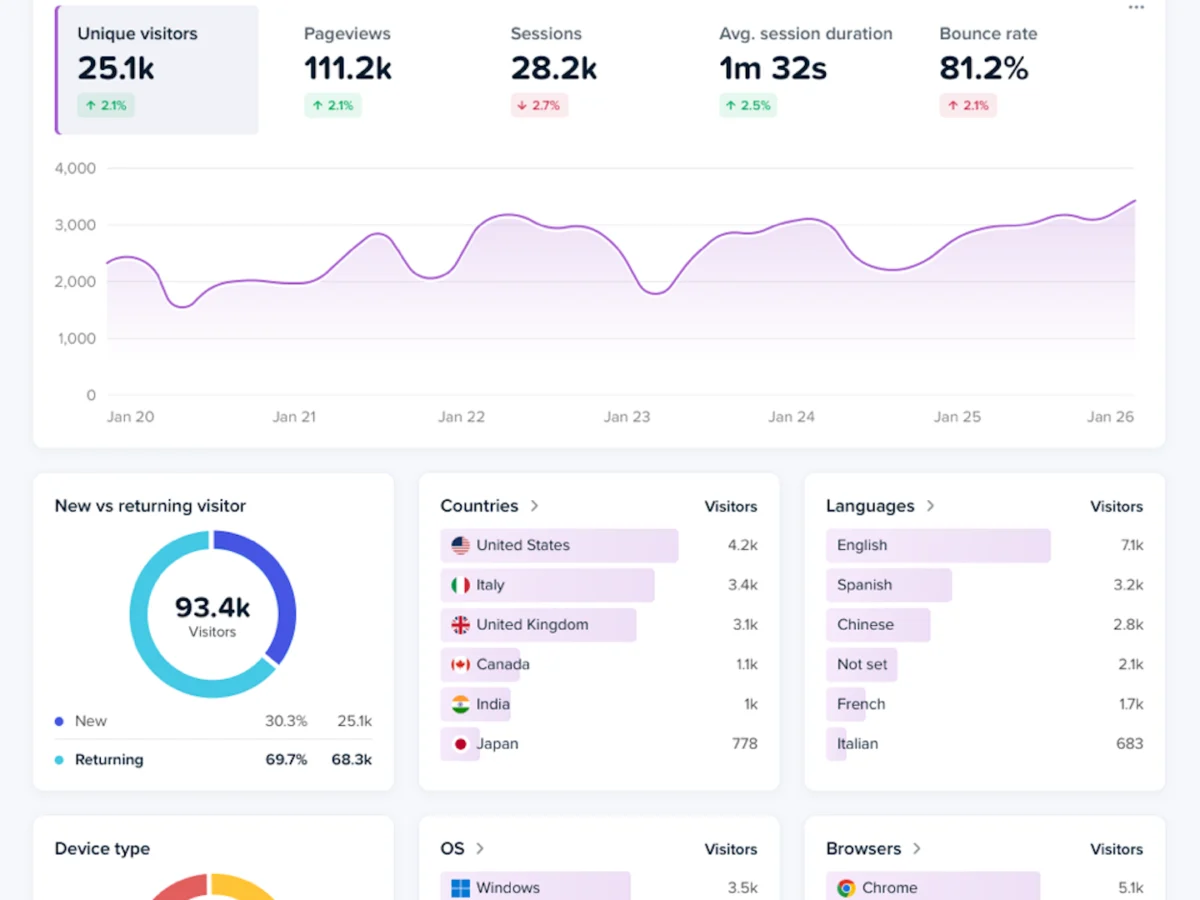
The landscape of digital analytics has undergone a significant transformation with the official launch of Crazy Egg’s Data Warehouse Connector, a tool designed to bridge the gap between isolated behavioral data and centralized business intelligence. By allowing organizations to sync every raw event recorded by the platform directly into their own data infrastructure, Crazy Egg is addressing a long-standing challenge in the marketing technology sector: the "siloing" of user experience data. This new feature enables analytics teams and data engineers to extract raw, granular records from all Crazy Egg features—including heatmaps, session recordings, and A/B testing—and integrate them with other critical datasets, such as customer relationship management (CRM) systems, financial records, and subscription platforms.
The introduction of the Data Warehouse Connector represents a strategic pivot toward data portability and sovereignty. In the modern enterprise, the ability to govern and own first-party data has become a competitive necessity, particularly as privacy regulations tighten and third-party cookies face obsolescence. By delivering behavioral records to a storage bucket owned and governed by the client, Crazy Egg is ensuring that businesses maintain full control over their data lifecycle, from collection to long-term archiving.
Technical Specifications and Data Portability
At its core, the Data Warehouse Connector is built to support the high-velocity needs of contemporary data engineering. The system performs fresh daily syncs, ensuring that the information available in the data warehouse is as current as possible. To facilitate seamless integration with modern data stacks, the connector utilizes open-source, high-performance formats, specifically Apache Parquet and Apache Iceberg.
Parquet, a columnar storage file format, is optimized for fast data processing and is highly efficient for complex queries on large datasets. Iceberg, an open table format for huge analytic datasets, adds a layer of reliability and performance, allowing for ACID (Atomicity, Consistency, Isolation, Durability) transactions and schema evolution. These choices in architecture indicate a commitment to interoperability, allowing the data to be easily ingested by major cloud data warehouses such as Snowflake, Amazon Redshift, Google BigQuery, and Databricks.
The connector includes comprehensive data points that were previously accessible only through the Crazy Egg user interface. These include:
- Session Data: Detailed logs of user visits, including duration, device type, and geographic location.
- Click Events: Precise coordinates and element interactions that define how users navigate a page.
- Conversion Events: Specific actions that denote successful user journeys, such as sign-ups or purchases.
- Pageview Metrics: Granular data on how individual URLs perform across different user segments.
Furthermore, the service includes historical backfills. This ensures that organizations are not starting from zero; they can port their existing historical data into their warehouse to conduct longitudinal studies and year-over-year performance analyses.
Historical Context: The Evolution of Web Analytics
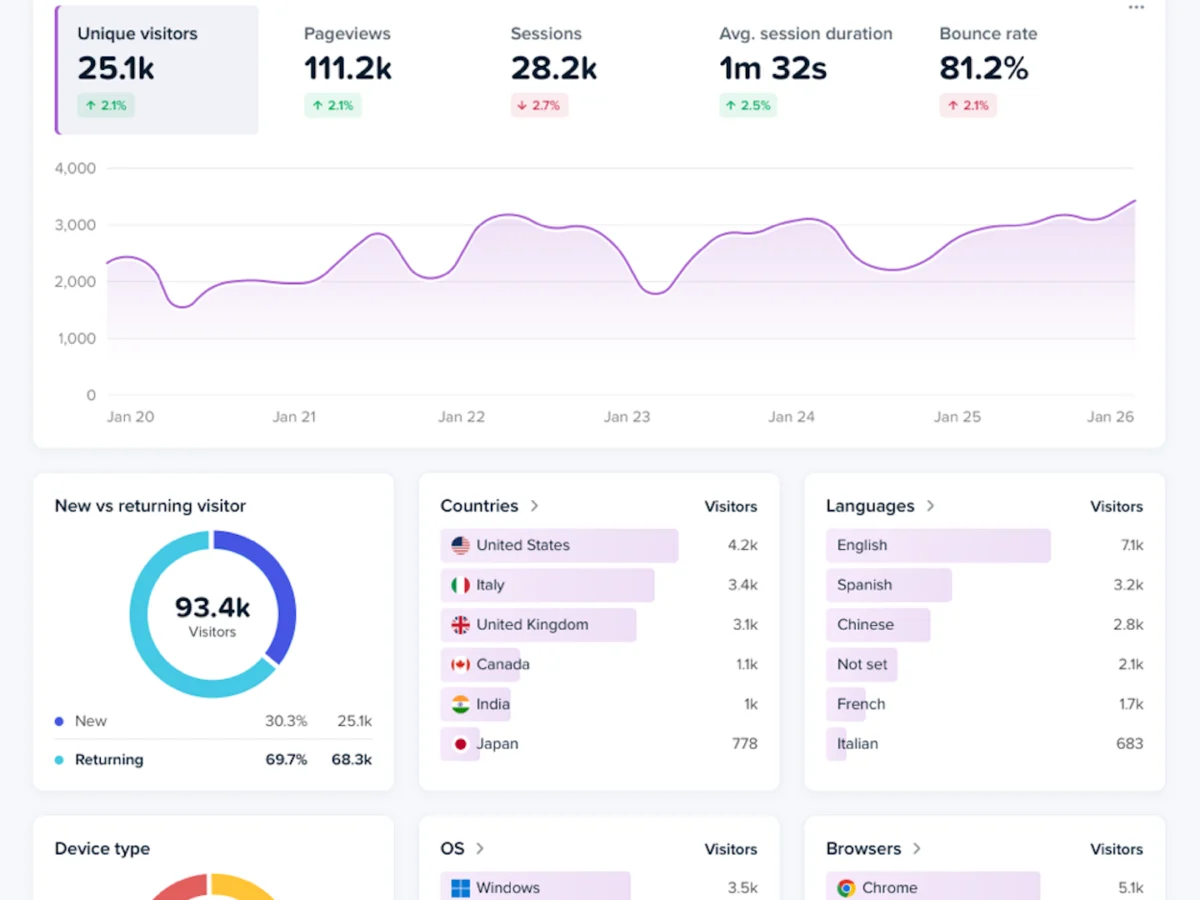
To understand the significance of this release, it is necessary to examine the evolution of web analytics over the last two decades. Crazy Egg, co-founded by Hiten Shah and Neil Patel in the mid-2000s, was a pioneer in visual analytics. Before the advent of heatmaps, website owners relied almost exclusively on quantitative data—such as pageviews and bounce rates—provided by tools like Google Analytics. While these metrics showed what was happening, they rarely explained why.
Crazy Egg filled this void by providing a visual layer to data, showing where users clicked, how far they scrolled, and where they became frustrated. However, for many years, this data remained within the Crazy Egg ecosystem. While valuable for conversion rate optimization (CRO) specialists, the data was difficult for data scientists to combine with "downstream" data, such as actual revenue figures or customer lifetime value (CLV) stored in back-end databases.
The 2026 launch of the Data Warehouse Connector marks a maturation of the platform. It transitions Crazy Egg from a standalone optimization tool into a foundational data provider for the enterprise. This move reflects a broader industry trend where businesses are moving away from "all-in-one" suites in favor of a "best-of-breed" stack, where various tools feed into a centralized "Single Source of Truth" (SSOT).
Strategic Implications for Analytics and Business Intelligence
The ability to join Crazy Egg’s behavioral data with internal business data unlocks several high-value use cases that were previously labor-intensive or impossible to achieve.
Advanced Attribution Modeling
Standard attribution models often struggle to account for the "middle" of the funnel—the micro-interactions that occur between the first click on an ad and the final purchase. By syncing click and session data into a warehouse, analysts can build more sophisticated attribution models. They can determine if specific behaviors on a landing page, such as interacting with a specific heatmap-tracked element, are leading indicators of high-value conversions.
Revenue Prediction and Churn Analysis
By connecting on-site actions to subscription data, data science teams can identify behavioral patterns that precede a cancellation or a purchase. For instance, if a cohort of users stops engaging with a core feature (tracked via Crazy Egg events) three weeks before their subscription expires, the business can trigger automated retention campaigns. Conversely, identifying the "golden path" of clicks that leads to a higher average order value (AOV) allows marketing teams to optimize the user journey with surgical precision.
Powering AI and Agentic Workflows
In the current era of artificial intelligence, the quality of an organization’s AI models is dictated by the quality of its training data. The Data Warehouse Connector provides a rich stream of first-party behavioral data that can serve as context for in-house AI agents. Large Language Models (LLMs) and machine learning algorithms can ingest this raw data to generate personalized product recommendations or to power autonomous agents that optimize website layouts in real-time based on predicted user intent.
Industry Reactions and Market Position
While Crazy Egg has not released a list of initial beta testers, industry analysts suggest that the move is a direct response to the increasing sophistication of growth marketing teams. "The era of looking at a heatmap in a vacuum is over," says one industry consultant specializing in marketing technology. "Today’s data engineers want the raw logs. They want to run their own SQL queries against behavioral data without being limited by a vendor’s pre-built dashboard. This move puts Crazy Egg in direct competition with enterprise-grade tools like FullStory or Heap, but with the accessibility that has always been Crazy Egg’s hallmark."
The shift toward open formats like Parquet and Iceberg has also been noted by the developer community. By avoiding proprietary formats, Crazy Egg is reducing the "friction of exit" and "friction of entry," making it easier for technical teams to advocate for the tool’s inclusion in the corporate budget.
Data Governance and Security
In an environment where data privacy is paramount, the "Data Warehouse Connector" offers a governance advantage. Rather than data residing on a third-party server indefinitely, companies can define their own retention policies within their storage buckets (such as Amazon S3 or Google Cloud Storage). This setup facilitates compliance with global regulations such as the General Data Protection Regulation (GDPR) and the California Consumer Privacy Act (CCPA), as the raw data is housed within the organization’s established security perimeter.
The delivery model also ensures that the data is "clean" before it reaches the warehouse. Crazy Egg’s processing layer handles the heavy lifting of normalizing the event data, ensuring that it arrives in a structured format ready for analysis. This reduces the workload for data engineers who would otherwise spend significant time on ETL (Extract, Transform, Load) processes.
Future Outlook: The Democratization of Big Data
The launch of the Data Warehouse Connector is likely the first in a series of updates aimed at the enterprise market. As businesses continue to centralize their operations around data warehouses, the demand for "pluggable" data sources will only grow.
For Crazy Egg, this feature expands its utility beyond the marketing department. It becomes a tool for product managers looking to validate feature adoption, for data scientists building predictive models, and for C-suite executives seeking a more holistic view of the customer journey.
Organizations interested in the Data Warehouse Connector are encouraged to engage with their account managers for custom configurations. As the digital economy becomes increasingly data-driven, the ability to sync raw website events into a centralized workflow is no longer a luxury—it is a requirement for any business seeking to understand the "why" behind their "what."
The move reinforces a broader shift in the software-as-a-service (SaaS) industry: the transition from providing answers to providing the raw material that allows companies to find their own answers. By opening the "black box" of behavioral data, Crazy Egg is empowering a new generation of data-driven decision-makers to build more effective, user-centric digital experiences.