The Evolution of Conversion Rate Optimization
To understand the current rivalry, one must look at the chronology of the web optimization industry. Crazy Egg, co-founded by Hiten Shah and Neil Patel in 2005, pioneered the visual analytics space by introducing heatmaps to a mainstream audience. Its mission was to democratize data by making user behavior visible to non-technical marketers. Conversely, Optimizely emerged in 2010, following co-founder Dan Siroker’s work as the director of analytics for the Obama 2008 campaign. Optimizely’s focus was on the rigors of A/B testing and statistical significance.
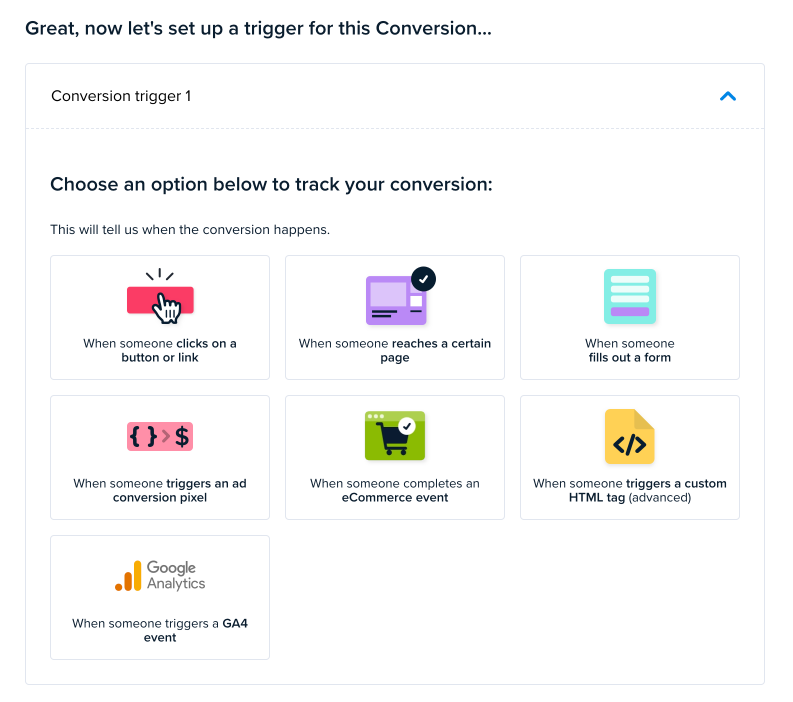
The market shifted significantly in 2020 when Episerver, a leader in content management and commerce, acquired Optimizely. This move transformed Optimizely from a standalone testing tool into a comprehensive DXP. Today, the two platforms serve vastly different segments of the market. Crazy Egg remains a streamlined, agile solution for teams that need to identify and fix conversion friction points quickly. Optimizely has moved "up-stack," catering to Fortune 500 companies that require server-side experimentation, feature flagging, and integrated content management.
Experimentation and Testing Methodologies
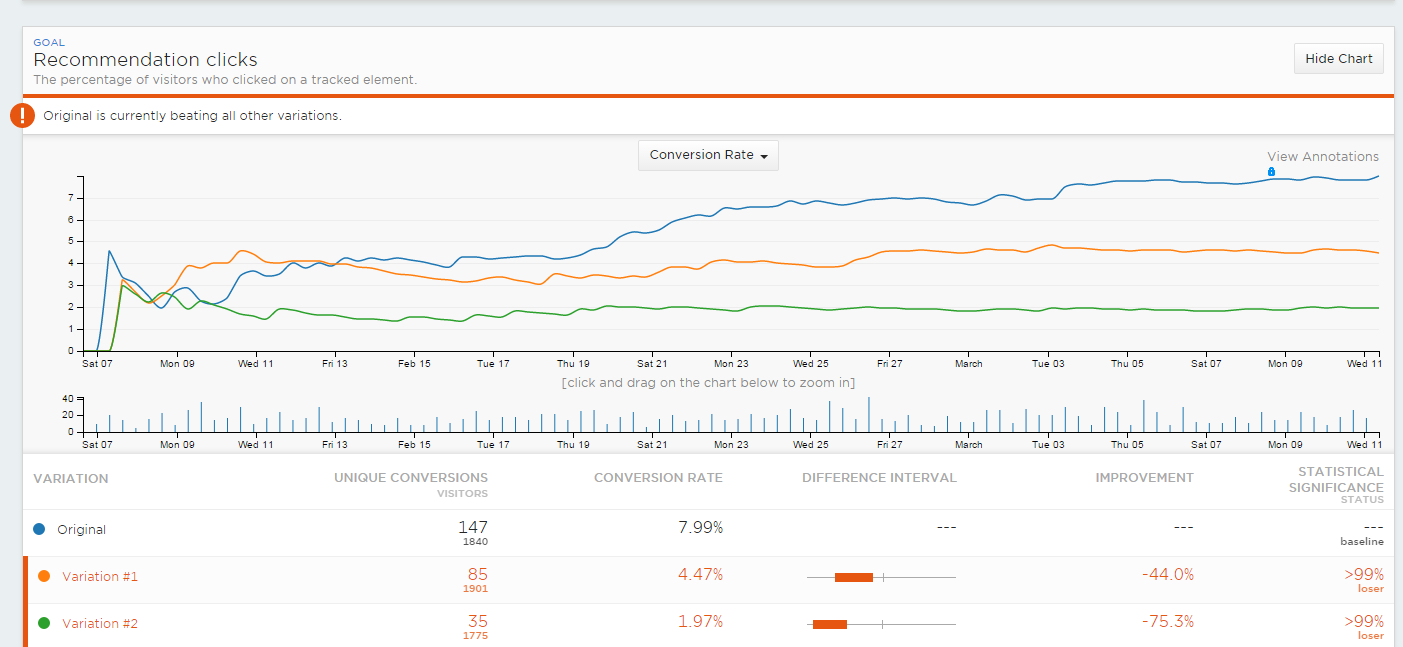
The core of any optimization strategy is the ability to test hypotheses. Crazy Egg utilizes a visual editor designed for rapid deployment. It supports standard A/B testing and split-URL testing, alongside a Multi-Arm Bandit (MAB) algorithm. The MAB approach is particularly effective for short-term campaigns, as it automatically shifts traffic to the winning variant in real-time, minimizing the "cost" of showing a sub-optimal version to users during the test period.
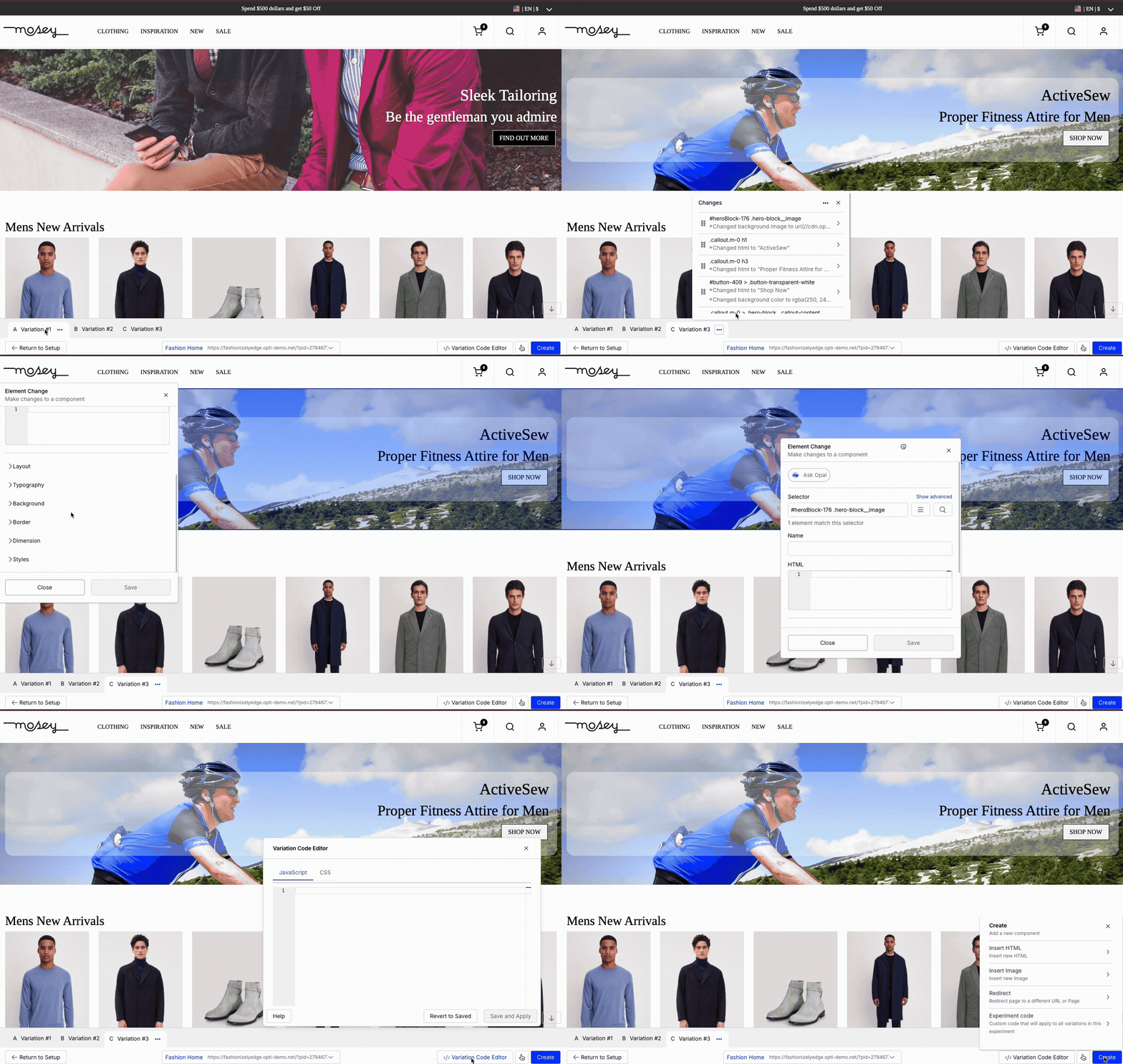
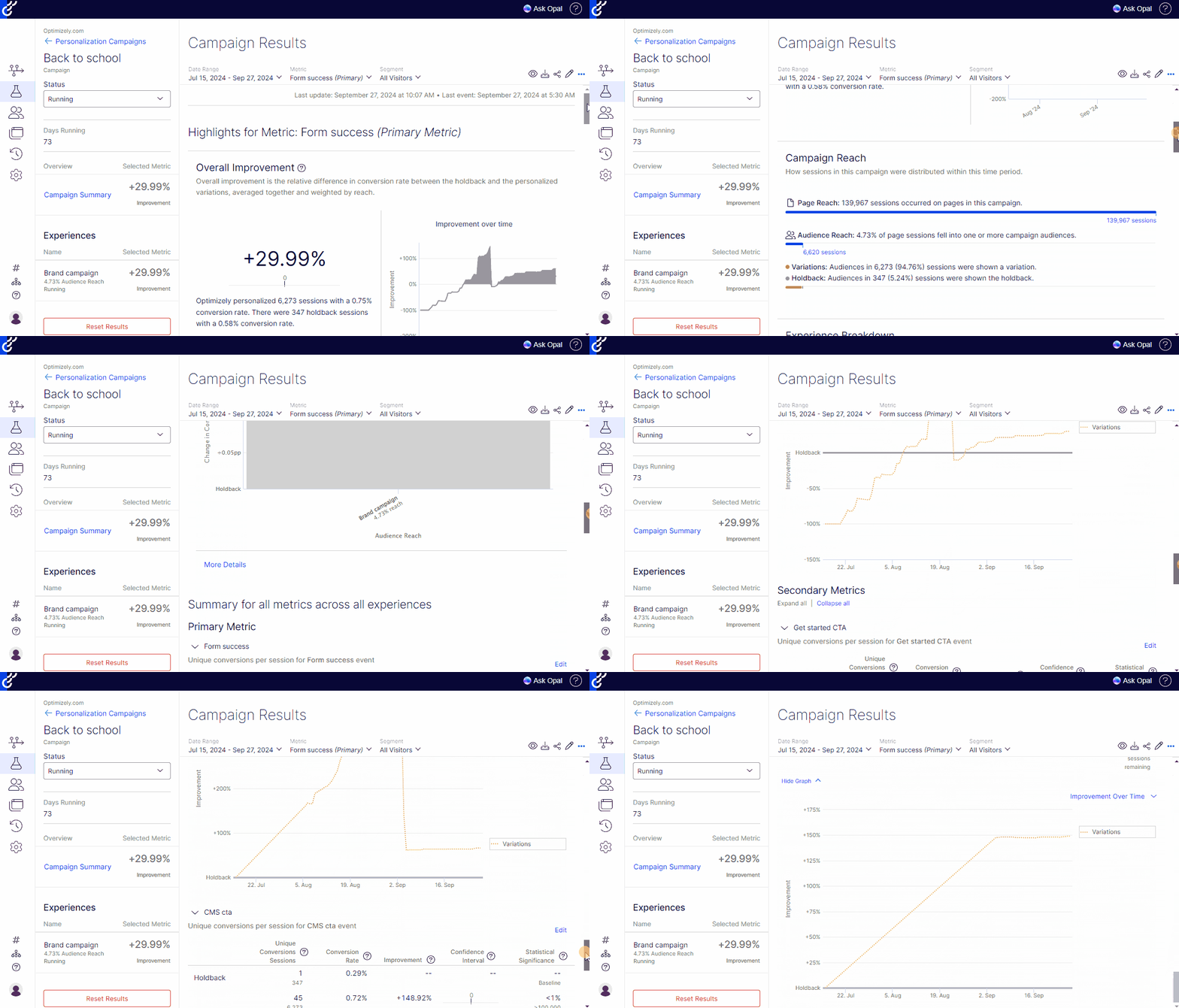
Optimizely’s experimentation engine is significantly more robust, supporting multivariate testing (MVT), multi-page testing, and A/A testing to validate statistical engines. Its primary differentiator is "Feature Experimentation," which allows developers to run tests on the server side. This is essential for modern applications where changes to the user interface are tied to complex backend logic. While Crazy Egg is ideal for front-end adjustments—such as changing a CTA button or a headline—Optimizely allows for testing entire product features, such as a new search algorithm or a redesigned checkout flow, before a full rollout.
Data Analytics: Native Dashboards vs. Warehouse Integration
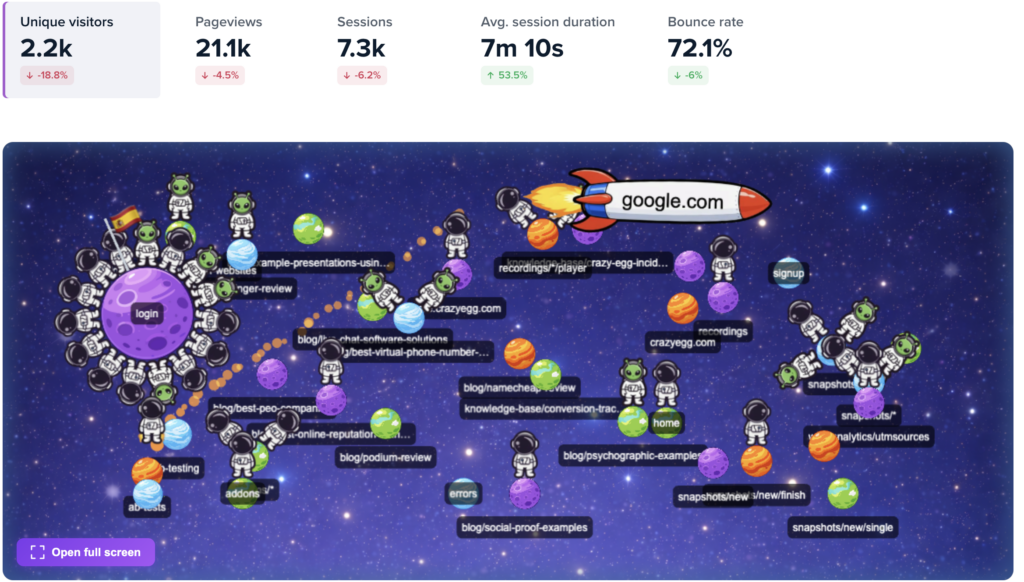
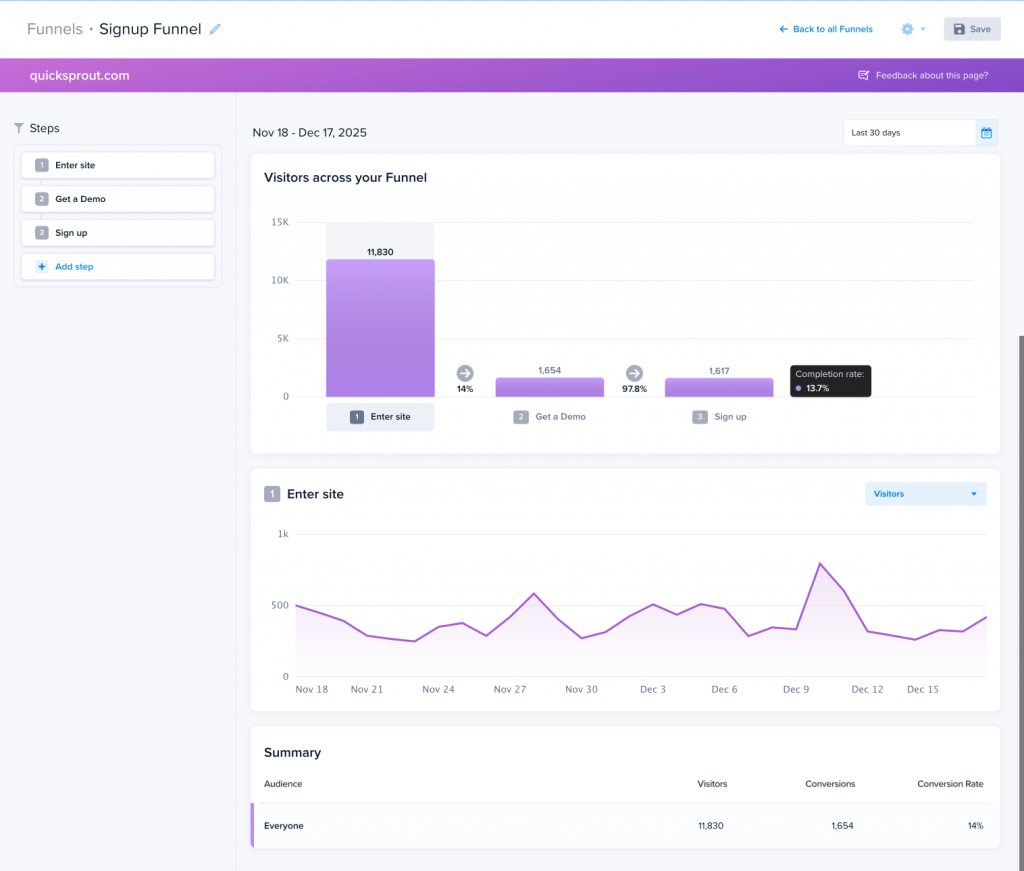
A critical divergence between the two platforms lies in how they handle data. Crazy Egg provides a self-contained analytics ecosystem. It includes native Web Analytics, Conversion Analytics, and retroactive Conversion Funnels. The retroactive nature of Crazy Egg’s funnels is a significant advantage for lean teams; it allows users to build a funnel and see historical data immediately, rather than waiting for new data to accumulate after the funnel is created.
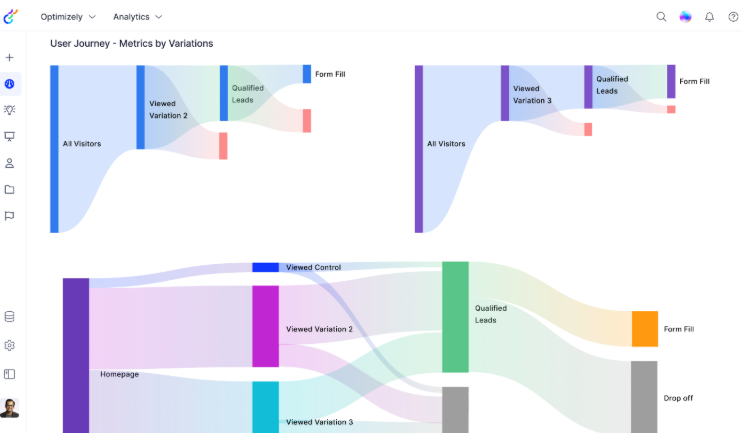
Optimizely has moved toward a "warehouse-native" philosophy. Rather than trying to be the sole source of truth, Optimizely Analytics is designed to plug directly into enterprise data warehouses like Snowflake or BigQuery. This allows organizations to perform multi-touch attribution and map complex customer journeys that span multiple devices and offline touchpoints. However, this power comes with a trade-off: Optimizely requires a data engineering resource to model the warehouse data correctly. For organizations without a dedicated data team, Crazy Egg’s "plug-and-play" GA4 connector offers a more practical path to insight.
Behavioral Insights and the Voice of the Customer
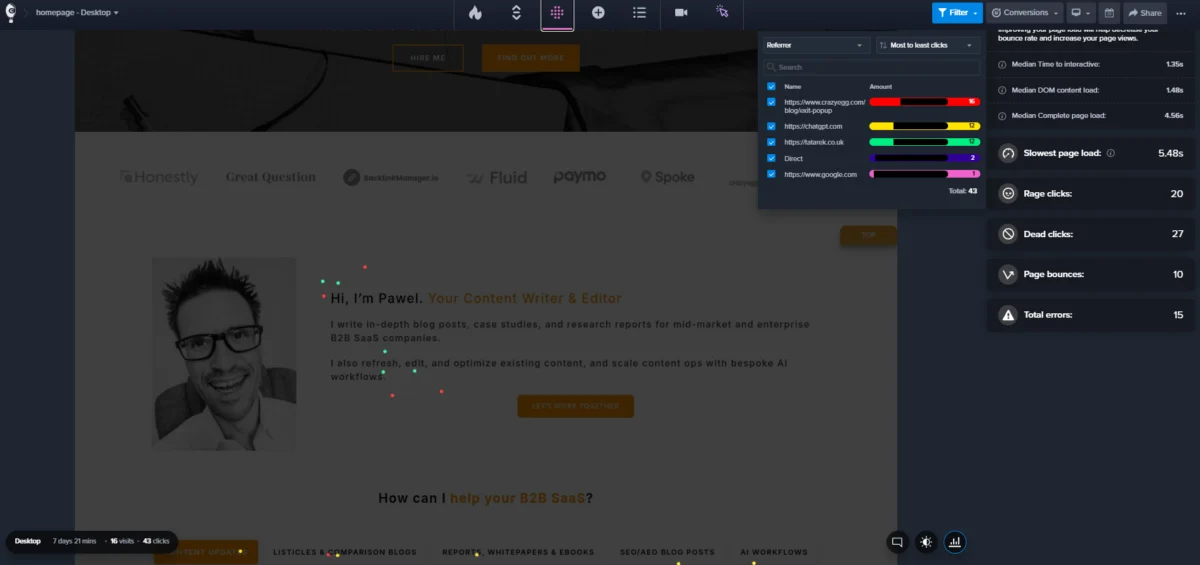
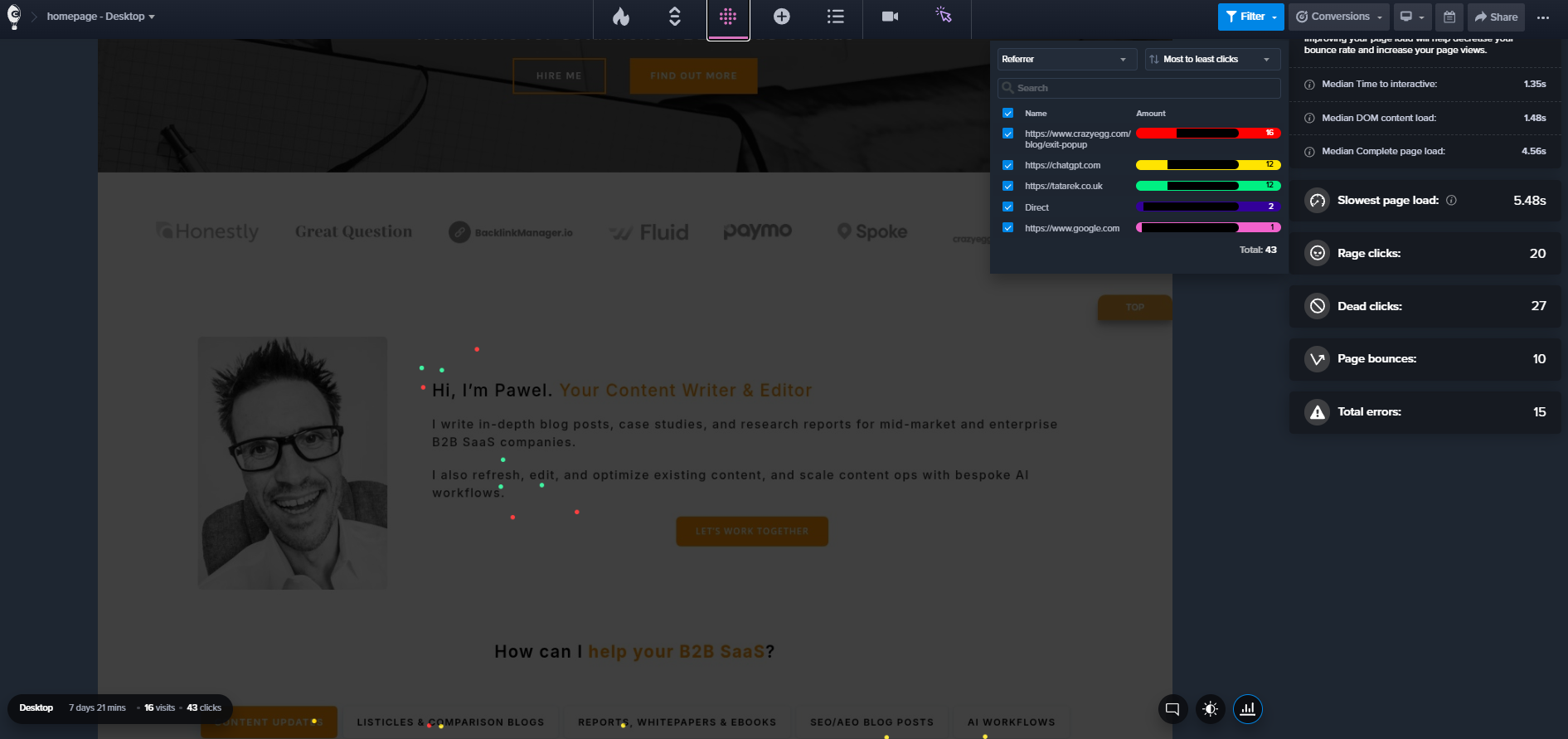
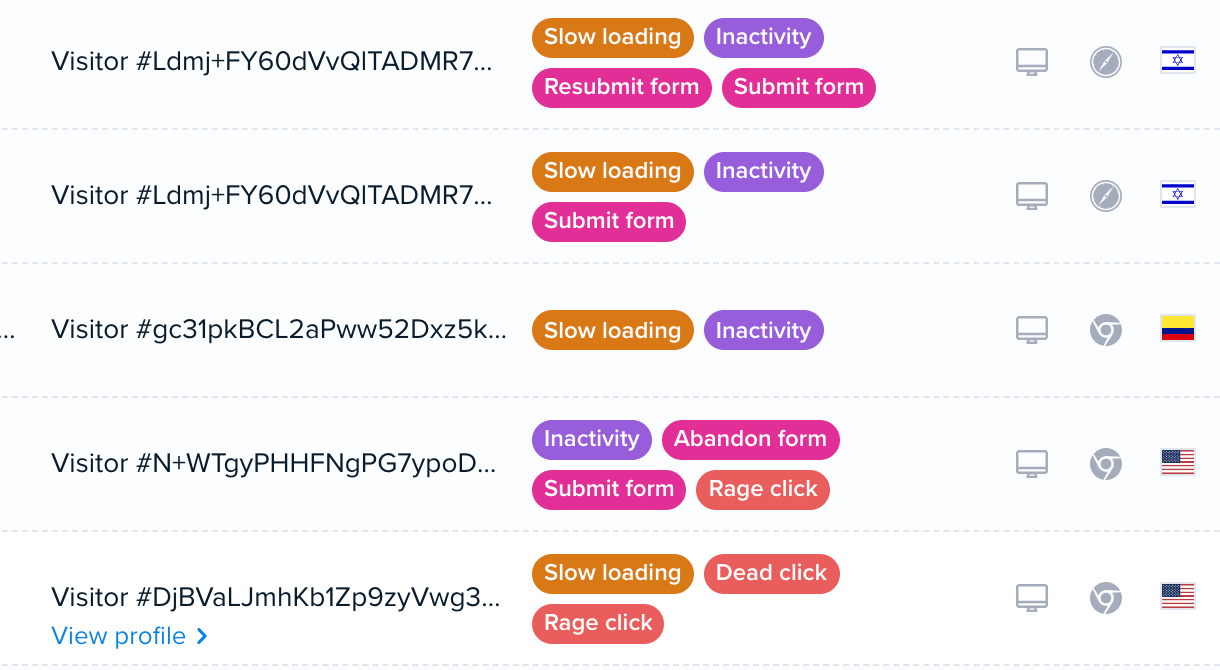
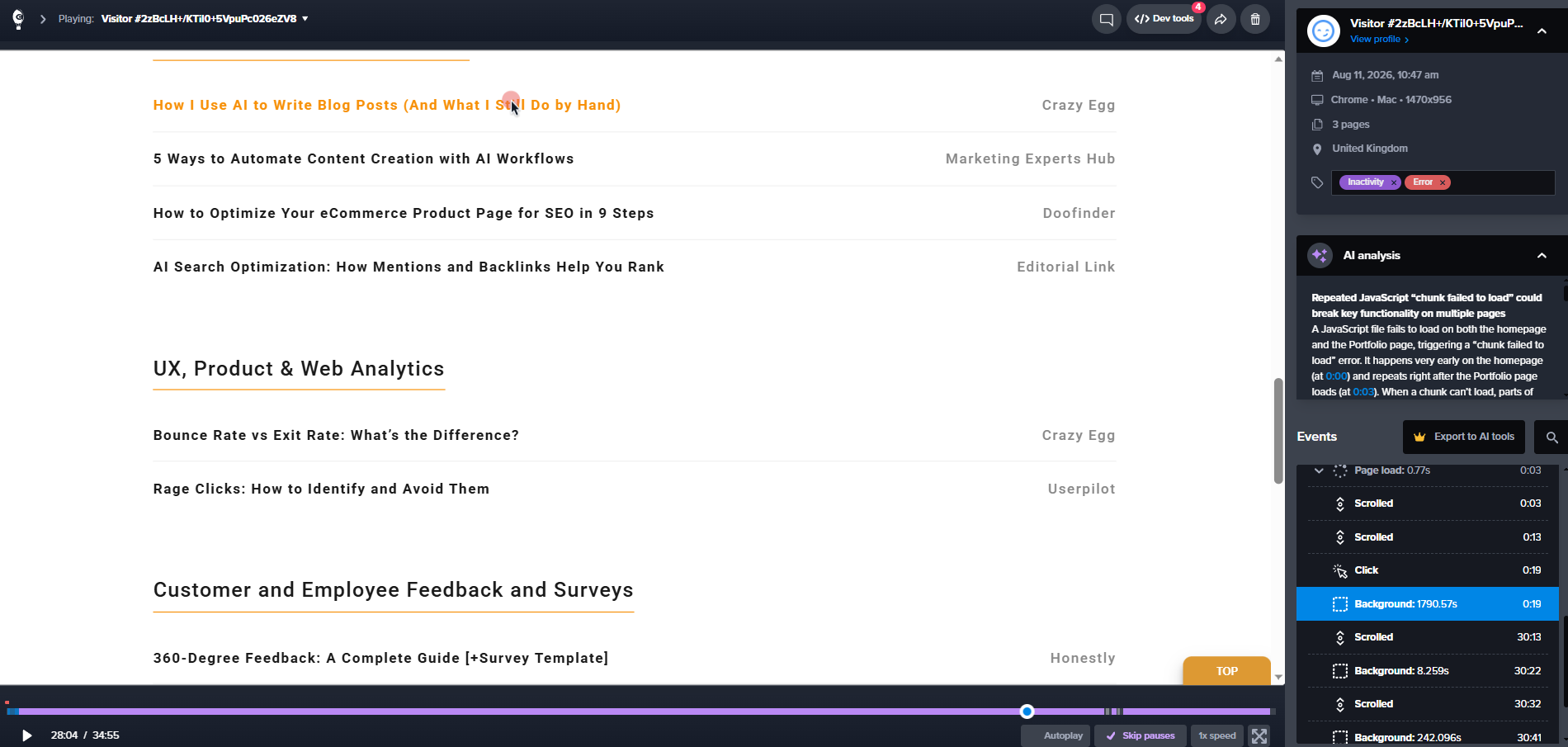
Understanding "why" a user fails to convert is often more important than knowing "what" happened. Crazy Egg remains a market leader in behavioral qualitative data. Its suite includes five types of heatmaps—including the "Confetti Report," which segments clicks by referral source—and native session recordings. These recordings are automatically tagged with behavioral triggers like "rage clicks" (repeatedly clicking an unresponsive element) or "dead clicks," allowing researchers to jump straight to the moments of highest frustration.
Optimizely does not offer native heatmaps or session recordings. Instead, it relies on third-party integrations with tools like Hotjar, Microsoft Clarity, or Contentsquare. While Optimizely’s "Opal" AI can analyze images of heatmaps from these external tools to suggest test ideas, the lack of a bundled behavioral suite means enterprise users must manage multiple vendor contracts and tracking scripts to get a complete picture of the user experience.
The AI Frontier: Agentic Orchestration vs. Actionable Insights
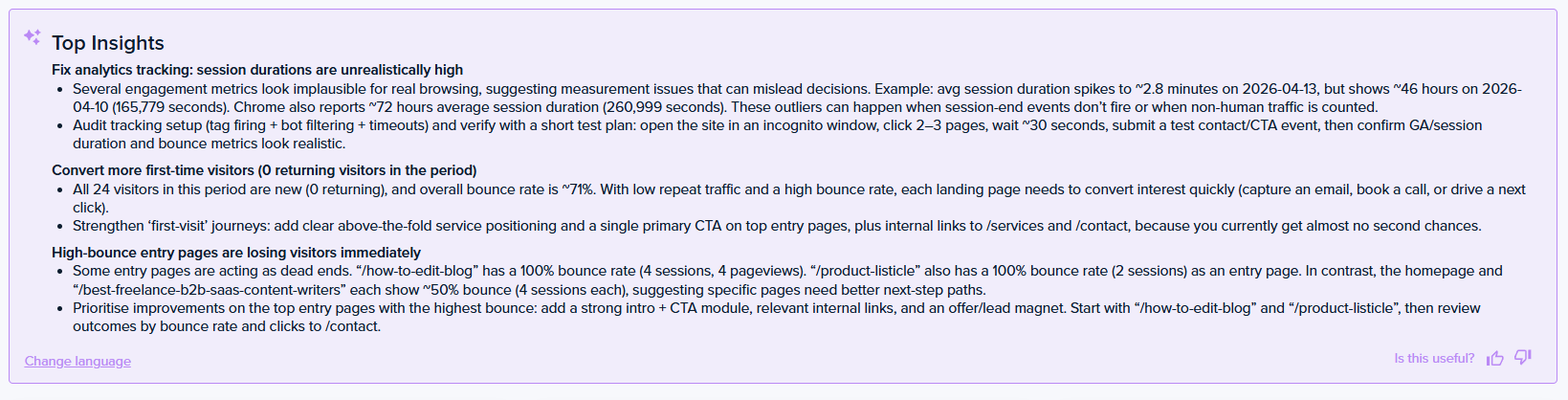
Artificial Intelligence has become the latest battleground for CRO platforms. Crazy Egg’s approach to AI is focused on efficiency. Its "Top Insights" feature uses machine learning to scan thousands of hours of session recordings and heatmap data to surface the most critical issues in plain English. Furthermore, its "Tasks" feature (currently in early access) acts as a virtual optimization consultant, configuring reports and delivering executive-ready PDFs with specific recommendations for page changes.
Optimizely has taken a more structural approach with "Opal," an agent orchestration platform. Optimizely has rebranded much of its suite around "Agentic" workflows, allowing users to build and chain AI agents that can plan experiments, generate content, and perform program health reviews. While powerful, this system is metered via a credit-based model. Most standard plans include 200 credits per month, but a single deep-dive analysis can cost nearly the entire monthly allowance, making it a high-cost luxury for frequent testing.
Total Cost of Ownership and Implementation Timelines
The financial implications of choosing one platform over the other are substantial. Crazy Egg operates on a transparent, self-serve model with annual plans ranging from $29 to $599 per month. A full enterprise deployment can be live within hours of a single script installation. This low barrier to entry makes it the preferred choice for agencies managing multiple clients and mid-market companies that need to prove ROI quickly.
Optimizely is a high-cap investment. Industry data from procurement platforms like Vendr indicates that mid-market experimentation contracts typically fall between $50,000 and $80,000 per year, while enterprise-wide deployments often exceed $200,000. These figures do not include implementation costs, which can range from $50,000 to over $200,000 in professional services and developer time. Furthermore, Optimizely contracts often involve two-to-three-year commitments with annual price escalators, creating a high level of vendor lock-in.
Security, Compliance, and Support Structures
For highly regulated industries such as finance and healthcare, Optimizely’s extensive certification list is a major selling point. The platform carries ISO 27001, SOC 2 Type 2, and PCI DSS certifications, and offers granular data residency options for EU and US customers. Its support structure is also built for the enterprise, with 24/7/365 availability and 15-minute response times for "Severity 1" issues on premium tiers.
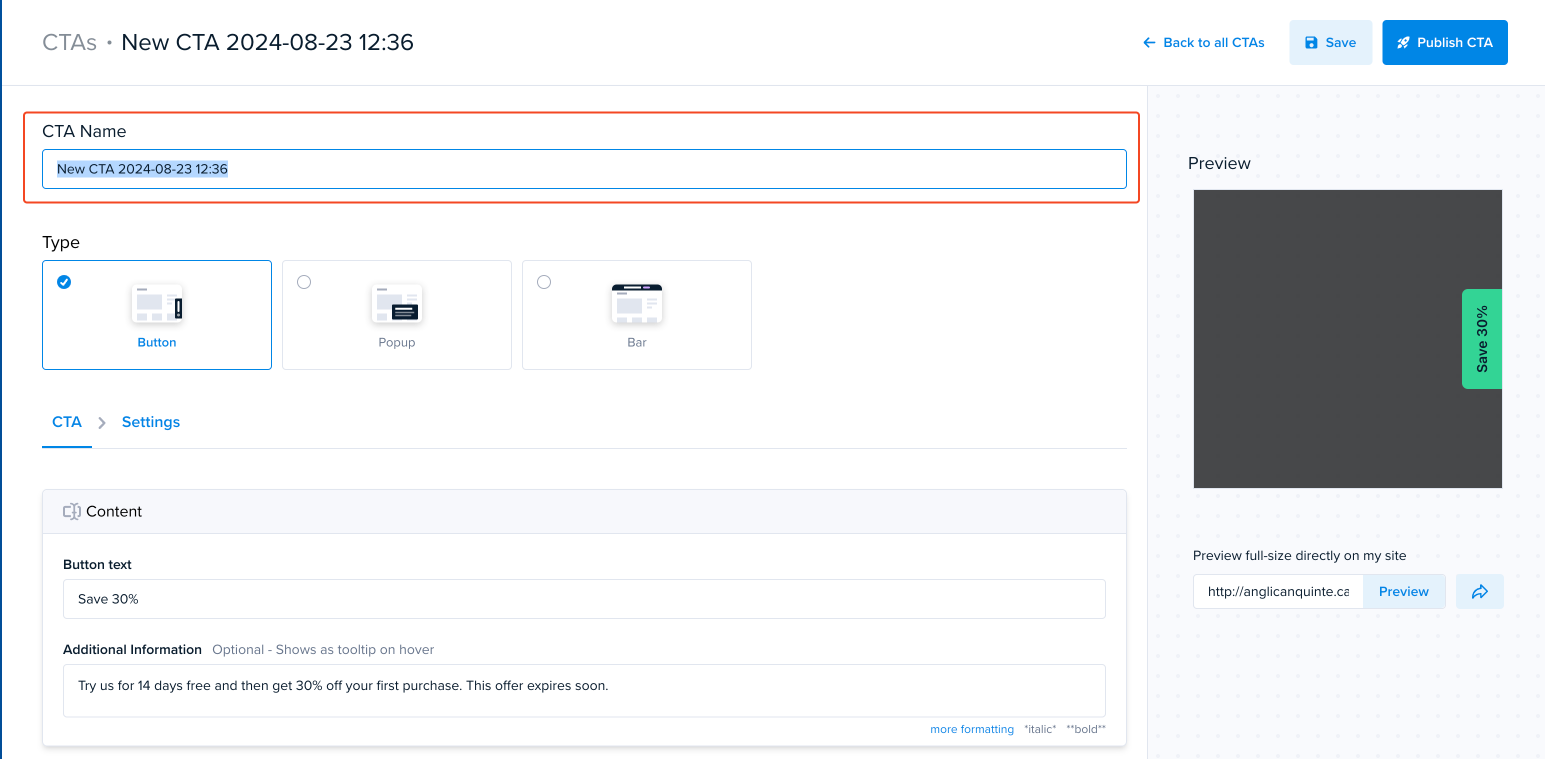
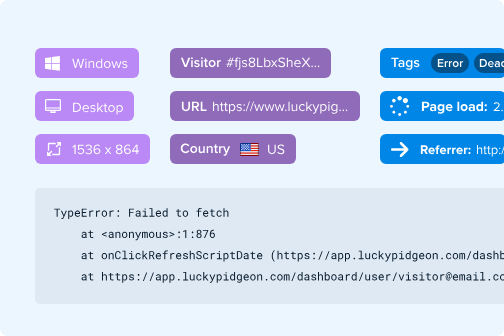
Crazy Egg, while fully GDPR and CCPA compliant, focuses on privacy-by-design at the tool level. Its session recordings automatically mask sensitive data like passwords and credit card numbers at the source, ensuring that PII (Personally Identifiable Information) never hits their servers. While it lacks the phone-based support of Optimizely’s premium tiers, its priority email support and guided onboarding for enterprise clients provide sufficient coverage for most digital marketing teams.
Final Analysis: Strategic Alignment
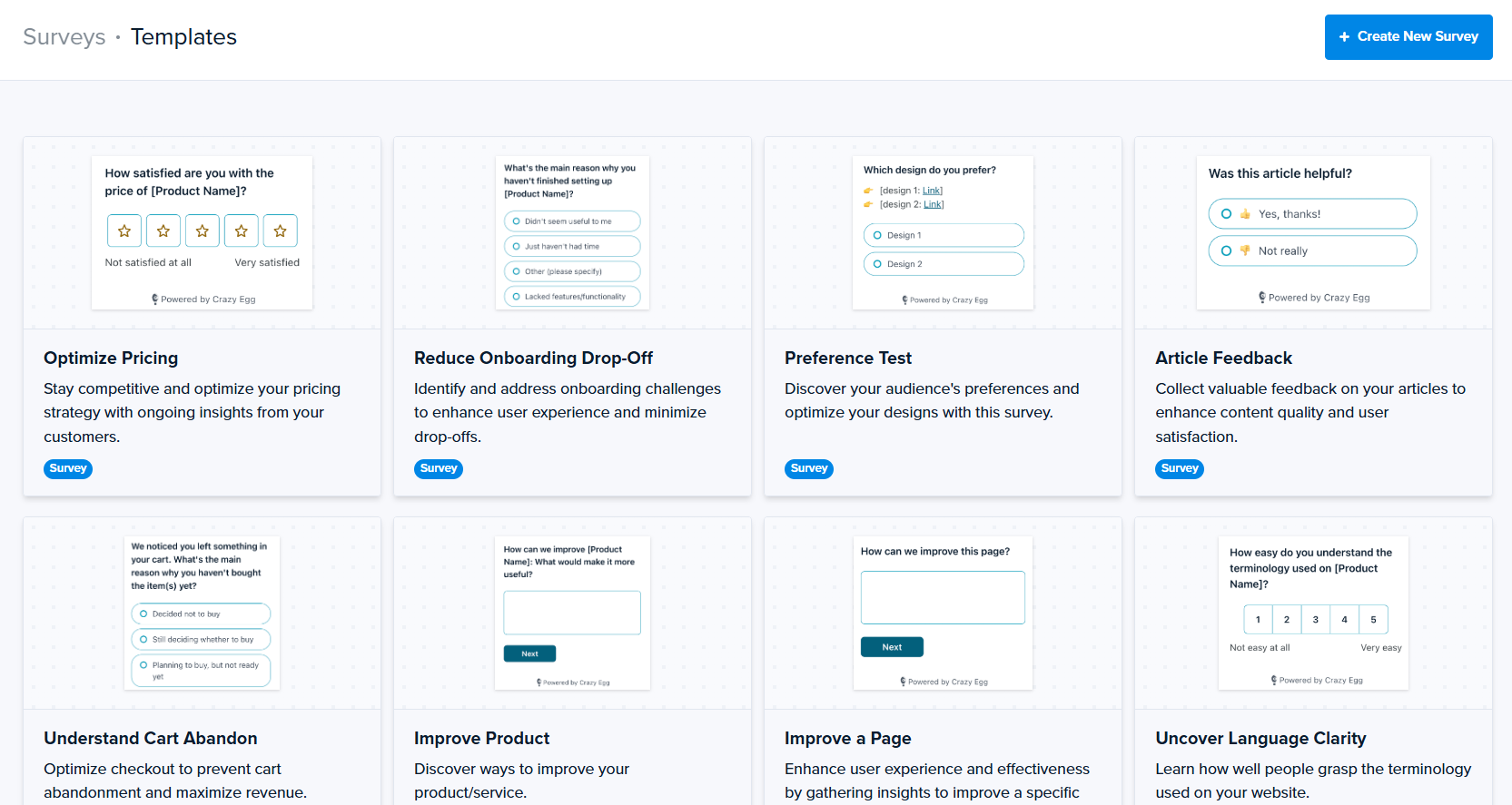
The choice between Crazy Egg and Optimizely is ultimately a question of organizational strategy. If the goal is to foster a culture of rapid experimentation across a marketing team with a focus on visual evidence and quick wins, Crazy Egg provides the most comprehensive and cost-effective toolkit. It eliminates the "tool sprawl" that often plagues marketing departments by bundling analytics, recordings, heatmaps, and surveys into a single subscription.
However, for organizations where the website is a complex product rather than a marketing asset, Optimizely is the necessary choice. Its ability to handle server-side flags and integrate with a wider headless CMS and commerce ecosystem makes it a foundational piece of enterprise infrastructure. While the cost and implementation time are significantly higher, the depth of its experimentation engine is unmatched for developers and data scientists.

As digital competition intensifies, the most successful companies will be those that match their optimization tools to their team’s technical capacity. Whether through the agile insights of Crazy Egg or the enterprise power of Optimizely, the objective remains the same: transforming visitor behavior into measurable business growth.