The United States is currently grappling with one of the most devastating public health crises in its history, characterized by a staggering rise in opioid-related overdose deaths. What began in the late 1990s as a surge in prescription opioid misuse has evolved into a multi-generational epidemic involving heroin and, more recently, highly potent synthetic opioids like fentanyl. Recent investigative reporting, such as the Pulitzer Prize-winning "Seven Days of Heroin" by the Cincinnati Enquirer, has highlighted the granular, daily toll this crisis takes on local communities. However, to fully grasp the magnitude of the emergency, an analysis of macro-level data is required to identify the trends, patterns, and demographic shifts that define the epidemic’s current state and its trajectory.
By synthesizing data from the Centers for Disease Control and Prevention (CDC), the United Nations Office on Drugs and Crime (UNODC), and demographic research from FiveThirtyEight, a clearer picture emerges of how the United States became the epicenter of a global drug crisis. The data reveals not only the lethality of these substances but also a unique American vulnerability that separates its experience from other developed nations.
The Chronology of an Epidemic: Three Waves of Crisis
The current opioid emergency is generally categorized by epidemiologists into three distinct waves, each defined by the primary substance driving the mortality rates. Understanding this timeline is essential for contextualizing why current intervention strategies must be multifaceted.
The first wave began in the late 1990s, following a shift in the medical community’s approach to pain management. Pharmaceutical companies reassured the medical establishment that patients would not become addicted to prescription opioid pain relievers, leading to a massive increase in prescriptions for drugs like oxycodone and hydrocodone. As availability increased, so did the rates of diversion and misuse.
The second wave arrived around 2010, characterized by a rapid increase in overdose deaths involving heroin. As authorities began to crack down on "pill mills" and over-prescription, many individuals who had developed a physical dependency on prescription opioids turned to heroin, which was often cheaper and more readily available on the black market.
The third and most lethal wave began in 2013, with a significant spike in deaths involving synthetic opioids—particularly illicitly manufactured fentanyl. Fentanyl is 50 to 100 times more potent than morphine and is frequently mixed into heroin, cocaine, and counterfeit pills, often without the user’s knowledge. This wave has caused overdose rates to skyrocket, as the margin for error with synthetic opioids is incredibly slim.
Comparative Analysis: Usage Versus Lethality
A critical insight gained from examining drug use data by age group, specifically data compiled by FiveThirtyEight, is the disproportionate lethality of heroin compared to other illicit substances. When comparing usage rates of heroin to drugs like cocaine or crack, heroin often shows a smaller base of total users but a significantly higher mortality rate.
Data indicates that heroin usage is most concentrated among the 20 to 34-year-old demographic. While substances like cocaine and crack maintain a presence among older age groups (40-60+), heroin usage appears to taper off in older populations. Analysts suggest two primary reasons for this: first, the extreme lethality of the drug means that many long-term users do not survive into older age; and second, the physical toll of opioid addiction often leads to severe health complications that prevent long-term sustained use.
Furthermore, the data highlights a disturbing trend in the "transition rate" of users. While a smaller percentage of the total population uses opioids compared to marijuana or alcohol, the rate at which opioid use transitions into fatal overdose is unparalleled. This reinforces the argument that the opioid crisis is not merely a problem of drug "adoption," but a crisis of unprecedented chemical potency.
The Global Perspective: An American Anomaly
When placed in a global context using UNODC data, the United States stands out as a significant outlier. While the opioid crisis is often discussed as a universal challenge, the sheer volume of overdose deaths in the U.S. dwarfs that of almost every other nation, both in absolute numbers and on a per-capita basis.
The United States leads the world in overdose deaths per million people. In comparison, countries with similar economic profiles, such as Sweden and Australia, report death rates that are less than half of the American rate. There are, however, specific outliers. Iceland, for instance, often appears high on per-capita lists due to its very small population; a relatively small number of deaths can significantly skew the "per million" metric. El Salvador also shows high rates, though often linked to different socio-economic factors and drug trafficking routes.
The discrepancy between the U.S. and Europe is particularly striking. Many European nations implemented "harm reduction" strategies—including supervised injection sites and robust state-funded addiction treatment—decades ago. In contrast, the U.S. response has historically focused more on criminalization, only recently shifting toward a public health-oriented model.
Geographic Hotspots and Domestic Trends
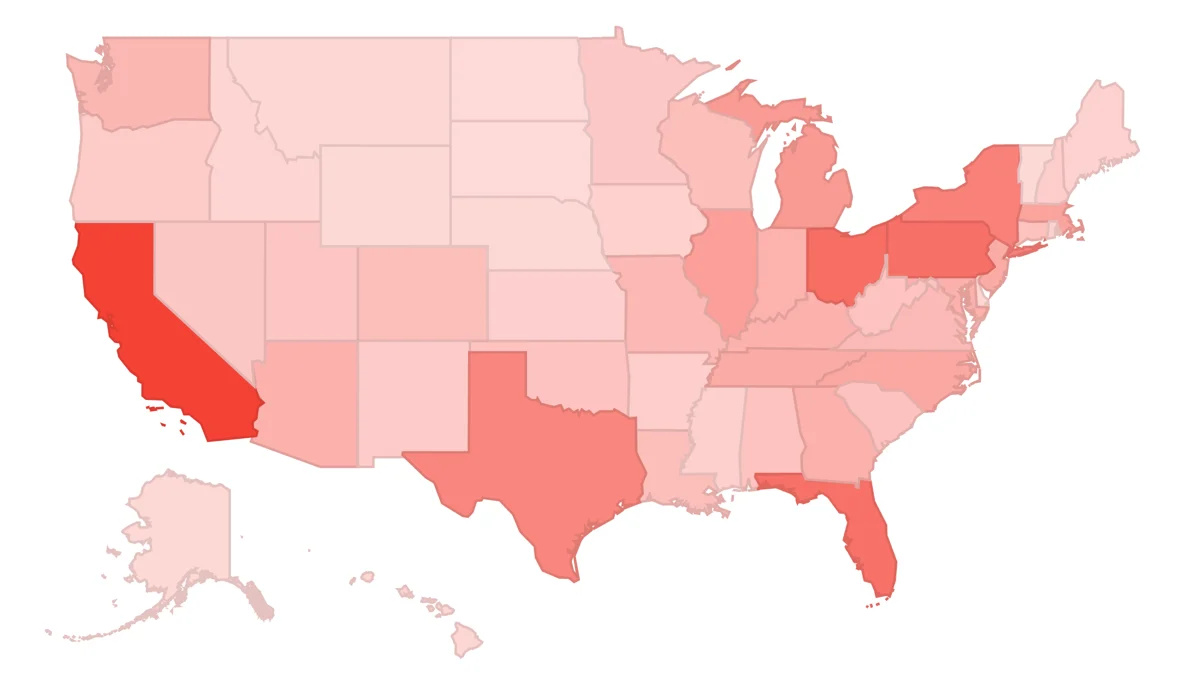
Within the United States, the epidemic does not impact all regions equally. CDC drug overdose death data shows a clear concentration of mortality in specific geographic corridors, most notably the Appalachian region and parts of the Northeast.
States such as West Virginia, Ohio, and New Hampshire have consistently reported the highest rates of overdose deaths. These regions were hit particularly hard by the first wave of prescription opioids, creating a foundation of dependency that was later exploited by heroin and fentanyl traffickers. However, the data also reveals "development trends" that are cause for concern. While some states have seen a plateauing of death rates due to aggressive Narcan (naloxone) distribution and expanded treatment, other states in the West and South are currently seeing their mortality rates climb as fentanyl enters their local markets.
The table of state-by-state data provides a roadmap for resource allocation. By identifying states where the trend is worsening most rapidly, federal agencies can preemptively deploy medical resources and education programs before the mortality rates reach the catastrophic levels seen in the Rust Belt.
Official Responses and the Path to Litigation
The scale of the crisis has prompted unprecedented legal and governmental action. In recent years, thousands of lawsuits have been filed by states, cities, and Native American tribes against pharmaceutical manufacturers, distributors, and retail pharmacies.
The most prominent of these cases involved Purdue Pharma, the maker of OxyContin. The subsequent settlements and the bankruptcy of the company marked a turning point in holding corporations accountable for their role in the first wave of the epidemic. Billions of dollars from these settlements are now being earmarked for "opioid abatement," which includes funding for treatment centers, recovery housing, and public education campaigns.
On the federal level, the government has declared the opioid crisis a Public Health Emergency. This status allows for the redirection of funds and the waiving of certain regulations to expedite treatment. The CDC has also issued stricter guidelines for prescribing opioids for chronic pain, aiming to reduce the number of new individuals exposed to highly addictive substances.
Broader Societal Implications and Analysis
The implications of the opioid epidemic extend far beyond the immediate tragedy of lost lives. The economic impact is estimated to be in the hundreds of billions of dollars annually, accounting for healthcare costs, lost productivity, and the burdens placed on the criminal justice system.
There is also a profound social cost. The crisis has placed an immense strain on the American foster care system, as the number of children removed from homes due to parental substance abuse has surged. Furthermore, the "stigma" associated with opioid use continues to be a barrier to recovery. Data-driven analysis helps to strip away some of this stigma by framing the crisis as a systemic public health failure rather than a collection of individual moral failings.
From a journalistic and analytical perspective, the use of data visualization is more than just a method for presenting facts; it is a tool for survival. By mapping these trends, public health officials can predict where the next "hotspot" will emerge and intervene before the death toll rises. The journey to understand the opioid epidemic through data reveals a grim reality, but it also provides the only viable roadmap for ending the crisis. Through rigorous tracking of overdose rates, demographic usage, and the efficacy of various interventions, society can begin to dismantle the structures that allowed this epidemic to flourish and work toward a future where such a tragedy is not repeated.