The sand of Coney Island became the unlikely stage for a high-stakes cultural critique this summer as Polaroid, the venerable pioneer of instant photography, launched a provocative outdoor advertising campaign. Rising above the boardwalk was a massive billboard that bypassed traditional product promotion in favor of a direct jab at the burgeoning artificial intelligence industry: “Go jump in some water before the data centers drink it all up.” This striking message was followed by others designed to resonate with a digitally exhausted public, such as “You can’t bask in blue light” and “Dance like nobody is recording.”
The campaign, spearheaded by Polaroid’s brand and creative director Patricia Varella, taps into a growing vein of public resentment toward the rapid, often unsolicited integration of AI into daily life. Varella noted that as society becomes more entwined with digital algorithms, there is a palpable drift away from empathy and genuine human connection. For brands and communicators, this sentiment represents a significant shift in the marketplace. What began as a period of wonder surrounding generative AI has quickly transitioned into a "trough of disillusionment," where the technology is increasingly viewed not as a tool for empowerment, but as an intrusive force consuming resources, replacing human creativity, and eroding privacy.
The Statistical Reality of AI Skepticism
While tech leaders frequently tout AI as a panacea for global productivity, the general public remains deeply conflicted. According to data from the Pew Research Center, 50% of Americans report being more concerned than excited about the increased use of AI in daily life. In contrast, a mere 10% say they are more excited than concerned. This 5-to-1 ratio of concern to excitement suggests that the "tech-optimism" narrative prevalent in Silicon Valley has failed to take root in the broader populace.
The skepticism is nuanced, however. The same Pew study indicates that while people are wary, they are not necessarily Luddites; 73% of respondents indicated they would allow AI to assist with at least some daily activities. This creates a complex landscape for brands: consumers are willing to use AI for utility and convenience, but they are increasingly hostile toward its use in creative, emotional, or high-stakes decision-making roles. The challenge for modern communicators is identifying the "uncanny valley" of AI integration—the point where a helpful tool becomes a perceived threat to human agency or authenticity.
The Resource Crisis: Data Centers and Environmental Impact
The Polaroid billboard’s reference to data centers "drinking" water is more than a metaphor; it is a reference to a growing infrastructure crisis. As tech giants like Microsoft, Google, and Amazon race to build the massive data centers required to process Large Language Models (LLMs), the environmental cost is becoming a flashpoint for local communities.
AI models require immense amounts of electricity and water for cooling. Reports indicate that Microsoft’s global water consumption spiked by 34% in a single year, largely attributed to its AI investments. Similarly, Google reported a 13% increase in water use for its data centers. In regions prone to drought or water scarcity, the arrival of a "hyperscale" data center is no longer viewed solely as an economic boon, but as a threat to local resources.
Gregg Feistman, an adjunct professor at Temple University’s Klein College of Media and Communications, argues that these companies are facing a fundamental business problem rather than a mere public relations hurdle. When a brand moves from the digital screen into physical neighborhoods, the stakes for trust are significantly higher. "Nature abhors a vacuum," Feistman noted, suggesting that if companies are not transparent about their resource consumption and community impact, residents will fill the silence with "worst-case scenarios." The solution, he suggests, is a move toward radical transparency and "flooding the zone" with credible, verifiable information rather than corporate platitudes.
The Creative Divide: Authenticity vs. Efficiency
In the marketing world, the backlash has been equally visible. Earlier this year, major brands including Coca-Cola and Toys "R" Us faced significant online criticism for releasing ads that were heavily or entirely generated by AI. Critics argued that these advertisements felt "hollow," "soulless," and "uncanny," lacking the human touch that defines iconic branding.
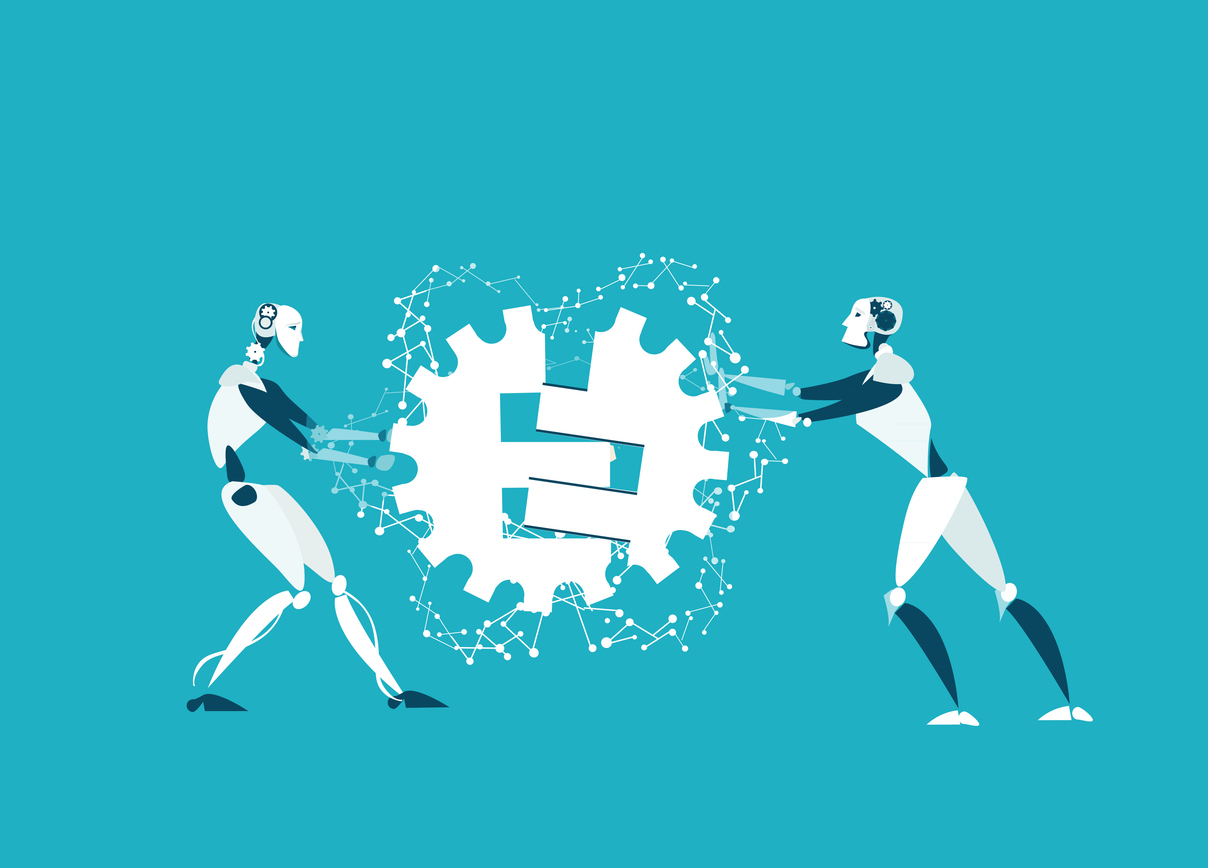
Neil Patel, co-founder of NP Digital, warns that brands create a "trust problem" when they prioritize efficiency over effectiveness. "AI is a bad idea when you’re using it simply because you can," Patel stated. He observed that consumers are becoming adept at spotting AI-generated content, often viewing it as a "shortcut" that signals a brand’s unwillingness to invest in human talent. For Patel, the "novelty" of AI has officially worn off. When every company launches an AI feature and every ad is generated by an algorithm, the market becomes saturated with "mass-produced" content that fails to build a lasting emotional connection.
This sentiment is echoed by students entering the workforce. Meghan Kessler, a junior public relations major at Temple University, recalled her visceral reaction to an AI-generated Coca-Cola ad. "It really turned me off because there’s no human aspect to that," she said, noting that the "obviousness" of the technology acted as a barrier to engagement. For a generation raised on the internet, the ability to discern between human-made and machine-generated content is becoming a core survival skill, and they are increasingly choosing the former.
Job Anxiety and the Academic Backlash
The anxiety surrounding AI is perhaps most acute on university campuses, where students are preparing for a job market that is being fundamentally reshaped. The tension was palpable this spring at the University of Arizona, where former Google CEO Eric Schmidt was repeatedly booed during his commencement speech as he discussed the future of AI.
The irony of this backlash is that students are among the most frequent users of the technology. Gallup research found that 57% of U.S. college students use AI for coursework at least weekly. However, this usage does not equate to endorsement. The same data shows that 42% of students pursuing bachelor’s degrees have considered changing their major due to the potential impact of AI on their future careers.
Professor Feistman, who requires his students to use AI for certain assignments, notes that the experience often leaves them more concerned, not less. "Overwhelmingly, they don’t like it," he said. "They see jobs being threatened." This highlights a significant messaging gap: while CEOs and investors speak of AI in terms of "productivity" and "cost savings," employees and students hear "displacement" and "devaluation."
Chronology of the AI Backlash (2022–2024)
To understand the current climate, it is necessary to look at the rapid timeline of AI adoption and the subsequent public response:
- November 2022: OpenAI releases ChatGPT, sparking a global frenzy of interest and investment.
- Early 2023: The "Hype Cycle" peaks. Brands scramble to integrate AI into every product, from search engines to kitchen appliances.
- Summer 2023: The Hollywood writers’ and actors’ strikes bring the issue of AI labor replacement into the mainstream consciousness, leading to significant public sympathy for human creators.
- Early 2024: The environmental impact of AI becomes a major news headline as tech companies report massive increases in water and energy usage.
- Spring 2024: Commencement season sees high-profile tech figures met with protests and boos on college campuses.
- Summer 2024: Polaroid’s "Analog" campaign signals a new era of "counter-AI" marketing, where brands leverage human-centric values as a competitive advantage.
Implications for the Communications Industry
The takeaway for communicators is not that AI should be abandoned, but that its use must be governed by a "human-in-the-loop" philosophy. The most successful brands of the next decade will likely be those that use AI to handle "invisible" tasks—data sorting, administrative research, and pattern recognition—while doubling down on human creativity for public-facing initiatives.
As 61% of Americans express a desire for more control over how AI is used in their lives, brands must move toward an "opt-in" rather than an "opt-out" approach. Transparency is no longer optional; it is a prerequisite for trust. This includes being candid about the environmental footprint of technology and being honest about when a human is—or isn’t—behind a piece of content.
Ultimately, the AI backlash is a reminder that marketing and public relations are fundamentally about human relationships. As Neil Patel concludes, "When trust, emotion, creativity, or your brand’s point of view matters, humans still need to be heavily involved." In an era of infinite machine-generated content, the most valuable commodity a brand can offer is its humanity. Polaroid’s message on the sands of Coney Island serves as a bellwether: the more high-tech the world becomes, the more consumers will crave the high-touch, the analog, and the real.