The landscape of software engineering has undergone a seismic shift in the mid-2020s, moving from simple autocomplete suggestions to fully autonomous coding agents capable of managing entire repositories. At the forefront of this movement is OpenCode, an MIT-licensed coding agent that has emerged as the primary open-source alternative to proprietary solutions like Claude Code and GitHub Copilot. As of mid-2026, the project has garnered significant momentum, boasting over 190,000 GitHub stars and a contributor base nearing 1,000 developers. However, the true value of OpenCode lies not in its popularity, but in a fundamental architectural decision: the total decoupling of the agentic framework from the underlying Large Language Model (LLM).
OpenCode is designed as a sophisticated intermediary layer. It does not possess an internal "brain"; rather, it provides the nervous system—the file tools, terminal access, session management, and permission protocols—necessary for an LLM to interact with a local development environment. This model-agnostic approach allows developers to swap providers as pricing fluctuates or as superior models emerge, effectively future-proofing the development workflow against the volatility of the AI market.
The Architectural Blueprint: Server-Client Decoupling
Unlike many of its predecessors that operated as monolithic command-line interface (CLI) tools, OpenCode is built on a client-server architecture. When a developer initializes the tool, it runs as a local server communicating over HTTP. This design choice enables a level of flexibility that has historically been absent from AI coding assistants.
The server-client model facilitates several advanced use cases. Through the opencode serve command, the agent can run in a headless state, making it suitable for integration into Continuous Integration (CI) pipelines or remote servers accessed via SSH. The opencode attach functionality further extends this by allowing developers to persist sessions across different machines; a developer can initiate a complex refactoring task on a high-powered office workstation and monitor or resume the progress from a laptop at home.

Furthermore, the OpenCode API, which follows the OpenAPI 3.1 specification, allows for programmatic control of the agent. This means that instead of manually typing prompts into a terminal, organizations can write scripts to automate repetitive tasks, such as generating documentation or applying security patches across dozens of repositories simultaneously. This shift from "puppeting" a CLI to interacting with a structured API marks a significant milestone in the maturation of AI development tools.
The Economics of "Free" Software in the Age of Tokens
A persistent misconception in the open-source AI community is that "open-source" equates to "zero cost." OpenCode addresses this transparency gap by offering multiple billing paths, each with distinct trade-offs. While the software itself is free under the MIT license, the "intelligence" required to power it remains a metered commodity.
For most professional developers, the preferred method is the "Bring Your Own Key" (BYOK) model. This involves connecting OpenCode to an API from providers like Anthropic, OpenAI, or Google. While this offers the highest level of model performance, it places the burden of cost management and security entirely on the user.
In response to the complexity of managing multiple API keys, the developers of OpenCode introduced "OpenCode Zen" and "OpenCode Go." Zen acts as a curated gateway for pay-as-you-go access, while Go offers a subscription model (currently priced at approximately $10 per month) specifically for open-weight models.
The most significant development in the 2026 economic landscape of AI agents was the restriction placed by major providers on consumer-grade subscriptions. In January 2026, Anthropic moved to block third-party tools from utilizing Claude Pro or Max subscriptions through unofficial channels. This forced a migration toward API-based billing, where users are charged per token. This shift highlighted the importance of OpenCode’s model-agnostic nature, as users were able to pivot to more cost-effective models without losing their established workflows or project context.
Local Execution and the Privacy-Quality Trade-off
For organizations operating in highly regulated industries, such as finance or healthcare, the ability to run AI agents entirely offline is a critical requirement. OpenCode facilitates this through integration with Ollama and other OpenAI-compatible local endpoints.
However, industry data from early 2026 suggests that the "local-first" dream comes with substantial hardware and performance penalties. Running a model capable of complex reasoning and tool use requires significant VRAM (often 24GB or more for mid-sized models) and high-performance GPUs. Even with adequate hardware, smaller local models frequently suffer from "tool-call failure," where the agent produces syntactically incorrect commands or fails to recognize the relationships between disparate files in a codebase. Consequently, the local path is currently viewed as a specialized solution for privacy-sensitive tasks rather than a direct replacement for high-end hosted models.
Workflow Integration: The AGENTS.md Standard
A key challenge in AI-assisted development is providing the agent with enough context to understand project-specific conventions. OpenCode addresses this through the implementation of AGENTS.md, a structured markdown file that serves as a "handbook" for the AI.
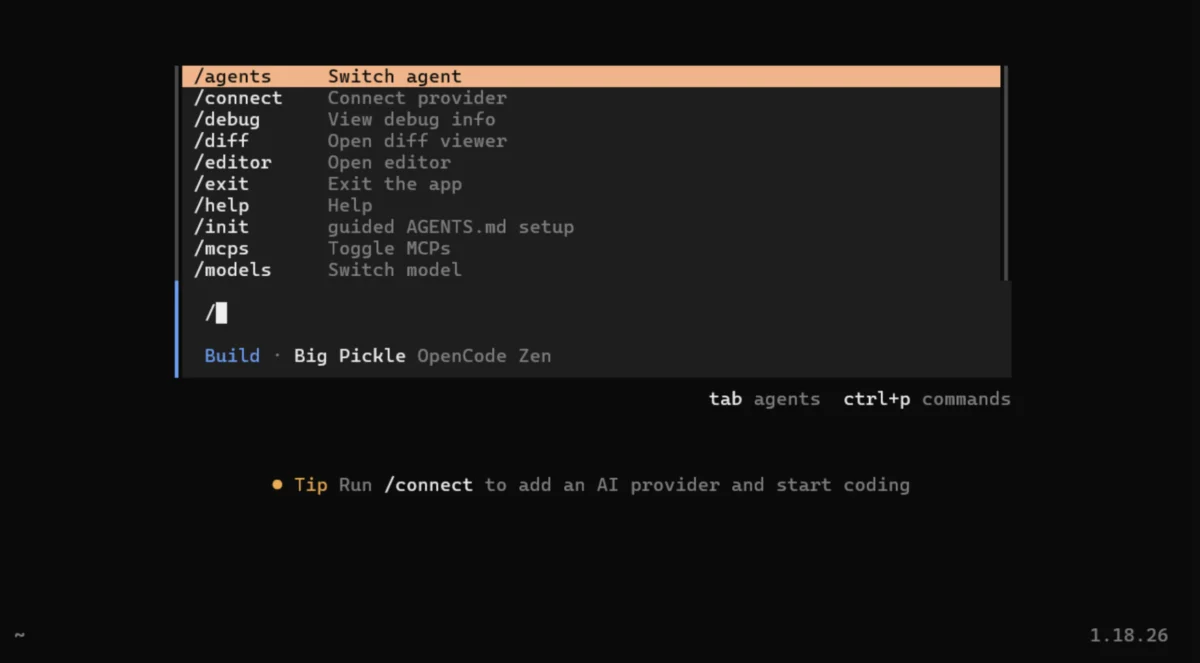
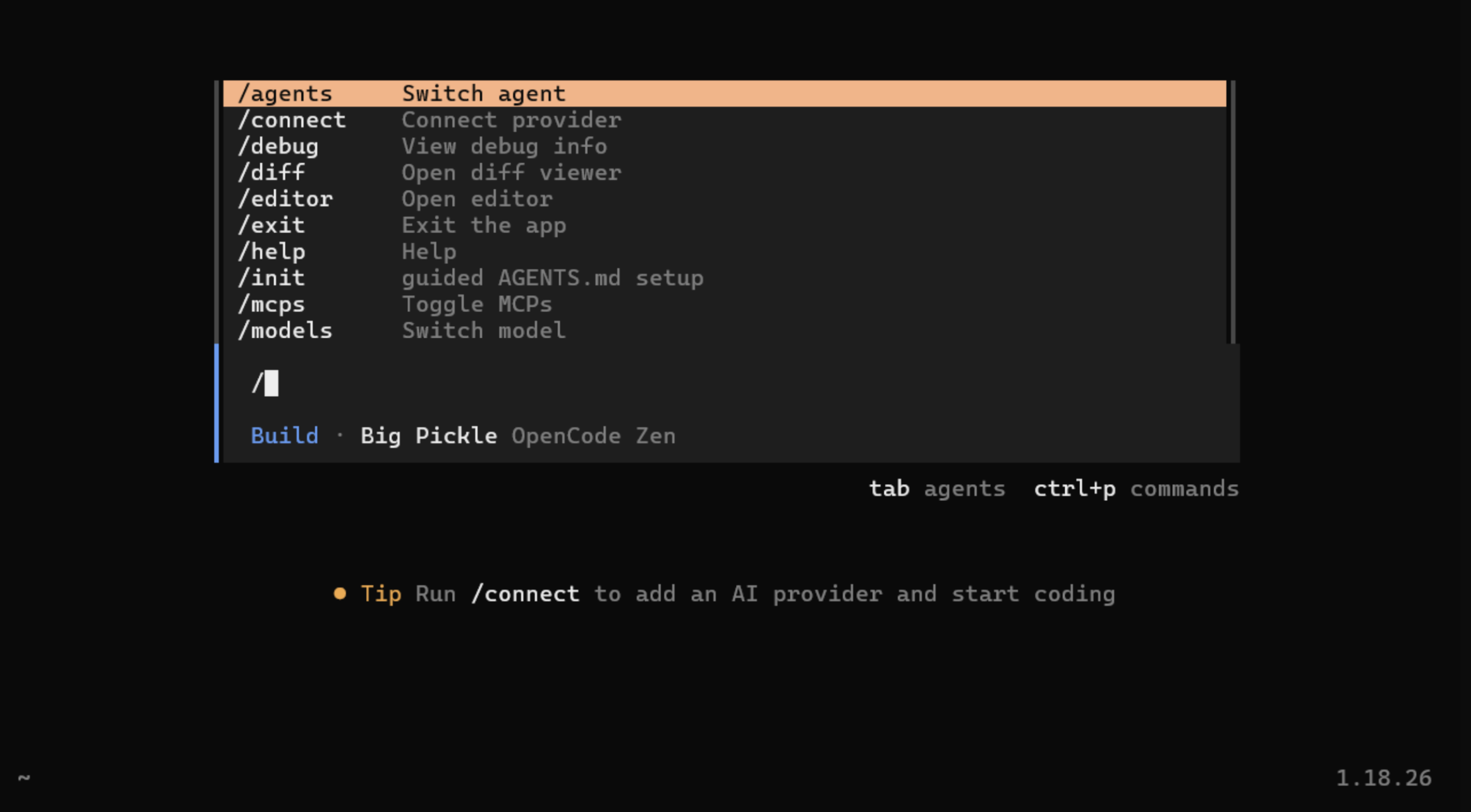
Upon running the /init command, OpenCode scans the repository and generates a summary of the project structure, testing frameworks, and naming conventions. This file, when committed to version control, ensures that every developer on a team—and every AI session—adheres to the same standards. This mirrors the CLAUDE.md convention used by proprietary tools but extends the concept to be model-independent.
The effectiveness of the agent is often directly proportional to the quality of this context file. Industry experts suggest a "minimalist" approach to AGENTS.md: if a rule does not actively prevent a common AI mistake, it should be removed to save context window space and reduce token costs.
Security, Permissions, and the Sandbox Myth
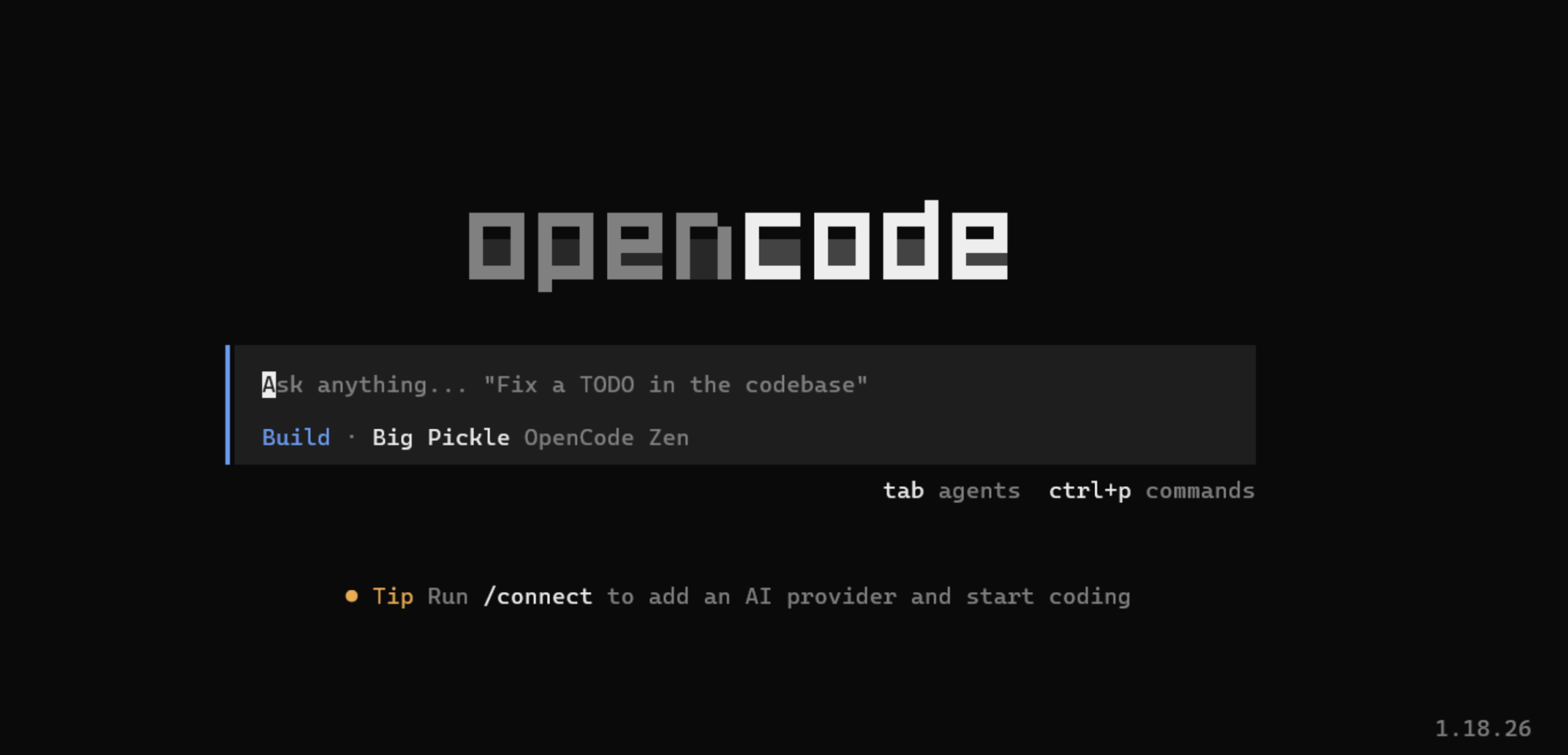
As AI agents gain the ability to execute bash commands and modify files, security has become a paramount concern. OpenCode utilizes a two-mode system: "Build" and "Plan." In Plan mode, the agent must seek explicit user approval before editing any file or executing a command. In Build mode, the agent operates with more autonomy, though still governed by a configurable permission system.
It is a critical distinction, emphasized in official documentation, that this permission system is a "workflow safeguard" rather than a "security sandbox." The agent operates with the permissions of the user who launched it. If the agent is instructed (either by a malicious prompt or a model hallucination) to delete a directory, the permission system may ask for confirmation, but it does not provide an isolated environment that prevents the action if confirmed.
Security audits in 2025 revealed vulnerabilities in early versions of the server mode, where unauthenticated users could potentially gain access to a running session. These have since been patched, and current best practices dictate that the OpenCode server should only bind to localhost and be protected by a mandatory password (OPENCODE_SERVER_PASSWORD).
Comparative Impact and Industry Implications
The rise of OpenCode has forced proprietary vendors to reconsider their "walled garden" strategies. The tool’s rapid iteration—releasing over 800 versions in its first year—demonstrates the power of community-driven development in the AI space.
For the individual developer, the choice between OpenCode and a tool like Claude Code often comes down to a trade-off between convenience and control. Claude Code offers a highly polished, "it just works" experience but ties the user to a single provider’s ecosystem and billing. OpenCode offers the freedom to navigate the entire LLM landscape but requires the user to manage their own infrastructure and billing.
From an enterprise perspective, OpenCode’s API and headless capabilities make it the superior choice for building custom internal tooling. Large-scale software firms are increasingly using the OpenCode SDK to build "Agentic Workflows," where AI agents perform initial code reviews, update dependencies, and fix "low-hanging fruit" bugs before a human developer even opens a pull request.
Chronology of Development
- Late 2024: OpenCode is launched as a lightweight alternative to existing CLI coding assistants, focusing on the MIT license.
- Mid 2025: The project introduces the client-server architecture, enabling the
opencode servefunctionality. - January 2026: Major LLM providers restrict consumer subscription access for third-party tools, leading to a surge in OpenCode’s BYOK (Bring Your Own Key) adoption.
- March 2026: OpenCode reaches 150,000 GitHub stars; the
AGENTS.mdstandard is widely adopted by the open-source community. - June 2026: The project surpasses 190,000 stars and integrates advanced multi-agent sub-processes for documentation and search.
Final Analysis: The Path Forward
The trajectory of OpenCode suggests that the future of software development will not be defined by the models themselves, but by the frameworks that allow those models to act. As models become more commoditized and their capabilities begin to plateau, the "agentic layer" becomes the primary site of innovation.
OpenCode’s commitment to an open-source, model-agnostic architecture positions it as the "Linux of coding agents"—a stable, extensible foundation upon which a diverse ecosystem of tools can be built. While it requires a higher degree of technical proficiency to set up and manage compared to its proprietary counterparts, the long-term benefits of data sovereignty, cost control, and architectural flexibility make it an essential tool for the modern developer’s toolkit. As the industry moves toward 2027, the focus will likely shift toward improving the reliability of local execution and further hardening the security protocols surrounding autonomous agent activity.