The landscape of software development underwent a seismic shift in August 2026, as the focus of the global developer community transitioned from the raw power of large language models (LLMs) to the sophisticated machinery required to operationalize them. According to GitHub Trending data analyzed throughout the month, the "centre of gravity" in the open-source world moved decisively toward agent harnesses, memory layers, cross-provider gateways, and specialized document tooling. While the previous two years were defined by the "Model Wars," August 2026 marked the beginning of the "Infrastructure Era," where the most successful projects were those that provided the connective tissue for autonomous agents.
Leading this technological surge was DeepSeek AI, whose new agent harness broke historical records for star growth. However, the trend extended far beyond a single repository. The ecosystem demonstrated a clear preference for modularity, with developers favoring composable "skills" over rigid, process-owning frameworks. As the industry matures, the emergence of standardized sockets for AI integration suggests that the era of monolithic AI applications may be giving way to a more fragmented, yet highly interoperable, plugin-based architecture.
The DeepSeek Phenomenon: A New Benchmark for Growth
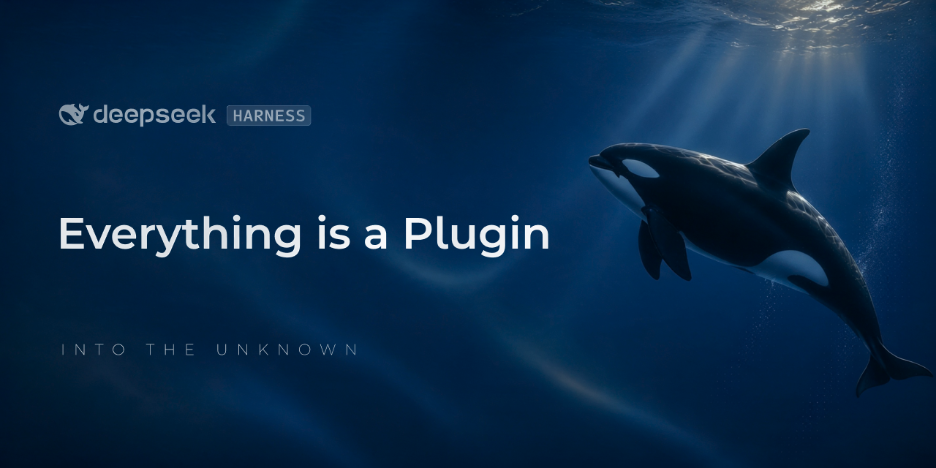
The most significant event of August 2026 was the release of DeepSeek Harness, known in the community as dsh. Within just four weeks, the repository amassed approximately 191,000 stars, including a staggering 62,000 stars in a single seven-day period. This level of adoption is nearly unprecedented in the history of GitHub, signaling an immense pent-up demand for open-source agent infrastructure from a frontier-level laboratory.
DeepSeek Harness is built on an "everything-is-a-plugin" architecture, powered by the Cordis framework. Released under the MIT license, the project arrived with a high degree of maturity, featuring over 14,000 commits and 23,000 forks at the time of its trending peak. The primary driver for its rapid adoption was its accessibility; a single command allows developers to launch a local web UI, effectively lowering the barrier to entry for complex agent orchestration.
Industry analysts suggest that the success of dsh represents a pivot away from proprietary agent wrappers. By providing a transparent, open-source harness, DeepSeek has positioned itself as the primary alternative to closed ecosystems. However, the project maintainers have issued a safety notice, labeling the current version a "developer preview" and warning of compatibility-breaking changes as the architecture evolves.
The Shift to Composable Agent Skills
Parallel to the rise of harnesses was the success of Matt Pocock’s "skills" repository, which reached a total of approximately 242,000 stars by the end of August. While dsh provided the engine, Pocock’s project provided the tools. This repository functions as a directory of composable agent skills distributed through marketplaces like Claude Code and the skills.sh installer.
The project’s philosophy is rooted in a rejection of "process-owning" frameworks such as GSD (Get Stuff Done) or BMAD (Big Model Agent Director). Pocock argues that these frameworks often reduce developer control and complicate debugging by obfuscating the agent’s decision-making process. Instead, the "skills" approach splits agent behavior into two categories:
- User-invoked commands: Such as
/grill-me(for code stress-testing) and/triage(for issue management). - Model-invoked skills: Such as
/tdd(test-driven development),/code-review, and/diagnosing-bugs.
This modularity has shaped how developers package and share agent behaviors in 2026, moving the industry toward a "Lego-brick" model of AI capabilities.
Legacy and Stability: OpenAI Codex as the North Star
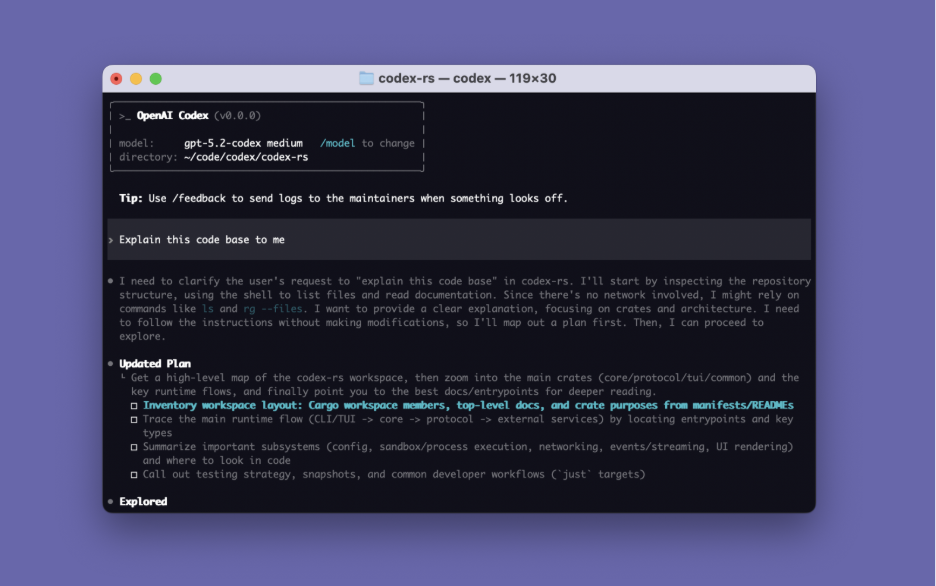
Despite the influx of new projects, OpenAI’s Codex remained a dominant force in the GitHub ecosystem. Adding roughly 17,500 stars in August, Codex reached a total of 121,000 stars. While its monthly growth was lower than that of the newcomers, its significance lies in its status as the industry’s reference point.
In August 2026, Codex transitioned from being a "new tool" to becoming a foundational platform. Many of the trending repositories this month—including specialized diagramming tools and gateways—shipped with specific Codex plugins. This "platformization" indicates that while newer agents may offer specific feature advantages, the developer community still relies on the stability and extensive documentation of the Codex ecosystem for production-grade environments.
Visualizing Complexity: The Architecture Diagram Trend
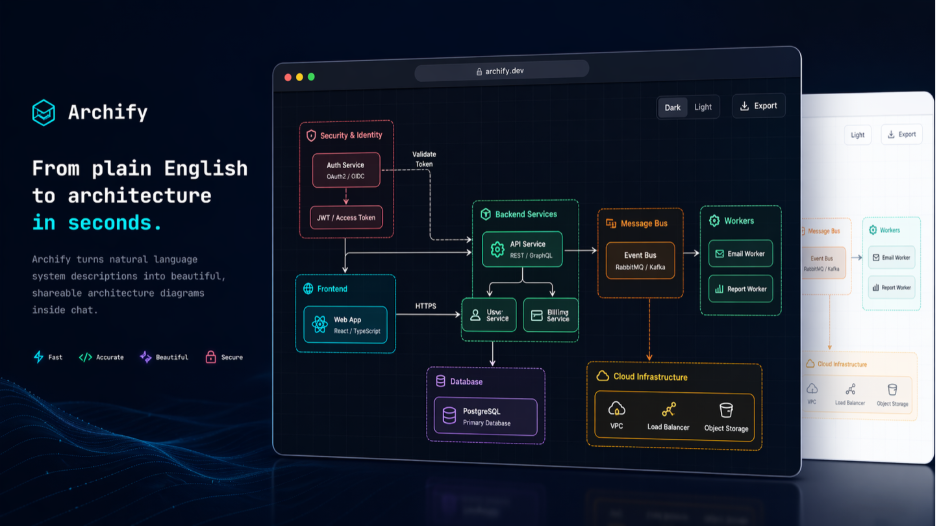
A notable gap in AI capability was addressed this month by the simultaneous trending of tt-a1i/archify and cathrynlavery/diagram-design. Together, these repositories gained 56,000 stars in August. For years, AI agents were capable of writing functional code but struggled to produce visual documentation that met professional standards.
- Archify: Focuses on dynamic architecture, workflow, and sequence diagrams, offering motion-enabled exports and clean SVG outputs.
- Diagram-design: Positions itself as a high-end editorial tool for Claude Code and Codex. Its README explicitly targets "Mermaid slop"—a reference to the often cluttered and unappealing diagrams generated by basic Markdown tools—advocating instead for a minimalist, "no shadows" aesthetic.
The popularity of these projects highlights a growing need for agents to communicate complex systems to human stakeholders, moving beyond the terminal and into the boardroom.
The "Ponytail" Philosophy: Efficiency Through Deletion
One of the more unique entries in the August rankings was DietrichGebert/ponytail, an agent skill designed to make AI behave like a senior engineer who prioritizes code deletion over addition. Reaching 120,000 stars, Ponytail implements a "seven-rung ladder" that the agent must climb before it is permitted to write new code. The rungs include questions such as: "Does this feature need to exist?", "Is it already in the codebase?", and "Can the standard library handle this?"
Empirical data published by the maintainer suggests that agents using the Ponytail skill produced 54% less code and resulted in 20% lower token costs across twelve feature tickets. Most notably, the project gained credibility when the maintainer publicly retracted earlier, more aggressive efficiency claims (80-94%) following a community audit. This commitment to factual accuracy in benchmarks has made Ponytail a favorite among enterprise teams looking to curb "AI-generated technical debt."
Plumbing the Depths: Document and Data Extraction
While agent logic captured the headlines, the "un-glamorous" work of data ingestion saw significant innovation through the Firecrawl suite. The projects anydoc and pdf-inspector added a combined 34,600 stars.
The significance of pdf-inspector lies in its data-driven approach to Optical Character Recognition (OCR). The project was built on the realization that approximately 54% of PDFs in modern corporate environments do not actually require OCR, as they contain extractable text layers. By classifying documents in 10 to 50 milliseconds and extracting position-aware Markdown without expensive OCR calls, Firecrawl has provided a critical optimization for RAG (Retrieval-Augmented Generation) pipelines.
Unified Access and the Fight Against Lock-in
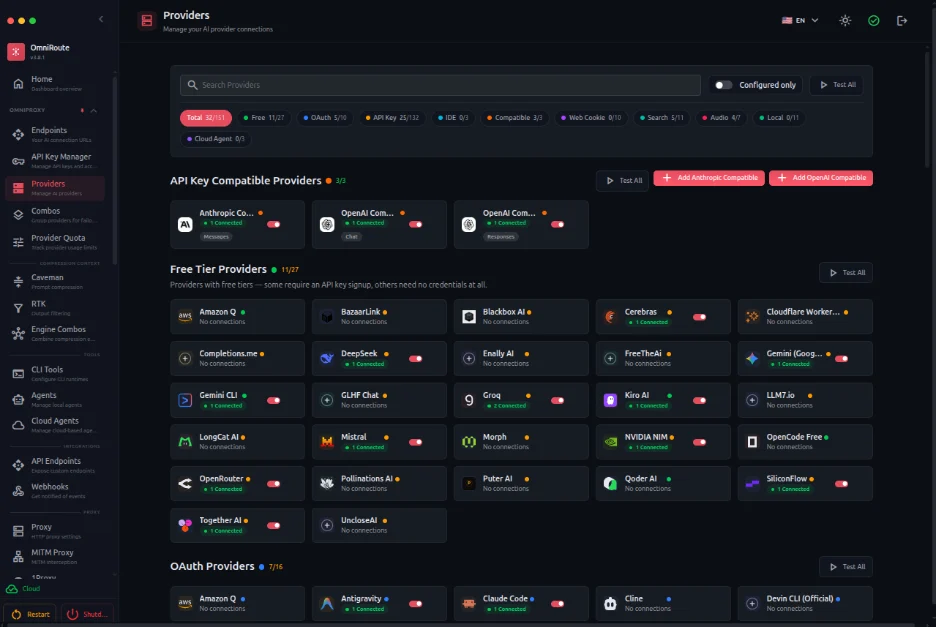
As the number of AI providers exploded in 2026, the problem of vendor lock-in became a primary concern for developers. diegosouzapw/OmniRoute, an MIT-licensed AI gateway, addressed this by collapsing 352 different providers and over 1,200 models into a single endpoint.

OmniRoute added 23,200 stars in August, driven by its promise of "quota-aware automatic fallback" and prompt compression techniques that can save up to 95% of token usage. By supporting protocols like MCP (Model Context Protocol) and A2A (Agent-to-Agent), OmniRoute is attempting to become the universal adapter for the AI era, ensuring that developers can swap models without rewriting their entire infrastructure.
Chronology of the Month: A Rapid Evolution
The month of August 2026 can be divided into three distinct phases of activity on GitHub:
- Week 1: The Infrastructure Explosion. This period saw the launch and immediate viral success of DeepSeek Harness. The community’s focus was almost entirely on setting up local environments and testing the "everything-is-a-plugin" architecture.
- Week 2: The Skill Refinement. As developers mastered the harnesses, attention shifted to Matt Pocock’s skills directory and the diagramming tools. This was the week where "agent utility" became the primary topic of discussion on developer forums.
- Week 3: The Efficiency Audit. Mid-month was characterized by a focus on optimization. Ponytail’s benchmarks and Firecrawl’s document processing tools trended as developers sought to make their agents faster and cheaper.
- Week 4: The Memory and Platform Consolidation. The final week saw the rise of TencentDB Agent Memory and Prime Agent. These projects aimed to solve the long-term problem of agent "forgetfulness" and decentralized training, signaling the next frontier for September.
Broader Impact and Industry Implications
The trends observed in August 2026 suggest that the software engineering profession is moving toward a "managerial" model. Rather than writing every line of code, developers are increasingly acting as architects of agent ecosystems—selecting the right harness, equipping it with specific skills, and managing its long-term memory through hubs like TencentDB.
Furthermore, the "Socket vs. Appliance" metaphor mentioned in several repository READMEs indicates a maturing market. In 2024 and 2025, AI tools were often viewed as standalone appliances. By late 2026, the industry has standardized the "socket"—the interface through which any agent can connect to any tool or model. This standardization is likely to accelerate the deployment of autonomous agents in production environments, as the risks associated with proprietary lock-in and architectural rigidity continue to diminish.
As August concludes, the high turnover in GitHub’s top twenty—with eight repositories exiting the list in the final days of the month—serves as a reminder of the volatility in this space. While star counts measure immediate attention, the underlying shift toward modular, open-source infrastructure appears to be a durable change in the trajectory of global software development.