

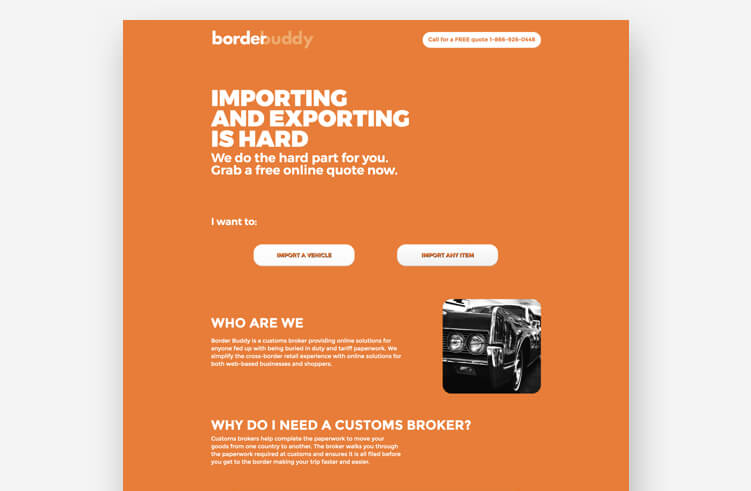
The digital marketing landscape in 2026 is defined by an increasingly fragmented attention economy, where the difference between a successful campaign and a failed investment often rests on a single, standalone destination: the landing page. As businesses navigate a post-cookie environment and prioritize first-party data collection, the strategic deployment of high-converting landing pages has moved from a tactical necessity to a cornerstone of enterprise growth. Industry leader Unbounce recently updated its comprehensive analysis of the 40 best landing page examples, providing a roadmap for marketers to navigate the complexities of modern consumer behavior. The report, authored by Luke Bailey, Colin Loughran, and Paul Park, emphasizes a core starting principle: a polished, professional landing page is the primary driver of improved conversion rates, while a disorganized interface serves as a significant deterrent to potential leads.

The Strategic Role of the Modern Landing Page
A landing page is defined as a standalone web page created specifically for a marketing or advertising campaign. Unlike a general homepage, which acts as a central hub for navigation, a landing page is designed with a singular focus—converting visitors who arrive via specific links in advertisements, emails, or social media posts into active leads or customers. In the current market, the “magical x-factor” that separates exceptional marketers from the average is the ability to balance aesthetic polish with psychological triggers that encourage immediate action.

According to the 2026 Conversion Benchmark Report, the efficacy of these pages is no longer just about design; it is about “relevance matching.” This involves ensuring that the messaging on the landing page perfectly mirrors the promise made in the preceding advertisement. This alignment reduces cognitive friction, a critical factor given that the average human attention span for digital content has continued to fluctuate in the mid-2020s.
Analysis of Top Performers Across Industries
The Unbounce report categorizes the most effective landing pages into several key sectors, including Software as a Service (SaaS), Ecommerce, and Professional Services. Each sector utilizes distinct design philosophies to achieve its goals.

SaaS and Digital Subscriptions: The Power of Minimalism
In the SaaS sector, giants like Netflix and Spotify continue to dominate by utilizing extreme minimalism. Netflix’s landing page, which currently serves a global base of over 300 million subscribers, focuses on a clear value proposition: unlimited content for a low monthly price. By removing navigation bars and exit points, the page forces a binary choice—sign up or leave. Similarly, Spotify leverages its universal brand recognition by omitting service descriptions entirely, moving straight to a “streaming audio” call to action (CTA).

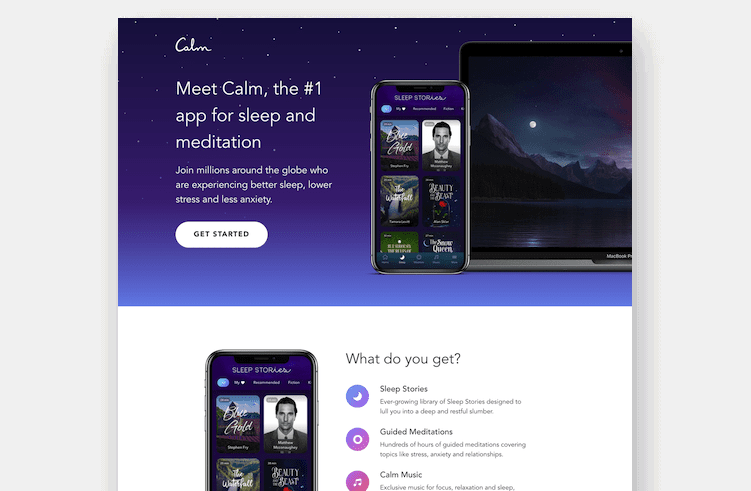
Other SaaS examples, such as Calm and LinkedIn, focus on emotional and professional benefits. Calm uses tranquil imagery to reflect the “peace of mind” its meditation app provides, while LinkedIn Premium targets job seekers with specific data-driven benefits, such as the ability to see who has viewed their profile.

Ecommerce and Niche Markets: Visual Storytelling
Ecommerce landing pages in 2026 have shifted toward “experience selling.” NANOR, a luxury candle brand, utilizes high-end photography to evoke a sensory response, effectively selling a lifestyle rather than just a product. In the health and wellness space, Goby and Perfect Keto use “benefit-first” copy. Goby’s “Brushing Perfected” headline provides immediate confidence, while Perfect Keto highlights specific nutritional data—such as three grams of net carbs—to appeal to health-conscious consumers.

The report also highlights the success of specialized agencies. J7 Media’s work for Coco Village and Fast Mask demonstrates how to showcase a collection of products while maintaining a single, click-through goal. MuteSix’s strategy for Grass Roots Farmers’ Cooperative takes visitors on a full customer journey, from educating them on the benefits of grass-fed meat to offering a $30 discount to incentivize the first purchase.

The Evolution of Conversion Technology: A Chronology
The development of the landing page as a marketing tool has undergone a significant evolution over the last two decades:

- The Early 2000s (The Pop-Up Era): Marketing destinations were often cluttered, high-friction pages or intrusive pop-ups with little regard for user experience.
- 2010–2015 (Mobile-First Shift): The rise of smartphones forced marketers to adopt responsive design. Landing pages became leaner to accommodate slower mobile speeds and smaller screens.
- 2016–2021 (The Era of the Builder): Tools like Unbounce’s drag-and-drop builder democratized design, allowing non-developers to create professional pages. Video elements began to see widespread adoption, with data showing a potential 86% increase in conversions when video was included.
- 2022–2026 (The AI and Personalization Era): Current landing pages are often dynamically generated or optimized using AI to match the specific intent of the visitor. Testing has moved from simple A/B splits to multi-armed bandit testing, where traffic is automatically diverted to the highest-performing variant in real-time.
Supporting Data and Technical Benchmarks
Modern conversion optimization is rooted in empirical data. The Unbounce report and associated industry studies highlight several critical benchmarks for 2026:

- Video Impact: Pages incorporating high-quality video content see an average conversion lift of 86%.
- The “Above the Fold” Rule: Content visible without scrolling remains the most valuable real-estate. Pages that place their primary value statement and CTA above the fold have a 25% higher retention rate.
- Mobile Optimization: With over 70% of web traffic now originating from mobile devices, pages that load in under two seconds on a 5G connection see a 40% lower bounce rate than those taking three seconds or longer.
- Social Proof: Including testimonials, trust badges, or “As Seen On” logos (as seen in the Goby and Campaign Monitor examples) increases perceived brand authority by 34%.
Official Responses and Expert Perspectives
Industry experts emphasize that the technical execution of a page is only half the battle; the other half is psychological. Cameron Gawley, Co-Founder and CEO of BuzzShift, provided insight into the strategy for Mooala, a dairy-alternative brand. “Most brands have a huge opportunity to lower their CPA (Cost Per Acquisition) and increase conversions by focusing more on awareness and consideration,” Gawley stated. He noted that their specific landing page worked by adding value via a coupon, capturing an email as a soft conversion, and then nurturing the lead through the rest of the journey.

Designers at Wavehuggers, a California-based surf lesson business, noted that their challenge was cutting through a crowded market. Their strategy involved segmenting important conversion components—social proof, urgency, and hero shots—to ensure each part caught the eye of the visitor immediately upon landing.

Broader Impact and Implications for Global Marketing
The implications of these high-performing landing pages extend beyond individual sales. They represent a shift in how brands interact with the global public. In an era where privacy regulations like GDPR and CCPA have limited the effectiveness of third-party tracking, the landing page has become the primary laboratory for understanding consumer intent.
Furthermore, the rise of “social commerce” platforms like Snackpass indicates that landing pages are becoming more integrated with social media. Snackpass uses a streamlined design to cater to users coming from Instagram and TikTok, proving that landing pages must now adapt to the aesthetic and speed of the platforms that feed them.
For educational institutions like Athabasca University, landing pages have become essential for distance education enrollment. By focusing on specific certificate programs rather than the entire university catalog, they can target high-level decision-makers with the exact information needed to commit to a program.
Future Outlook: The Michael Jordan of Landing Pages
As the report concludes, the goal for marketers in 2026 is to reach a level of “Michael Jordan-like” excellence in their campaigns. This metaphor serves as an encouragement to small businesses and independent marketers. The accessibility of drag-and-drop builders and AI-driven templates means that a “blank page and a big idea” can still compete with the multi-million dollar budgets of companies like Amazon or Netflix.
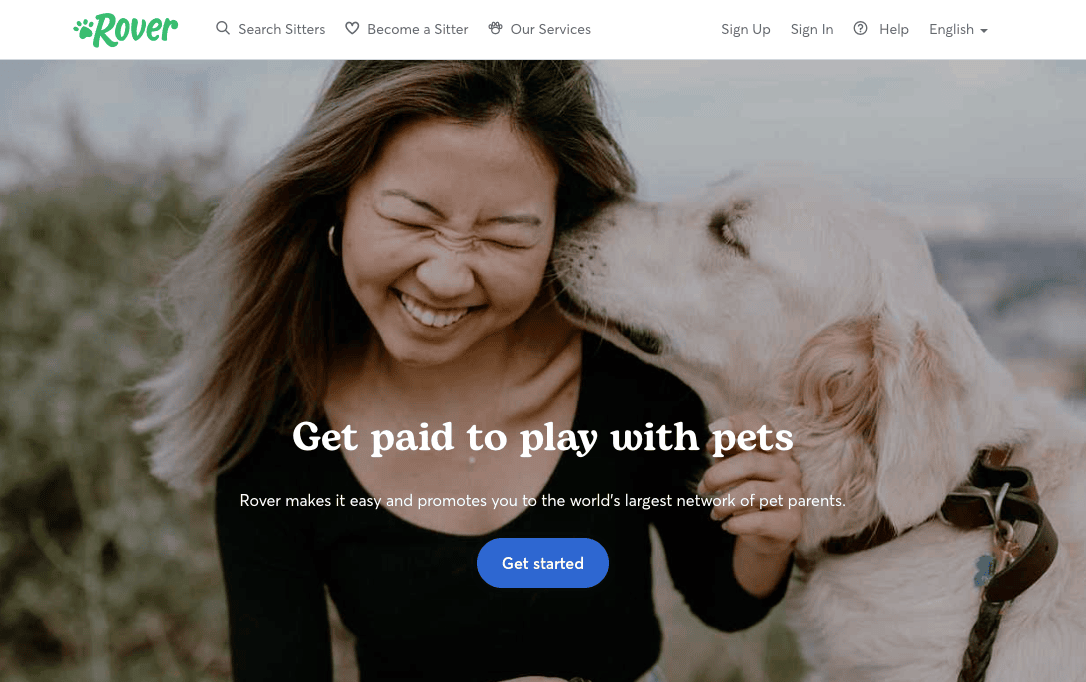
The ongoing necessity for A/B testing remains the final takeaway. No landing page is ever truly finished; it is a living document that must be continuously refined based on visitor behavior. As consumer preferences shift toward more ethical, transparent, and personalized digital experiences, the “best” landing pages will be those that not only convert but also build long-term brand trust.







