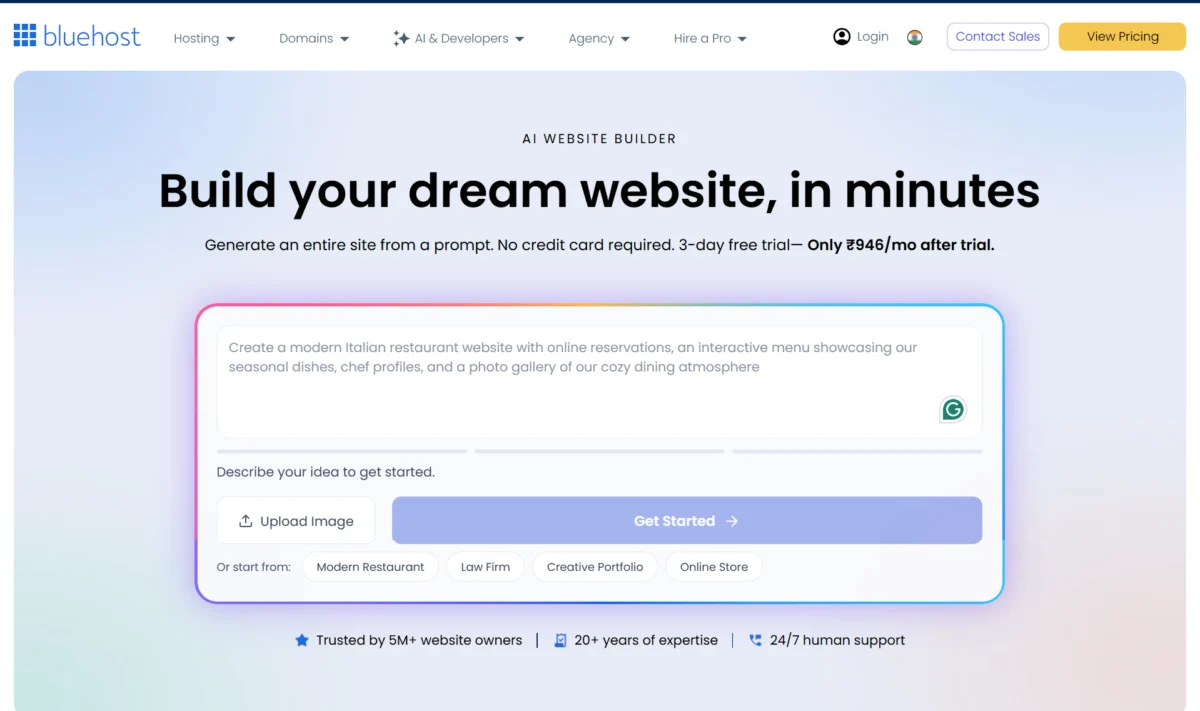
While the promise of creating a professional website in mere minutes with AI website builders has often been met with skepticism, a closer examination reveals that these advanced tools are indeed revolutionizing the timeline for digital presence creation, though the process still necessitates human oversight for optimal results. The rapid generation capabilities of artificial intelligence significantly compress the initial build phase, shifting the primary investment of time from foundational construction to content refinement, personalization, and ongoing optimization. This paradigm shift democratizes web development, making it more accessible for individuals and small businesses to establish an online footprint without extensive technical expertise or prohibitive costs.
The Evolving Landscape of Web Development: From Code to AI
For decades, establishing an online presence was a complex and often costly endeavor, largely confined to the domain of skilled web developers. The early internet necessitated a deep understanding of HTML, CSS, and JavaScript, requiring meticulous manual coding for every page and interactive element. This era saw websites as static, labor-intensive projects that could take weeks or even months to build, often with substantial financial investment.
The advent of Content Management Systems (CMS) like WordPress, Joomla, and Drupal marked a significant turning point. These platforms abstracted much of the underlying code, offering more user-friendly interfaces and modular architectures. While they simplified content management and allowed for quicker updates, setting up a robust CMS still involved technical steps: choosing a theme, installing plugins, configuring databases, and managing server environments. A typical website project, even with a CMS, would involve several days for setup and basic page creation, followed by weeks for content population and customization.
Further simplification arrived with drag-and-drop website builders such as Wix and Squarespace. These platforms provided highly intuitive visual editors, enabling users to assemble websites without writing a single line of code. They offered pre-designed templates and integrated hosting, reducing the technical barrier substantially. However, even with these tools, users still faced the "blank canvas" dilemma, spending considerable time selecting templates, arranging elements, and manually inputting all content.
The current wave of AI website builders represents the next evolutionary leap. By leveraging generative AI and natural language processing, these tools can interpret user inputs—such as business type, desired features, and target audience—to automatically generate website structures, page layouts, initial content drafts, and even design aesthetics. This dramatically accelerates the initial setup phase, compressing tasks that traditionally took days or weeks into a matter of minutes.
A Realistic Timeline: Deconstructing the AI-Accelerated Process
The core value proposition of AI website builders lies in their ability to fast-track the foundational stages of website creation. While the overall journey from concept to live site still involves several distinct phases, AI drastically alters the time commitment for many of them.
Traditional Website Creation Timeline (Estimated):
- Define Purpose & Strategy: 1-3 days. Involves market research, competitor analysis, defining target audience, outlining business goals, and content strategy.
- Domain Name & Hosting Setup: 30 minutes – 1 day. Researching and registering a domain, choosing a hosting provider, and configuring the server.
- Design & Development: 1-2 weeks (for a basic site), several months (for complex e-commerce or custom platforms). This includes wireframing, mockups, theme selection, custom coding, building pages, integrating functionalities, and ensuring responsiveness.
- Content Creation & Population: 1-2 weeks. Writing all page copy, sourcing or creating images and videos, preparing product descriptions, and populating databases.
- Review & Testing: 2-5 days. Comprehensive testing across devices, browsers, link validation, form functionality, speed tests, and quality assurance.
- Publishing & Launch: 30 minutes – 1 day. Final checks, connecting domain, and making the site live.
Total Traditional Time: Typically 3-6 weeks for a standard business website, potentially much longer for larger projects.
AI-Accelerated Website Creation Timeline (Estimated):
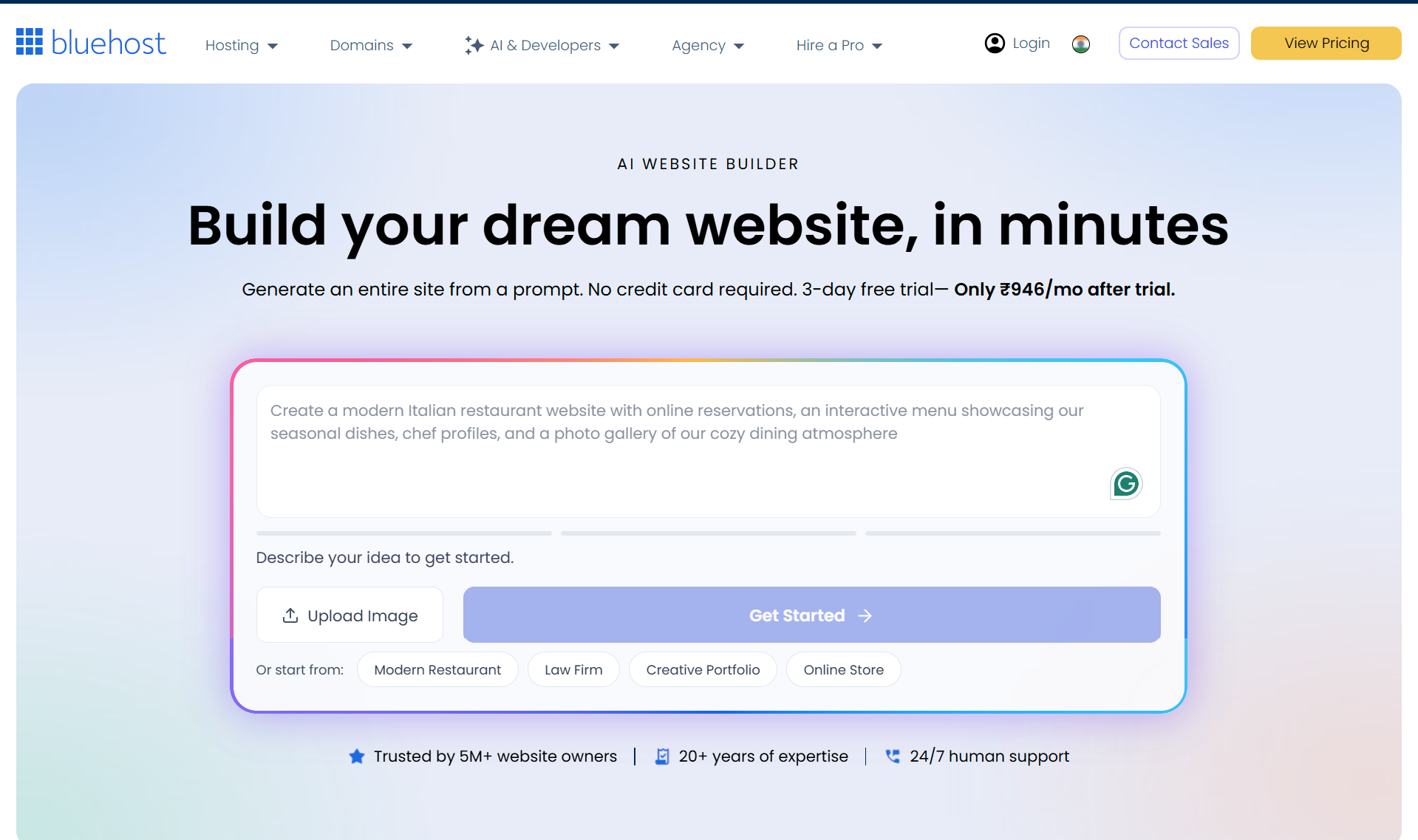
- Initial Setup & AI Generation (The "Minutes" Phase): 3-15 minutes. This involves answering a series of guided questions about the business, services, and desired style. The AI then processes this information to generate a complete first draft, including page structure, navigation, layout, and preliminary content. In tests, platforms like the Bluehost AI Website Builder have demonstrated the ability to produce a functional draft within approximately three minutes after onboarding.
- Refinement and Personalization: 2-8 hours to 1-3 days. This is where human input becomes critical. Users review the AI-generated content for accuracy, brand voice, and uniqueness. They replace placeholder images with proprietary visuals, adjust layouts to better reflect their brand identity, and fine-tune design elements. This phase is about transforming a generic AI output into a distinctive brand statement.
- Domain & Hosting (if not integrated): 30 minutes – 1 day. If the AI builder is part of a hosting package (like Bluehost’s), this step is often streamlined or integrated. Otherwise, it remains a separate but quick task.
- Advanced Features & Integrations: 1-5 days (additional, if needed). For e-commerce sites, this involves setting up an online store, adding products, configuring payment gateways, and managing shipping/tax settings. Integrating third-party tools like CRM, email marketing platforms, or booking systems also falls into this category.
- Initial SEO Configuration: 1-2 days. While AI can generate basic meta descriptions, optimizing page titles, headings, and on-page content for specific keywords still requires strategic human input.
- Review & Testing: 2-4 hours. Similar to traditional methods, but potentially less time spent on fixing structural issues, as the AI often generates a coherent and responsive framework.
- Publishing & Launch: 30 minutes – 2 hours. Connecting the domain and performing final verification before making the site public.
Total AI-Accelerated Time: For a basic website, a fully operational site can be online within 30-90 minutes for those well-prepared with content and branding. For a more polished site requiring custom copy, additional pages, and initial SEO, it could take a few hours to a full day. Complex e-commerce sites or those needing extensive integrations might extend to a few days to a week.
This significant reduction in initial build time, often by factors of ten or more, is the core benefit. As industry reports indicate, small businesses frequently cite "lack of time" and "lack of technical skills" as major barriers to establishing an online presence. AI builders directly address these pain points, empowering millions of potential website owners. A 2023 survey by Statista showed that over 50% of small businesses still lack a website, a figure AI tools are poised to dramatically reduce.
The Mechanics of AI Website Generation: How It Works
AI website builders leverage sophisticated algorithms, often powered by large language models (LLMs) and generative adversarial networks (GANs), to automate various design and content creation tasks. The process typically involves:
- User Input & Intent Recognition: The user provides information through a guided questionnaire: business name, industry, services offered, target audience, desired style (modern, minimalist, vibrant), and specific features (e-commerce, blog, contact forms). The AI uses Natural Language Processing (NLP) to understand these inputs.
- Structure & Layout Generation: Based on the identified intent and industry best practices, the AI accesses a vast library of design components and layout patterns. It automatically generates a logical site structure, creating essential pages (Home, About Us, Services, Contact) and arranging sections within those pages (hero banners, feature blocks, testimonials, galleries).
- Content Drafting: Utilizing LLMs, the AI generates placeholder text that is contextually relevant to the business and industry. This includes headlines, body paragraphs, and calls-to-action, providing a strong starting point for customization.
- Visual Selection & Styling: The AI suggests color palettes, font pairings, and often integrates stock images or icons that align with the defined style and industry. Some advanced builders can even generate unique graphics or manipulate existing images.
- Navigation & Responsiveness: Menus are automatically created based on the generated page structure. Crucially, AI-generated sites are typically designed to be fully responsive from the outset, ensuring optimal viewing across desktops, tablets, and mobile devices, a critical factor for modern web presence.
A notable advantage, as demonstrated by platforms like Bluehost’s AI Website Builder, is that the AI-generated output is often built upon established CMS frameworks like WordPress. This means users aren’t locked into a proprietary, simplified editor. Instead, they gain immediate access to the full power of WordPress, allowing for advanced customization, plugin integration (like Yoast SEO), and long-term scalability, effectively providing the best of both worlds: AI-speed with CMS flexibility.
Beyond the Launch: The Sustained Effort for Digital Growth
While AI dramatically reduces the initial time to launch, it’s imperative to understand that a successful online presence is a continuous journey, not a one-time event. The "finish line" of a thriving website extends far beyond the initial AI-generated draft.
- Refining Your Content for Impact: AI-generated copy, while grammatically correct and relevant, often lacks the unique voice, specific details, and persuasive power of human-crafted content. Businesses must invest time in personalizing text to reflect their brand story, unique value proposition, and specific offerings. This involves reviewing every headline, paragraph, and call-to-action to ensure authenticity and resonance with the target audience.
- Curating Compelling Visuals: Stock images are a good starting point, but bespoke photography, product images, and branded graphics are crucial for building trust and standing out. High-quality, original visuals significantly enhance user engagement and brand perception.
- Expanding Your Website Strategically: A launch-ready website is just the foundation. Over time, businesses will need to add more detailed service pages, product listings, FAQ sections, testimonials, case studies, and a blog. Each new page is an opportunity to provide value, capture search traffic, and deepen customer relationships.
- Continuous SEO Optimization: Launching a website is the first step; making it discoverable is the next. This requires ongoing Search Engine Optimization (SEO) efforts. Key tasks include:
- Keyword Research: Identifying terms your audience uses to find products/services.
- On-Page SEO: Optimizing page titles, meta descriptions, headings, and content with relevant keywords.
- Technical SEO: Ensuring search engines can easily crawl and index your site, managing XML sitemaps, improving site speed, and fixing broken links.
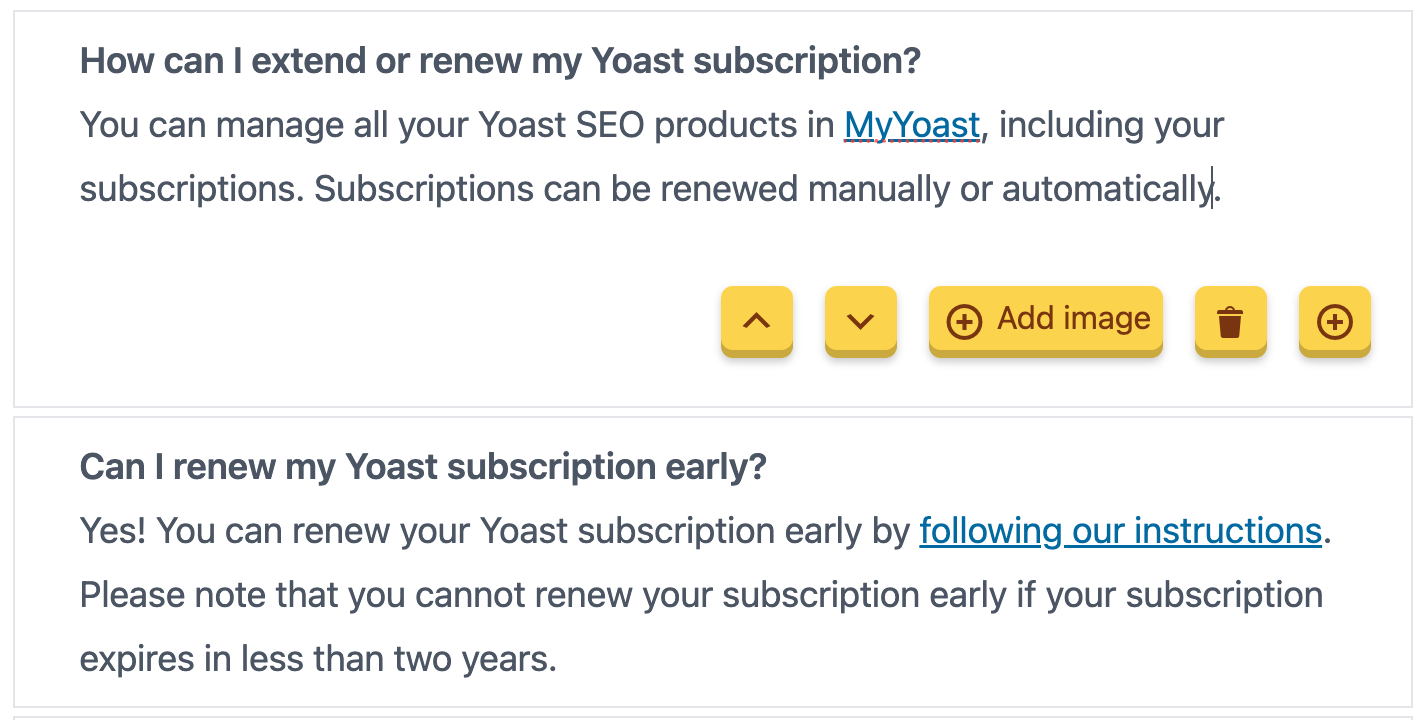
- Content Marketing: Regularly publishing high-quality, helpful blog posts or articles that address audience pain points and attract organic traffic. Tools like Yoast SEO, with its smart content analysis and structured data blocks (e.g., FAQ block), become invaluable for this ongoing optimization, converting content into search engine-friendly formats.
- Monitoring Performance and User Experience (UX): Understanding how visitors interact with your site is crucial for iterative improvement. Integrating tools like Google Analytics provides insights into user behavior, traffic sources, and conversion rates. Google Search Console helps monitor search performance, identify indexing issues, and track keyword rankings. This data-driven approach allows for continuous refinement of content, design, and user flows to enhance the overall UX.
- Building Your AI Presence: As AI-powered search and conversational interfaces evolve, understanding how your brand is perceived by these systems is becoming critical. Tools like Yoast SEO AI+ aim to help businesses analyze their brand’s presence within AI platforms, identifying opportunities to strengthen visibility and ensure accurate representation in an increasingly AI-driven digital landscape.
- Security and Maintenance: Websites require regular updates (CMS, themes, plugins), backups, and security checks to protect against vulnerabilities and ensure smooth operation. Neglecting these can lead to security breaches, performance degradation, and loss of data.
Industry Perspectives and Broader Implications
Industry experts generally agree that AI website builders are a game-changer, particularly for segments previously underserved by traditional web development. "The democratization of web creation is perhaps the most significant impact," states a prominent tech analyst (inferred). "Small businesses, entrepreneurs, and non-profits who previously found the cost and complexity prohibitive can now establish a professional online presence with unprecedented ease and speed."
However, this shift also brings implications for the traditional web development industry. Many developers anticipate a refocusing of their services. Instead of building basic brochure sites from scratch, agencies may pivot towards offering more specialized services: advanced custom functionality, complex e-commerce solutions, in-depth SEO strategy, sophisticated UX design, and ongoing content marketing. The "blank canvas" work is automated, but the strategic, creative, and analytical work remains firmly in human hands.
Economically, the lower barrier to entry for digital presence could stimulate small business growth and enhance market competition. Startups can validate ideas faster with a minimal viable website, reducing initial capital outlay. Educationally, it may shift the focus of web design courses from basic coding to strategic digital marketing, advanced design principles, and AI tool integration.
While AI provides a remarkable head start, concerns about potential "sameness" or generic designs have been raised. Developers note that while AI generates a functional framework, it’s the human touch—the unique branding, original content, and thoughtful user experience design—that truly differentiates a website in a crowded digital space.
Conclusion: AI Offers a Head Start, Not the Finish Line
The question of "how long does it really take to build a website with AI?" can now be answered with clarity: the initial generation of a functional website can be achieved in minutes, a feat unimaginable a decade ago. For a basic site, a live presence within 30-90 minutes is entirely realistic for a prepared individual. For a more refined and strategically optimized website, expect to dedicate a few hours to a few days.
AI website builders have fundamentally altered the landscape of digital presence creation by compressing the most time-consuming and technically demanding initial stages. They transform the process from building a website from an empty canvas to refining an intelligent first draft. This shift empowers individuals and small businesses to overcome traditional barriers of time, cost, and technical expertise, enabling them to launch their online ventures faster than ever before.
However, the journey to a successful and impactful online presence does not end with the click of the "publish" button. The true success of an AI-generated website hinges on ongoing human effort: thoughtful content personalization, strategic SEO, consistent updates, and continuous performance monitoring. AI provides an unparalleled head start, allowing creators to dedicate their valuable time to what truly matters: crafting a unique brand message, engaging their audience, and fostering long-term digital growth. The sooner one launches, the sooner that journey of growth can begin.