Laily UPN
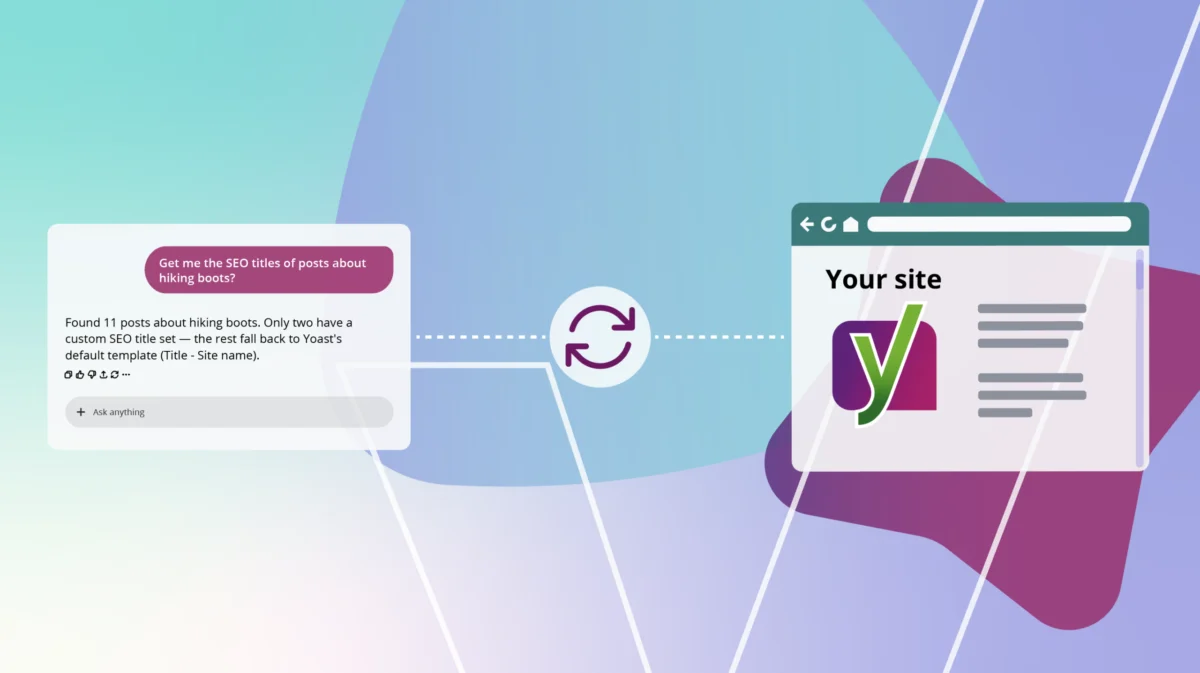
Yoast, a leading name in WordPress SEO, has announced a significant expansion of its Yoast SEO Abilities, a feature set designed to enable Artificial Intelligence (AI) tools to not only diagnose but also directly implement technical SEO changes on WordPress websites. This pivotal release marks a substantial leap towards fully agentic workflows, moving AI from a purely analytical role to an actionable one within the digital marketing landscape. This development is particularly aimed at professionals and agencies managing complex SEO strategies and numerous websites, promising unprecedented efficiency and scalability.
Background: The Evolving Landscape of SEO and AI
For years, Search Engine Optimization (SEO) has been a cornerstone of digital marketing, driving organic traffic and visibility for countless businesses. However, the process has historically been labor-intensive, requiring human intervention for every adjustment. From identifying broken links and incorrect schema markup to optimizing meta descriptions and canonical tags, SEO specialists have meticulously navigated website backends, often performing repetitive tasks that, while critical, consumed valuable time. The advent of AI tools brought a new era of analysis, allowing marketers to quickly identify issues, analyze content performance, and even generate preliminary content. Yet, a significant gap persisted: the transition from AI-driven insights to direct, automated implementation. This gap meant that even with sophisticated AI diagnostics, the final, crucial step of making the changes still required a human operator.
The concept of "agentic workflows" seeks to bridge this divide. An agentic workflow involves AI systems that can not only understand a problem but also autonomously plan and execute a series of actions to solve it. In the context of SEO, this means an AI tool could identify a misconfigured product page (e.g., one incorrectly telling Google it’s a recipe) or a lingering link to an old test site, and then, crucially, directly access the website’s backend to rectify these issues without manual intervention. This represents a paradigm shift from AI as an advisory assistant to AI as an active participant in website management.
A Chronology of AI Integration and WordPress Standards
The foundation for this advanced functionality has been laid over time, rooted in the ongoing efforts within the WordPress ecosystem to embrace modern technologies and streamline developer experiences.
- November 2025: The WordPress community introduced the WordPress Abilities API. This foundational API was designed to provide a standardized, secure, and predictable way for external applications, including AI tools, to interact with WordPress instances. Its introduction signaled a clear intent to foster greater interoperability and enable more sophisticated integrations within the platform.
- April 2026: Yoast SEO took an initial, significant step by registering its first set of "abilities" with the newly established WordPress Abilities API. These initial abilities focused on diagnostic capabilities, allowing AI tools to reliably check crucial metrics like SEO scores, readability scores, and inclusive language scores for recently modified posts. While revolutionary for enabling automated assessments, these abilities were primarily read-only. An AI could identify posts with weak SEO scores but lacked a standardized method to read the underlying technical fields or, more importantly, to modify them. Any required changes still necessitated a human logging into the WordPress admin panel.
- Current Release (September 2026, as per screenshot date): This latest update from Yoast SEO closes that critical gap. Building upon the existing diagnostic capabilities, Yoast SEO Abilities now empowers AI tools with read and write access to core technical SEO settings. This release transforms AI from merely identifying problems to actively solving them, marking a pivotal moment in the automation of technical SEO within the WordPress environment.
Core Functionality and Enhanced Features
The latest iteration of Yoast SEO Abilities introduces a suite of powerful features designed to streamline SEO workflows, enhance efficiency, and provide greater control for digital marketers and agencies.
Direct AI-Powered Updates for Technical Fields:
At the heart of this release is the capability for AI tools to directly update critical technical SEO settings. Previously, an AI might flag a canonical URL error; now, it can directly correct it. The same applies to issues such as incorrect robots flags, schema types, or cornerstone content designations. These are the underlying technical settings that often require manual, repetitive adjustments, and their automation represents a significant time-saving opportunity.
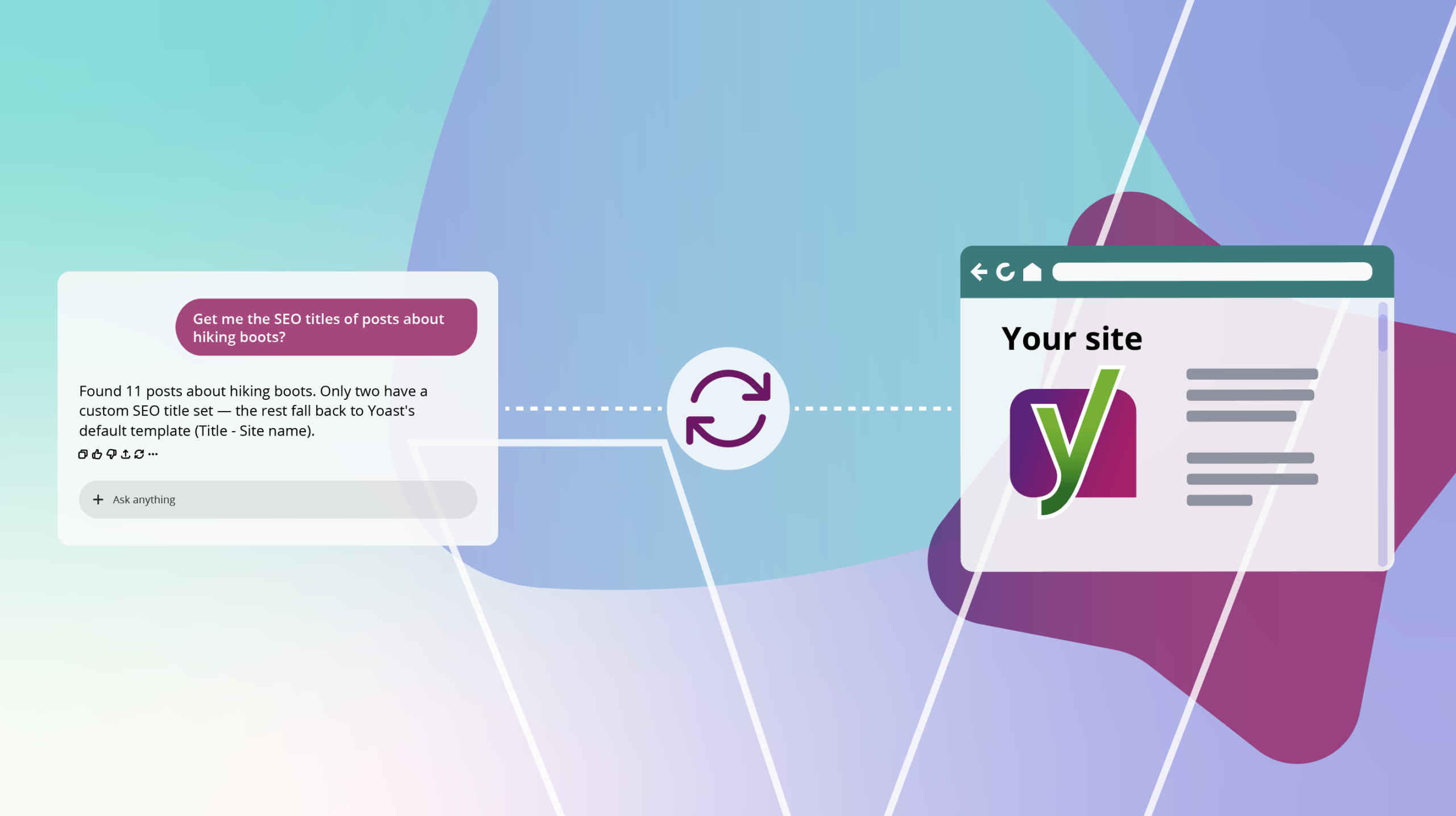
Comprehensive Data Retrieval with yoast-seo/get-post-seo-data:
To facilitate intelligent decision-making by AI agents, Yoast SEO Abilities now offers a robust yoast-seo/get-post-seo-data function. This ability allows AI tools to retrieve a comprehensive dataset for any given post, including:
- The HTML title tag.
- Meta Description: The snippet displayed in search results.
- Robots Flags: Directives for search engine crawlers (e.g.,
noindex,nofollow). - Schema Type: Structured data markup (e.g.,
Article,Product,Recipe). - Canonical URL: The preferred version of a webpage.
- Social Previews: How the page appears when shared on social media platforms.
- Scores: SEO, readability, and inclusive language scores.
Crucially, posts can be identified by their ID, permalink, or even a plain-language title search. This flexibility ensures that AI agents can accurately pinpoint the intended post with a single call, eliminating the need for complex, multi-step search processes and enhancing the accuracy of automated tasks.
Writable Core Technical Settings:
The ability to write to core technical settings is where this release truly shines. AI tools can now modify:
- Canonical URLs: Ensuring search engines index the correct version of content, preventing duplicate content issues.
- Robots Flags: Controlling how search engine crawlers interact with pages, crucial for managing indexing.
- Cornerstone Content Status: Designating high-value, foundational content for improved internal linking and search visibility.
- Schema Type: Correcting or optimizing structured data markup to enhance rich snippet potential and search engine understanding.
Yoast SEO already meticulously manages these fields, ensuring that changes made through AI tools are seamlessly integrated without introducing new layers of complexity or conflict with existing site configurations.
Robust Rollback Mechanism for Safety:
Recognizing the critical nature of automated changes, Yoast SEO Abilities incorporates a practical rollback mechanism. Any modification made through the WordPress Abilities API can be reverted, provided the AI tool maintains the changed values within its current operational context. This emphasizes the importance of a structured workflow: an AI should first read a post’s SEO data, then update it, and finally, remain in the same session to review the outcome. If the context is lost, the previous values may no longer be readily accessible for an automated rollback. This feature underscores a commitment to safety and iterative testing within AI-driven workflows, allowing for confident experimentation.
Efficiency Through Bulk Operations:
For agencies and large-scale websites, the ability to perform bulk and batch operations is transformative. AI agents can now apply get, update, or filter requests across multiple posts in a single call, dramatically accelerating tasks that previously required individual attention. The system returns per-post results, offering granular visibility into every change and ensuring transparency in bulk modifications. This capability is invaluable for tasks like updating schema across an entire product category or adjusting robots flags for a segment of archive pages.
Strategic Control: The Read-Only Focus Keyphrase:
While embracing extensive automation, Yoast has made a deliberate and strategic decision to keep the "focus keyphrase" read-only. This means AI tools cannot automatically generate or alter a post’s primary target keyword. The rationale is clear: the focus keyphrase is intrinsically linked to content strategy, marketing briefs, and the intended audience targeting. Automatic changes could inadvertently invalidate carefully planned content strategies, skew subsequent SEO assessments, and undermine the strategic efforts of human marketers. Yoast recommends that content workflows, especially those involving keyword strategy, continue to be managed within the editor, where human oversight and strategic intent are paramount.
Seamless Access Control with WordPress Standards:
Security and access management are paramount. Yoast SEO Abilities leverages native WordPress capability checks, eliminating the need for a separate, complex permission system. This means that access to these AI-driven functionalities is governed by existing WordPress user roles and capabilities. Site administrators can audit AI access in the same familiar way they audit any other administrator-level access, ensuring a consistent and secure management framework.
Technical Foundations and Industry Standardization
The power and reliability of Yoast SEO Abilities stem from its adherence to established and emerging industry standards, particularly within the WordPress ecosystem.
Integration with the WordPress Abilities API:
As previously noted, these new abilities are built directly on the WordPress Abilities API. This foundational integration ensures that once the WordPress MCP Adapter is connected, Yoast SEO’s capabilities become callable Multi-Client Protocol (MCP) tools for any MCP-aware client. This includes popular development environments and AI tools such as Claude Desktop, Claude Code, Cursor, and VS Code. The direct integration means that no custom or bespoke integrations are required for these widely used platforms, significantly lowering the barrier to entry for developers and agencies.
The Role of the Multi-Client Protocol (MCP) Adapter:
The WordPress MCP Adapter acts as the crucial bridge, translating Yoast SEO’s specific abilities into a format understandable by various AI clients adhering to the MCP standard. This standardization is key to achieving true interoperability and ensures that Yoast SEO’s functionalities can be accessed and utilized across a broad spectrum of AI tools without needing individual, tailor-made connectors.
Predictability Through Typed Input and Output Schemas:
For developers building on top of these abilities—creating custom dashboards, reporting tools, or more complex automated systems—predictability is paramount. Yoast SEO Abilities provides typed input and output schemas, which clearly define what data should be sent to an ability and what format the response will take. This rigorous definition eliminates ambiguity, reduces development time, and enhances the reliability of integrations. For agencies managing multiple client sites, this predictability translates into a standardized setup across every WordPress build, eliminating the need for manual, per-site reconfiguration and vastly improving operational efficiency.
Implications for Digital Marketing and SEO Professionals
This release from Yoast SEO carries profound implications for the digital marketing industry, particularly for SEO specialists and agencies.
Dramatic Increase in Efficiency:
The most immediate impact will be a significant boost in operational efficiency. Automating the identification and correction of technical SEO issues frees up valuable human resources. SEO professionals can shift from tedious, manual backend work to more strategic tasks, such as competitor analysis, content strategy development, advanced link building, and performance analysis. This re-allocation of time can lead to more impactful SEO campaigns and better overall ROI.
Faster Issue Resolution and Improved Site Health:
Technical SEO errors can severely impact a website’s search engine visibility and user experience. With AI tools capable of rapid diagnosis and immediate correction, issues like broken canonicals, incorrect schema, or unwanted indexation directives can be resolved in a fraction of the time. This leads to quicker recovery from potential penalties, improved crawlability, and consistently healthier website SEO profiles.
Enhanced Scalability for Agencies:
For SEO agencies managing dozens or even hundreds of client websites, the ability to implement bulk, AI-driven technical SEO changes is a game-changer. Standardized setups, combined with batch operations, mean that agencies can maintain high levels of SEO hygiene across their entire portfolio with significantly less manual effort, allowing them to scale their operations more effectively without proportionally increasing headcount.
Democratization of Advanced SEO:
While advanced technical SEO often requires specialized knowledge, AI-driven automation could potentially democratize access to these complex optimizations. Website owners and smaller businesses, even those without deep technical SEO expertise, could leverage user-friendly AI interfaces to ensure their sites adhere to best practices, guided by Yoast SEO’s established intelligence.
Evolution of the SEO Specialist Role:
The role of the SEO specialist is set to evolve. Rather than being primarily task-executors, they will become architects of AI-driven workflows, expert prompt engineers, and critical reviewers of AI-generated changes. Their focus will shift to strategic oversight, ensuring AI agents align with broader business objectives, interpreting complex data, and intervening when nuanced human judgment is required. Understanding how to effectively communicate with and manage AI tools will become a core competency.
Ethical Considerations and Human Oversight:
While automation offers immense benefits, the importance of human oversight cannot be overstated. The read-only status of the focus keyphrase is a testament to this principle, highlighting areas where strategic human input remains irreplaceable. SEO professionals must understand the limitations of AI, continuously monitor its outputs, and be prepared to intervene. Ethical considerations, such as the potential for unintended consequences from automated changes, necessitate a cautious and controlled approach, ensuring that AI remains a tool under human direction rather than an autonomous decision-maker for critical strategic elements.
Statements and Expert Commentary
Beth Parker, Product Marketing Manager at Yoast, emphasized the company’s vision behind this release: "Our goal has always been to empower users and streamline workflows, making SEO accessible and effective. With Yoast SEO Abilities, we’re taking a monumental step by enabling AI tools to move beyond mere analysis to direct action, all while maintaining the control and integration with WordPress standards that our users expect. This release is about giving marketers back their time, allowing them to focus on strategy and creativity rather than manual adjustments."
Members of the broader WordPress development community are expected to welcome this integration, seeing it as a validation of the WordPress Abilities API and a practical demonstration of its potential. The standardization offered by MCP and clear schemas will likely be lauded by developers building ecosystem tools.
SEO agencies and consultants, while enthusiastic about the automation potential, will likely adopt a phased approach, thoroughly testing these new capabilities in controlled environments before full deployment. Their feedback will be crucial in refining these agentic workflows.
Getting Started: Implementation and Resources
To leverage the full power of Yoast SEO Abilities, users need to connect their own Large Language Model (LLM) subscription to Yoast. Once this connection is established, all core functionalities, including read access, updates to technical SEO fields, and bulk operations, are included as part of the Yoast SEO plugin.
For detailed technical guidance, Yoast provides comprehensive developer documentation covering the full list of abilities, the typed input and output schemas, and step-by-step instructions on how to connect the WordPress MCP Adapter. The adapter itself is available on GitHub (github.com/wordpress/mcp-adapter).
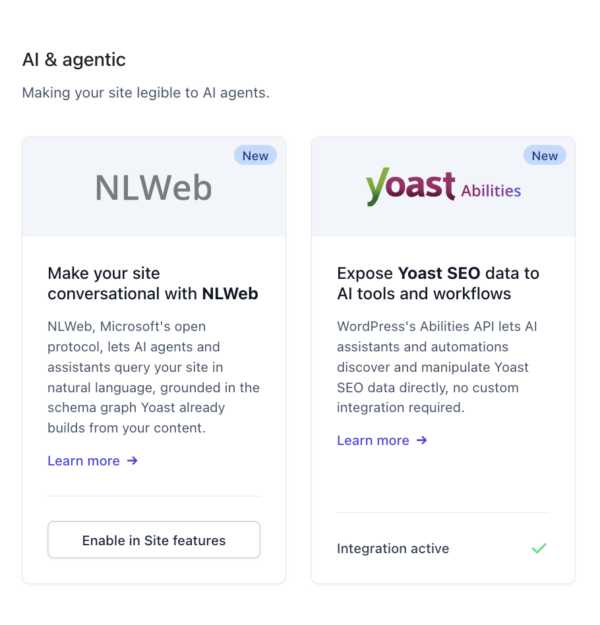
Users can verify the connection and explore the new integrations directly within their WordPress dashboard. Yoast has reorganized the "Integrations" page within the Yoast SEO settings. Instead of a single long list, integrations are now logically grouped by topic, making them easier to navigate. Users should look for the newly introduced "AI & agentic" group to manage their LLM connections and review the available abilities. Further assistance and setup instructions are available through Yoast’s dedicated help article on setting up Abilities.
Conclusion: A New Era for WordPress SEO
The latest release of Yoast SEO Abilities marks a significant milestone in the evolution of digital marketing. By empowering AI tools with direct read and write access to core technical SEO settings within WordPress, Yoast is ushering in an era of unprecedented automation and efficiency. This development not only promises to free up invaluable time for SEO professionals, allowing them to focus on strategic initiatives, but also sets a new standard for how AI can be seamlessly integrated into complex website management workflows. As the digital landscape continues to evolve, the synergy between powerful AI and robust SEO platforms like Yoast will undoubtedly pave the way for smarter, more agile, and more effective online strategies.

 Nana Muazin
 Asep Darmawan