

The term "target" is indeed a cornerstone of effective marketing strategy, representing the fundamental question of audience identification. Marketers employ various lenses to define this target, including behavioral, psychographic, demographic, and geographic segmentation. While these traditional approaches remain vital, a deeper understanding of generational nuances is increasingly critical for crafting resonant campaigns. This series delves into digital marketing strategies tailored to specific generations, beginning with Gen Z and now focusing on Millennials (born 1980-1994). The aim is to equip businesses with the insights needed to reach these distinct groups with the right message on the right platforms.
Having previously explored strategies for engaging Generation Z, this installment turns its attention to the Millennial generation, a demographic that has dominated recent discourse due to its burgeoning size and influence. Millennials have now surpassed Baby Boomers as the largest generational cohort, a demographic shift with significant implications for consumer markets and societal trends. They are often characterized by their digital fluency, a heightened awareness of health and wellness, and a legacy of student loan debt. However, such generalizations, while convenient, risk oversimplifying a complex and diverse population group. This article aims to move beyond superficial labels to provide a more nuanced understanding of the Millennial mindset, their consumption patterns, and the most effective ways for marketers to connect with them.
The Millennial Mindset: Digital Natives and Delayed Milestones
Millennials represent a unique cohort, having come of age during a period of unprecedented digital transformation. Unlike Gen Z, who were born into a world where the internet and social media were already established, Millennials witnessed the genesis and meteoric rise of these technologies. Their formative years coincided with the launch of platforms like Facebook, the widespread adoption of cell phones, and the ascent of tech giants such as Google, Amazon, and Apple. This direct immersion has cultivated a generation that is inherently tech-savvy and adept at navigating digital landscapes.
This digital fluency is underscored by educational attainment. Research indicates that Millennials possess higher levels of education compared to previous generations. However, this academic achievement is often juxtaposed with significant financial challenges. The escalating costs of higher education and the soaring price of housing have placed a considerable burden on many Millennials, leaving them with substantial student loan debt. Consequently, many are delaying traditional markers of adulthood, such as marriage, homeownership, and starting families, until later in life. This delay is not necessarily a sign of irresponsibility but rather a pragmatic response to economic realities.
Beyond these economic and technological factors, Millennials are often described as self-oriented, idealistic, and valuing individual freedom. This can translate into a strong emphasis on personal growth, well-being, and experiences over material possessions. Their health consciousness is evident in the growing popularity of plant-based diets, including vegetarianism, veganism, and pescetarianism, as well as the ubiquitous presence of trends like avocado toast. This preference for experiences and well-being over traditional material accumulation is a critical insight for marketers. A 2019 Pew Research Center study highlighted that Millennials’ young adulthood experiences differ from prior generations, often marked by greater educational attainment but also by financial strains that shape their life choices.
Millennial Consumption: Value, Quality, and Experiential Spending
Understanding Millennial consumption habits is crucial for developing effective marketing strategies. A comprehensive study by McKinsey & Company identified several distinct consumer behavior clusters within this generation. While the specific details of these clusters are not provided in the source material, the overarching trend points to a discerning consumer base. Notably, despite concerns about their financial futures, Millennials demonstrate a willingness to invest in premium or quality products. This preference stems from a desire for items that offer longevity and tangible benefits, particularly concerning their health and well-being. This suggests that while price may be a consideration, perceived value, durability, and positive health impacts can justify higher price points.
This inclination towards quality and experience-driven purchases aligns with their generational values. Rather than accumulating a large quantity of disposable goods, Millennials are more likely to seek out products and services that offer a unique experience, contribute to their personal growth, or align with their ethical or health-conscious values. This could manifest as a preference for artisanal products, sustainable brands, or travel and cultural experiences.
Marketing to Millennials: Platforms and Messaging
The question then becomes: how can businesses effectively reach and engage this influential demographic? The answer lies in a strategic combination of platform selection and tailored messaging.
Platforms to Reach Millennials
Identifying the right digital channels is paramount. While Gen Z dominates platforms like TikTok and Snapchat, Millennials maintain a strong presence on a wider array of social media networks. Data consistently shows that Millennials are active users of:
- Facebook: Despite the rise of newer platforms, Facebook remains a dominant social network for Millennials, often used for connecting with friends and family, sharing life updates, and participating in interest-based groups.
- Instagram: This visually driven platform is highly popular among Millennials, who use it for sharing personal experiences, following brands, and discovering new trends and products.
- YouTube: As a primary source for entertainment, education, and product reviews, YouTube is a crucial platform for reaching Millennials. They often use it for in-depth research before making purchasing decisions.
- LinkedIn: For professional networking and career development, LinkedIn is an essential platform for many Millennials.
- Twitter (X): While its user base may be more diverse, Twitter remains a platform where Millennials engage with news, current events, and brand conversations.
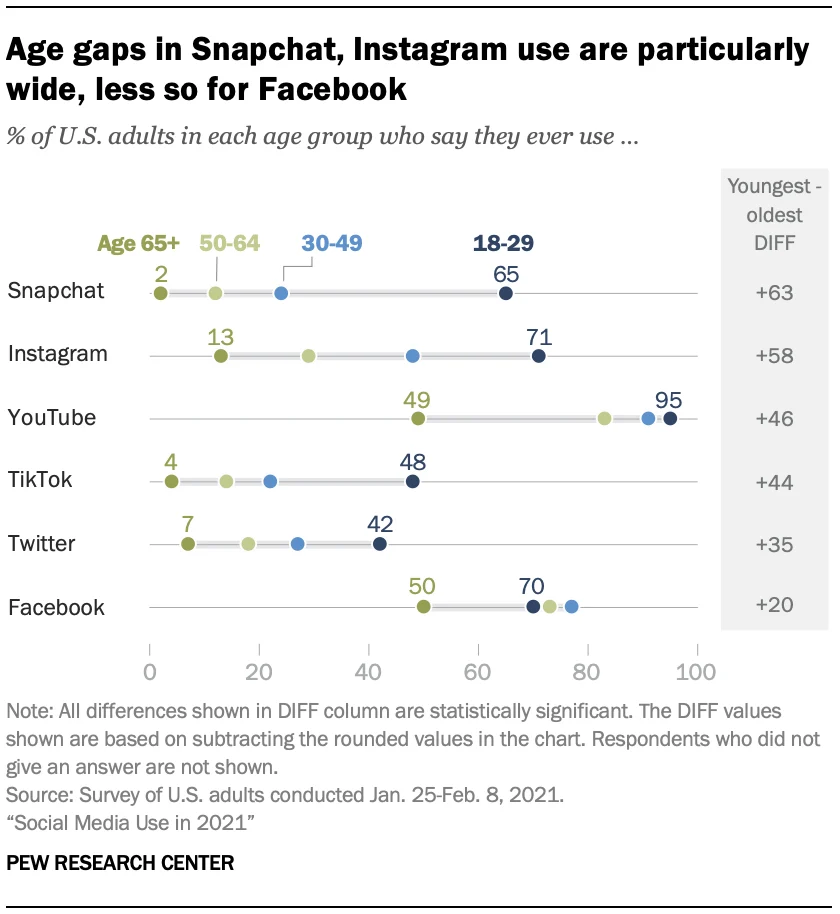
The provided image, illustrating age gaps across different social media platforms, visually reinforces this point. It typically depicts Millennials as having a significant presence on platforms like Facebook and Instagram, while also maintaining engagement on YouTube and potentially other established networks. Understanding these platform preferences allows marketers to allocate resources effectively and tailor content to the specific environment of each channel.
Messaging That Speaks to Millennials
Once the appropriate platforms are identified, the next critical step is crafting messaging that resonates with the Millennial mindset and values. This requires a move beyond generic advertising and towards authentic, value-driven communication. Key elements of effective messaging include:
- Authenticity and Transparency: Millennials are wary of overly polished or disingenuous marketing. They value brands that are transparent about their practices, values, and even their imperfections. Storytelling that highlights the brand’s purpose, mission, and origin can be highly effective.
- Value Proposition Beyond Price: As noted, Millennials are willing to invest in quality. Messaging should focus on the long-term benefits, durability, and positive impact of products or services, rather than solely on price promotions. Highlighting health benefits, sustainability, or unique experiential aspects can be compelling.
- Social Responsibility and Purpose: Many Millennials are driven by a desire to support brands that align with their social and environmental values. Communicating a brand’s commitment to ethical sourcing, sustainability, diversity, or community initiatives can foster strong brand loyalty.
- Personalization and Customization: While not explicitly detailed in the source, the trend towards personalized experiences is strong across demographics. Tailoring offers, content, and communications to individual preferences and past behaviors can significantly increase engagement.
- Focus on Experiences: Messaging that emphasizes the experiences a product or service enables, rather than just the product itself, is likely to resonate. This could involve showcasing how a brand facilitates travel, learning, connection, or personal well-being.
- Influencer Marketing (with caution): While influencer marketing can be effective, Millennials are increasingly discerning about the authenticity of endorsements. Collaborations with influencers who genuinely align with the brand’s values and have an engaged, trusting audience are more impactful.
It is crucial to acknowledge that "Millennial" is a broad categorization. Within this generation, there are diverse sub-segments, differing levels of income, and varied life experiences. Therefore, segmenting the Millennial audience further based on specific consumer clusters, as identified by research like McKinsey’s, is essential for hyper-targeted campaigns. For example, a Millennial focused on career advancement might respond differently to messaging than one prioritizing family life or personal health.
The overarching implication for marketers is the need for a strategic, data-driven approach that prioritizes authenticity, value, and a deep understanding of the Millennial lifecycle. As the Millennial generation continues to mature and their purchasing power grows, businesses that can effectively connect with their values and aspirations will undoubtedly gain a significant competitive advantage.
For businesses seeking to refine their digital marketing strategies and ensure they are effectively reaching and converting their Millennial audience, consulting with experienced marketing professionals can provide invaluable guidance. The dynamic nature of digital marketing necessitates continuous adaptation and a commitment to understanding the evolving preferences of each generation.









