The modern mobile application landscape is defined by a paradox of data: while developers and product managers have access to more metrics than ever before, the underlying reasons for user churn and friction often remain shrouded in mystery. For years, the industry has relied heavily on quantitative analytics—the numerical tracking of events, sessions, and conversions—to measure success. However, as the global mobile app market matures, a consensus is emerging among industry professionals that numbers alone are insufficient for long-term growth. To truly optimize the user experience, professionals are increasingly turning to qualitative analytics, a set of tools designed to reveal the human behavior behind the data points.
The Limitations of the Quantitative Approach
Quantitative analytics serves as the foundational "alarm system" for mobile applications. By tracking Key Performance Indicators (KPIs) such as Daily Active Users (DAU), retention rates, and funnel conversion percentages, teams can identify when something is wrong. For instance, if a retail app sees a 40% drop-off at the "Add to Cart" stage, quantitative data provides the specific location of the failure.
However, the limitation of this data is its inability to explain motivation or frustration. A quantitative report can show that a user exited the app on the checkout screen, but it cannot specify if they left because a button was unresponsive, a form field was confusing, or a technical glitch prevented the keyboard from appearing. According to industry research, nearly 25% of mobile apps are abandoned after only one use. When developers rely solely on numerical data, they are often forced to guess the solution to these abandonment issues, leading to expensive and time-consuming A/B testing cycles that may never address the root cause.
Defining Qualitative Analytics: A Dual-Pronged Approach
Qualitative analytics bridges the gap between "what" is happening and "why" it is happening. This methodology focuses on the visual and experiential aspects of the user journey, primarily through two core technologies: touch heatmaps and user session recordings.
Touch Heatmaps and the Science of Interaction
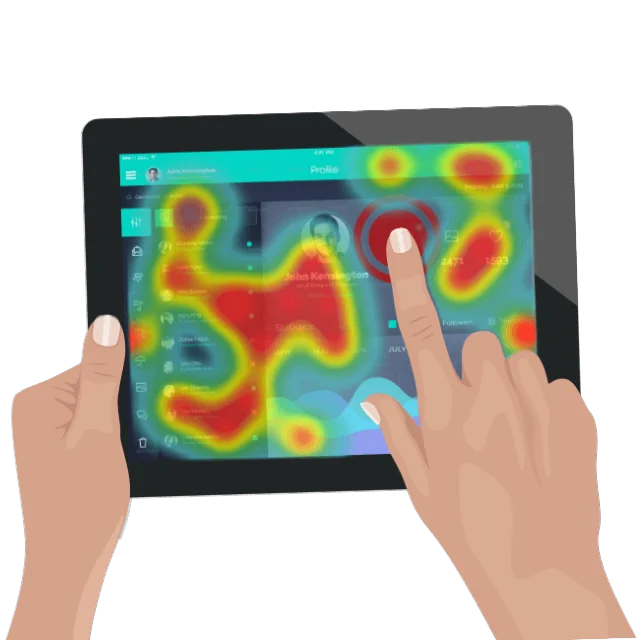
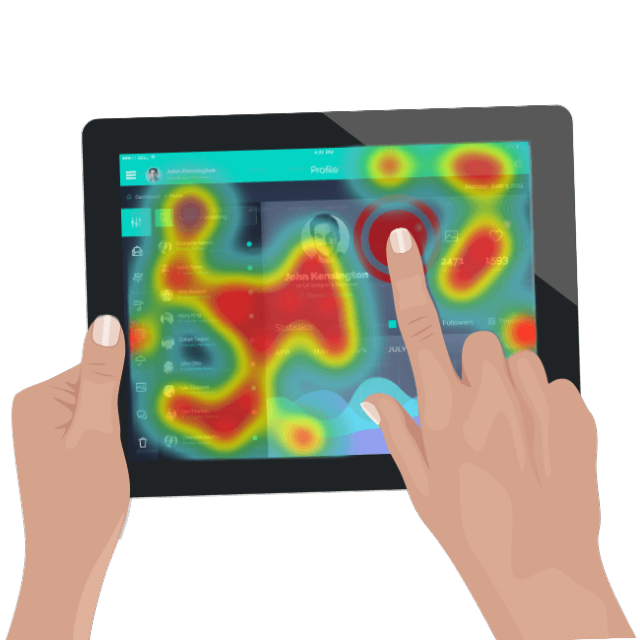
Touch heatmaps are visual representations of user interactions across an app’s interface. By aggregating every tap, double-tap, and swipe across thousands of sessions, these maps highlight which areas of a screen receive the most attention and which are ignored.
A critical component of heatmap analysis is the identification of "unresponsive gestures." These occur when a user taps an element—such as an image they expect to be a link or a button that fails to trigger an action—and receives no feedback from the app. From a journalistic and technical perspective, unresponsive gestures are the "silent killers" of user retention. They indicate a fundamental misalignment between the designer’s intent and the user’s intuition. High concentrations of unresponsive gestures typically signal either a UI design flaw or a functional bug that quantitative tools would likely miss.
User Session Recordings: The Unbiased Witness
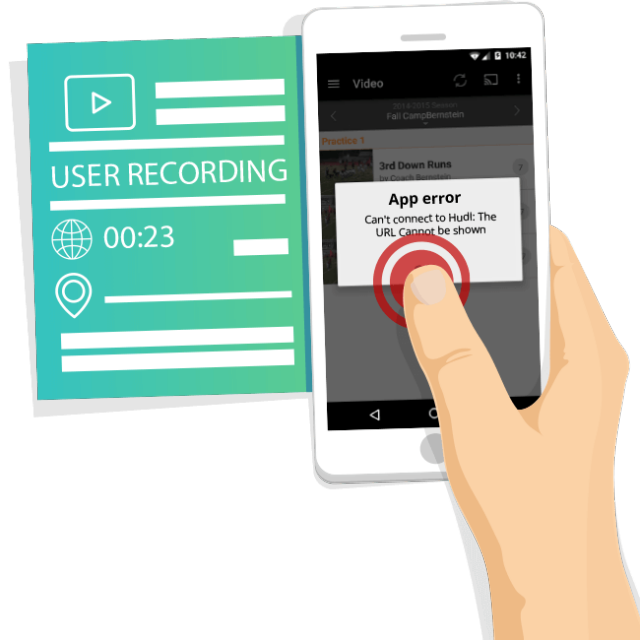
User session recordings provide a literal "over-the-shoulder" view of how individuals navigate an app. Unlike traditional focus groups, where users may change their behavior because they know they are being watched (the Hawthorne Effect), session recordings capture real-world usage in a natural environment.
These recordings allow product teams to witness the exact sequence of events leading up to a crash or a session abandonment. By filtering recordings by device type, operating system, or specific user actions, developers can pinpoint technical issues that occur only under specific conditions. For example, a session recording might reveal that on older versions of Android, a specific pop-up menu obscures the "Submit" button, making it impossible for a segment of the user base to complete a transaction.
A Chronology of the Analytics Evolution
The shift toward qualitative data represents the third major era in mobile app development.
- The Gold Rush Era (2008–2012): Focus was primarily on acquisition. Success was measured by total downloads. Analytics were rudimentary, often borrowed from web-based models.
- The Engagement Era (2013–2018): As the market became saturated, the focus shifted to retention and monetization. Quantitative tools like Flurry, Mixpanel, and Google Analytics for Firebase became industry standards, focusing on "event-based" tracking.
- The Experience Era (2019–Present): With the rise of "Super Apps" and intense competition, user experience (UX) became the primary differentiator. Qualitative tools like Appsee (now part of ServiceNow), LogRocket, and FullStory emerged to provide the deep behavioral insights necessary to survive in a crowded marketplace.
Data-Fueled Optimization: The Synergy of Both Worlds
The most effective mobile app workflows do not replace quantitative data with qualitative data; instead, they create a symbiotic relationship between the two. This "Data-Fueled Optimization" workflow typically follows a three-step cycle: Alert, Investigate, and Resolve.
Consider the example of a subscription-based news app. The quantitative dashboard alerts the team to a sudden 15% decrease in successful sign-ups following a recent update. In a traditional workflow, the team might speculate that the price is too high or the "Subscribe" button is the wrong color.
In a qualitative-enriched workflow, the team investigates by watching session recordings of users who dropped off at the sign-up page. They might discover that the new "Auto-fill" feature for credit card information is actually covering the "Terms and Conditions" checkbox, which must be ticked to proceed. Because the user cannot see the checkbox, they assume the app is broken and leave. By identifying this specific UI friction, the team can resolve the issue with a simple layout adjustment rather than an unnecessary price drop or a total redesign.
Proactive Troubleshooting and Technical Integrity
Beyond optimization, qualitative analytics enables a shift from reactive to proactive troubleshooting. Quantitative analytics are inherently retrospective; you need a significant sample size of failures before a trend becomes visible in the numbers.
Qualitative tools allow QA teams to spot "micro-frictions" before they escalate into macro-trends. By reviewing a handful of session recordings daily, a developer might notice a slight lag in a transition animation or a confusing navigation path that hasn’t yet resulted in a mass exodus but is clearly degrading the experience.
Furthermore, qualitative data is invaluable for resolving "non-reproducible" bugs. Developers often struggle to fix crashes that they cannot replicate in a testing environment. A session recording provides the exact "state" of the app—the specific sequence of taps, the network conditions, and the device orientation—at the moment of the crash, providing a roadmap for the fix.
Broader Impact and Industry Implications
The adoption of qualitative analytics has profound implications for the ROI of mobile development. A study by Forrester Research suggests that every dollar invested in UX brings a return of up to $100. By reducing the guesswork involved in app updates, companies can significantly lower their development costs and shorten their time-to-market.
Moreover, there is a growing emphasis on privacy in the qualitative space. Modern tools are designed to be "privacy-first," automatically masking sensitive user information such as passwords and credit card numbers within session recordings. This ensures that while companies gain behavioral insights, they remain compliant with global regulations such as GDPR and CCPA.
From a market perspective, the integration of qualitative insights is becoming a standard requirement for venture capital investment. Investors are no longer just looking at "vanity metrics" like total downloads; they are scrutinizing "stickiness" and user sentiment. Qualitative analytics provides the evidence that a product team deeply understands its users and is capable of iterative, data-driven improvement.
The Future of Behavioral Analysis
As artificial intelligence (AI) and machine learning (ML) continue to evolve, the next frontier for qualitative analytics is automated insight generation. Future platforms will likely use AI to watch thousands of session recordings and automatically flag "points of frustration" or "anomalous behavior" without requiring a human to manually review the footage. This will allow even small development teams to compete with tech giants by maintaining a high standard of UX.
In conclusion, the reliance on quantitative analytics alone is a legacy approach that no longer meets the demands of the modern mobile user. By enriching workflows with touch heatmaps and session recordings, app professionals can move beyond the "what" and master the "why." This transition from guessing to knowing is what transforms a standard mobile application into a high-performing digital powerhouse. The ability to see the app through the eyes of the user is no longer a luxury—it is a strategic necessity in the digital-first economy.