Digital marketing strategies are undergoing a fundamental shift as organizations move away from traditional, one-off A/B testing in favor of a continuous, evidence-based model known as iterative testing. This transition, prompted by increasingly volatile consumer behavior and a demand for higher capital efficiency, represents a departure from the "home run" mentality that has dominated the industry for over a decade. Rather than seeking a single, transformative change, marketing teams are now prioritizing a cycle of small, data-driven refinements that compound over time to drive significant growth.
The rise of iterative testing marks a convergence between software development methodologies and performance marketing. For decades, product teams have utilized agile frameworks to build and refine software; today, those same principles are being applied to landing pages, ad copy, and user interfaces. This shift is driven by the realization that most marketing failures are not spectacular collapses, but rather "slow leaks"—incremental budget drains caused by stagnant creative and unoptimized user journeys.
The Mechanics of the Iterative Testing Framework
The iterative testing process is defined by its repetitive nature. Unlike traditional testing, which often concludes once a winner is declared between two variables, iterative testing uses the results of one experiment as the foundation for the next. This creates a perpetual feedback loop that allows brands to adapt to market changes in real-time.
Industry experts outline a six-step protocol for implementing this model effectively. The process begins with the formulation of a focused hypothesis. Rather than attempting to overhaul an entire webpage, practitioners identify a single, high-leverage element—such as a headline, a call-to-action (CTA) button, or a form field—and predict how a specific change will influence user behavior. This granular approach ensures that the resulting data is clear and actionable.
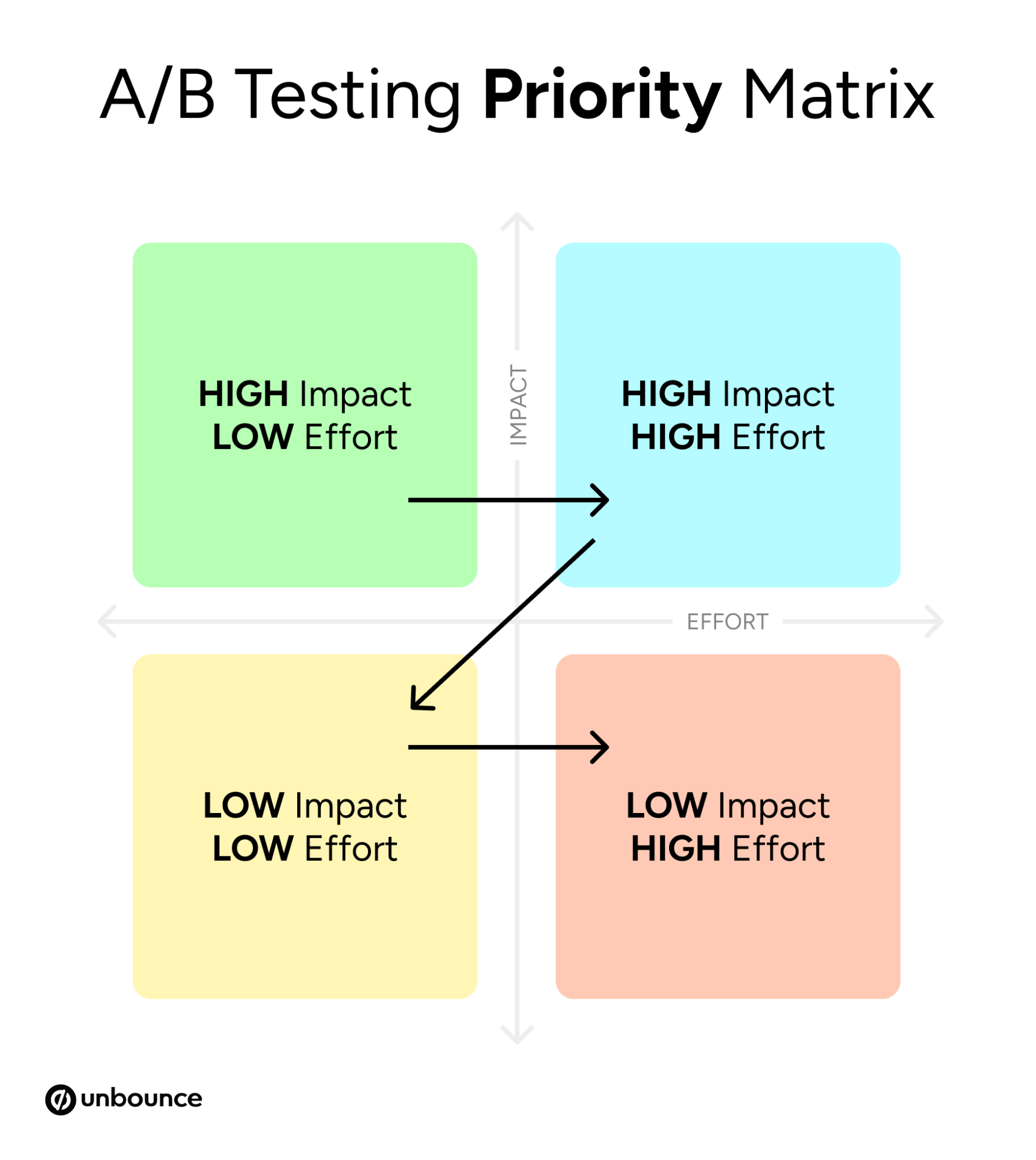
Following hypothesis generation, teams must prioritize their experiments based on a matrix of impact versus effort. High-impact, low-effort changes—often referred to as "quick wins"—are prioritized to build momentum and secure early ROI. Once a test is launched, the focus shifts to data collection and statistical significance. Modern optimization tools have lowered the barrier to entry for this stage; for instance, specialized algorithms can now begin optimizing traffic distribution after as few as 50 visits, a significant decrease from the thousands of interactions previously required for valid results.

Supporting Data: The 2024 Conversion Benchmarks
Recent data from the 2024 Conversion Benchmark Report highlights the necessity of this approach. The report found a stark correlation between simplicity and performance. Specifically, landing pages written at a 5th-to-7th-grade reading level convert at an average rate of 11.1%, which is more than double the conversion rate of pages utilizing professional or academic-level writing.
Furthermore, the data indicates a -24.3% negative correlation between word complexity and conversion rates. This suggests that as technical jargon and sentence length increase, user engagement precipitously drops. For marketing teams, these findings serve as a prime candidate for iterative testing. A team might start by simplifying a headline, measuring the lift, and then proceeding to simplify the body copy and form labels in subsequent rounds.
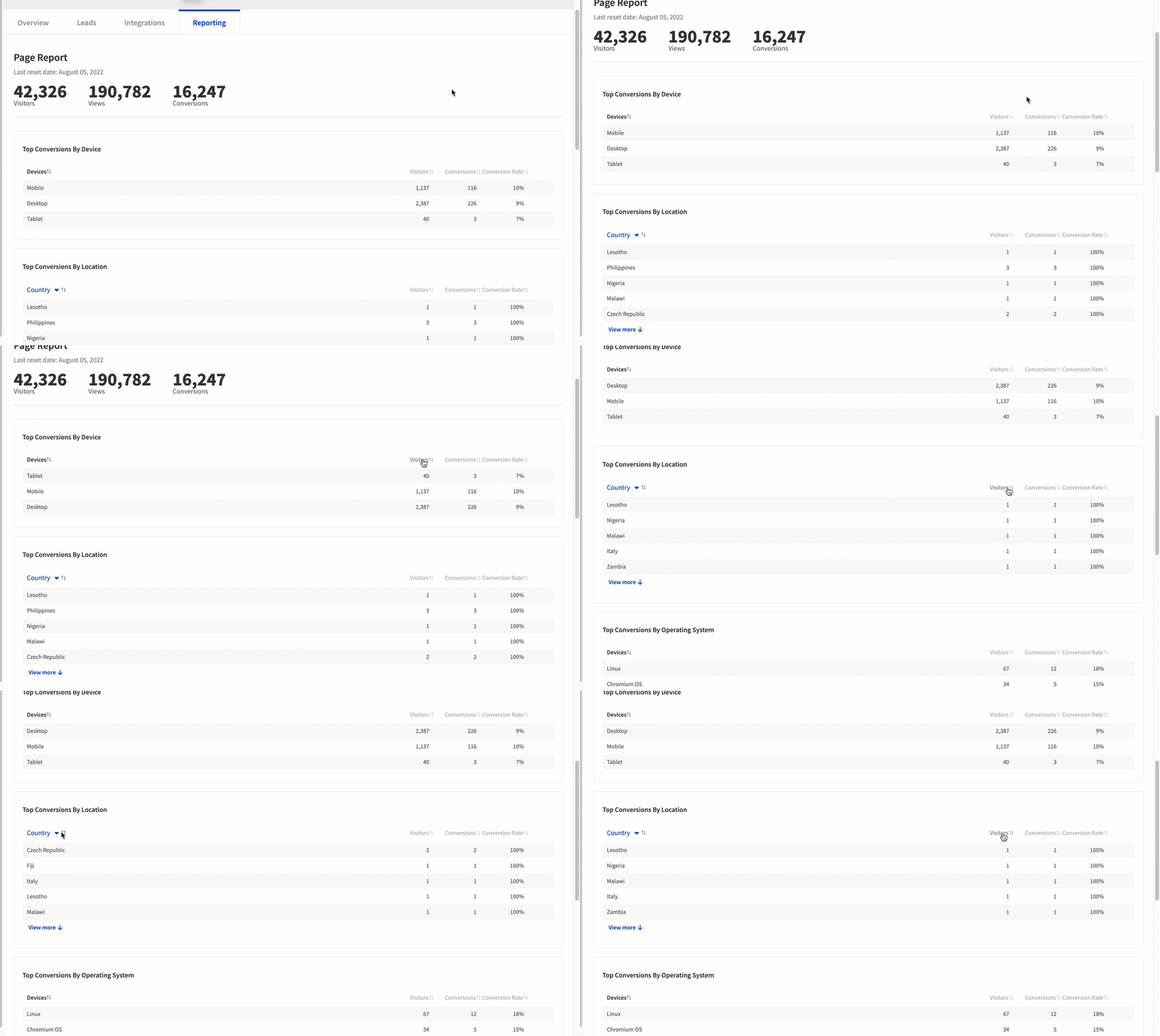
The report also shed light on the growing "device gap." While 83% of all landing page visits now occur on mobile devices, desktop sessions still convert at an average rate 8% higher than their mobile counterparts. This disparity underscores the importance of device-specific iterative testing. Instead of applying a universal design, organizations are increasingly using iterative cycles to develop distinct mobile and desktop experiences that cater to the unique constraints and behaviors of each platform.
A Chronology of Experimentation in Digital Marketing
To understand the current move toward iteration, one must look at the timeline of digital marketing evolution.
In the early 2000s, "Static Optimization" was the norm. Marketers would build a page, leave it for months or years, and only make changes when a complete rebrand was required. The introduction of accessible A/B testing tools in the early 2010s ushered in the era of "Single-Variable Testing." While an improvement, this era was often characterized by "one-and-done" tests that lacked a cohesive long-term strategy.
By 2018, the rise of machine learning began to influence the field, leading to the "Automated Optimization" phase. This allowed for more complex multivariate testing, but often left marketers in the dark regarding why certain variations worked. The current era, which began to take shape around 2022, is the "Agile Iterative Phase." This combines the speed of automated tools with a human-centric strategic framework, ensuring that every test contributes to a broader understanding of the target audience.

Internal Stakeholder Reactions and Organizational Shifts
The adoption of iterative testing is also changing the internal dynamics of marketing departments. Josh Gallant, founder of Backstage SEO and a prominent voice in the SaaS growth space, emphasizes that the methodology requires a culture of experimentation rather than a culture of "expert opinion."
"Most marketers run A/B tests once, celebrate or mourn the results, and move on," Gallant noted in a recent analysis of the trend. He argues that the true value lies in the "consistent base hits" that add up over time. This sentiment is echoed by Chief Marketing Officers (CMOs) who are under pressure to justify every dollar of spend. By moving to an iterative model, marketing leaders can demonstrate a constant upward trajectory in performance, making budget approvals more predictable.
Furthermore, the process is fostering greater collaboration across silos. Customer support teams are being tapped for insights into user pain points, which are then turned into testing hypotheses. Sales departments provide feedback on lead quality, which helps marketing refine the "messaging-to-conversion" funnel. This cross-functional approach ensures that the testing program is solving real-world business problems rather than just chasing clicks.
Economic Implications and Risk Mitigation
From a financial perspective, iterative testing serves as a robust risk-mitigation tool. Traditional marketing "launches" involve significant upfront investment with no guarantee of success. If a massive campaign fails, the loss is total. In contrast, iterative testing allows for the "de-risking" of ideas on a small scale.
By testing a new value proposition on a small segment of traffic before rolling it out across all channels, companies can avoid costly missteps. This "evidence-based change" model is particularly critical in a high-interest-rate environment where the cost of capital is high and marketing budgets are under scrutiny. The ability to pivot quickly—shrinking feedback loops from fiscal quarters to mere days—provides a competitive advantage that is difficult for slower, more traditional organizations to overcome.
The Role of Artificial Intelligence and Future Outlook
The future of iterative testing is inextricably linked to advancements in artificial intelligence and predictive analytics. Emerging tools are now capable of "Smart Traffic" routing, where AI identifies which variation of a page is most likely to convert a specific user based on their historical behavior and demographic profile.
This does not replace the need for human-led iterative testing; rather, it augments it. While the AI handles the real-time distribution, the marketing team remains responsible for the "creative iterations"—the development of new hypotheses and the interpretation of the "why" behind the data.
As we look toward the latter half of the decade, the distinction between "marketing" and "optimization" will likely disappear. In a digital-first economy, the campaign is never truly "finished." It is a living entity that must be nurtured through constant, incremental improvement. The organizations that thrive will be those that view every user interaction as a data point and every test result as a stepping stone to the next insight.
The shift to iterative testing is more than a change in tactics; it is a change in philosophy. It acknowledges that the market is too complex and user behavior too fluid for any single "perfect" solution to exist. Instead, success is found in the pursuit of progress—one small, data-backed iteration at a time.