The landscape of digital marketing and conversion rate optimization (CRO) is currently grappling with a fundamental paradox: while A/B testing is theoretically rooted in the same rigorous scientific principles as physics and medicine, the practical application of these methods in the corporate world often lags decades behind modern statistical standards. As organizations increasingly rely on data-driven decision-making to drive revenue, the reliance on outdated "fixed-horizon" testing models has led to a proliferation of illusory results, false positives, and wasted resources. Industry experts now warn that common statistical approaches used in A/B testing literature are nearly half a century behind the methodologies utilized in clinical trials and biostatistics.
At its core, an A/B experiment is a randomized controlled trial (RCT). By randomly assigning users to different variants, practitioners can eliminate confounding variables and establish a direct causal link between a specific change—such as a headline adjustment or a checkout flow modification—and a change in user behavior. However, the integrity of this causal link depends entirely on the statistical framework governing the experiment. The current crisis in the field stems from three primary issues: the misuse of statistical significance, a systemic lack of consideration for statistical power, and the inherent inefficiency of classical tests when applied to the fast-paced digital environment.
The Evolution of Experimental Design: From Agriculture to Algorithms
The history of statistical experimentation dates back to the early 20th century, pioneered by figures like Ronald A. Fisher, who developed the foundations of experimental design for agricultural research. In those settings, experiments were naturally constrained by growing seasons; data was collected at the end of a harvest, leading to the "fixed-sample" approach where results are analyzed only once at a predetermined point in time.
As experimentation migrated into the digital realm in the late 1990s and early 2000s, this fixed-sample model was adopted as the industry standard. However, the digital environment differs fundamentally from a wheat field. Data in A/B testing accrues in real-time, and stakeholders often monitor results daily. This accessibility has birthed the "peeking" phenomenon—a practice that invalidates the very statistical tests most marketers rely upon. The transition toward more sophisticated methods, such as the AGILE approach, represents a necessary shift to align digital marketing with the "sequential analysis" techniques developed for medical research in the 1960s and 70s.
The Significance Trap and the Peeking Problem
The most prevalent issue in modern A/B testing is the fundamental misunderstanding of statistical significance. In a standard Student’s T-test or Bernoulli distribution model, a primary assumption is that the experimenter will fix the sample size in advance and conduct only one evaluation. When practitioners monitor a test as it runs and decide to stop early because the results look "significant," they are engaging in data-driven optional stopping, or "peeking."
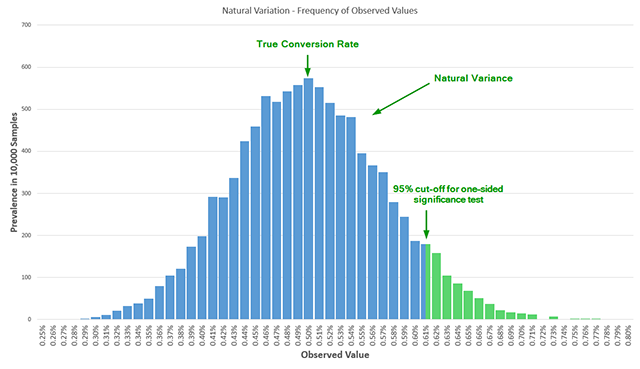
Peeking introduces an additional dimension into the test sample space. Instead of calculating the probability of a false positive at a single point in time, the test must account for the cumulative probability of a false detection across multiple checks. Statistical data indicates that without adjustments, the reported error rate is drastically lower than the actual error rate. For instance, peeking at the data just twice more than doubled the actual error versus the reported nominal error. If a practitioner peeks five times, the actual error probability is 3.2 times higher than reported; ten peeks result in a five-fold increase in false positives.
This leads to a "Garbage In, Garbage Out" (GIGO) scenario. Many "winning" tests identified through peeking are actually the result of natural variance—temporary fluctuations in data that would eventually regress to the mean if the test were allowed to reach its proper conclusion. For a business, this means implementing changes that do not actually improve conversion rates, potentially leading to long-term revenue stagnation despite a library of "successful" experiments.
The Hidden Cost of Low Statistical Power
While significance (Alpha) focuses on avoiding false positives, statistical power (1-Beta) focuses on avoiding false negatives. Power is the probability that a test will detect a true effect of a certain size if it exists. Despite its importance, a review of influential A/B testing literature published between 2008 and 2014 revealed that only one out of seven major books discussed power in a proper context, with the others ignoring the concept entirely.
Running an under-powered test is akin to using a low-resolution microscope to look for a small organism; you may conclude the organism isn’t there simply because your tool wasn’t sensitive enough to see it. In the corporate world, this results in the abandonment of potentially lucrative ideas. If a test is designed with only 50% power—which is the silent default in many free online calculators—the experiment is essentially a coin toss.
Statistical power is inextricably linked to sample size. To achieve high power (typically 80% to 90%), organizations often find they need much larger sample sizes than they initially anticipated. This creates a strategic dilemma: should a company run a long, high-power test to ensure they don’t miss a 2% lift, or run a short test that can only detect a 10% lift? The inability to answer this question efficiently often leads to "zombie tests" that run for months without providing actionable insights.
The AGILE Statistical Method: A Clinical Solution
To address these systemic failures, the AGILE statistical method has been proposed as a bridge between the rigid requirements of classical statistics and the fluid needs of digital business. Inspired by the Group Sequential Trials used in medical research, AGILE allows for interim analyses while maintaining strict control over error rates.
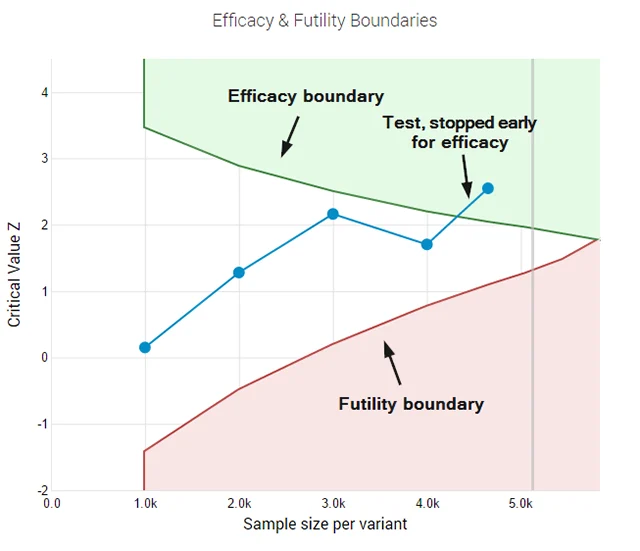
The AGILE method utilizes "error-spending functions." This mathematical framework "spends" a portion of the allowed false positive budget at each interim check. If a result is so extreme that it crosses a predefined boundary early on, the test can be stopped with statistical confidence. If not, the test continues. This provides the flexibility that practitioners demand without sacrificing the integrity of the data.
Comparative Efficiency and Economic Impact
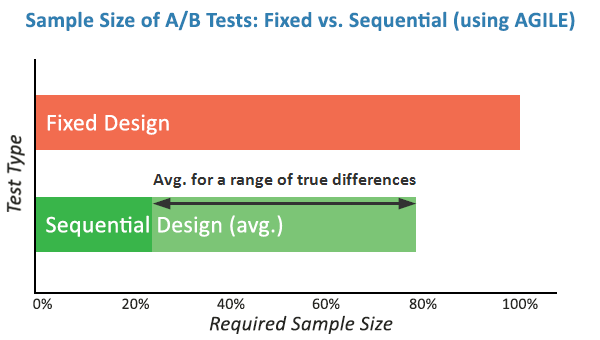
Data simulations comparing the AGILE method to classical fixed-sample testing show significant efficiency gains. Depending on the actual magnitude of the lift being tested, AGILE can reduce the required sample size by 20% to 80%.
- Efficacy Stopping: If a new variant is performing exceptionally well (e.g., a 15% lift when only a 10% lift was expected), AGILE allows the test to stop early for efficacy. This enables the business to implement the winning change sooner, accelerating the "time to revenue."
- Futility Stopping: Perhaps the most valuable feature for resource-constrained teams is the futility rule. If a variant is performing poorly or showing no movement, AGILE provides a statistical guarantee for stopping the test early because it has little to no chance of becoming a winner. This allows teams to "fail fast" and redirect resources to more promising hypotheses.
Industry Implications and the Path Forward
The shift toward AGILE and sequential testing methodologies marks a maturation of the CRO industry. As digital markets become more saturated and the cost of customer acquisition rises, the margin for error in experimentation shrinks. Organizations that continue to rely on flawed "peeking" methods risk making strategic decisions based on statistical noise.
Reactions from the data science community suggest that while the math behind AGILE is more complex, the operational benefits are undeniable. Major A/B testing platforms have begun to integrate similar sequential testing models into their backend engines, acknowledging that the "fixed-horizon" model is no longer compatible with modern business velocity.
Furthermore, the adoption of these methods has broader implications for corporate culture. It shifts the focus from "finding a winner at any cost" to "accurate measurement of impact." By accounting for both power and significance, and by allowing for interim analysis, the AGILE method provides a realistic framework for experimentation that respects both the laws of mathematics and the realities of the balance sheet.
In conclusion, the transition to the AGILE statistical approach is not merely a technical upgrade; it is a necessary evolution for any organization that claims to be data-driven. By moving away from 19th-century agricultural models and embracing the sophisticated frameworks of modern clinical science, the digital marketing industry can finally fulfill the promise of A/B testing as a truly scientific discipline. The result will be fewer illusory findings, more efficient use of traffic, and a more accurate understanding of what truly drives user behavior in an increasingly complex digital world.