rifanmuazin
The promise of marketing automation and, more recently, artificial intelligence, has consistently been presented as a panacea for B2B marketing challenges. Yet, a persistent pattern emerges: organizations invest heavily in these sophisticated platforms, anticipate transformative results, and then find themselves facing plateaued engagement, diminished lead quality, and opaque reporting. This leads to the familiar, yet often misguided, question: "Do we need a different tool?" The answer, according to experts in the field, is rarely about the technology itself. Instead, the failure lies in the organization’s inability to fully leverage these powerful tools, a gap primarily attributed to a lack of what is termed "marketing orchestration."
Lisa Heay, Vice President of Business Operations at Heinz Marketing, articulates this critical distinction: "Marketing automation platforms don’t fail on their own—organizations fail to fully leverage them." This sentiment rings true as teams often rush to implement new technologies, expecting them to inherently drive success. However, without a robust underlying framework, even the most advanced tools, including AI-powered solutions, can merely accelerate existing inefficiencies or amplify existing problems. The core issue is not a deficiency in the technology but an absence of a cohesive strategy that integrates people, processes, data, and technology.
The Core Problem: The Absence of Marketing Orchestration
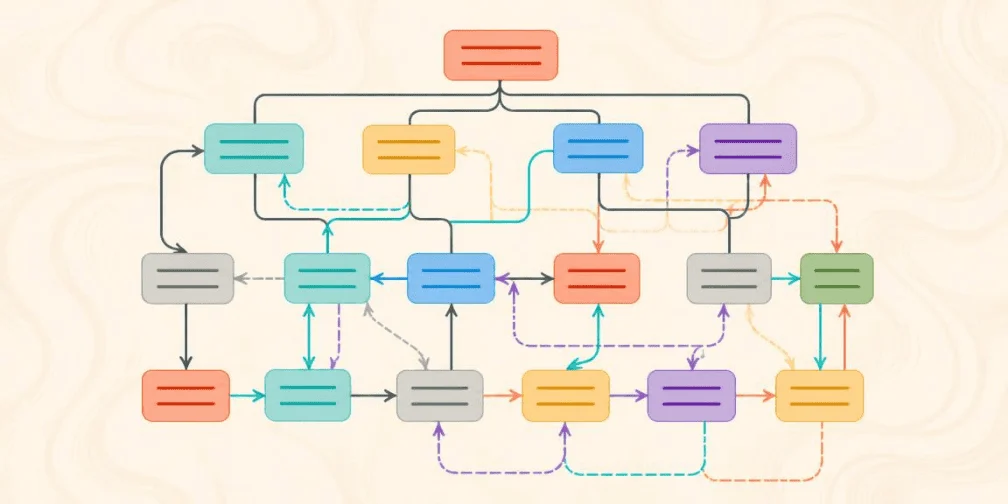
At its heart, marketing orchestration is the systematic alignment of the essential components that drive consistent, impactful marketing outcomes. When marketing automation initiatives falter, the root cause is seldom a missing feature or an incorrect vendor selection. Instead, it stems from a lack of a unified system capable of connecting disparate elements and ensuring they work in concert. This system, marketing orchestration, hinges on the cohesive integration of four critical pillars:
- People: Ensuring teams are aligned in their understanding of goals, processes, and responsibilities.
- Process: Establishing clear, repeatable workflows for campaign execution, lead management, and data handling.
- Data: Maintaining high-quality, unified, and accessible data that fuels informed decision-making across departments.
- Technology: Strategically deploying and integrating marketing automation and AI tools to support, not dictate, the overall strategy.
Many organizations possess fragments of these elements, but rarely do they achieve a state where these components function as a unified, synergistic whole. The result is often a fragmented approach, characterized by disconnected campaigns, misaligned departmental efforts, siloed data repositories, and an overreliance on technology to bridge these fundamental gaps. The advent of AI has only amplified this dynamic, accelerating output without necessarily improving outcomes, thus magnifying existing inconsistencies and noise. Orchestration, therefore, is the crucial bridge that transforms mere activity into tangible, measurable results.
Unpacking the Common Pitfalls Hindering Marketing Automation Success
The persistent underperformance of marketing automation initiatives can be traced to several recurring organizational shortcomings:
1. The Void of Clear Campaign Strategy
A significant number of marketing teams operate under the misconception that the platform itself will generate strategic direction. This leads to a focus on activity rather than strategic intent. Key indicators of this deficiency include:
- Campaigns lacking clear objectives: Initiatives are launched without well-defined goals, making it impossible to measure success.
- Uncoordinated channel activation: Different marketing channels operate in isolation, failing to create a cohesive customer journey.
- Audience segmentation based on broad demographics: Targeting lacks the nuance required for effective personalization, leading to generic messaging.
- Absence of a defined customer journey: The path a prospect takes from awareness to conversion is not mapped or understood, leading to disjointed touchpoints.
The orchestration gap here is profound: campaigns are not integrated into a broader go-to-market strategy, and there is a failure to coordinate channels, audiences, and timing. The AI reality is that while AI can rapidly generate content such as emails, advertisements, and landing pages, it cannot intrinsically define the strategic imperative for a campaign, identify the target audience, or articulate the overarching purpose.
2. The Pernicious Impact of Poor Data Quality and Structure
Data is the lifeblood of effective marketing. When data quality is compromised or its structure is inadequate, the entire marketing ecosystem suffers. Symptoms of this malady are evident in:
- Inaccurate segmentation: Poor data leads to misdirected campaigns, reaching the wrong audiences with irrelevant messaging.
- Low lead quality: Inconsistent or incomplete data results in leads that do not meet the criteria for sales engagement.
- Lack of sales trust in marketing data: When sales teams perceive marketing data as unreliable, collaboration breaks down, and handoffs become contentious.
- Duplicated or incomplete contact records: This inefficiency hinders personalization efforts and creates a confusing customer experience.
- Inconsistent data fields across systems: Different versions of truth emerge, leading to confusion and misinterpretation.
The orchestration gap in this scenario is the failure to unify, govern, and share data across teams. Marketing, sales, and operations often find themselves working with disparate datasets, undermining collaborative efforts. The AI reality is that artificial intelligence is fundamentally dependent on structured and reliable data. Without it, AI does not provide enhanced insights; rather, it accelerates the generation of less accurate or even misleading conclusions, amplifying the consequences of poor data.
3. Underdeveloped Lead Management Processes
The journey of a lead, from initial generation to becoming a qualified prospect, is often fraught with breakdowns in process and communication. The perennial question, "Leads are generated… and then what?" highlights a critical deficiency. Common issues include:
- Unclear lead qualification criteria: Marketing and sales departments often have differing definitions of what constitutes a qualified lead.
- Delayed lead follow-up: The speed at which leads are nurtured and passed to sales is often too slow to capitalize on prospect interest.
- Lack of lead nurturing pathways: Prospects who are not immediately sales-ready are not effectively engaged with relevant content.
- Poorly defined lead handoff protocols: The transition of leads from marketing to sales is often unclear, leading to lost opportunities.
- Absence of accountability for lead follow-up: Without clear ownership, leads can languish without proper attention.
This represents a significant orchestration gap between people and process. Marketing and sales teams are not aligned on lead definitions or subsequent actions. The AI reality is that while AI-powered predictive scoring and intent signals can offer powerful insights, their effectiveness is severely diminished without clearly defined next steps and established accountability. Without these foundational elements, AI can inadvertently contribute to increased confusion rather than driving action.

4. The Absence of Dedicated Operational Ownership
In many organizations, marketing automation tools are treated as a shared responsibility, which paradoxically leads to a lack of clear ownership. While multiple individuals may have access and utilize various functionalities, the absence of governed processes, standardized naming conventions, and a structured approach can result in a chaotic and inefficient environment. The consequences of this diffuse ownership include:
- Disorganized campaign assets: Naming conventions are inconsistent, making it difficult to locate and manage campaign materials.
- Lack of standardized processes: Workflows are ad-hoc and vary depending on the individual executing them.
- Inconsistent reporting metrics: Different individuals may track and report on different key performance indicators, hindering consolidated analysis.
- Underutilization of platform features: Advanced functionalities remain unexplored or unused due to a lack of expertise or clear direction.
- Security and compliance risks: Without oversight, sensitive data may be handled improperly.
The orchestration gap is starkly evident here: there is no singular entity responsible for connecting the dots across campaigns, data, and teams. Strong leadership from marketing operations or revenue operations is paramount to bridge this gap. The AI reality is that AI tools necessitate ongoing setup, diligent oversight, continuous tuning, and robust governance. Without dedicated ownership, these tools can quickly become underutilized, misused, or poorly managed, failing to deliver on their potential.
5. The Fallacy of Technology as a Sole Driver of Results
A prevalent misconception is that the acquisition of the "right" marketing automation platform will automatically translate into improved results. This belief overlooks the fundamental truth that technology is a tool, not a strategy in itself. Platforms do not inherently align teams or rectify flawed processes.
The orchestration gap stems from a fundamental misunderstanding of technology’s role within a broader operational system. It is viewed as a standalone solution rather than an integrated component. The AI reality mirrors this same flawed perspective: there is an expectation that AI will drive outcomes without first addressing the foundational weaknesses within the existing marketing infrastructure. This leads to the premature adoption of advanced AI capabilities, which can exacerbate existing problems due to a lack of underlying strategic alignment and process maturity.
The Evolutionary Path: From Automation to Orchestration Maturity
To truly harness the power of marketing automation and AI, organizations must evolve their thinking from simple tool adoption to a more mature approach centered on orchestration. This progression can be viewed across several levels of maturity:
- Level 1: Tool-Centric Execution: This foundational stage involves basic campaign execution with limited coordination and a heavy reliance on the capabilities of the platform itself.
- Level 2: Campaign-Centric Marketing: A degree of structure is introduced, but campaigns may still operate in silos, leading to inconsistencies in execution and customer experience.
- Level 3: Orchestrated Revenue Engine: This represents a significant leap forward, characterized by aligned teams, clearly defined processes, shared and unified data, and coordinated execution across all marketing and sales efforts.
- Level 4: Intelligent Orchestration (AI-Enabled): At this advanced stage, AI capabilities are seamlessly integrated to enhance personalization, optimize timing, and provide deeper insights. This level of sophistication is only achievable because a strong, orchestrated foundation is already in place.
It is crucial to understand that attempting to leap directly to AI-powered marketing without first establishing a well-orchestrated marketing organization with a robust operational foundation is a recipe for disappointment. AI’s true potential is unlocked when it builds upon a system that is already efficient, aligned, and data-driven.
When Platform Evolution Becomes Necessary
While the emphasis is on internal processes, there are indeed instances where a platform change is warranted. Organizations may have outgrown their current system if:
- The platform’s capabilities are demonstrably limiting growth: The existing technology cannot support the scale or complexity of current marketing initiatives.
- Integration challenges persist with critical business systems: The platform fails to seamlessly connect with essential CRM, ERP, or other vital software.
- The user experience is consistently poor, leading to low adoption and efficiency: The platform is cumbersome and difficult for users to navigate, hindering productivity.
- Vendor support is inadequate, hindering problem resolution and platform optimization: The provider fails to offer sufficient assistance, leading to ongoing issues.
- The cost of maintaining and updating the legacy system outweighs the benefits: Ongoing expenses are disproportionately high compared to the value derived.
However, before embarking on the disruptive and often costly process of switching platforms, a thorough self-assessment of the existing operational foundation is imperative. This assessment should include:
- Evaluating the clarity of campaign strategy and objectives.
- Auditing the quality, structure, and accessibility of data.
- Reviewing the effectiveness and alignment of lead management processes.
- Determining clear ownership and accountability for marketing operations.
- Assessing the realistic expectations placed upon technology solutions.
Focusing on high-impact improvements first is a more pragmatic approach. These can include:
- Establishing clear, measurable campaign objectives.
- Implementing a consistent lead scoring and qualification framework.
- Defining and documenting essential marketing and sales processes.
- Ensuring a single source of truth for customer data.
As AI capabilities are integrated, the focus should shift to:
- Leveraging AI for enhanced personalization at scale.
- Utilizing AI to optimize campaign timing and channel selection.
- Employing AI for predictive analytics and actionable insights.
- Ensuring AI tools are governed and overseen by human expertise.
Conclusion: Building a System, Not Just Acquiring a Tool
Ultimately, marketing automation platforms and the emerging wave of AI tools do not inherently fail. Instead, they serve as powerful magnifying glasses, exposing existing gaps in strategy, process, and organizational alignment. They amplify whatever foundation has been laid, whether it is strong and cohesive or fragmented and inefficient. The true opportunity for B2B marketers lies not in the perpetual search for a superior tool, but in the deliberate and strategic effort to build a superior system. When marketing orchestration is achieved, the platform transcends its role as a mere campaign execution engine and becomes a true driver of measurable business results.
For organizations seeking to navigate this complex landscape and unlock the full potential of their marketing technology investments, a strategic partnership can be invaluable. Engaging with experts for a collaborative brainstorm session can illuminate critical areas for improvement and chart a path toward a more orchestrated and effective marketing operation.