In an increasingly digitized world, the ability for businesses and individuals to be discovered online is paramount. For anyone operating a website or contemplating its creation with the ambition to attract a wider audience, Search Engine Optimization (SEO) is not merely an option but a foundational component of any effective marketing strategy. It serves as a critical pathway to establishing brand visibility, driving targeted traffic, and ultimately, achieving business objectives. Understanding the intricacies of SEO, from its basic definitions to its evolving methodologies, is the first step towards harnessing its profound potential.
Defining the Digital Compass: What is SEO?
SEO, an acronym for Search Engine Optimization, encompasses the multifaceted practice of improving a website and its constituent pages to achieve maximum visibility when users search for relevant topics across various search platforms. This definition has expanded significantly from its traditional focus on engines like Google and Bing to include optimization for AI-powered search experiences, chatbots, and emerging discovery platforms. As Alex Moss, Principal SEO at Yoast, articulates, "SEO is both the art and science of improving a website, and pages within, to be as visible as possible for when people search for a relevant topic within any search platform. SEO covers many areas from technical aspects including optimizing a site’s performance and structure, to enhancing brand authority by providing great content and matching it with that person’s search intent." This comprehensive approach integrates technical enhancements, strategic content optimization, and robust brand-building efforts to amplify online presence, engage the appropriate demographic, and align with overarching business goals.
The Mechanics of Discovery: How Search Engines Operate

At its core, the functioning of search engines like Google revolves around three primary processes: crawling, indexing, and ranking. An intricate network of automated programs, known as crawlers or spiders, systematically navigates the vast expanse of the internet, meticulously collecting data from billions of web pages. This collected information is then organized and stored in a colossal database known as the index. This index is a dynamic entity, continuously updated with new content and revisions to existing pages.
When a user initiates a search query, the search engine rapidly consults its index. Sophisticated algorithms then analyze this indexed data to identify pages most relevant to the user’s specific query and intent. These algorithms determine the order in which results are presented, a process known as ranking. For instance, a search for "sustainable phone case" will prompt Google to draw upon its index and algorithms to display what it deems the most pertinent results, ranging from e-commerce sites selling such products to articles reviewing their environmental impact.
Organic vs. Paid Search: Distinguishing Visibility Strategies
A crucial distinction in the digital marketing landscape is between organic and paid search results. SEO exclusively targets organic traffic—visitors who arrive at a website via unpaid listings in search engine results pages (SERPs). In contrast, paid search, often managed through platforms like Google Ads, involves advertisements or sponsored results typically displayed at the top or bottom of SERPs. These are identifiable by labels such as "Ad" or "Sponsored." While paid results offer immediate visibility and allow businesses to appear prominently for specific search terms, they incur a cost for every click (Pay-Per-Click or PPC). Both SEO and PPC possess distinct advantages and disadvantages, but frequently, they function synergistically, complementing each other to maximize overall online presence.
The Evolution of Search: From Keywords to AI Overviews

The trajectory of SEO has mirrored the rapid evolution of the internet and artificial intelligence.
The Early Days (1990s): Simplicity and Manipulation
The mid-1990s marked the nascent stages of SEO. Algorithms were rudimentary, heavily relying on factors such as keyword density. The prevailing strategy involved "keyword stuffing"—recurrently embedding target keywords within content and meta tags—to signal relevance to search engines like AltaVista and Yahoo. This era was characterized by a focus on manipulating algorithms rather than genuinely serving user needs.
Google’s Ascendancy and Algorithm Refinements (2000s-2010s):
Google’s emergence fundamentally shifted the paradigm. Its PageRank algorithm, which evaluated the quality and quantity of backlinks, introduced a more sophisticated measure of authority. Recognizing the limitations of easily manipulated metrics, Google embarked on a continuous journey of algorithm refinement, prioritizing user experience and content quality. Key updates include:
- Panda (2011): Targeted low-quality content, duplicate content, and content farms.
- Penguin (2012): Focused on combating web spam, particularly manipulative link-building schemes.
- Hummingbird (2013): Represented a significant overhaul, enabling Google to better understand the semantics and context of queries, moving beyond mere keyword matching to comprehend user intent.
- RankBrain (2015): Introduced machine learning to help process ambiguous or novel search queries, further enhancing Google’s ability to interpret intent.
- BERT (Bidirectional Encoder Representations from Transformers, 2019): A neural network-based technique for natural language processing, allowing Google to understand the nuances and context of words in search queries more effectively.
- Core Web Vitals (2021): Emphasized page experience metrics like Largest Contentful Paint (LCP), First Input Delay (FID), and Cumulative Layout Shift (CLS), highlighting the importance of speed, responsiveness, and visual stability.
SEO in the AI Era (2020s and Beyond):
The advent of advanced AI has further transformed the search landscape. While the fundamental principles of SEO remain constant, its application has broadened. The concept of Generative Engine Optimization (GEO), focusing on optimizing for AI-generated responses, has emerged. However, as Yoast emphasizes, SEO remains the overarching term, adapting to new platforms like social media, video platforms, voice search, and most notably, AI-driven search experiences.
Google AI Overviews, for instance, utilize AI to synthesize and combine information from various sources into a concise summary directly within the search results. This can lead to "zero-click searches," where users find their answers without visiting a website. While this might reduce direct clicks, being cited as a trusted source in an AI overview significantly boosts brand awareness and credibility. Carolyn Shelby, Principal SEO at Yoast, aptly observes, "Rankings still matter, but they are no longer the end goal. They are a proxy for visibility, not a guarantee of impact. As search shifts from ranking pages to selecting sources, rankings should be interpreted alongside presence, citation, and narrative accuracy."

The Three Pillars of Modern SEO: A Holistic Approach
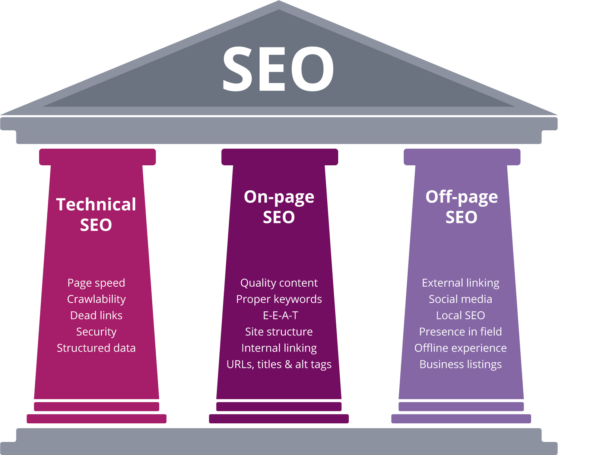
Effective SEO rests upon three interconnected pillars: Technical SEO, On-Page SEO, and Off-Page SEO.
1. Technical SEO:
This foundational pillar focuses on optimizing the technical infrastructure of a website to enhance user experience and facilitate search engine understanding. Key aspects include:
- Crawlability and Indexability: Ensuring search engine bots can access and add pages to their index through proper
robots.txtconfiguration and XML sitemaps. - Site Speed: Optimizing loading times (measured by Core Web Vitals) is crucial for user satisfaction and ranking.
- Mobile-Friendliness: With mobile devices dominating internet usage, a responsive design is non-negotiable.
- Site Security (HTTPS): Encrypted connections build trust and are a ranking signal.
- Structured Data (Schema Markup): Implementing code that helps search engines better understand content and display rich snippets in SERPs.
- Site Architecture: A logical, hierarchical structure improves navigation and crawl efficiency.
- Broken Links and Redirects: Managing 404 errors and implementing 301 redirects to preserve link equity.
2. On-Page SEO:
This pillar involves optimizing the content and HTML source code of individual pages to improve their relevance for specific search queries. It’s intrinsically linked with content SEO. Key elements include:
- High-Quality Content: Creating valuable, comprehensive, and unique content that addresses user intent. E-E-A-T (Experience, Expertise, Authoritativeness, Trustworthiness) is a critical framework for content quality.
- Keyword Research and Integration: Identifying relevant keywords and naturally incorporating them into headings, body text, and meta descriptions, avoiding keyword stuffing.
- Title Tags and Meta Descriptions: Crafting compelling, keyword-rich titles and concise descriptions that entice users to click.
- Header Tags (H1-H6): Structuring content logically with clear headings for readability and semantic understanding.
- Internal Linking: Creating a robust internal link structure to distribute authority and guide users and crawlers through the site.
- Image Optimization: Using descriptive alt text and compressing images for faster loading.
- URL Structure: Creating clean, descriptive, and user-friendly URLs.
3. Off-Page SEO:
This pillar encompasses activities performed outside of a website to enhance its authority, reputation, and visibility.
- Link Building: Acquiring high-quality backlinks from reputable and relevant external websites. These links act as "votes of confidence," signaling trustworthiness and authority to search engines. Strategies include guest blogging, content promotion, and digital PR.
- Brand Mentions: Unlinked mentions of a brand or website also contribute to authority.
- Social Media Marketing: While social signals don’t directly impact rankings, social platforms increase content visibility, drive traffic, and foster brand engagement, indirectly supporting SEO efforts.
- Local SEO: For businesses with physical locations, optimizing Google Business Profile, local citations, and online reviews is crucial for appearing in local search results.
- Influencer Outreach and Digital PR: Collaborating with industry influencers and securing media coverage to amplify brand reach and authority.
Key SEO Ranking Factors: The Signals of Relevance
While the exact weighting of Google’s hundreds of ranking factors remains proprietary, extensive industry research and observation highlight several consistently critical signals:
- Content Quality and Relevance: Comprehensive, unique, and valuable content that thoroughly addresses user intent.
- Backlink Profile: The quantity, quality, and relevance of inbound links from other authoritative websites.
- User Experience (UX): Page speed, mobile-friendliness, ease of navigation, and overall site usability.
- Search Intent Alignment: How well a page’s content matches what a user is truly looking for.
- Technical Health: Crawlability, indexability, site security (HTTPS), and structured data implementation.
- Brand Authority and Trust: The overall reputation and trustworthiness of a brand, often reflected in mentions, reviews, and sustained positive engagement.
- Domain Authority and Age: Older, well-established domains with strong backlink profiles often carry more authority.
Tools like Yoast’s SEO Checker can assist in identifying and addressing potential issues related to these factors, providing actionable recommendations for improvement.
The Indispensable Value of SEO for Site Owners
The enduring importance of SEO stems from several critical factors:
- Immense Search Volume: Google alone processes approximately 8.5 billion searches per day in 2024, a figure that has grown exponentially since its inception. This represents an unparalleled opportunity for businesses to connect with a vast, actively searching audience.
- Intent-Driven Traffic: Unlike outbound marketing channels (e.g., social media ads) that interrupt user experiences, SEO attracts users who are actively seeking information, products, or solutions. This inherent intent translates into higher engagement rates and significantly better conversion potential, making SEO a powerful inbound marketing strategy.
- Sustainable Competitive Advantage: In a crowded digital landscape, a well-executed SEO strategy builds long-term online visibility, strengthens brand presence, establishes industry authority, and drives high-quality traffic. This sustained growth fosters customer loyalty and revenue, providing a durable competitive edge that often yields a superior return on investment compared to short-term paid campaigns.
- Beyond Clicks: Brand Building and Credibility: Modern SEO extends beyond merely generating clicks. Appearing as a trusted source in AI-generated answers, AI overviews, or other discovery platforms—even without an immediate click to the website—significantly enhances brand awareness, bolsters credibility, and cultivates future demand for a business’s offerings.
Setting Strategic SEO Goals in a Dynamic Landscape
Traditional SEO metrics such as keyword rankings, raw website traffic, and bounce rates remain relevant, but the evolving search landscape necessitates a broader perspective on goal setting. With content appearing across diverse platforms and in various formats (e.g., AI summaries), the focus must shift from solely numerical targets to the holistic perception and influence of a brand.
Modern SEO goals should encompass:
- Enhanced Brand Awareness and Recognition: Measuring how frequently a brand is mentioned or cited across different platforms.
- Improved User Experience and Satisfaction: Focusing on site speed, mobile usability, and content clarity to ensure positive interactions.
- Increased Engagement: Tracking metrics like time on page, pages per session, and conversion rates for specific actions (e.g., newsletter sign-ups, purchases).
- Thought Leadership and Authority: Establishing a brand as a go-to source for information within its niche.
- Customer Loyalty: Fostering repeat visits and positive interactions across all digital touchpoints.
This shift moves beyond "just clicks" to understanding a brand’s overall digital footprint and its perceived value by both online tools and the target audience.
Embarking on Your SEO Journey: Practical Steps and Resources

Navigating the complexities of SEO can seem daunting, but it is entirely manageable, especially with the right approach and resources.
1. Establish a Strong Technical Foundation:
Prioritize technical SEO. Ensure your website is crawlable, indexable, fast, mobile-friendly, and secure (HTTPS). If technical expertise is lacking, leverage website builders that simplify these aspects or consider professional assistance. A robust technical foundation is critical before investing heavily in content.
2. Develop a Strategic Content Plan:
Once the technical groundwork is laid, focus on content. Conduct thorough keyword research to identify topics that align with your business offerings and user intent. In an era of AI-generated content, emphasize originality, unique insights, and demonstrable expertise (E-E-A-T) to differentiate your brand. Develop an ongoing content strategy, recognizing that SEO is a continuous process, not a one-time task.
3. Leverage Industry Tools and Education:
Numerous resources are available to guide this journey. Companies like Yoast provide comprehensive tools and educational platforms:
- SEO Plugins: Plugins for platforms like WordPress (Yoast SEO Free and Premium) and Shopify (Yoast SEO app for Shopify) offer features like SEO and readability analyses, technical SEO automation, keyword optimization, and redirect management, simplifying complex tasks.
- SEO Academy: Online courses, such as "SEO for Beginners" and "Structured Data," provide structured learning paths to master various aspects of SEO.
- Informative Blogs: Regularly updated blogs offer insights into SEO basics, advanced strategies, algorithm updates, and emerging trends.
By systematically addressing technical foundations, creating high-quality, intent-driven content, and continuously learning and adapting, businesses can effectively leverage SEO to build brand authority, attract quality traffic, and achieve sustained growth in the dynamic digital landscape.


 Jia Lissa
 Siti Muinah