


Lightspeed eCom, a solution designed to integrate brick-and-mortar operations with online sales channels, has served many businesses. However, retailers often encounter its limitations, particularly concerning escalating costs with multiple locations and registers, a less robust online storefront builder compared to dedicated e-commerce platforms, and a primary focus on physical retail rather than online-first brands. For businesses seeking to overcome these hurdles, a careful evaluation of alternative platforms is essential. This analysis explores five leading contenders, examining their pricing, sales features, point-of-sale (POS) integration capabilities, design flexibility, and ease of use, to help retailers find the optimal solution for their unique needs.
The current market landscape offers a spectrum of e-commerce platforms, each with distinct strengths and weaknesses. As businesses scale and their operational demands evolve, the initial choice of a platform may no longer align with their strategic objectives. This is particularly true for retailers who initially adopted Lightspeed eCom for its integrated approach but now find its pricing structure or feature set restrictive. The transition from a system primarily built for physical retail to one that equally, if not more strongly, supports online growth requires a deep understanding of what each alternative platform brings to the table.
Understanding the Limitations of Lightspeed eCom
Lightspeed eCom is no longer available as a standalone product. It is now integrated into the broader Lightspeed Retail offering, with the basic plan starting at $89 per month when billed annually. Higher tiers, such as Core and Plus, come with significantly increased costs. This bundling strategy, while potentially beneficial for businesses requiring comprehensive retail management tools, presents a substantial financial barrier for smaller operations or those with a primary focus on online sales.
The pricing model for Lightspeed Payments, which is around 2.6% + $0.10 for in-person transactions and 2.9% + $0.30 for online payments, further contributes to the total cost of ownership. This pricing structure makes sense for established multi-location retail operations that benefit from advanced inventory, purchasing, and supplier management functionalities. However, for businesses where these advanced features are secondary to their online presence or where cost efficiency is paramount, this model becomes less attractive. The challenges become more pronounced when:
- The cost of adding new locations and registers becomes prohibitive.
- The online storefront’s design and functionality lag behind those offered by specialized e-commerce builders.
- The platform’s core strengths lie in physical retail, making it less ideal for businesses prioritizing online-first growth.
Top Lightspeed eCom Alternatives
After a thorough comparison of leading e-commerce platforms based on critical factors such as pricing, sales features, POS integration, design flexibility, and ease of use, five platforms stand out as worthy alternatives to Lightspeed eCom: Shopify, Square Online, BigCommerce, WooCommerce, and Wix.
Here’s a comparative overview of these platforms:
| Platform | Best For | Starting Price (Billed Annually) | Free Plan or Trial | Transaction Fees (Native Payments) | Built-in POS | AI Store Builder |
|---|---|---|---|---|---|---|
| Shopify | All-round online and in-store selling | $29 per month | 3-day free trial, then $1/month for 3 months | 2.9% + $0.30 online (Basic) | Yes | Yes |
| Square Online | Budget-conscious retailers | $0 (free plan) | Free plan forever | 2.9% + $0.30 online | Yes | Yes |
| BigCommerce | Large catalogs and growing stores | $29 per month | 15-day free trial | 0% platform fee on any gateway | Via integrations | Yes |
| WooCommerce | Customization and WordPress users | Free plugin (hosting extra) | Free plugin | 2.9% + $0.30 (WooPayments, US) | Via extensions | Limited |
| Wix | Beginners and design-led stores | $17 per month ($29 to sell) | Free plan forever (no selling) | 2.9% + $0.30 (Wix Payments, US) | Yes (US only) | Yes |
Note: Pricing and fees are based on published US pricing at the time of writing and are subject to change. Always confirm current rates on the platform’s official pricing pages.
1. Shopify: The Best All-Round Alternative
Shopify emerges as the top recommendation for businesses seeking a seamless transition from Lightspeed eCom, particularly those looking for a robust unified online and in-store selling experience. It mirrors Lightspeed’s core functionality by offering a single platform to manage both online stores and physical retail points of sale, with a unified inventory and customer database.
Key Advantages:
Shopify’s foundational strength lies in its online-first architecture. This translates to superior storefront design tools, a more streamlined checkout process, and more potent marketing features compared to Lightspeed. Its extensive app ecosystem is a significant differentiator, offering access to over 6,000 apps that cater to virtually any business need, from advanced analytics and CRM to specialized marketing and inventory management. The theme store is also vast, providing a wide array of professional and customizable templates.
Considerations:

While powerful, Shopify’s section-based editor, a departure from free-form drag-and-drop interfaces, might feel restrictive for designers who require pixel-perfect control. Although its entry-level pricing is more accessible than Lightspeed Retail, costs can escalate rapidly when factoring in premium themes, essential third-party apps, and Shopify POS Pro for advanced in-store functionalities.
Pricing Structure:
Shopify offers several plans to accommodate different business sizes and needs:
- Starter: $5 per month (billed annually) – Ideal for individuals selling through social media or messaging apps.
- Basic: $29 per month (billed annually) – Suitable for new businesses.
- Grow: $79 per month (billed annually) – For businesses scaling their sales and marketing efforts.
- Advanced: $299 per month (billed annually) – For established businesses needing advanced reporting and lower transaction fees.
- Plus: Custom pricing, starting from $2,300 per month for a 3-year term – For large enterprises with high-volume sales.
When comparing to Lightspeed, Shopify Basic at $29 per month is considerably less expensive than Lightspeed Retail Basic at $89 per month. However, if advanced in-store features via Shopify POS Pro are required for a single location, the total monthly cost can approach $118, making the pricing more competitive. Shopify generally offers better value for businesses prioritizing their online presence.
Suitability:
- Suitable for: Online-first businesses, hybrid retailers needing a strong unified system, businesses looking for a vast app and theme marketplace, and those planning for significant online growth.
- Not suitable for: Businesses requiring absolute free-form design control without relying on sections, or those who need extremely specialized, niche POS features not available through apps.
Why choose Shopify? It provides a comprehensive solution that matches Lightspeed eCom’s dual online and in-store capabilities while offering a more expansive ecosystem, enhanced AI tools, and a clearer trajectory for scaling. For retailers migrating from Lightspeed and still requiring POS functionality, Shopify should be the primary platform for initial testing.
2. Square Online: The Best Budget Alternative for Retailers
For businesses whose primary motivation for leaving Lightspeed is cost, Square Online presents itself as the most compelling budget-friendly alternative. It offers a genuinely free e-commerce plan that integrates seamlessly with Square’s free POS software. This allows small retailers to manage both online and in-store sales without incurring monthly platform fees, only paying standard payment processing charges.
Key Advantages:
Square Online’s greatest strength is its simplicity and affordability. The free plan includes unlimited product listings, options for local pickup and delivery, and utilizes a Square-branded domain. This makes it an exceptionally low-barrier entry point for small businesses, cafes, and service providers. The integration with Square POS is intuitive, simplifying the process of adding products, setting up fulfillment options, and connecting sales channels.
Considerations:
The trade-off for its affordability is that Square Online is significantly more basic than Lightspeed or Shopify. Design customization options are limited, and its app ecosystem is comparatively small. The free plan also features Square branding and does not support custom domains. For businesses with large or complex product catalogs, or those who rely heavily on advanced inventory features like purchase orders or multi-location stock transfers, Square’s inventory tools may feel insufficient.
Pricing Structure:

Square Online offers three tiers:
- Free: $0 per month – Unlimited products, pickup/delivery, Square-branded domain.
- Plus: $29 per month (billed annually) – Custom domain, no Square ads, abandoned cart recovery, advanced item options.
- Premium: $79 per month (billed annually) – Lower processing rates, real-time shipping rates, priority support.
Comparison with Lightspeed:
A small retailer can operate both Square Online and Square POS for free, a stark contrast to Lightspeed Retail Basic’s $89 per month. Even the Premium plan at $79 per month is less expensive than Lightspeed’s entry point. This significant cost saving is achieved by sacrificing some of the depth in inventory management and reporting capabilities found in Lightspeed.
Suitability:
- Suitable for: Small businesses, cafes, service providers, retailers with modest product catalogs, and those prioritizing cost savings above all else while needing an integrated sales system.
- Not suitable for: Businesses with large or complex inventories, those requiring advanced inventory management features, or brands that need extensive design customization.
Why choose Square Online? It offers the most economical path to maintaining a unified system for online and in-person sales. If Lightspeed’s monthly subscription fees are the primary concern and the product catalog is manageable, Square Online can effectively eliminate those costs.
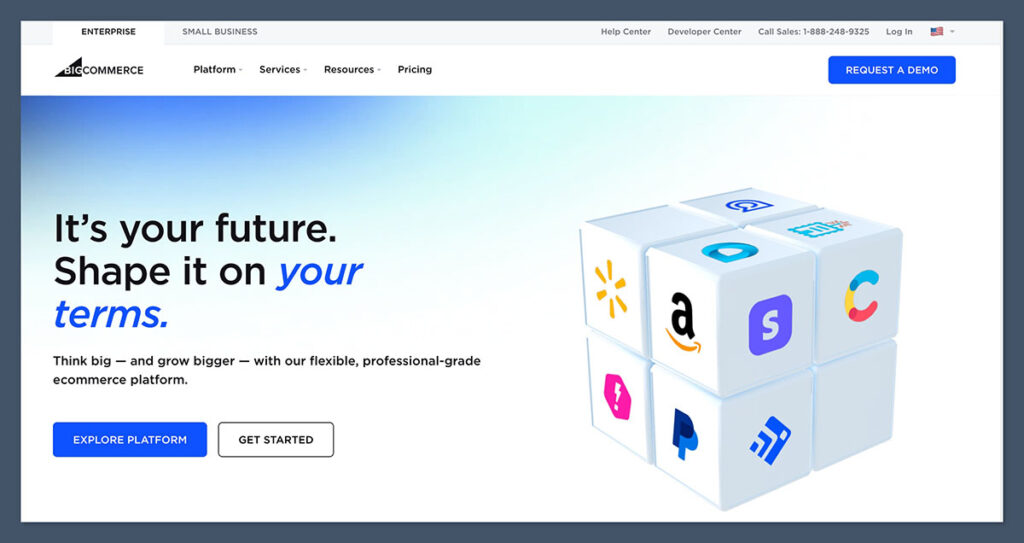
3. BigCommerce: Best for Large Catalogs and Growing Stores
BigCommerce is an excellent choice for Lightspeed users who primarily operate online and manage extensive product inventories. It comes equipped with a more comprehensive suite of built-in e-commerce features than many competitors, including product variants, advanced filtering, multi-currency support, and B2B tools, all without requiring additional app subscriptions. A significant advantage is its policy of charging zero platform transaction fees, regardless of the payment gateway used.
Key Advantages:
The platform’s inherent strength lies in its robust e-commerce functionality, designed to support substantial product catalogs and complex sales strategies. Features like faceted search, SEO optimization tools, and bulk pricing are integrated natively, providing a powerful foundation for online growth. The absence of platform transaction fees can lead to substantial savings for high-volume sellers.
Considerations:
A notable limitation of BigCommerce is its lack of a native POS system. While integrations with third-party POS solutions are possible, they do not offer the same seamless experience as an all-in-one platform. Furthermore, BigCommerce enforces annual sales thresholds on its plans, which can automatically push rapidly growing businesses to higher, more expensive tiers.
Pricing Structure:
BigCommerce offers several self-service plans:

- Standard: $29 per month (billed annually) – Supports up to $50,000 in annual online sales.
- Plus: $79 per month (billed annually) – Supports up to $180,000 in annual online sales, includes features like abandoned cart recovery.
- Pro: $299 per month (billed annually) – Supports up to $400,000 in annual online sales, with additional tiers for higher volumes.
- Enterprise: Custom pricing – For businesses with highly specific needs and extensive sales volumes.
Comparison with Lightspeed:
BigCommerce Standard at $29 per month is significantly more affordable than Lightspeed Retail Basic at $89 per month. For businesses that do not require a Lightspeed-level POS, BigCommerce offers a richer set of online features at a lower price point. The absence of transaction fees further enhances its cost-effectiveness for growing online stores.
Suitability:
- Suitable for: Businesses with large product catalogs, online-first retailers, B2B sellers, companies that prioritize built-in e-commerce features, and those aiming to avoid platform transaction fees.
- Not suitable for: Retailers who require a tightly integrated, native POS system, or businesses that prefer a simple, non-tiered pricing structure without sales volume limitations.
Why choose BigCommerce? If Lightspeed’s online capabilities feel insufficient and the cost of adding apps to fill those gaps is a concern, BigCommerce provides enterprise-grade catalog management and zero transaction fees at a mid-market price point.
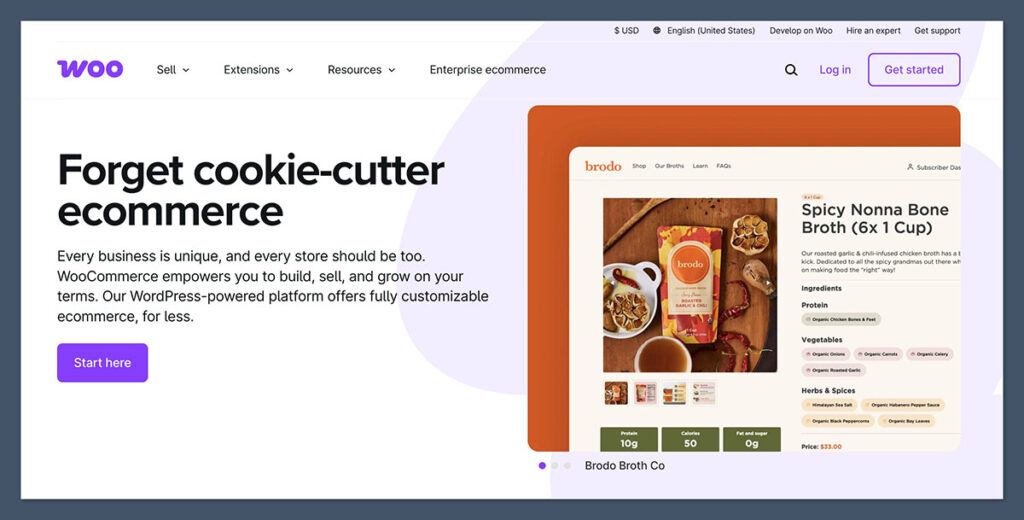
4. WooCommerce: Best for Customization and WordPress Users
WooCommerce stands out as the most flexible platform available, offering users complete ownership and control over their store’s code and data. Built on the WordPress framework, it is an ideal choice for individuals or businesses already invested in WordPress or those who desire unparalleled control over their website’s design, SEO, and overall functionality.
Key Advantages:
The platform’s open-source nature provides limitless customization possibilities. Users can tailor every aspect of their store, from design to functionality, by leveraging a vast array of plugins and themes. This granular control is invaluable for businesses with unique operational workflows or specific branding requirements that hosted platforms may not accommodate.
Considerations:
This extensive flexibility comes with significant responsibility. Users are solely accountable for managing hosting, security, software updates, and backups, unless they opt for a managed hosting solution. Building a polished and secure WooCommerce store often requires a greater degree of technical expertise compared to using a hosted platform. This can be a considerable adjustment for retailers accustomed to Lightspeed’s all-in-one, managed environment.
Pricing Structure:
WooCommerce itself is a free plugin, but associated costs include:
- Web Hosting: Typically $10 to $40 per month for shared or managed WooCommerce hosting.
- Domain Name: Around $10 to $20 per year.
- Themes: Free options are available, with premium themes costing $0 to $100 one-time.
- Paid Extensions: Annual subscriptions ranging from $49 to $299 per year for specialized functionalities like advanced shipping or POS extensions.
- Payment Processing: WooPayments charges 2.9% + $0.30 for US cards, with additional fees for international transactions. Other gateways are also available.
Comparison with Lightspeed:
WooCommerce can be significantly more affordable than Lightspeed Retail’s $89 per month, or conversely, more expensive depending on the extent of customization and the paid extensions required. The cost is highly variable, directly correlating with the level of investment in development and management.
Suitability:
- Suitable for: Developers, businesses with unique customization needs, WordPress users, those prioritizing full data ownership and control, and merchants willing to manage technical aspects.
- Not suitable for: Beginners who prefer a hands-off approach, businesses that require immediate, out-of-the-box POS integration, or those who want a fully managed, low-maintenance solution.
Why choose WooCommerce? If Lightspeed feels too rigid and a business needs a platform that adapts to its specific requirements rather than dictating them, WooCommerce offers unparalleled control, provided the user is prepared to manage the technical infrastructure.
5. Wix: Best for Beginners and Design-Led Stores
Wix stands out as the most user-friendly platform for beginners, thanks to its AI website builder and intuitive drag-and-drop editor. It is an excellent option for small businesses that place a high value on visual aesthetics and wish to consolidate marketing, email, booking, and e-commerce functionalities within a single dashboard.
Key Advantages:
Wix simplifies the website creation process with its AI-powered builder, which generates a functional site and dashboard based on user input. The free-form editor allows for extensive design customization, making it easy for users to create visually appealing online stores. It also integrates various business tools, streamlining operations for small enterprises.
Considerations:
Wix is not designed for heavy-duty e-commerce operations. Its inventory management and in-store POS capabilities are more basic when compared to Lightspeed and Shopify. The Wix POS system is also exclusively available in the US. Businesses with very large product catalogs or those requiring advanced retail management features might find Wix limiting.
Pricing Structure:
Wix offers a free tier and four paid plans:
- Free: $0 per month – Limited functionality, Wix-branded domain and ads.
- Light: $17 per month (billed annually) – Custom domain, no ads, basic marketing tools.
- Core: $29 per month (billed annually) – Enables online selling, basic analytics, and e-commerce features.
- Business: $36 per month (billed annually) – Advanced e-commerce, multi-currency, and enhanced features.
- Business Elite: $159 per month (billed annually) – Premium support, advanced developer tools, and unlimited collaborators.
Comparison with Lightspeed:
Wix Core at $29 per month is a fraction of the cost of Lightspeed Retail Basic. Even the Business plan at $36 per month, which is more suitable for active selling, is substantially more affordable. Wix offers a cost-effective solution for businesses prioritizing design and marketing over deep retail functionality.
Suitability:
- Suitable for: Small businesses, entrepreneurs, freelancers, artists, designers, and any business that prioritizes a visually stunning website and ease of use.
- Not suitable for: Large-scale retailers, businesses with complex inventory needs, multi-location operations requiring advanced POS features, or those who anticipate rapid, complex growth in their online sales channel.
Why choose Wix? For small, design-centric businesses that found Lightspeed overly complex, Wix provides an attractive website, robust marketing tools, and an intuitive editor at a significantly lower price point.
Evaluating Your Transition: Key Factors to Consider
When migrating from Lightspeed eCom, a strategic evaluation of several key factors is crucial to ensure the chosen platform aligns with your business objectives. These include:
- POS Integration: The need for a seamless online-to-offline sales experience.
- Pricing Structure: Understanding monthly fees, transaction costs, and potential for scaling.
- Scalability: The platform’s ability to grow with your business.
- Design Flexibility: The extent to which you can customize your online storefront.
- App Ecosystem: The availability of third-party integrations to extend functionality.
- Ease of Use: The learning curve and day-to-day management of the platform.
- Inventory Management: The sophistication of stock tracking and control features.
- Customer Management: How customer data is stored, accessed, and utilized.
The ideal alternative depends on what initially drew you to Lightspeed and what specific limitations are now prompting a change.
Navigating the Migration Process
Switching from Lightspeed eCom to a new platform is achievable, and most of the recommended alternatives facilitate the import of product catalogs. While the process is rarely a one-click solution, it generally involves exporting your data from Lightspeed (often as a CSV file) and importing it into the new platform.
The typical migration process involves:
- Exporting Data: Downloading product lists, customer information, and order history from Lightspeed.
- Formatting Data: Adjusting exported data to match the import templates of the new platform.
- Importing Data: Uploading the formatted files into the new e-commerce system.
- Testing and Verification: Thoroughly checking product details, pricing, inventory levels, and customer accounts.
For businesses with extensive catalogs or complex data, third-party migration services like Cart2Cart or LitExtension can automate much of the data transfer for a fee. It is highly recommended to run both systems in parallel for a short period to reconcile inventory counts and ensure a smooth transition before discontinuing the Lightspeed subscription.
Conclusion: Finding the Right Fit
For the majority of retailers seeking a robust alternative to Lightspeed eCom, Shopify stands out as the top recommendation. It successfully balances the unified online and in-store selling model that Lightspeed pioneered with a significantly larger app ecosystem, more advanced AI capabilities, and a clearer path for online scalability.
However, each of the discussed platforms serves a distinct purpose:
- Shopify: The best all-around solution for integrated online and in-store sales.
- Square Online: The most cost-effective option for budget-conscious retailers.
- BigCommerce: Ideal for businesses with large product catalogs and a focus on online growth.
- WooCommerce: The ultimate choice for those requiring deep customization and WordPress integration.
- Wix: The easiest platform for beginners and design-focused businesses.
Leveraging the free plans and trials offered by these platforms is the most practical way to determine the best fit. Square Online and Wix provide perpetual free plans for exploration, while BigCommerce offers a 15-day trial. Shopify’s introductory $1-per-month offer for three months provides ample time to test its comprehensive features. By carefully assessing individual business needs against the strengths of each platform, retailers can make an informed decision that supports their future growth and operational efficiency.








