The conventional wisdom in the e-commerce world often paints a picture of growth defined by escalating headcount and aggressive marketing spend. Yet, a closer examination of high-performing businesses reveals a different narrative, one where operational leanness and astute financial management are the true drivers of profitability. This shift in focus, from a volume-driven approach to one centered on efficiency and strategic resource allocation, is reshaping how successful online retailers achieve and sustain their financial objectives.
One striking example illustrating this paradigm shift involves a small business owner who, until recently, managed a team of 35 employees. While the business maintained solid revenue streams, profitability remained a persistent challenge, a situation exacerbated by the considerable stress of managing a large workforce. The owner’s day-to-day operations were significantly consumed by personnel management, detracting from strategic growth initiatives. In response to these pressures, a series of decisive actions were taken. The business transitioned to a remote operational model, outsourced its warehousing and fulfillment to a third-party logistics (3PL) provider, and strategically replaced many full-time employees with a team of freelancers and independent contractors. The outcome was a dramatic transformation: the business now operates with a core team of just one full-time employee and eight contractors. This leaner structure has resulted in unprecedented profit margins and a significant reduction in the owner’s stress levels, offering a compelling counterpoint to the traditional growth-at-all-costs model.

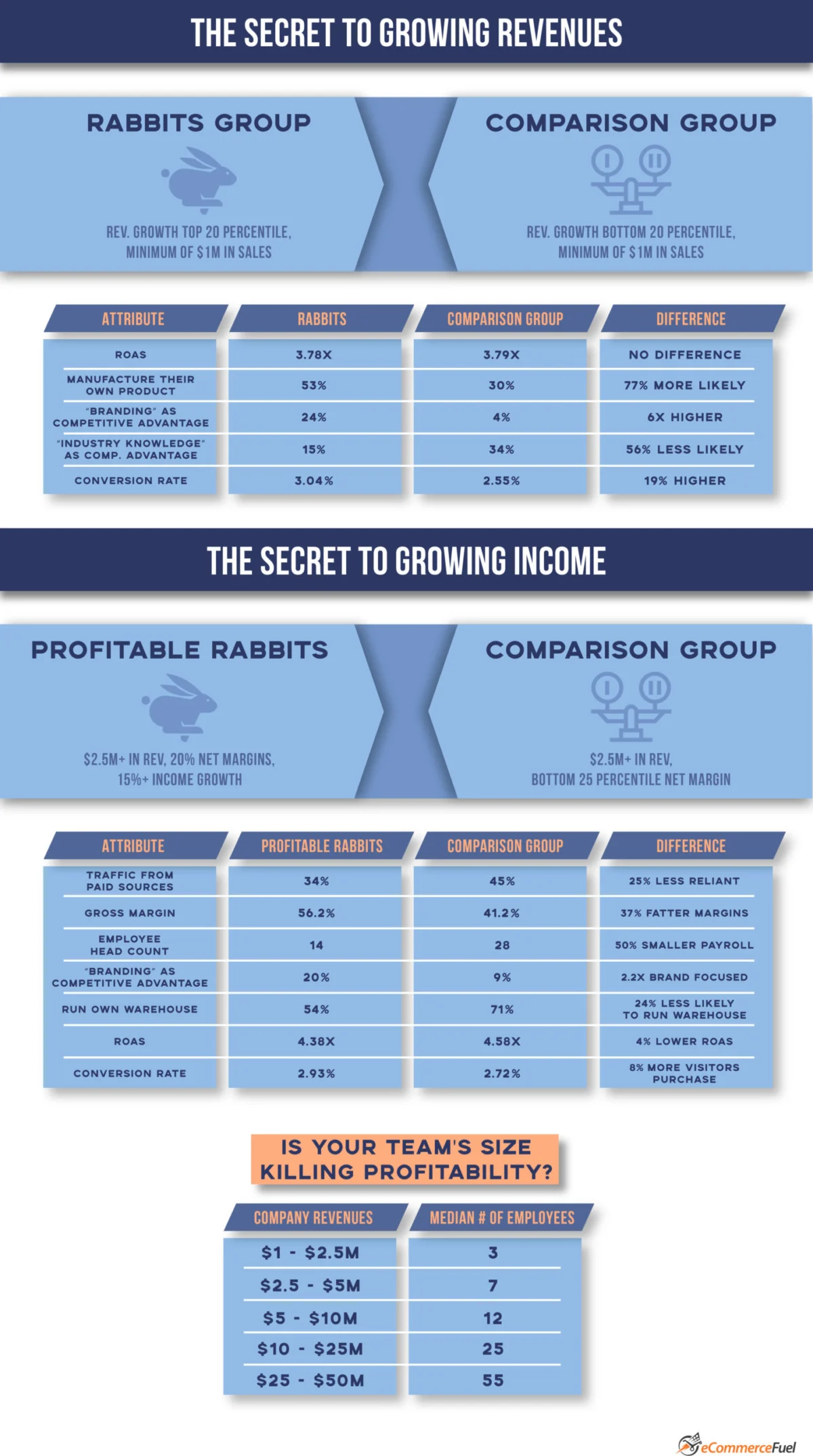
This anecdote is not an isolated incident but rather reflects a broader trend observed across hundreds of e-commerce businesses. Research conducted by industry analysts indicates that the primary differentiator between highly profitable stores and those struggling is not marketing prowess but operational efficiency. A comprehensive study analyzing the financial performance of numerous e-commerce ventures found that top performers maintained payrolls approximately half the size of their less profitable counterparts. Furthermore, these leading businesses were 25% more likely to outsource their warehouse operations and 25% less reliant on paid advertising channels. This data suggests that operational leanness and a strategic approach to outsourcing can significantly outperform aggressive marketing tactics in driving profitability.
The findings challenge the widely held belief that scaling a business necessitates a proportional increase in staff. While marketing efforts such as Return on Ad Spend (ROAS) and Customer Acquisition Cost (CAC) are crucial metrics, the research indicates that their impact on profitability is often overshadowed by the efficiencies gained through optimized operations. This implies that businesses focusing intensely on marketing may be overlooking more fundamental levers for financial improvement.
Redefining "Lean" Beyond Headcount
The concept of "staying lean" in business often evokes images of downsizing or layoffs. However, the principle extends far beyond personnel reduction. True operational leanness encompasses a critical evaluation of all overhead costs. This includes examining expenditures on office space that may have become underutilized in a post-pandemic remote work environment, or the costs associated with maintaining in-house fulfillment when a 3PL can offer more cost-effective and efficient solutions. Furthermore, the proliferation of Software-as-a-Service (SaaS) subscriptions, often auto-renewing and easily forgotten, represents another significant area where hidden costs can accumulate.

A key strategy for identifying areas for leanness is to scrutinize what functions are truly core to a brand’s competitive advantage. If a company’s unique selling proposition lies in its product design, then retaining in-house design talent is logical. However, if the core competency is not in packing and shipping, outsourcing these functions to specialized providers can unlock significant efficiencies. Profitable e-commerce businesses are not indiscriminately cutting costs; rather, they are making deliberate decisions about resource allocation, prioritizing investments in areas that directly contribute to their brand’s value proposition and market differentiation.
The Imperative of Proactive Difficult Conversations
A widely cited adage suggests that success in life is often measured by the willingness to engage in difficult conversations. In the business context, these conversations are frequently postponed until external pressures, such as economic downturns, cash flow crises, or plummeting profitability, make them unavoidable. However, business leaders who excel in profitability tend to address these challenging issues proactively, before they escalate into existential threats.
These proactive conversations involve candid assessments of operational necessity. Questions such as "Do we truly need this role, or was it an arbitrary addition to a growing team?" or "Are we paying for this software out of genuine need or simply out of habit?" are crucial. Furthermore, hypothetical scenarios, such as "What would we cut if we were forced to reduce expenses by 25% tomorrow?" can provide valuable insights into areas of potential optimization. The decisive action taken based on these discussions, even when not driven by immediate crisis, is a hallmark of intentionally managed, highly profitable businesses.

Unlocking Hidden Value: The Second Unsexy Lever of Tax Optimization
While operational efficiency is a well-discussed strategy, the potential for significant profit enhancement through strategic tax planning often remains an underutilized opportunity. Many business owners view taxes as a fixed cost, a percentage of revenue that must be paid regardless of their financial strategies. However, a more deliberate approach to tax management can lead to substantial savings, effectively increasing net profit without altering revenue or operational costs.
Consider the hypothetical scenario of two identical e-commerce businesses, each generating $2.5 million in revenue and $250,000 in profit, with owners in similar personal financial situations (married with three children). Owner A, operating with a conventional tax strategy, might pay approximately $75,000 in annual taxes. In contrast, Owner B, who actively engages in tax-efficient planning, could see their tax liability reduced to as little as $21,000. This dramatic difference of $54,000 annually is achieved not through illicit means, but through the strategic application of established tax codes.
Owner B’s approach might involve several key strategies:

- Profit Sharing: Contributing significantly to retirement accounts through profit-sharing plans, exceeding standard 401(k) limits. For instance, a $45,000 contribution could yield savings of approximately $13,500, assuming a 30% marginal tax rate.
- Appreciated Stock Donations: Donating stocks that have appreciated in value to charities instead of cash. This strategy allows the owner to avoid capital gains tax on the appreciation while still receiving a full tax deduction for the fair market value of the donation, potentially saving around $3,500.
- Maximized Health Savings Accounts (HSAs): Contributing the maximum allowable amount to an HSA, which offers triple tax advantages (tax-deductible contributions, tax-free growth, and tax-free withdrawals for qualified medical expenses). A $8,500 family contribution could result in tax savings of approximately $2,550.
- Employing Children: Legally employing children in the business for legitimate work performed. Paying each of three children $7,000 annually is deductible for the owner and allows the children to invest their earnings in Roth IRAs, benefiting from tax-free growth for decades. This strategy can save approximately $6,300 in taxes.
- Inventory Donations: Donating slow-moving or obsolete inventory to charitable organizations. Instead of liquidating at a loss, the business can claim a deduction at the fair market value of the inventory. Donating $60,000 of old inventory could provide tax savings of around $18,000, a significantly underutilized strategy in e-commerce.
The cumulative effect of these intentional tax planning strategies can result in tens of thousands of dollars in annual savings, directly boosting the bottom line.
The Invisible Impact of Tax Strategy
The reason these tax optimization opportunities are often overlooked is the fragmented nature of tax information. Personal tax returns, business filings, brokerage statements, and payroll reports are typically managed separately. Without a consolidated view, business owners rarely gain a comprehensive understanding of their total tax burden, let alone identify areas for potential reduction. While having a competent accountant is essential for accurate tax filings, many accountants focus on compliance rather than proactive tax strategy. They process information provided to them but may not actively propose innovative tax-saving ideas.
A simple yet effective test for the proactivity of one’s CPA is to recall the last time they initiated a conversation about potential tax-saving strategies. If the answer is "never," it suggests that while the accountant may be proficient in handling tax obligations, they may not be actively identifying opportunities that could significantly benefit the business owner. This lack of proactive engagement can result in substantial missed savings, highlighting the importance of selecting a CPA who acts as a strategic financial partner.

Two Overlooked Levers for Enhanced Profitability
In the competitive landscape of e-commerce, marketing metrics such as ROAS, CAC, and Lifetime Value (LTV) dominate discussions and strategic planning. These are undeniably important for customer acquisition and retention. However, the businesses that consistently achieve superior profitability are often those that focus on two less glamorous but profoundly impactful areas: operational leanness and strategic tax management. By optimizing their team structures, outsourcing non-core functions, and diligently planning their tax liabilities, these businesses retain a significantly larger portion of their earnings. While effective marketing is a valuable asset, the ability to keep more of the revenue already generated often presents a more immediate and impactful path to sustained financial success.
The pursuit of higher profits in e-commerce is not solely about generating more sales; it is increasingly about optimizing the entire operational and financial ecosystem. By embracing operational efficiency and strategic tax planning, e-commerce businesses can build more resilient, profitable, and less stressful enterprises, fundamentally redefining the metrics of success in the digital marketplace.