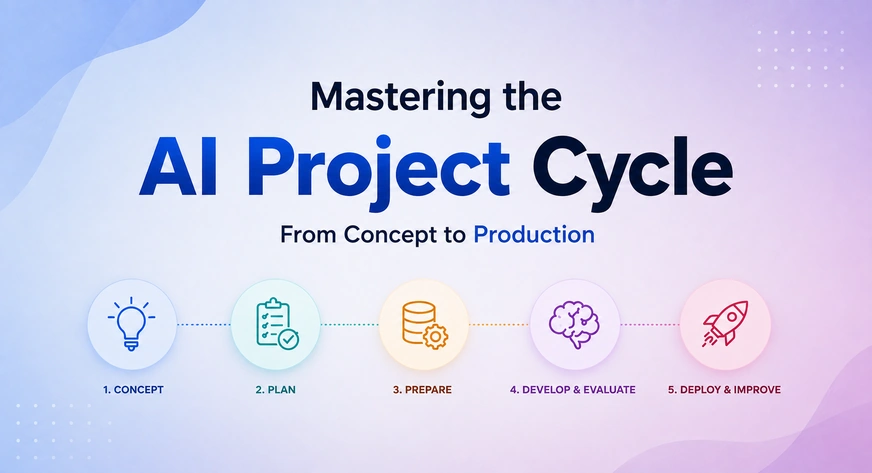
The rapid evolution of artificial intelligence has moved the field beyond experimental prototypes toward mission-critical enterprise applications. However, the success of an AI initiative is rarely the result of simply selecting a high-performing model; instead, it hinges on a rigorous, multi-stage framework known as the AI Project Cycle. This structured journey encompasses everything from the initial identification of a business problem to the continuous monitoring of a deployed system, ensuring that technical solutions remain aligned with organizational goals and real-world dynamics. As global spending on AI is projected to surpass $300 billion by 2026, understanding this lifecycle has become a prerequisite for organizations seeking to minimize risk and maximize return on investment.
The Strategic Importance of a Structured Lifecycle
The AI Project Cycle is not a linear path but an iterative process designed to organize complex development into manageable, interconnected stages. Historically, many AI projects failed—with some industry estimates suggesting failure rates as high as 80%—because teams treated model building as an isolated laboratory task rather than a holistic product development effort. By adopting a lifecycle approach, organizations can identify flaws early, refine data strategies, and ensure that the final output is scalable and maintainable.
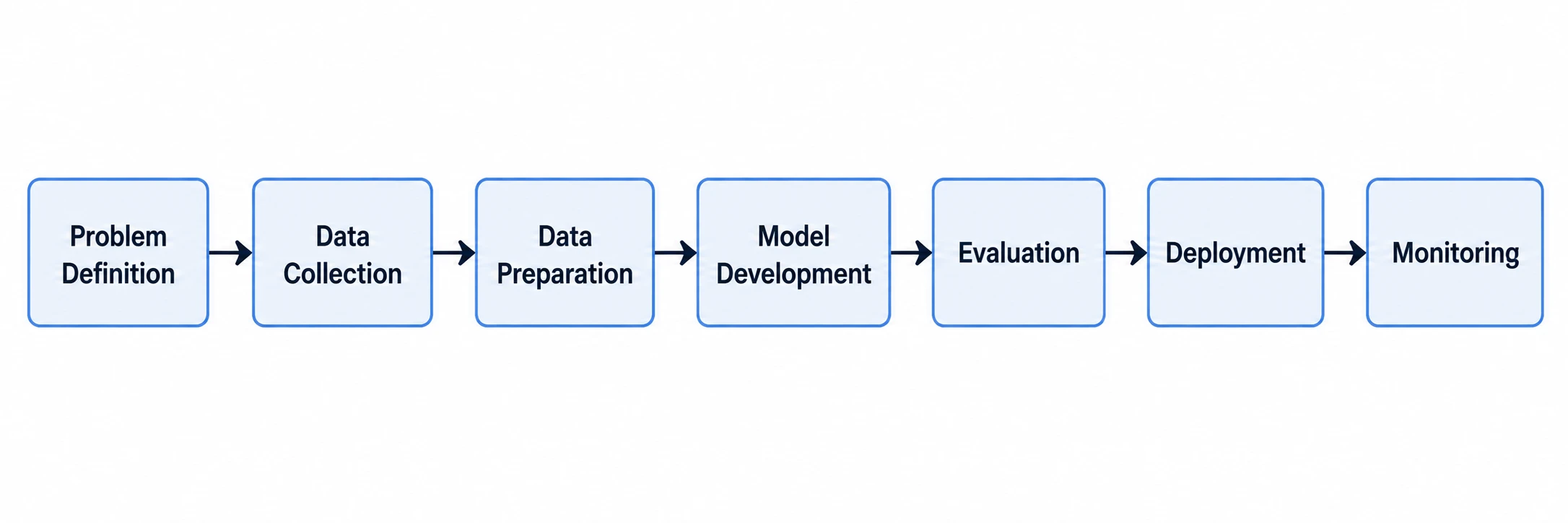
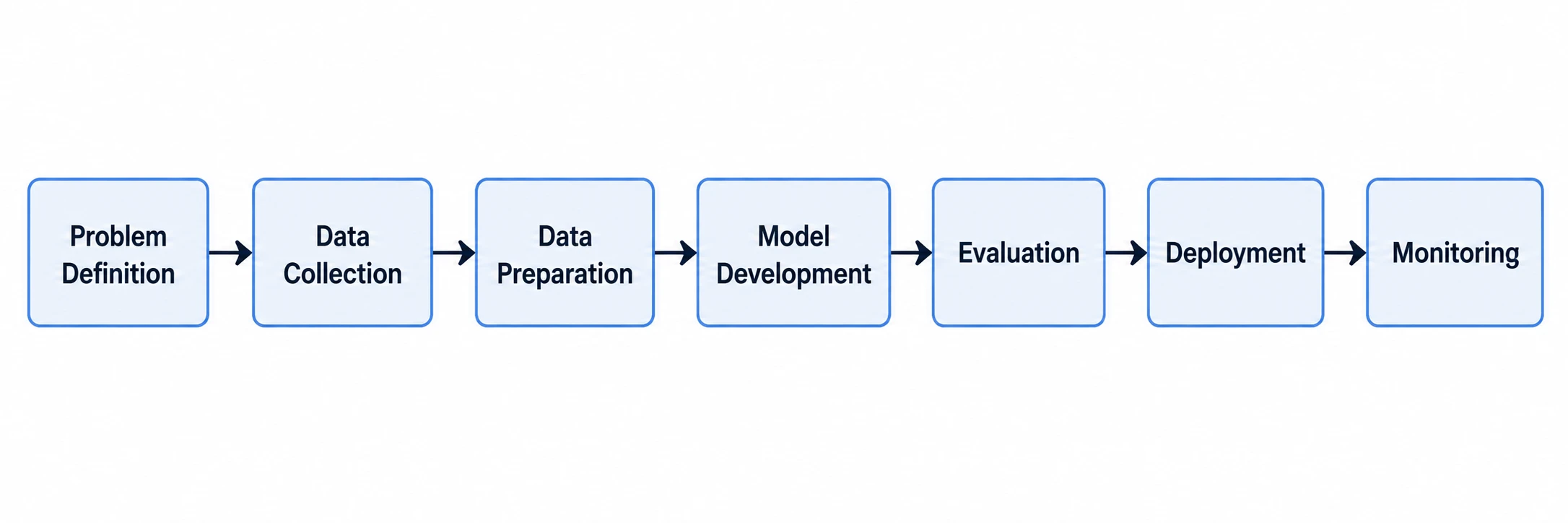
The cycle typically moves through seven distinct stages: Problem Definition, Data Collection, Data Preparation, Model Development, Evaluation, Deployment, and Monitoring. Because these stages are linked, insights gained during evaluation or production often necessitate a return to earlier phases, creating a feedback loop that drives continuous improvement.
Stage 1: Defining the Problem and Business Objectives
Every successful AI project begins with a clear, measurable objective. Experts suggest that the primary cause of AI project abandonment is the lack of a well-defined use case. Rather than aiming for vague goals such as "improving efficiency," successful teams articulate specific outcomes. For example, a retail firm might define its goal as reducing inventory overhead by 15% through more accurate demand forecasting.
During this stage, stakeholders must identify the target audience, the specific pain points being addressed, and the key performance indicators (KPIs) that will define success. This foundational step ensures that the technical team does not build a sophisticated solution for a problem that does not exist or does not provide business value.
Stage 2: Strategic Data Collection
Once the problem is defined, the focus shifts to the "fuel" of the AI system: data. The modern shift toward "data-centric AI" emphasizes that the quality and relevance of data are often more important than the complexity of the algorithm itself. Data collection involves sourcing information from various channels, including internal databases, third-party APIs, IoT sensors, and unstructured documents.
In the era of Generative AI, this stage also includes the curation of knowledge bases for Retrieval-Augmented Generation (RAG). This might involve gathering internal PDFs, technical manuals, and customer interaction logs to provide the model with contextually relevant information. Security and compliance are paramount here, as teams must ensure that data collection adheres to privacy regulations such as GDPR or CCPA.
Stage 3: Data Preparation and Exploratory Analysis
Raw data is almost never ready for immediate use. Industry data indicates that data scientists spend approximately 60% to 80% of their time on data cleaning and preparation. This stage involves handling missing values, removing duplicates, and normalizing formats.
Exploratory Data Analysis (EDA) is performed concurrently to identify patterns, outliers, and potential biases. If a dataset used to train a hiring algorithm is biased toward a specific demographic, the resulting model will inevitably perpetuate that bias. Identifying these issues during the preparation phase is critical for ethical AI development. For Generative AI, preparation further includes "chunking" text into manageable segments and converting them into vector embeddings for efficient retrieval.
Stage 4: Model Development and Architecture Selection
With clean data in hand, teams begin the modeling phase. This involves selecting the appropriate architectural approach, which varies significantly depending on the use case.
- Traditional Machine Learning: For structured data tasks like fraud detection or churn prediction, teams may utilize Random Forests, Gradient Boosting, or Support Vector Machines.
- Generative AI: For language-based tasks, the focus shifts to Large Language Models (LLMs). This may involve prompt engineering, fine-tuning existing models on proprietary data, or building agentic workflows where the AI can interact with external tools.
A core principle of modern AI development is starting with a simple baseline. By establishing a "minimum viable model," teams can measure whether more complex architectures actually provide a meaningful boost in performance.
Stage 5: Rigorous Evaluation and Testing
Before an AI system reaches a single user, it must undergo exhaustive evaluation. This goes beyond simple accuracy metrics. For traditional models, analysts look at Precision, Recall, and the F1-score to understand how the model handles false positives and negatives.
In the context of Generative AI, evaluation becomes more nuanced. Systems are tested for:
- Faithfulness: Does the model stay true to the provided source material?
- Relevance: Is the answer actually helpful to the user’s query?
- Safety: Does the model resist "jailbreaking" or the generation of harmful content?
Failure to conduct thorough evaluation can lead to "hallucinations"—where the AI confidently asserts false information—which can result in significant reputational or legal damage for a corporation.
Stage 6: Deployment and Integration
Transitioning a model from a development environment to a production environment is the realm of MLOps (Machine Learning Operations). Deployment involves integrating the AI into existing software stacks via APIs and ensuring it can scale to meet user demand.
Organizations often use "Canary Releases" or "A/B Testing" during this phase. By directing only 5% of traffic to the new AI system while keeping the rest on the legacy system, teams can monitor performance in the real world without risking a total system failure. This stage also requires significant infrastructure planning, deciding between on-premises hosting for data security or cloud-based solutions for elastic scaling.
Stage 7: Monitoring and the Iterative Feedback Loop
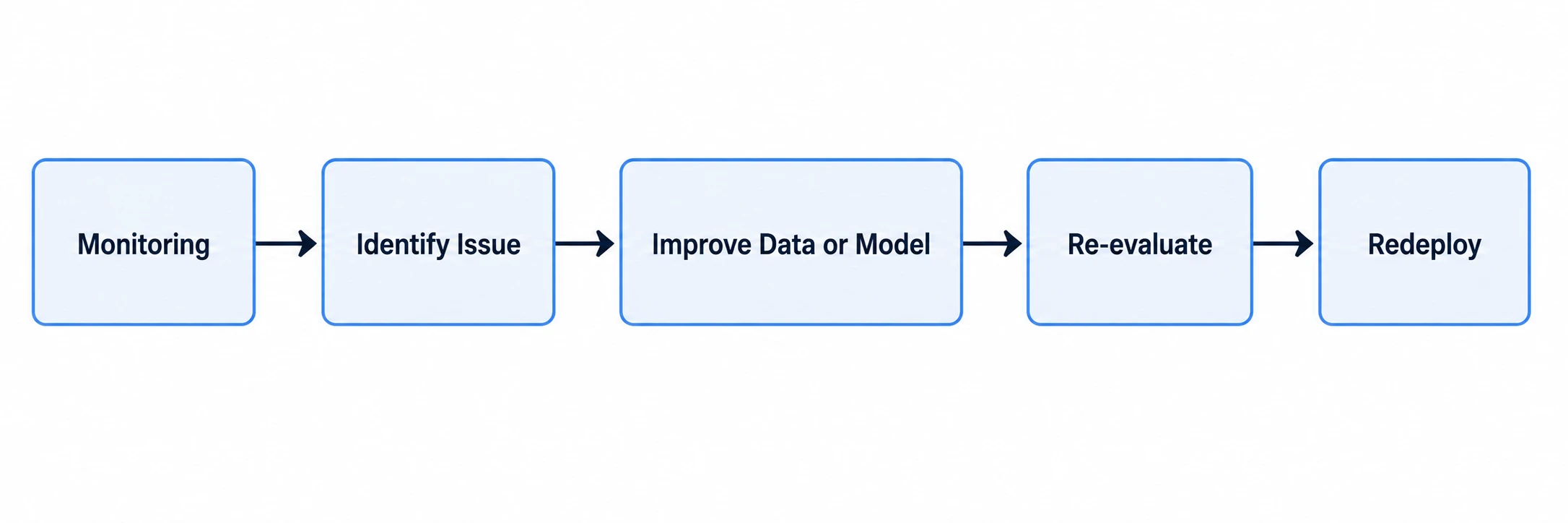
The "launch" of an AI project is not the finish line. AI systems are subject to "Model Drift," where changes in real-world data cause the model’s performance to degrade over time. For instance, a consumer behavior model trained before a global economic shift may become obsolete overnight.
Continuous monitoring tracks technical metrics like latency and error rates, as well as qualitative metrics like user satisfaction and retrieval accuracy. When performance dips below a certain threshold, the cycle begins again: new data is collected, the model is retrained or re-prompted, and the updated version is redeployed. This iterative nature is what allows AI to remain a living, evolving asset rather than a static piece of software.
Challenges and Implications for the Enterprise
Despite the clarity of the AI Project Cycle, several challenges remain prevalent in the industry. "Shadow AI"—where departments deploy AI tools without centralized oversight—can lead to security vulnerabilities and inconsistent data usage. Furthermore, the high cost of compute power for LLMs means that the "Model Development" and "Deployment" stages require careful financial auditing.
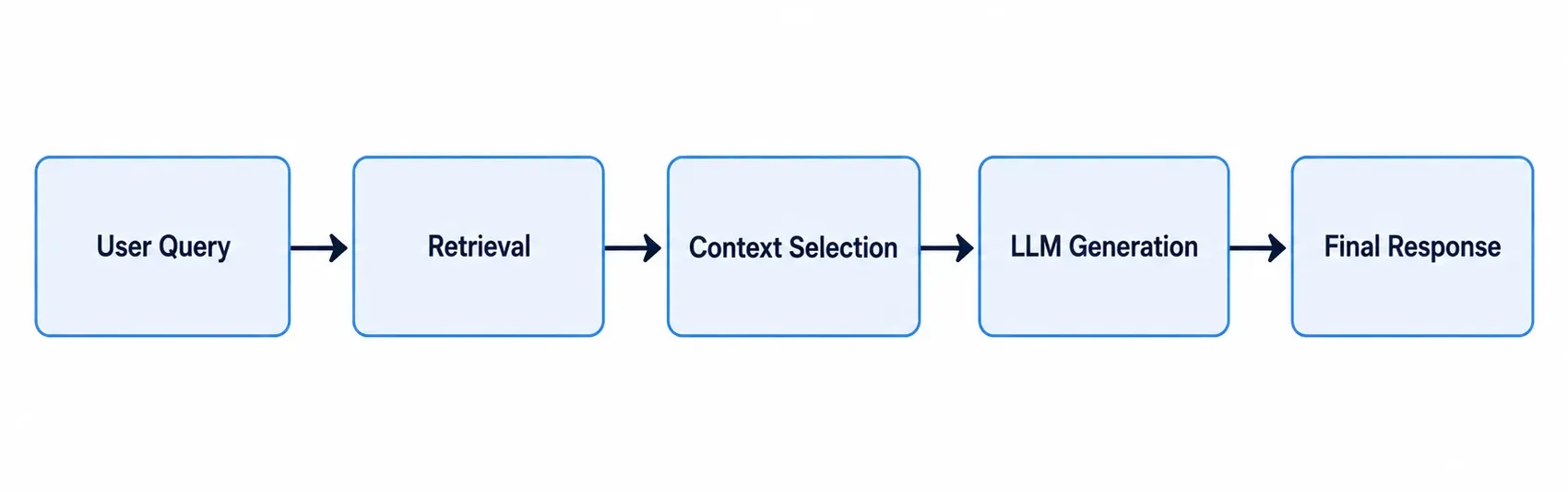
The rise of "Agentic AI"—systems that can take actions, such as booking a flight or writing code—adds a layer of complexity to the cycle. These systems require "Human-in-the-Loop" (HITL) monitoring to ensure that the autonomous actions taken by the AI remain within the bounds of corporate policy.
The Broader Impact of Lifecycle Management
As AI becomes more pervasive, the adoption of a structured project cycle is moving from a "best practice" to a regulatory necessity. The EU AI Act, for instance, mandates high levels of transparency, documentation, and risk management for "high-risk" AI systems. By following the AI Project Cycle, companies naturally generate the documentation and audit trails required for such compliance.
Furthermore, a well-executed lifecycle fosters trust. When users know that an AI system has been rigorously defined, cleaned, tested, and monitored, they are more likely to adopt the technology. For the enterprise, this translates into higher adoption rates and a more significant competitive advantage.
Conclusion
The AI Project Cycle serves as a roadmap for navigating the complexities of modern machine learning and generative artificial intelligence. By breaking the process down into seven logical stages—from the initial "Problem Definition" to "Continuous Monitoring"—organizations can transform AI from a speculative experiment into a reliable, production-ready tool. In an era where technology moves at breakneck speed, the discipline of the cycle provides the stability necessary for long-term success. The goal is no longer just to build an AI that works in the lab, but to sustain an AI system that provides consistent, ethical, and scalable value in an ever-changing real-world environment.