The promise of creating a professional website in minutes, once a futuristic concept, has largely been realized with the advent of AI website builders. These advanced platforms leverage artificial intelligence to automate significant portions of the web development process, dramatically compressing timelines that traditionally spanned days, weeks, or even months. However, while AI can generate a visually appealing and functional website with surprising speed, the complete journey from concept to a truly effective online presence still necessitates crucial human input for refinement, personalization, and ongoing optimization. Understanding this realistic timeline, distinguishing between AI’s rapid generation and the essential human stages, is key for anyone looking to establish or enhance their digital footprint.
The Evolving Landscape of Website Creation
For decades, building a website was a complex endeavor, often requiring specialized technical skills in coding (HTML, CSS, JavaScript), database management, and server configuration. The early internet saw static pages hand-coded, while the rise of Content Management Systems (CMS) like WordPress, Joomla, and Drupal democratized the process somewhat, allowing users to manage content without deep coding knowledge. Yet, even with CMS platforms, users still faced a steep learning curve in choosing themes, installing plugins, configuring layouts, and populating content—tasks that could easily consume dozens of hours for a novice. For businesses, this often translated into significant financial investment in hiring web developers or agencies, extending project timelines considerably.
The advent of no-code and low-code platforms further simplified website creation, offering drag-and-drop interfaces that reduced the technical barrier. AI website builders represent the next evolutionary leap, pushing automation to an unprecedented level. These tools don’t just provide a template; they intelligently generate a website structure, design elements, and even initial content based on a few user prompts. This shift has profound implications for entrepreneurs, small businesses, and individuals who previously found the entry barrier to a professional online presence too high.
A Realistic Timeline: Navigating the AI-Assisted Website Journey
While the marketing claims of "minutes to a website" hold a kernel of truth regarding the generation phase, a comprehensive understanding of the entire process reveals a more nuanced, albeit still significantly accelerated, timeline. Every website, regardless of its creation method, follows a fundamental journey. The critical difference with AI lies in how rapidly the initial foundational stages are completed.
Here’s a breakdown of the typical stages and a realistic estimate, contrasting traditional and AI-assisted approaches:
| Stage | What it Involves | Traditional Time | AI-Assisted Time |
|---|---|---|---|
| 1. Define Website’s Purpose & Strategy | Clearly articulate goals (e.g., lead generation, e-commerce, portfolio), identify target audience, and outline essential pages and features. The clearer the vision, the smoother the execution. | 1-3 days | 30 minutes – 1 day |
| 2. Market & Competitor Research | Analyze industry trends, study competitors’ websites, identify unique selling propositions (USPs), and gather design/content inspiration. Crucial for differentiation and effective positioning. | 2-5 days | 1-3 days (AI can assist with initial data gathering) |
| 3. Choose & Register Domain Name | Brainstorm memorable names, check availability, and secure the best fit for your brand. | 30 minutes – 1 day | 30 minutes – 1 hour |
| 4. Set Up Web Hosting | Select a reliable hosting provider, create an account, and configure essential settings to make your site accessible online. Many AI builders integrate hosting seamlessly. | 1-2 days | 30 minutes – 1 hour |
| 5. Website Structure & Design | Traditional: Manually select templates, build pages, organize navigation, choose layouts, and integrate functionalities. AI-Assisted: AI generates initial structure, page layouts, and design elements based on prompts. | 3-10 days | 3-15 minutes |
| 6. Content Generation & Refinement | Traditional: Write all page copy, gather images/videos, ensure brand consistency. AI-Assisted: AI generates draft content; human review and personalization are essential. | 5-15 days | 1-7 days (post-AI generation) |
| 7. Review, Test & QA | Thoroughly test responsiveness across devices, verify all links and forms, check loading speeds, proofread content, and fix any issues before launch. | 1-3 days | 2-8 hours |
| 8. Publish Website | Connect the domain, perform final pre-launch checks, and make the website live for public access. | 2-4 hours | 30 minutes – 2 hours |
| Total Estimated Time | 16-40+ days | 3-15 days |
Note: These are estimates. Project complexity, available resources, and user preparedness significantly influence actual timelines.
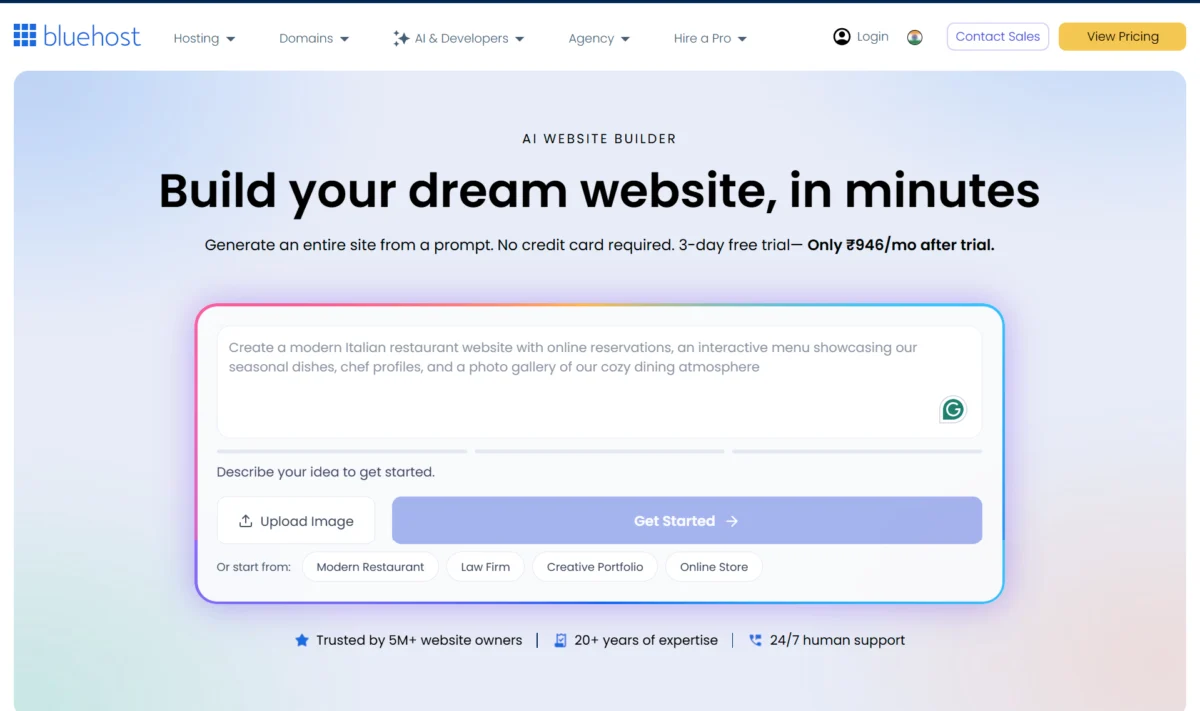
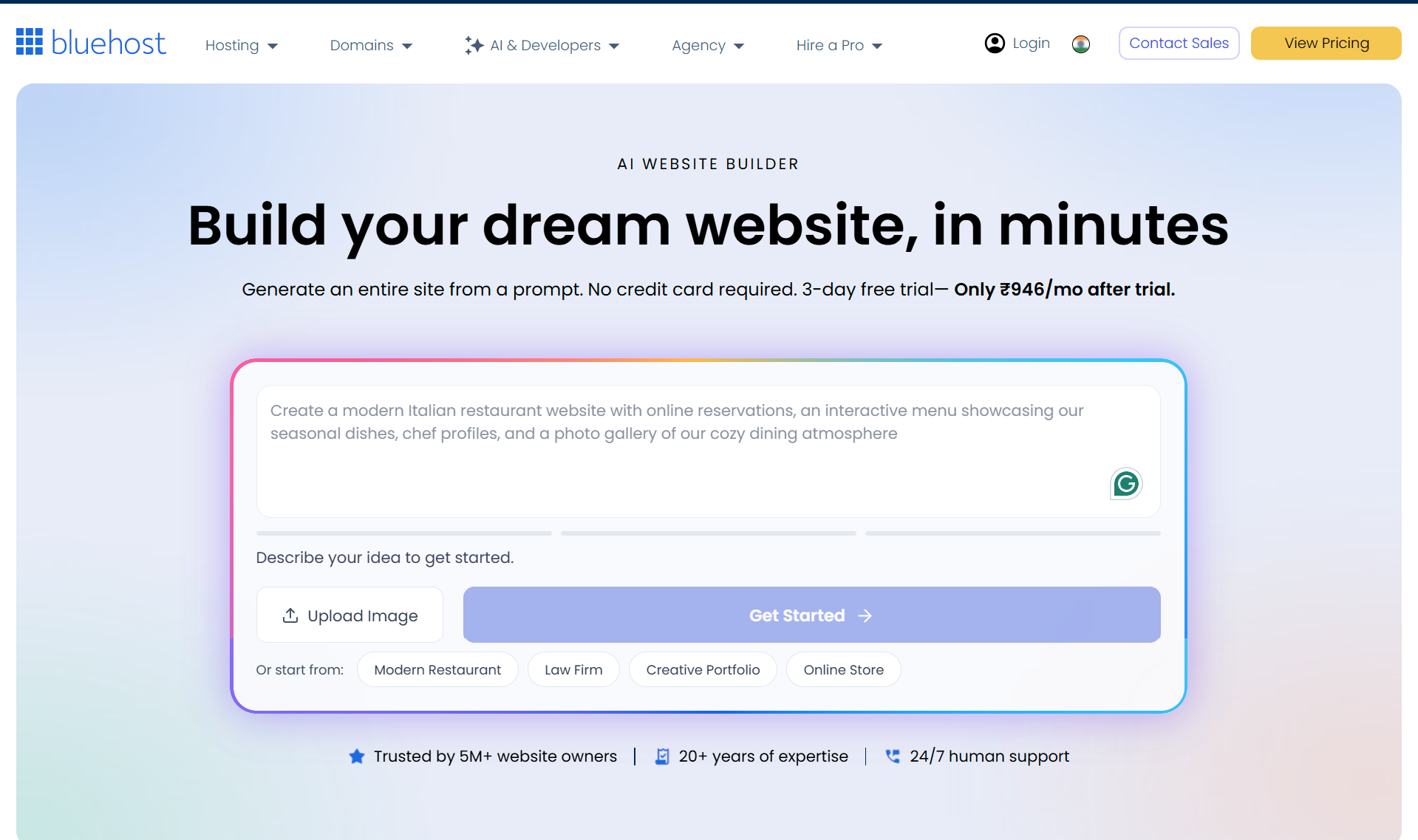
The most dramatic reduction, as evident, occurs in Stage 5: Website Structure & Design. This is where AI truly shines, transforming what could be days or weeks of manual layout work into a process that takes mere minutes. Platforms like Bluehost’s AI Website Builder exemplify this, generating a complete first draft—including page layouts, navigation, and initial content—in approximately three minutes after a brief onboarding questionnaire. This acceleration is a game-changer for individuals and small businesses, enabling them to bypass the "blank canvas" paralysis and move directly to refinement.
Additional Factors Extending the Timeline
While AI speeds up the core build, specific functionalities and strategic considerations can still extend the overall project timeline. These additions are often critical for business-specific needs and highlight areas where human expertise remains paramount:
- E-commerce Integration: Setting up an online store involves configuring product catalogs, managing variants (size, color), integrating payment gateways (e.g., Stripe, PayPal), and setting up complex shipping and tax rules. This can add anywhere from 1-5 days for basic setup to several weeks for extensive product lines and complex logistics.
- Third-Party Tool Integration: Connecting external services like Customer Relationship Management (CRM) systems, email marketing platforms, analytics tools (Google Analytics, Google Search Console), or booking systems requires careful configuration and testing, potentially adding a few hours to several days per integration.
- Multilingual Support: Creating pages in multiple languages demands translation, localization, and technical setup for language switching, which can extend the content phase by several days to weeks, depending on the number of languages and content volume.
- Advanced Customizations & Branding: While AI provides a solid starting point, achieving a truly unique brand identity often requires deeper customization of design elements, bespoke graphics, and custom code snippets, which can add significant time.
- Pre-Launch Strategic Planning: For businesses entering competitive markets, pre-launch activities like detailed competitor analysis, in-depth brand positioning workshops, and comprehensive content strategy development are crucial. These strategic efforts, while extending the overall project duration, lead to a more focused and effective website that better serves business objectives. Industry analysts often highlight that strategic planning, though time-consuming, is correlated with higher conversion rates and greater online success.
Where Human Oversight Remains Indispensable
The primary benefit of AI website builders is providing a robust first draft, eliminating the initial friction of starting from scratch. However, this draft is rarely the final product. The most impactful improvements and differentiators come from human intervention in several critical areas:
- Refining Your Content: AI-generated text is a strong starting point, offering structure and basic information. However, it often lacks the unique brand voice, nuanced messaging, emotional resonance, and specific details that define a business. Human writers must review, personalize, and inject their brand’s personality, ensuring accuracy, authenticity, and persuasive language that resonates with the target audience. According to marketing experts, unique and engaging content is a primary driver of customer trust and conversion.
- Choosing the Right Images and Visuals: AI may populate sites with stock images, but authentic, high-quality photography and branded visuals are crucial for establishing credibility and a strong identity. Replacing placeholders with original product shots, team photos, or custom graphics creates a more trustworthy and memorable experience. Visual consistency across the website reinforces branding and improves user engagement, with studies showing that high-quality visuals can increase content views by over 90%.
- Expanding Your Website Strategically: The initial AI-generated site typically includes core pages. However, a successful online presence often requires additional content, such as detailed service pages, comprehensive FAQs, compelling testimonial sections, detailed pricing pages, or a robust blog. Humans are best equipped to identify these strategic content gaps and develop a plan for phased expansion to meet evolving business needs and customer queries.
- Optimizing for Search Engines (SEO): While AI can generate content that includes keywords, true SEO mastery requires ongoing human effort. This involves in-depth keyword research, optimizing page titles, meta descriptions, internal linking structures, heading hierarchies, and ensuring mobile-friendliness. Post-launch, continuous SEO involves creating valuable, evergreen blog content, monitoring performance through tools like Google Search Console, and adapting to algorithm changes. A significant portion of website traffic, often exceeding 50%, originates from organic search, underscoring the necessity of persistent SEO efforts.
- User Experience (UX) and Accessibility: While AI can provide a functional layout, human designers and testers are crucial for fine-tuning the user experience to ensure intuitive navigation, optimal information architecture, and adherence to accessibility standards (WCAG guidelines). A well-optimized UX not only keeps visitors on the site longer but also improves conversion rates.
Implications for Businesses and the Web Development Industry
The rise of AI website builders democratizes web presence, empowering a broader spectrum of individuals and small businesses to get online quickly and affordably. This means more competition in the digital space, but also greater opportunity for those who leverage AI effectively and then invest in human refinement.
For the web development industry, this shift isn’t about job displacement but rather job evolution. Developers and designers are increasingly moving away from foundational site assembly towards more complex, value-added tasks:
- Custom Integrations: Building bespoke connectors for specific business software.
- Advanced Functionality: Developing unique features that go beyond standard templates.
- Performance Optimization: Focusing on speed, scalability, and security at an advanced level.
- Strategic Consulting: Guiding clients on digital strategy, SEO, UX, and online growth.
- AI Tool Specialization: Becoming experts in leveraging and customizing AI-generated outputs.
Industry projections suggest a growing demand for professionals skilled in optimizing and managing AI-driven platforms, indicating a shift towards higher-level, strategic roles.
Navigating the Post-Launch Phase: Continuous Growth and Optimization
Launching a website, even an AI-generated one, is merely the first step in a continuous journey. A successful online presence is dynamic, requiring ongoing effort to remain relevant, discoverable, and effective.
- Regular Content Publishing: Whether it’s a business blog, news updates, or product announcements, consistently publishing helpful and fresh content keeps your audience engaged and signals to search engines that your site is active and authoritative. Crafting SEO-friendly blog posts is vital for attracting organic traffic.
- Website Maintenance and Updates: Websites are living entities. As your business evolves—new products, services, pricing, or contact details—your website must reflect these changes promptly. Regular software updates (for CMS platforms like WordPress), security checks, and broken link audits are also crucial for performance and user trust.
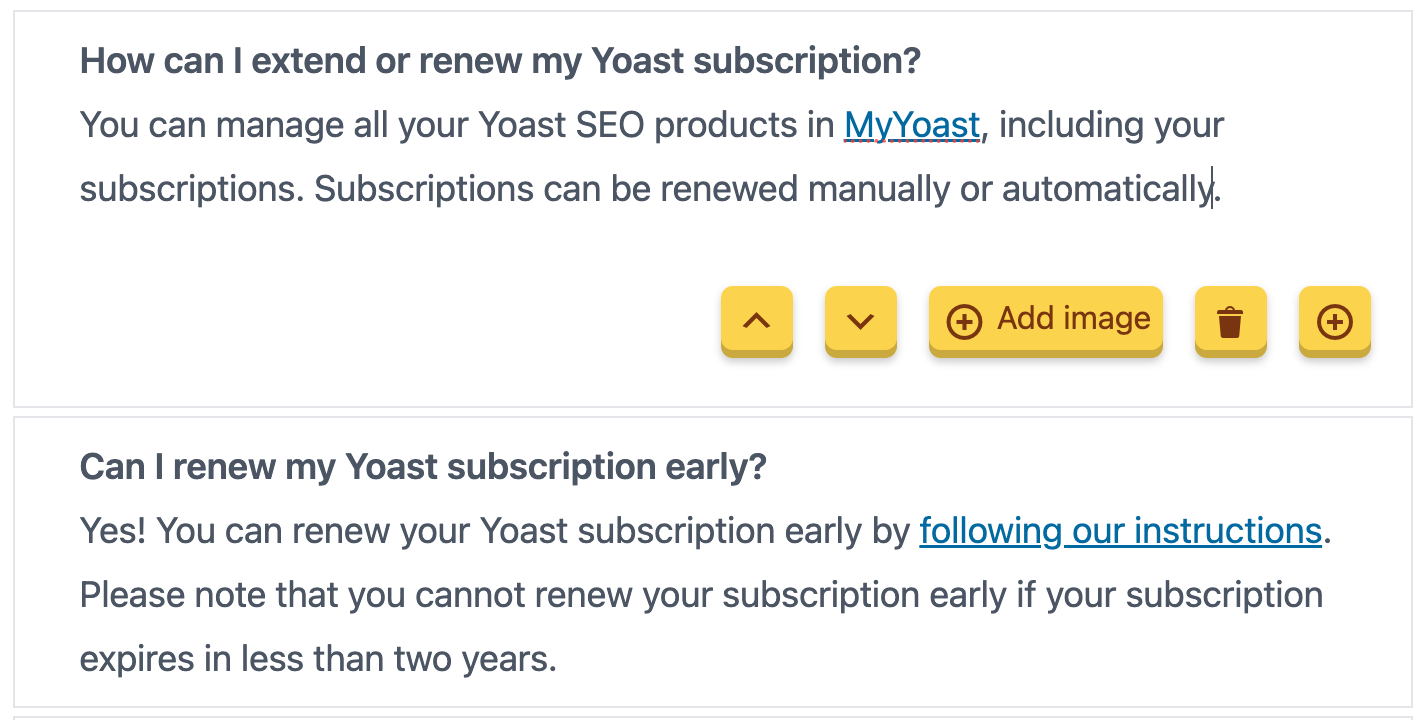
- Continuous SEO Improvement: SEO is not a one-time task. It involves ongoing keyword research, optimizing new and existing pages, building high-quality backlinks, improving technical SEO aspects (site speed, crawlability), and adapting to evolving search engine algorithms. Tools like Yoast SEO, with its smart content analysis and structured data blocks (e.g., for FAQs), can significantly aid in this process, helping content become more digestible for both human users and AI crawlers.
- Performance Monitoring: Understanding how users interact with your site is paramount. Integrating tools like Google Analytics provides insights into user behavior, traffic sources, and conversion paths. Google Search Console helps monitor search performance, identify indexing issues, and track keyword rankings, informing future SEO strategies.
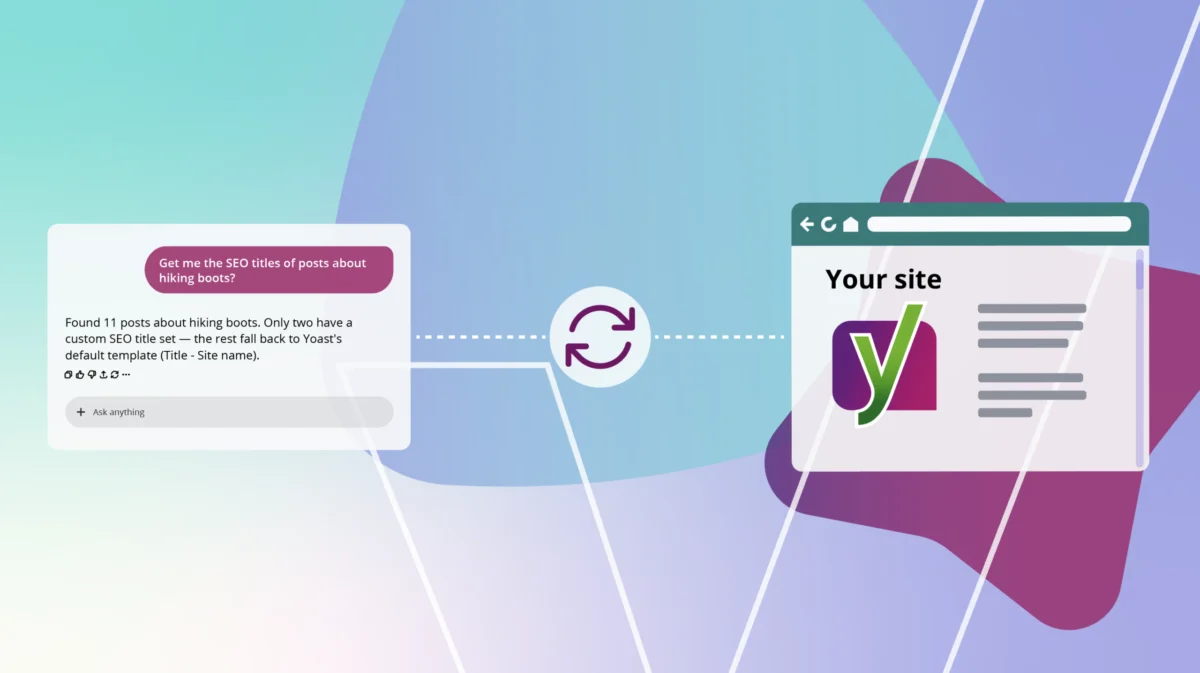
- Building an AI Presence: As AI-powered search experiences (like conversational AI in search engines) become more prevalent, understanding how your brand is perceived by these systems is increasingly important. Tools like Yoast SEO AI+ aim to help businesses monitor their brand’s representation in AI platforms, allowing them to proactively strengthen their online presence in this emerging landscape.
The Final Verdict: AI as a Head Start, Not the Finish Line
AI website builders have unequivocally transformed the initial stages of website creation. They enable individuals and businesses to bypass the steep learning curve and significant time investment traditionally associated with building a site from the ground up. A basic, functional website can realistically be online within 30 to 90 minutes for most users, assuming some preparedness regarding branding and initial content. For those with a clear vision and ready assets, publishing in under 15 minutes is entirely feasible for the initial draft. More polished, customized, and SEO-optimized sites will still require a few hours to a full day of dedicated refinement.
The biggest impact of AI is not that it creates a perfect website in minutes, but that it delivers a complete first draft in minutes. This compresses the most time-consuming foundational tasks—setting up structure, layouts, navigation, and initial content—into an efficient, guided process. This allows creators to dedicate their valuable time to the elements that truly differentiate a website and drive success: crafting compelling content, establishing strong branding, optimizing user experience, and implementing robust SEO strategies.
AI provides an unprecedented head start, enabling faster market entry and greater agility. However, the journey to a successful, high-performing website remains a collaborative effort between intelligent automation and insightful human creativity. The sooner one launches with AI’s assistance, the sooner one can begin the essential work of refining, growing, and optimizing their online presence to truly stand out.

 Jia Lissa
 Siti Muinah