The global mobile application market, currently valued at hundreds of billions of dollars, has reached a level of saturation where mere functionality no longer guarantees commercial success. In an environment where the Apple App Store and Google Play Store host millions of competing services, the differentiator has shifted from what an app does to how seamlessly it performs for the end-user. For years, mobile app professionals have relied on quantitative analytics to gauge performance, tracking metrics such as Daily Active Users (DAU), retention rates, and conversion funnels. However, industry analysts increasingly point to a fundamental flaw in this traditional workflow: quantitative data identifies that a problem exists but fails to explain why it is occurring. To bridge this gap, a new paradigm of "Qualitative Analytics" has emerged, fundamentally altering how developers, product managers, and UX designers optimize their digital products.
The Quantitative Ceiling and the Need for Contextual Depth
Quantitative analytics serves as the "alarm system" of the mobile ecosystem. It provides the hard numbers required to measure the health of an application. For instance, a product manager might observe through a dashboard that 40% of users drop off at the "Shipping Information" screen of a checkout process. While this figure is a vital indicator of friction, it remains a silent witness to the actual user experience. The quantitative data cannot distinguish between a technical bug, a confusing user interface (UI) element, or a psychological barrier such as a lack of trust in the payment gateway.
This limitation represents the "quantitative ceiling." Relying solely on these metrics often leads development teams into a cycle of "blind optimization," where they make iterative changes based on assumptions rather than observed behavior. This approach is not only inefficient but also costly, as it consumes engineering resources without a guaranteed improvement in user outcomes. The solution lies in integrating qualitative tools—specifically touch heatmaps and user session recordings—into the standard analytics workflow to provide the "why" behind the "what."
The Evolution of Qualitative Tools: Heatmaps and Session Replay
The transition toward qualitative insights has been driven by the advancement of Software Development Kits (SDKs) that can capture granular user interactions without compromising device performance. Two primary technologies lead this front:
1. Aggregate Interaction Analysis through Touch Heatmaps
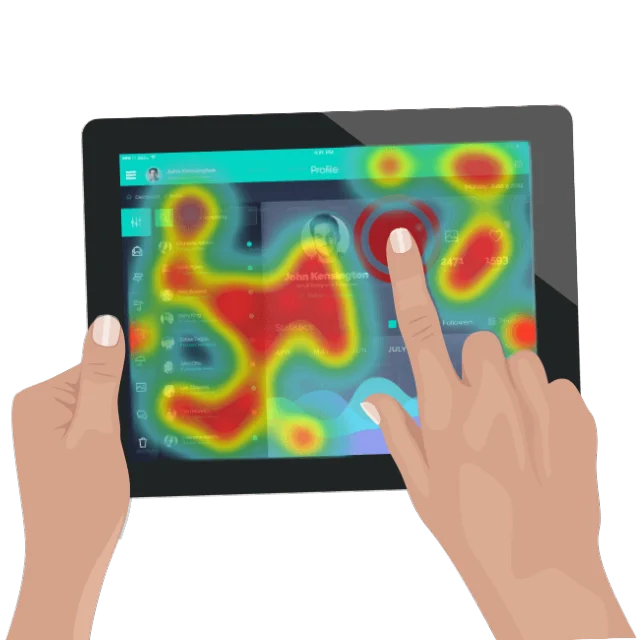
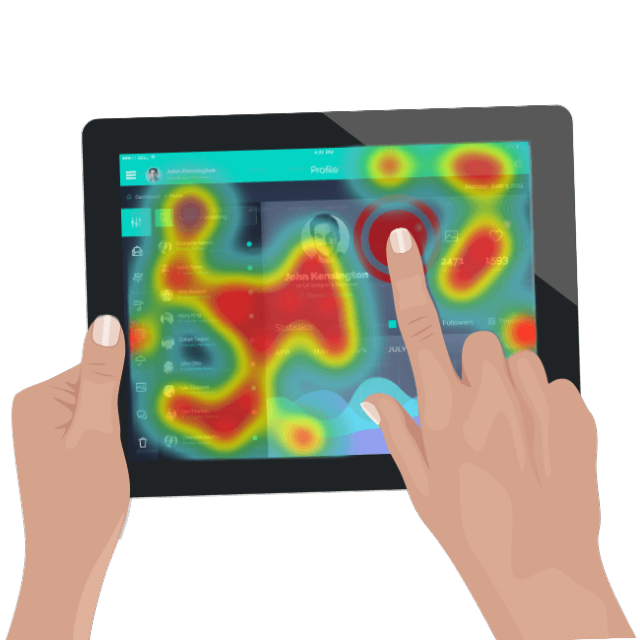
Touch heatmaps represent a visual synthesis of every gesture performed across an app’s interface. By aggregating data from thousands of sessions, these tools create a color-coded overlay that highlights areas of high and low engagement.
A critical sub-metric within this field is the "unresponsive gesture." These occur when a user taps or swipes an element—such as an image they expect to be zoomable or a text string they believe is a link—and the app provides no feedback. According to UX research, unresponsive gestures are a primary driver of "rage clicking," a behavior where frustrated users tap rapidly on a frozen or non-interactive element. Identifying these clusters allows designers to align the app’s affordances with user expectations, turning intuitive "mis-taps" into functional features.
2. Visual Ethnography via User Session Recordings
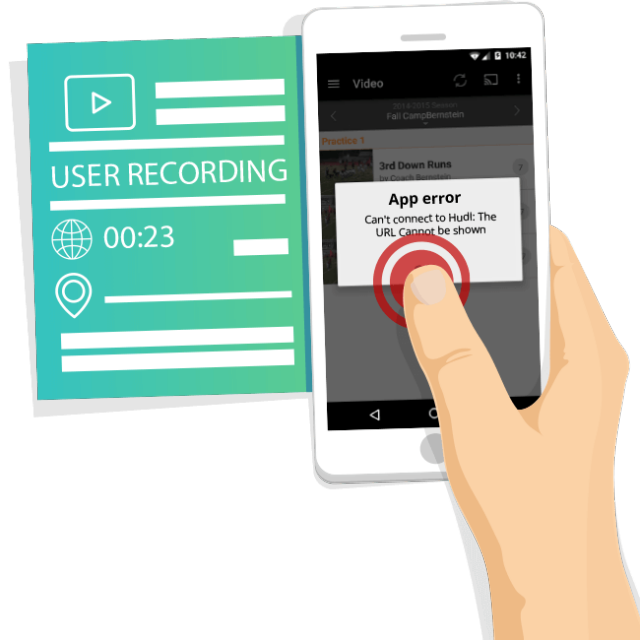
If heatmaps provide the "big picture," user session recordings provide the "biography" of a single user’s journey. This technology captures the sequence of events on a screen-by-screen basis, allowing professionals to watch a playback of the user experience.
Unlike traditional laboratory-based usability testing, which can be influenced by the "Hawthorne Effect" (where individuals modify their behavior because they know they are being observed), session recordings offer an unbiased view of how users interact with the app in their natural environment. This data is invaluable for troubleshooting rare, device-specific bugs or understanding the navigation paths of different demographic segments. Modern qualitative platforms ensure privacy by automatically masking sensitive information, such as passwords or credit card numbers, ensuring that the pursuit of UX excellence does not come at the cost of data security.
Chronology of a Shift: From Reactive to Proactive Workflows
The integration of qualitative data has forced a chronological shift in the development lifecycle. Historically, the workflow followed a linear, reactive path:
- Deployment: The app is released to the public.
- Observation: Quantitative data is collected over weeks or months.
- Negative Feedback: Users encounter issues, leading to poor App Store ratings or high churn.
- Reaction: Developers attempt to replicate bugs and release a patch.
The modern, qualitative-enhanced workflow is cyclical and proactive:
- Real-Time Monitoring: As soon as a new version is deployed, session recordings are reviewed.
- Early Detection: UI friction is spotted in the first hundred sessions, often before the user even realizes there is a systemic issue.
- Hypothesis and Validation: Quantitative drops are immediately cross-referenced with qualitative recordings to confirm the root cause.
- Rapid Iteration: Fixes are deployed before the issue impacts the broader user base or the app’s overall rating.
Data-Fueled Optimization: The "Alert, Investigate, Resolve" Model
The most effective mobile teams utilize a hybrid approach known as "Data-fueled Optimization." This methodology treats quantitative and qualitative data as two sides of the same coin.
Consider the scenario of a fintech application experiencing a sudden 15% decrease in successful account creations. The quantitative tool sends an "Alert" regarding the drop-off at the "ID Verification" step. Instead of guessing that the instructions are unclear, the team moves to the "Investigate" phase by filtering session recordings specifically for users who exited at that screen.
The recordings might reveal that on a specific model of Android phone, the "Upload Document" button is being obscured by the system’s keyboard. This specific insight allows for a "Resolve" phase that is surgical rather than speculative. By fixing the CSS layout for that specific resolution, the team recovers the conversion rate with minimal trial and error. This "lather, rinse, repeat" cycle minimizes the "stab in the dark" approach that characterizes many legacy optimization strategies.
Proactive Troubleshooting and Technical Integrity
Beyond UI/UX optimization, qualitative analytics serves as a frontline defense for technical stability. Crash logs (a quantitative metric) are often cryptic, providing a stack trace that tells a developer where the code failed but not the user actions that led to the failure.
By watching the seconds of a session recording leading up to a crash, developers can see the exact sequence of "edge case" interactions that triggered the exception. For example, a user might have toggled a setting, switched to another app, and then returned to a specific sub-menu—a sequence that a QA tester might never have thought to simulate.
Industry consensus among Chief Technology Officers (CTOs) suggests that "proactive troubleshooting" significantly reduces the "Mean Time to Resolution" (MTTR). When a bug is caught and understood visually, the communication gap between the support team, product managers, and engineers is virtually eliminated.
Broader Impact and Industry Implications
The shift toward qualitative-heavy workflows has broader implications for the mobile economy. First, it directly impacts User Acquisition (UA) costs. In an era where the cost to acquire a single user can exceed $5.00 in competitive verticals like gaming or e-commerce, losing a user due to a preventable UI glitch is a significant financial drain. Improving retention through qualitative insights directly boosts the Lifetime Value (LTV) of the customer base, making UA spend more efficient.
Furthermore, the democratization of these tools means that small indie development teams can now compete with larger corporations. By using qualitative data to maintain a "high-touch" understanding of their users, smaller players can iterate faster and maintain higher levels of user satisfaction.
In conclusion, the marriage of quantitative and qualitative analytics represents the maturation of the mobile app industry. The numbers provide the skeleton of the app’s performance, but the qualitative insights provide the muscle and soul. As mobile professionals move away from siloed data and toward an integrated, visual understanding of the user journey, the result is a more intuitive, stable, and successful digital product. Those who fail to adopt these "fresh twists" on old analytics ideas risk being left behind in an increasingly demanding and sophisticated market.


 Ali Ikhwan
 Dwi Wanna