The digital landscape continues its rapid evolution, marked by significant updates across major search and advertising platforms, as highlighted in this week’s comprehensive industry recap. From Google Search setting new global usage benchmarks during a historic sporting event to the integration of social media performance data within Search Console, and the ongoing proliferation of AI in advertising, these developments underscore a dynamic period for webmasters, marketers, and businesses worldwide. Key announcements also include crucial updates to Google Ads, the expansion of AI-driven ad solutions from ChatGPT, and essential fixes and new features within core Google services like Merchant Center and Business Profiles.
Google’s Unprecedented Scale and Search Console Innovations
Google’s role as a global information utility was dramatically underscored when it recorded unprecedented search activity during a momentous sporting event. Nick Fox, a prominent figure within Google Search, announced that the platform broke all prior usage records at the precise moment Argentina scored its winning goal in the 2022 FIFA World Cup Final against France. This single event, captivating billions worldwide, triggered a surge in real-time queries that tested the limits of Google’s vast infrastructure, demonstrating its capacity to handle instantaneous global demand for information at an unparalleled scale. The previous record for search traffic was typically associated with major global events such as the Super Bowl or significant breaking news stories, but the World Cup final, particularly its dramatic conclusion, created a unique inflection point in search history. This achievement highlights not only the immense global reach of the World Cup but also Google’s robust technological backbone, designed to process trillions of searches annually and deliver instantaneous results, even under peak load conditions. The ability to maintain service integrity and deliver relevant information during such a sudden and massive spike in demand is a testament to years of infrastructure investment and engineering prowess.
In a move addressing the increasingly fragmented nature of online content, Google Search Console has rolled out a pivotal update, now allowing webmasters to view third-party platform content performance data. This includes metrics for content published on Instagram, TikTok, X (formerly Twitter), and YouTube. This integration represents a significant shift, acknowledging the crucial role social and video platforms play in content discovery and user engagement, extending beyond traditional website traffic. Previously, marketers and SEO professionals had to rely on disparate analytics tools for each platform, creating data silos that hindered a holistic view of content performance. The new Search Console functionality bridges this gap, providing a centralized dashboard to track how content performs across these vital channels. This enables a more integrated approach to content strategy, allowing businesses to understand which pieces of content resonate most effectively on different platforms, identify new traffic sources, and optimize their multi-platform presence. The implication is a richer, more comprehensive understanding of a brand’s digital footprint, facilitating data-driven decisions that span owned websites and popular social ecosystems.
Further enhancing the utility of Search Console, Google has addressed a persistent issue with its page indexing report. After a period where the report displayed inaccuracies or delays, a fix has been implemented, providing webmasters with more reliable and up-to-date information on the indexing status of their pages. While noted with the caveat "for now," suggesting ongoing monitoring or potential for future adjustments, this resolution offers much-needed relief to SEOs who depend on this data for identifying and resolving indexing issues. Accurate indexing data is fundamental for search visibility, and any discrepancies can lead to significant delays in content appearing in search results. This fix ensures that webmasters can more effectively diagnose problems such as pages not being indexed, canonicalization errors, or crawl budget inefficiencies, ultimately supporting better site health and search performance.
Related to indexing and site health, Google has provided clarity on the expected timeframe for resolving canonicalization issues. The search giant indicates that it can take up to two weeks for canonicalization changes to be fully processed and reflected in its index. Canonicalization is a critical SEO concept where webmasters signal the preferred version of a URL when multiple URLs serve the same or very similar content, preventing duplicate content issues. The two-week window underscores the complexity of Google’s indexing systems and the patience required from webmasters when implementing or correcting canonical tags. This information is vital for managing expectations, particularly for sites undergoing migrations, redesigns, or those with extensive duplicate content concerns. It reinforces the importance of meticulous planning and early implementation of canonical strategies to minimize potential impacts on search rankings and visibility.
The Evolving Landscape of AI in Search and Advertising
The integration of artificial intelligence into search continues to accelerate, with Google actively expanding its Search Generative AI (SGE) capabilities. AI controls for Google’s generative search experiences are now rolling out to more sites beyond the initial testing phase in the UK. These controls empower users with greater agency over their interactions with AI-generated search results, allowing them to customize preferences or provide feedback, thereby shaping their generative search experience. This gradual expansion signals Google’s cautious yet determined approach to embedding AI into its core search product, ensuring user comfort and refining the technology based on broader feedback. For content creators and publishers, understanding how users interact with these AI controls and how their content is surfaced within generative answers becomes paramount.
Accompanying the rollout of generative AI features, a practical trick has emerged for webmasters to access AI performance reports for their new platform properties. While specific details of this "trick" were not elaborated in the initial report, it implies a method to gain insights into how AI-driven search results are impacting traffic and visibility for recently added or reconfigured digital assets. This capability is crucial for understanding the evolving user journey in an AI-infused search environment and for optimizing content strategies to align with how generative AI synthesizes and presents information. As AI Overviews become more prevalent, having access to such performance data will be indispensable for publishers to adapt and maintain their organic visibility.
Google is also enhancing its AI Overviews with a new "Further Exploration" feature. This addition aims to enrich the user experience by providing more avenues for discovery directly within the AI-generated summaries. When users receive an AI Overview, "Further Exploration" likely presents related queries, tangential topics, or deeper dives into specific aspects of the initial query, all designed to keep users engaged and facilitate a more comprehensive understanding of a subject without necessarily navigating away from the search results page. This feature not only improves the utility of AI Overviews but also reinforces Google’s strategy to serve as a comprehensive knowledge hub, guiding users through complex information landscapes more intuitively.
In the realm of advertising, Google Ads is proactively addressing transparency and ethical considerations surrounding AI-generated content. The platform has introduced AI labels for advertisements that have been created or significantly edited using artificial intelligence. This initiative aligns with broader industry trends towards disclosing the use of AI in content creation, driven by both regulatory pressures and a desire to build user trust. For advertisers, this means an added layer of compliance and potentially a new consideration in ad creative development. For users, these labels provide clear indicators, allowing them to distinguish between human-crafted and AI-assisted ad content, fostering greater transparency in the digital advertising ecosystem. This move is a clear signal that AI’s role in advertising is maturing, requiring established standards for disclosure and accountability.
Advancements in Google’s Advertising and E-commerce Ecosystem
Google Ads continues to refine its offerings, particularly within the travel sector. The open beta for Google Ads travel search campaigns has been expanded to include "Things To Do" and "Events." This expansion allows travel businesses, event organizers, and experience providers to leverage Google’s robust advertising platform to reach potential customers searching for activities and happenings. By broadening the scope of travel campaigns, Google aims to capture a larger share of the travel and leisure market, providing more granular targeting options and specialized ad formats for a highly competitive industry. This move offers significant opportunities for businesses to showcase unique experiences and drive bookings, while also providing users with more relevant and diverse travel-related ad content.
Google is also actively experimenting with ad display formats to optimize user engagement and click-through rates. Tests are underway for large "Visit Site" buttons on sponsored results, designed to make the call-to-action more prominent and intuitive for users. Simultaneously, Google is testing the inclusion of favicons on sitelinks within sponsored results. Favicons, the small icons associated with websites, can enhance brand recognition and trust, making sponsored links appear more integrated and trustworthy within the search results page. These UI experiments reflect Google’s continuous efforts to balance advertiser needs for visibility with user experience, aiming to create more effective and visually appealing ad units that seamlessly integrate into the search interface. The outcomes of these tests will likely influence future standard ad formats, potentially leading to higher engagement for advertisers and a more streamlined experience for users.
For e-commerce businesses, Google is enhancing structured data capabilities for merchant listings. New fields have been added to the Merchant Listings structured data, including "product categories" and "sale duration." These additions enable merchants to provide more detailed and specific information about their products and promotional offers directly within their schema markup. Richer structured data allows Google to better understand and display product information in search results, potentially leading to enhanced rich snippets, improved visibility in Google Shopping, and more relevant ad targeting. The "sale duration" field is particularly beneficial for highlighting limited-time offers, creating urgency and potentially boosting conversion rates. This update underscores the growing importance of comprehensive structured data for e-commerce success, allowing merchants to communicate critical product and pricing information directly to search engines.
In a move towards simplification, "Google Merchant Center Next" has officially been rebranded to simply "Merchant Center." This name change signifies the full integration and maturation of the "Next" iteration, which likely brought significant interface and feature enhancements. The dropping of "Next" indicates that the new, streamlined version is now the standard, consolidating Google’s tools for merchants under a unified and familiar name. This simplification aims to reduce confusion and provide a consistent experience for businesses managing their product data feeds for Google Shopping and other e-commerce initiatives.
Critical Updates for Businesses and Publishers
A significant warning has been issued regarding the Google & YouTube Shopify Sync app, which is projected to cause a "huge mess" for shopping campaigns after August 18th. While the exact nature of the impending issues was not detailed, the strong advisory suggests potential breaking changes, data synchronization problems, or disruptions to existing shopping campaign structures. This alert is critical for the vast number of e-commerce businesses that rely on the Shopify platform to power their online stores and integrate with Google and YouTube for advertising and sales channels. Merchants are urged to review their campaigns and app configurations proactively before the specified date to mitigate potential negative impacts, which could include campaign performance degradation, incorrect product listings, or even temporary halts in advertising efforts. This highlights the inherent risks and complexities involved in third-party platform integrations, requiring constant vigilance and readiness for change.
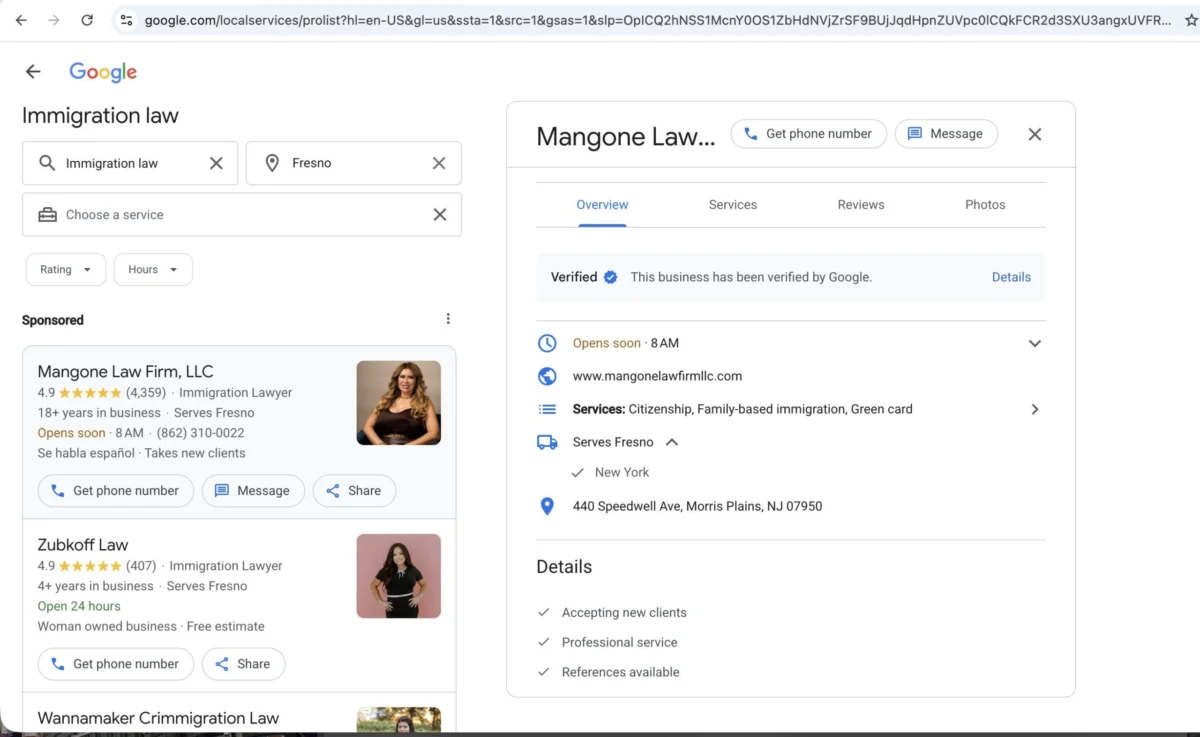
Google Business Profiles (GBP) has introduced a crucial enhancement to its appeals workflow. The appeals form now includes a dedicated section for submitting evidence. This addition is particularly significant for businesses that have faced profile suspensions, incorrect information, or other disputes. By allowing the direct submission of supporting documentation, such as business licenses, utility bills, or photos, Google aims to streamline the appeals process and enable more accurate and efficient resolution of issues. This change is a welcome development for legitimate businesses, providing a more robust mechanism to prove their authenticity and correct erroneous information, ultimately helping them regain control over their vital local search presence. It also signals Google’s efforts to combat fraudulent profiles and ensure the integrity of its local business listings.
However, not all news from Google was positive, as a "scary" reviews bug has been reported. While specific details of the bug’s nature were sparse, the description suggests a significant issue impacting the display, accuracy, or availability of business reviews. Google reviews are a cornerstone of local SEO and consumer trust, with their presence and quality directly influencing purchasing decisions. A "scary" bug could imply anything from reviews disappearing, incorrect ratings being displayed, or an inability for users to leave new reviews. Such an issue could severely impact businesses’ online reputations and local search performance, eroding trust in the accuracy of Google’s data. Businesses relying heavily on reviews for their credibility will need to monitor their GBP listings closely and report any anomalies they encounter.
Google is also testing a new technical parameter in its search results: google.com/goto tracking URL parameters. These parameters are likely designed for internal tracking and analytics purposes, allowing Google to gain more granular insights into user behavior, click paths, and the effectiveness of various search features. While these parameters are typically handled internally by Google and should not directly impact SEO rankings, webmasters and analytics professionals should be aware of their presence. They could potentially appear in referrer data or require adjustments in analytics configurations if they are not properly filtered or understood, ensuring accurate reporting of website traffic sources.
The Broader Competitive Landscape: ChatGPT and Bing Innovations
Beyond Google, other major players in the search and AI space are also making significant strides. ChatGPT Ads, a growing advertising platform, has unveiled a suite of new features designed to empower advertisers. The platform now offers ad autogeneration capabilities, allowing AI to draft ad copy and creative based on inputs, significantly speeding up campaign creation. Complementing this, ChatGPT Ads has introduced audience targeting, enabling advertisers to reach specific demographics and interest groups with greater precision. A new "Overview" tab provides a centralized dashboard for campaign management and performance monitoring. Furthermore, ChatGPT Ads has expanded its global reach, launching in Japan and South Korea, signaling its ambition to become a major international player in the AI-driven advertising market. These developments highlight the increasing competition in the ad tech space, with AI becoming a standard feature for efficient and effective campaign execution.
Meanwhile, Microsoft’s Bing search engine continues its innovation, testing a new product detail overlay screen. This feature is likely designed to provide users with a richer, more immersive product discovery experience directly within the search results. When users search for products, the overlay screen could present detailed information such as specifications, reviews, pricing comparisons, and multiple images, all without requiring a click away to a merchant’s website. This initiative reflects Bing’s ongoing efforts to enhance its e-commerce capabilities and compete more effectively with Google Shopping, offering users a comprehensive shopping experience directly within the search interface. For merchants, this means another platform to optimize their product data for, ensuring rich, compelling information is available to Bing users.
The collective updates from Google, ChatGPT Ads, and Bing paint a clear picture of a rapidly evolving digital ecosystem. AI is no longer an emerging technology but a foundational element across search, advertising, and content creation. The emphasis on data integration, transparency, and enhanced user experience suggests a future where digital platforms are more intelligent, interconnected, and responsive to both user and business needs. As these changes continue to unfold, adaptability and a proactive approach to understanding new features and mitigating potential risks will be paramount for anyone operating in the digital realm.