

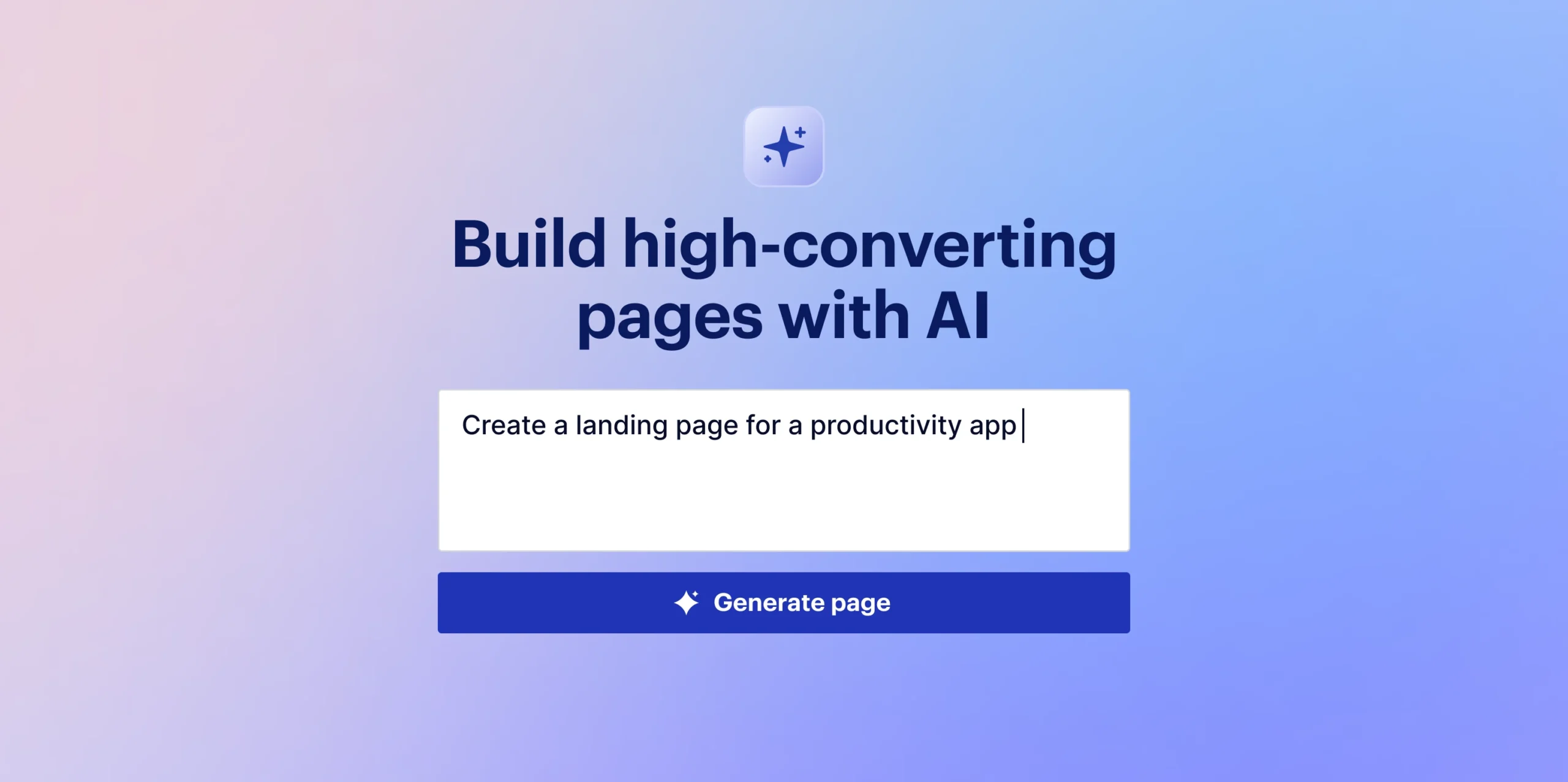
The digital marketing landscape has undergone a seismic shift as Instapage, a long-standing leader in landing page technology, officially unveiled its transition into an end-to-end, AI-powered marketing platform. This evolution marks a significant milestone for the company, which has spent over a decade refining the art of conversion rate optimization (CRO). By integrating generative artificial intelligence across its entire ecosystem—including page construction, email automation, and content scaling—Instapage aims to solve the persistent problem of “tool fragmentation” that has plagued marketing departments for years. The move reflects a broader industry trend where standalone software tools are being replaced by integrated AI environments capable of handling complex workflows from a single interface.
Since its inception in 2012, Instapage has maintained a reputation for providing one of the industry’s most sophisticated landing page builders. However, the company’s recent strategic pivot acknowledges a new reality in the mid-2020s: lean marketing teams are being asked to do more with less. By embedding AI into every stage of the marketing funnel, Instapage is positioning itself not just as a builder, but as an intelligent partner that can generate, test, and optimize assets in real-time. This transition is headlined by three major releases: AI Page Generation, AI Email Generation, and AI Collections, which together form a cohesive pipeline for lead generation and nurturing.
A Chronology of Innovation: From Builder to AI Ecosystem
The trajectory of Instapage provides a blueprint for the evolution of the SaaS (Software as a Service) marketing sector. Understanding the current AI integration requires a look back at the company’s historical milestones.
In 2012, Instapage launched with a focus on democratizing high-quality landing page design. At the time, creating a high-converting page required significant technical skill or a dedicated developer. Instapage’s introduction of a “pixel-perfect” drag-and-drop builder allowed non-technical marketers to achieve professional results. By 2018, the company had expanded its scope, moving beyond simple builders to offer a comprehensive CRO suite. This included advanced features such as heatmaps, A/B testing, and dynamic text replacement.
The period between 2020 and 2024 saw the company begin to experiment with automation and early-stage machine learning. During this era, Instapage introduced personalization features that allowed brands to serve different content to different audience segments automatically. However, the true turning point occurred in the last two years as generative AI matured. Instapage began embedding AI copy tools and experimentation modules, which served as the precursor to the current full-scale platform. The 2026 release represents the culmination of this decade-long journey, shifting the platform from a reactive tool that assists users to a proactive system that generates complete marketing assets from simple descriptions.
The Mechanics of AI Page Generation and Creative Control
One of the primary hurdles in digital marketing is the “blank page syndrome.” Even with sophisticated builders, the initial process of structuring a page, writing persuasive copy, and aligning design elements can take hours or even days. Instapage’s new AI Page Generation tool seeks to reduce this timeframe to mere seconds.
Unlike traditional AI generators that often produce rigid, uneditable templates, Instapage has integrated its generative AI directly into its established drag-and-drop builder. This hybrid approach addresses a common pain point in the industry: the difficulty of refining AI-generated content. In many standalone AI tools, if a user wants to change a specific layout element after the initial generation, they are often forced to re-prompt the system and regenerate the entire page, consuming additional tokens and time.
Instapage’s system operates differently. Once the AI generates a “conversion-ready” page based on a user’s description, the user retains full creative control. They can move sections, adjust margins, and swap images using the pixel-perfect editor without disturbing the underlying AI-optimized structure. This “generate-then-refine” workflow is designed to maintain the speed of AI while preserving the brand-specific nuances that only a human marketer can provide.
Expanding the Funnel: AI-Powered Email and Lead Nurturing
A landing page is only as effective as the follow-up that follows the lead capture. Historically, marketers have had to export leads from their landing page builder and import them into a separate email service provider (ESP), often using third-party connectors like Zapier to bridge the gap. This “stitching together” of tools creates friction and increases the likelihood of lead leakage.
Instapage’s new AI Email Generation tool is designed to eliminate this gap. By hosting pages, leads, and emails in a single environment, the platform allows for instantaneous follow-up. The AI email generator functions by taking inputs such as the campaign goal, target audience, preferred tone, and desired length. It then produces tailored messaging that aligns with the content of the landing page the lead just visited.

This integration is supported by new automation triggers. When a lead submits a form on an Instapage site, the system can immediately deploy an AI-crafted response. According to industry data, responding to a lead within the first five minutes increases the likelihood of conversion by nearly nine times. By automating this process with AI that understands the context of the lead’s interaction, Instapage is targeting a significant increase in mid-funnel efficiency for its users.
Supporting Data: The Economic Imperative for AI Integration
The shift toward AI-driven platforms is supported by compelling economic data. In the current fiscal climate, marketing budgets have faced increased scrutiny. A 2025 industry report indicated that the average cost of producing a single high-quality landing page—including design, copy, and development—ranged from $1,500 to $3,500 when using traditional agency or in-house resources. By utilizing AI generation, firms are reporting a reduction in production time of up to 80%, allowing for a higher volume of targeted campaigns without a corresponding increase in headcount.
Furthermore, the data regarding personalization remains a driving factor for Instapage’s strategy. Research from McKinsey & Company suggests that companies that excel at personalization generate 40% more revenue from those activities than average players. Instapage’s AI Collections and experimentation tools are built specifically to handle this at scale. By using AI to test hundreds of variations of a page simultaneously, the platform can identify high-performing segments far faster than a human analyst could.
Official Responses and Industry Implications
While official executive statements often highlight the “visionary” nature of such updates, internal product teams at Instapage have emphasized the practical necessity of these tools. Sources close to the product development cycle suggest that the move was driven by user feedback regarding “tool fatigue.” Marketers expressed frustration at having to manage five different subscriptions just to launch a single campaign.
Industry analysts view Instapage’s evolution as a direct challenge to both traditional ESPs and newer AI “wrapper” startups. “What we are seeing is the consolidation of the MarTech stack,” says one digital marketing analyst. “Instapage is betting that users would rather have a deeply integrated AI that understands their entire funnel than a series of disconnected, ‘best-of-breed’ tools that don’t talk to each other.”
However, the transition is not without its challenges. Instapage has noted that several of its AI features are currently in beta, rolling out gradually to ensure stability. This cautious approach reflects the ongoing concerns in the tech industry regarding AI hallucinations and the need for human oversight in brand-sensitive communications.
Broader Impact on the Marketing Profession
The broader implications of Instapage’s AI-powered platform extend to the very nature of marketing roles. As AI takes over the “heavy lifting” of layout design and initial copywriting, the role of the marketer is shifting from “creator” to “curator” and “strategist.”
In a world where a conversion-ready page can be built in seconds, the competitive advantage for brands will no longer be the ability to produce content, but the ability to provide the most accurate prompts and the most insightful strategic direction. Instapage’s platform is designed for this new era, where the speed of execution is no longer a bottleneck, but a baseline requirement.
As the platform continues to roll out its AI Collections and advanced experimentation features, the focus will likely shift toward predictive analytics—using AI not just to build what a marketer asks for, but to suggest what will perform best based on historical data. For now, Instapage’s transition marks a definitive end to the era of the “siloed builder” and the beginning of the integrated, intelligent marketing ecosystem.
With a 14-day free trial now available for the new suite, the industry will be watching closely to see if this unified approach can truly deliver on the promise of scaling marketing efforts without the traditional overhead. The success of this pivot could signal a permanent change in how SaaS companies structure their offerings in an AI-first world.







