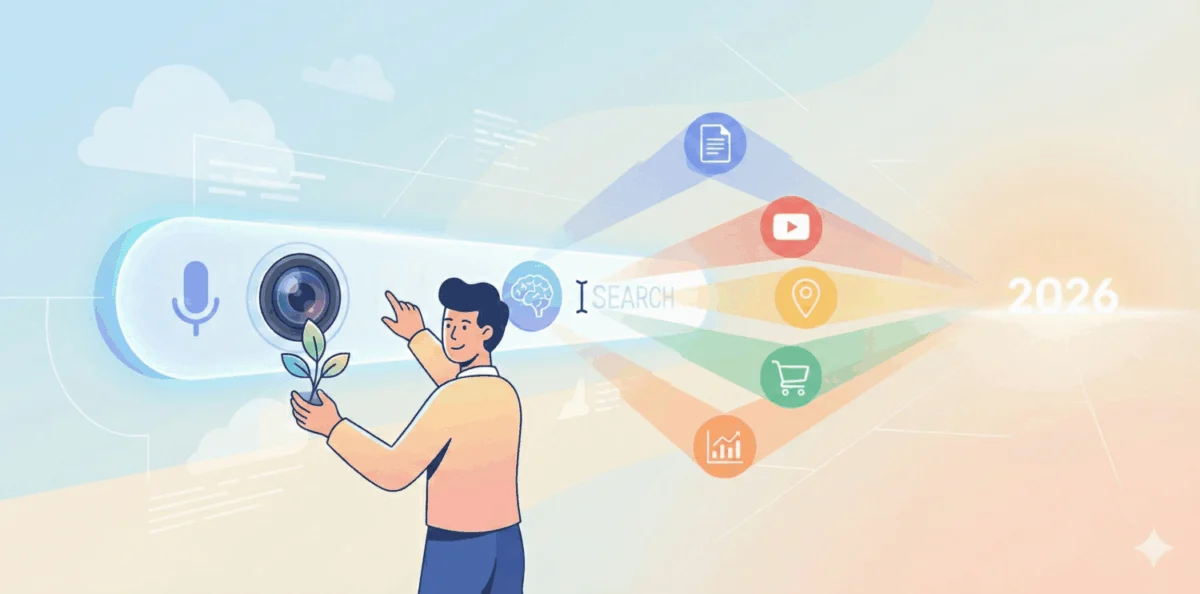
The digital landscape is undergoing a profound metamorphosis, a transformation far more significant than a mere algorithmic tweak or an incremental optimization cycle. What is currently unfolding in the realm of online search represents a seismic shift in how individuals discover and consume information, driven largely by advancements in artificial intelligence. AI systems are increasingly capable of answering complex queries directly, synthesizing information from diverse sources, and maintaining conversational context across multiple interactions. For marketing professionals, this paradigm shift signals the obsolescence of traditional SEO playbooks, ushering in an entirely new era of digital strategy.
This radical evolution necessitates a forward-looking perspective, particularly for marketing teams aiming to maintain relevance and drive growth in the near future. By 2026, as AI-driven discovery becomes deeply embedded in everyday search behavior, operational models will need to adapt comprehensively. The core challenge lies in understanding and strategically navigating a multi-faceted search ecosystem where AI agents act as primary intermediaries between users and information.
The Historical Trajectory of Search and the AI Inflection Point
To fully grasp the magnitude of the current shift, it is essential to contextualize it within the broader history of online search. Early internet navigation relied on curated directories like Yahoo!, which quickly gave way to keyword-based search engines like AltaVista and eventually Google. Google revolutionized search by prioritizing relevance through its PageRank algorithm, leading to the familiar "ten blue links" model that dominated for decades. The subsequent evolution incorporated semantic search, understanding user intent beyond exact keywords, and the rise of mobile search, local search, and voice search, each adding layers of complexity and opportunity.
However, the introduction of sophisticated Large Language Models (LLMs) and generative AI in late 2022, exemplified by ChatGPT, marked an unprecedented inflection point. These systems demonstrated an ability not just to retrieve information, but to understand, interpret, and generate human-like text, effectively synthesizing answers rather than merely listing sources. This technological leap has propelled major search providers like Google, Microsoft (with Bing Chat/Copilot), and emerging players like Perplexity AI to integrate these capabilities directly into their core offerings, fundamentally altering the user’s information journey. Industry reports indicate a rapid adoption curve for these AI tools, with ChatGPT reaching 100 million users in just two months, signaling a strong user appetite for direct, synthesized answers. This rapid integration and user acceptance set the stage for the dramatic changes anticipated by 2026.
Prediction 1: AI Answer Engines Will Become the Default Search Experience
By 2026, the traditional "ten blue links" search results page, while still existing, will largely recede into a secondary role. Tools such as Google’s AI Overviews, OpenAI’s ChatGPT, Google Gemini, and Perplexity will increasingly serve as the initial point of information discovery, providing synthesized answers directly to user queries. This shift signifies the transformation from a single gateway controlled by one dominant engine to a more intricate "search ecosystem," even as Google’s influence continues to shape the broader direction.
The critical distinction here is that AI systems assemble answers by drawing upon a multitude of disparate sources – publisher content, brand-owned assets, third-party reference materials, and academic papers. These systems then evaluate the credibility of these sources, weigh their relevance, and synthesize comprehensive, contextualized responses. This means that content, irrespective of whether it earns a direct click, can significantly influence the AI’s output. Consequently, the very definition of SEO and content marketing undergoes a radical redefinition. Visibility is no longer solely about securing a top organic ranking; it’s about being deemed retrievable and sufficiently trusted to be incorporated as input into an AI-generated answer.
To thrive in this environment, structured data, clear sourcing, and explicit signals of expertise will transition from mere best practices to absolute table stakes. Marketers must optimize content for semantic understanding, ensuring that their information is easily digestible and verifiable by AI. This includes leveraging schema markup, clearly attributing data and quotes, and demonstrating authority through credentials and editorial rigor. Furthermore, content breadth – the consistent publication across multiple authoritative platforms and the recognition as an expert in a given field – will significantly impact how often a brand’s information is cited. By 2026, content not explicitly designed for citation and synthesis by AI systems will struggle to appear in the crucial decision-making moments of users. Marketing strategists are increasingly advising a "knowledge graph" approach, where brand information is meticulously organized, interconnected, and verifiable across the digital domain, making it easier for AI to discover and trust.
Prediction 2: Search and Recommendation Will Collapse Into a Single Discovery System
The academic distinction between "search" (explicit query) and "recommendation" (inferred need) will largely dissolve by 2026. This convergence is already evident across numerous digital platforms, where AI systems proactively anticipate user desires before they are explicitly articulated. YouTube seamlessly queues up relevant explainer videos, LinkedIn surfaces posts aligning with a user’s professional role and interests, TikTok masterfully predicts content that will capture attention within seconds, and Amazon often anticipates purchasing needs before a query is even formulated. These platforms leverage sophisticated machine learning algorithms and predictive analytics to create highly personalized content streams.
For marketers, this convergence presents both expansive opportunities and inherent risks. Content can now reach precisely the right audience without a single keyword being typed into a search bar. A well-researched industry analysis or a meticulously designed explainer video has the potential to travel far beyond the confines of traditional search engine results, propelled by intelligent recommendation engines. However, content that is not "legible" to these sophisticated systems – meaning it doesn’t align with the platform’s native formats, signals, and algorithmic preferences – will simply fail to gain traction.
In 2026, marketing teams must pivot their content design strategies to cater to moments of "inferred need," rather than exclusively focusing on explicit demand. This requires a deep understanding of how different platforms evaluate and prioritize content relevance. It means creating content specifically tailored to native platform formats, such as short-form video for TikTok, professional insights for LinkedIn, or visually rich guides for Pinterest. Crucially, marketers must accept that discovery is increasingly driven by AI systems making decisions for users, based on their inferred preferences, behaviors, and contextual cues. This necessitates a shift from purely keyword-driven content creation to a more holistic strategy focused on contextual relevance and platform-specific optimization.
Prediction 3: Personalization Will Get a Memory
A significant development already gaining traction is the integration of persistent conversational history and user-level memory as standard features across major AI platforms. ChatGPT, Gemini, and Perplexity, for instance, now retain context from past interactions, saved preferences, and accumulated user data. This "memory" profoundly influences the content and answers subsequently recommended to users, leading to an unprecedented level of personalized discovery.
The implications for information retrieval are vast. A user who has previously delved into an advanced topic will receive different, more nuanced results than someone encountering the subject for the first time. Past clicks, conversational patterns, browsing history, and stated preferences all contribute to an individual’s unique "memory profile," which in turn shapes what an AI system presents in its outputs. This creates a significant challenge for marketers: audience fragmentation at an unprecedented scale. The same query from two distinct users may surface entirely different content based on their individual interaction histories and expertise levels. Repeat searchers will experience increasingly tailored results that reflect their established preferences and depth of knowledge.
To navigate this fragmented landscape, marketers must adopt more modular content strategies. This entails designing content that caters to various knowledge levels – for example, beginner-level explainers, intermediate guides, and expert-level analyses. Content should be structured as a logical progression, featuring clear entry points for novices, deeper follow-ons for those seeking more detail, and explicit signals (e.g., "for beginners," "advanced insights") that help AI systems understand the intended audience for each piece. This modular approach allows AI to dynamically assemble personalized content journeys, ensuring that users receive information that is appropriately challenging and relevant to their individual memory profiles.
Prediction 4: Attribution Models Will Break, but New KPIs Will Emerge
The rise of AI search fundamentally disrupts traditional attribution models. As AI systems directly synthesize answers and users spend more time interacting within AI interfaces, brands lose critical insight into the conventional click-based path from search query to conversion. It becomes increasingly difficult to precisely determine how specific pieces of content influence user decisions and ultimately drive business outcomes.
This breakdown necessitates a complete rethinking of measurement strategies. Clickthrough rates (CTRs), long considered the bedrock of search performance analysis, will become less reliable as primary Key Performance Indicators (KPIs). A growing number of conversions will occur through pathways that bypass traditional tracking mechanisms, such as users acting directly on AI-generated summaries without ever visiting the source website.
To address this gap, a new suite of metrics will emerge. "Citation frequency" – how often AI systems reference or incorporate a brand’s content into their answers – will become a profoundly meaningful signal of influence. "Model recall rates," "excerpt usage patterns," and "structured data adoption" will offer insights into content’s retrievability and utility within AI frameworks. "Dwell time" within AI-generated summaries that incorporate a brand’s information could indicate engagement and perceived value. Perhaps most significantly, "share of answers" will emerge as a crucial competitive benchmark. Similar to how "share of voice" became a standard public relations metric, "share of answers" will quantify how frequently a brand appears in AI-generated responses relative to its competitors. Performance teams and forecasting models will need to integrate these novel signals, developing robust frameworks that capture influence and impact even when direct, last-click attribution is impossible. This shift reflects a move from purely transactional measurement to a more holistic evaluation of brand authority and knowledge domain leadership.
Prediction 5: Authority Signals Will Become the New Ranking Factors
In an era increasingly concerned with the veracity and reliability of information, Large Language Models are becoming far more cautious about sourcing and citation quality. Consequently, traditional SEO factors, such as keyword density or link volume, are being superseded by "authority signals" as the primary determinants of visibility. Trust, demonstrable accuracy, and verifiable expertise are rapidly becoming the fundamental currency that dictates whether a brand’s content is surfaced at all within AI-driven discovery.
This profound shift reflects the evolving methodology by which AI systems evaluate and prioritize content. They increasingly emphasize verifiable claims, content authored by named experts, transparent publication processes, and clear information provenance. "High-signal" pages – those rich in factual accuracy, specific details, clear structure, and alignment with established consensus – receive preferential treatment over high-volume, generic content that lacks depth or originality. The ongoing development of AI model training, retrieval layers, and safety guardrails collectively pushes the system towards what can be described as "safe precision." AI systems are engineered to reward brands that meticulously back up their claims with credible evidence and to penalize those that fail to do so. This signals the definitive end of the era characterized by thin aggregation and generic SEO filler content.
For marketers, this means that substantive, high-quality content will consistently outperform sheer scale. Investing in original research, incorporating direct quotes from subject matter experts, and leveraging first-party insights are already yielding substantial value. Brands must prioritize establishing and showcasing their credentials, which includes crafting detailed author biographies, implementing proper citation methodologies, providing clear disclosure statements, and establishing rigorous expert review processes for their content. As a testament to this trend, the increasing demand for "storytellers" – professionals who can articulate complex ideas with authority and clarity – highlights that human expertise, validated and presented credibly, is once again becoming a critical competitive advantage in the digital sphere. The emphasis is on proving knowledge, not just presenting it.
Preparing for the Search Landscape Ahead
The ongoing transformation of the search landscape, driven by the rapid advancements in artificial intelligence, presents both formidable challenges and significant opportunities for marketers. Brands and agencies that rigidly adhere to legacy approaches will inevitably find their strategies increasingly ineffective and their visibility diminished as AI fundamentally reshapes how information is discovered. Conversely, those who proactively adapt their strategies, embrace new paradigms, and invest in foundational changes will position their brands for sustained organic growth and influence in the burgeoning AI-driven discovery era.
The imperative to prepare is immediate. Organizations must initiate comprehensive audits of their existing content portfolios to assess their "answer-readiness" – their suitability for direct synthesis by AI. This involves evaluating content for clarity, specificity, factual accuracy, and the presence of structured data. Furthermore, strategic investment in structured data implementation, robust expertise signals (such as detailed author bios and expert review processes), and transparent sourcing methodologies is no longer optional but essential. Concurrently, marketing teams must begin building and refining new measurement frameworks that are capable of capturing influence and impact beyond traditional clicks, incorporating metrics like citation frequency and "share of answers." The search landscape of 2026 is not a distant future; it is actively taking shape today, and the strategic foundations laid now will unequivocally determine a brand’s visibility, authority, and success in the years to come.
Frequently Asked Questions (FAQs):
If clicks are declining, how do we prove content is working?
The measurement paradigm is shifting from a sole focus on traffic to a more holistic evaluation of influence and brand authority. While direct, last-click attribution becomes more elusive, new metrics are emerging as powerful indicators of performance. These include citation frequency (how often AI systems reference your content), excerpt reuse within AI-generated summaries, and "share of answers" (your brand’s presence in AI responses relative to competitors). While these signals may not offer the clean, direct line of sight of traditional analytics, they provide a clearer, more nuanced picture of how content shapes user decisions and builds brand credibility upstream in the discovery process, even when traditional tracking tools cannot fully capture the direct conversion path.
What kinds of content perform best in AI-driven discovery?
Content that is characterized by clarity, specificity, and defensibility tends to achieve greater reach and impact in AI-driven discovery environments, significantly outperforming broad or generic material. AI systems demonstrate a strong preference for structured explanations, verifiable claims, content attributed to named experts, and material with well-defined scopes. Original research, expert commentary, in-depth studies, and tightly framed explainers consistently prove more effective than thin aggregation, rehashed information, or content primarily driven by keyword stuffing. The emphasis is on unique, authoritative, and factually robust information that AI can confidently synthesize and cite.
How should teams adapt their content strategy for personalization and memory?
To effectively adapt to personalization and AI memory features, content teams should transition from a "one-size-fits-all" approach to a strategy centered on progression and modularity. This involves creating distinct content pieces that cater to different knowledge levels (e.g., entry-level explainers, intermediate guides, advanced technical breakdowns, or expert analyses). Crucially, content should be designed to connect logically, providing clear entry points for new users and deeper follow-ons for those with existing knowledge. Furthermore, teams must incorporate explicit signals (e.g., using specific tags, meta descriptions, or introductory statements) that help AI systems understand the intended audience and knowledge prerequisite for each piece. This enables AI to dynamically surface the most appropriate material based on a user’s individual history, expertise, and inferred needs, creating a highly personalized and effective learning or discovery journey.


 Nana
Nana
 Laily UPN