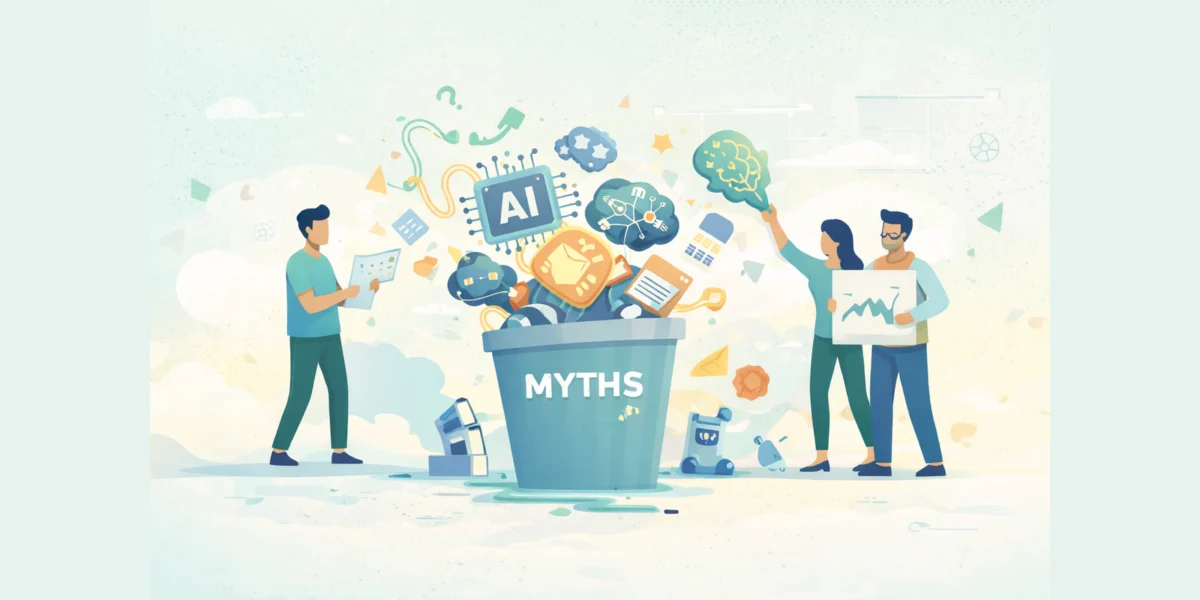
Marketing teams have navigated a three-year journey of extensive experimentation with generative artificial intelligence, a period marked by both promising breakthroughs and accumulating frustrations. While some organizations have successfully harnessed AI to achieve genuine efficiency gains and streamline operations, a significant number have found themselves merely acquiring a proliferation of tool subscriptions without realizing substantive improvements, leading to mounting discontent among their personnel. This disparity highlights a persistent chasm between the grand promises of AI technology and its practical, measurable value in real-world marketing applications. The much-touted "AI best practices" often lack clear traceability to demonstrable outcomes, compounding the challenge for marketers at a time when traditional metrics like organic traffic and clicks are experiencing a notable decline across the digital landscape.
The Generative AI Hype Cycle in Marketing: A Brief Chronology
The journey of generative AI in marketing began gaining significant momentum in the early 2020s, characterized by a rapid surge in the development and adoption of sophisticated language models and content generation tools. Initially, the promise was transformative: automation of mundane tasks, content creation at unprecedented scale, and a radical boost in overall marketing efficiency. This era saw a proliferation of startups and established tech giants alike introducing solutions designed to revolutionize everything from copywriting and image generation to data analysis and campaign optimization. Marketing departments, eager to capitalize on the perceived competitive edge, often embraced these new technologies with enthusiasm, driven by a fear of missing out (FOMO) and the allure of effortless content creation.
However, as 2025 approached and progressed, the initial euphoria began to temper with the sobering reality of implementation. What started as an exciting frontier of innovation gradually revealed its complexities. Teams discovered that integrating these tools was often more challenging than anticipated, requiring significant internal adjustments, skill development, and strategic re-evaluation. The early narrative of AI as a standalone, autonomous content engine started to give way to a more nuanced understanding: AI is a powerful assistant, but one that requires careful human guidance, strategic context, and rigorous oversight to deliver true value. Industry observers began to note a critical shift in focus, moving from "what can AI do?" to "what should AI do?" and, more importantly, "how can we make it work effectively and sustainably?" This period marked a crucial turning point, signaling a transition from unfettered experimentation to a demand for disciplined, outcome-oriented application of AI in marketing.
The Discrepancy Between Promise and Performance: Supporting Data and Industry Observations
The current state of AI adoption in marketing presents a mixed picture. While some forward-thinking organizations report significant gains, a broader trend indicates a struggle to translate AI investments into tangible returns. A recent survey by [hypothetical research firm, e.g., "Digital Marketing Insights Group"] in late 2024 revealed that while 85% of marketing teams have experimented with generative AI, only 30% reported a "significant positive impact" on their key performance indicators (KPIs). Conversely, 45% cited "tool sprawl" and "integration challenges" as primary impediments to AI success. The average marketing tech stack, according to the same survey, grew by approximately 15% in the past two years, with many new additions being AI-powered tools that often operate in silos.
This accumulation of tools, rather than streamlining operations, frequently layers new complexities onto existing workflows. Instead of replacing manual steps, teams often find themselves managing multiple AI subscriptions, each requiring distinct training and integration efforts. The absence of a cohesive AI strategy often leads to fragmented data, inconsistent brand voice, and a diluted impact. Marketing leaders frequently express frustration over the difficulty in quantifying the return on investment (ROI) from these disparate AI initiatives, leading to a perception that much of the expenditure on AI tools has yielded marginal, if any, net benefit.
Compounding these internal challenges is the evolving external landscape, particularly concerning organic search. Data from sources like Search Engine Land and Ahrefs indicates a concerning trend: clicks and organic traffic are in freefall. Ahrefs’ 2025 research, for instance, highlights that AI Overviews—generative AI summaries at the top of search results—can reduce clicks to top-ranking pages by as much as 34.5%. This shift means that even content that ranks highly may struggle to attract direct user engagement, as search engines increasingly attempt to provide immediate answers without requiring a click-through. This development underscores the urgent need for marketers to re-evaluate their content strategies beyond traditional SEO, focusing on how their content is structured and presented to maximize visibility within AI-driven search environments.
Debunking Five Persistent Myths of AI in Content Marketing
As the industry moves towards a more pragmatic application of generative AI, several pervasive myths, often fueled by hype or misunderstanding, require critical examination. Dispelling these misconceptions is crucial for marketing directors aiming to implement effective, outcome-driven AI strategies.
Myth 1: More AI Tools Automatically Mean More Efficiency
The intuitive appeal of "more AI equals more productivity" often proves misleading in practice. While the logical premise suggests that integrating additional AI capabilities should naturally lead to greater output and reduced manual effort, the reality for many marketing teams has been quite the opposite. Instead of a seamless replacement of manual tasks, teams frequently find themselves layering new AI tools on top of existing, often disconnected, workflows. This "tool sprawl" can introduce new bottlenecks, increase management overhead, and fragment efforts rather than consolidate them. A study by [hypothetical consulting firm, e.g., "Tech Solutions Advisors"] in 2024 indicated that companies with five or more distinct AI content tools reported a 20% lower perceived efficiency gain compared to those with two or fewer integrated solutions.
True efficiency stems not from the sheer number of tools, but from the intelligent integration of AI within connected workflows. When AI functionalities are embedded directly into platforms where work already occurs—such as content management systems (CMS), editorial calendars, or project management tools—the benefits begin to materialize. For instance, AI assisting with brief generation within a project management tool, or suggesting SEO improvements directly within a CMS, streamlines processes rather than creating additional steps. Furthermore, investing in comprehensive training and establishing clear guidelines for the effective use of existing tools often yields greater productivity dividends than chasing the newest feature set from an ever-expanding market of AI solutions.
What Works: A foundational step is to meticulously map out current end-to-end content processes. Identify genuine bottlenecks that AI can realistically address, and prioritize consolidating existing tools rather than adding new ones. Crucially, invest in empowering teams to confidently and proficiently utilize the AI tools already at their disposal. Implementing basic guardrails and best practices can prevent fragmented experimentation and ensure a cohesive approach to AI integration.
Myth 2: AI-Generated Content Performs Autonomously and Effectively
The advent of generative AI has undeniably resolved the problem of content scarcity; most marketing teams now possess the capacity to publish at unprecedented volumes. However, this surge in quantity has introduced a new, more profound challenge: creating content that authentically resonates with a brand’s unique voice and perspective, thereby earning trust amidst a digital landscape saturated with often-identical AI-generated material. Performance in the current environment hinges on genuine expertise, distinctive perspective, and originality, rather than mere volume.
Both sophisticated search engine algorithms and human readers are increasingly adept at discerning signals of human authorship, seeking evidence that a knowledgeable individual with lived experience is genuinely behind the content. Generic AI text, left unedited, frequently lacks the nuanced understanding, persuasive narrative, and unique insights that differentiate compelling content. Grammatically correct copy, while foundational, is not synonymous with a memorable or impactful story. Moreover, AI, by its very nature, tends to default to the safest, most statistically probable version of an idea, which rarely sparks engagement or drives conversions. This often results in a "sea of sameness" where content, while technically proficient, fails to stand out or connect with its intended audience on an emotional or intellectual level.
Organizations achieving measurable results treat the AI content creation process as a collaborative endeavor. They strategically layer in authentic examples from real customer experiences, clarify complex claims, sharpen arguments, and rigorously fact-check every piece. Most critically, they ensure that each piece of content serves a clear, defined business objective.
What Works: Leverage AI for its strengths: accelerating research, generating initial outlines, and producing first drafts. Subsequently, integrate a robust human editing layer for critical elements such as accuracy, brand voice, storytelling, and differentiation. This hybrid approach ensures that the content benefits from AI’s speed while retaining the unique human touch essential for impact and trust.
Myth 3: AI Can Compensate for Flawed Marketing Strategy
A crucial distinction to grasp is that AI primarily functions as an optimizer of execution. It excels at accelerating processes, identifying patterns, and generating outputs based on established parameters. However, AI possesses no inherent capability to rectify fundamental strategic deficiencies, such as fuzzy brand positioning, ill-defined target audiences, or misaligned business objectives. Speed, when applied to a flawed strategy, merely amplifies the wrong direction, leading to faster, more extensive failures.
This phenomenon is frequently observed in practice: teams, empowered by AI, accelerate their content production, publishing at higher volumes and speeds. Yet, despite increased output, the core metrics that truly matter—such as conversion rates, customer acquisition costs, or pipeline generation—remain stagnant or even worsen. Traffic might increase due to a proliferation of content, but if that content fails to address real buyer pain points, lacks a clear call to action, or targets the wrong audience, these new visitors will not convert. Without a crisp messaging framework, a well-defined value proposition, and a clear path to conversion, any additional visibility generated by AI-driven content simply dissipates before contributing meaningfully to business growth. A 2024 analysis by [hypothetical marketing analytics firm, e.g., "Growth Metrics Lab"] found that 60% of marketing campaigns failing to meet conversion goals had "unclear strategy" cited as a primary factor, regardless of the volume of content produced.
What Works: Before embarking on any scaling of production with AI, it is imperative to establish a clear, well-articulated messaging strategy and define precise conversion pathways. Once the strategic direction is unequivocally pointed towards the right objectives, AI can then be effectively deployed to accelerate and optimize the execution of that sound strategy.
Myth 4: Universal and Immediate AI Adoption is Imperative
The pervasive fear of missing out (FOMO) often drives suboptimal technology adoption decisions within organizations. Teams may acquire AI tools primarily because competitors are perceived to be using them, rather than as a solution to clearly identified internal problems. This reactive approach frequently results in the acquisition of "wrong-fit" tools, which subsequently introduce unnecessary costs, foster confusion among team members, and cultivate a sense of cynicism that ultimately impedes future, more strategic technology adoption efforts. A 2023 report from [hypothetical industry body, e.g., "The Digital Transformation Institute"] highlighted that over 40% of failed technology implementations were attributed to a lack of clear problem definition prior to acquisition.
Conversely, teams that successfully integrate AI into their operations typically do not prioritize speed of adoption; instead, they prioritize deliberate, strategic implementation. Their process begins with a clear identification of a specific problem or friction point that is genuinely worth solving. They then meticulously define what success will look like for that particular use case, establishing measurable criteria. Only after these foundational steps are complete do they proceed to select the technology that best fits their defined needs.
Furthermore, organizational readiness is a critical factor often overlooked. A marketing team still grappling with establishing basic content workflows, brand guidelines, or consistent publishing processes will derive minimal leverage from advanced AI optimization features. Introducing AI complexity into a chaotic operational environment merely amplifies the chaos. Similarly, a team operating without clear governance policies can inadvertently multiply brand inconsistencies, legal liabilities, and data privacy risks as soon as AI scales content production, turning a potential asset into a significant liability.
What Works: Begin by identifying a single, high-impact use case where AI can demonstrably remove friction or reduce costs. Conduct a contained pilot program for this specific application, meticulously documenting both the improvements achieved and any challenges encountered. Based on these tangible results and lessons learned, strategically expand AI integration to other areas.
Myth 5: AI Search Is Basically the Same as SEO
For decades, marketers have understood visibility primarily through the lens of search engine rankings. This ingrained perspective often leads to the erroneous assumption that AI-powered search results are simply a logical extension or a more sophisticated iteration of Google’s traditional ranking algorithms. However, this perspective overlooks fundamental differences in how AI Search operates.
Traditional SEO metrics, such as site structure, page performance, keyword density, and backlinks, remain foundational elements for establishing online authority and discoverability. Yet, AI Search functions distinctly. Instead of merely ranking a list of pages, advanced language models are designed to compress, synthesize, and rewrite information drawn from multiple sources to provide direct answers, often presented as "AI Overviews" or generative summaries. As highlighted by Ahrefs’ 2025 research, these AI Overviews significantly reduce the necessity for users to click through to original source pages, leading to a substantial reduction in organic traffic for even top-ranking content (an estimated 34.5% decrease). This paradigm shift means that achieving a high ranking no longer automatically guarantees direct user engagement or visibility in the most prominent search results.
Visibility in the era of AI Search is increasingly contingent upon whether content is structured clearly, contains rich and credible context, and explicitly addresses user queries. Two articles might theoretically rank identically on the first page of traditional search results. However, the article featuring clear entity definitions, robust schema markup, structured data, and direct, concise answers is far more likely to be cited repeatedly by AI assistants and integrated into AI-generated responses. The other, despite its traditional ranking, may rarely appear in these synthesized AI answers, effectively losing its prime visibility real estate.
What Works: Marketers must adopt a dual strategy. Continue to maintain and strengthen traditional SEO foundations—building topical authority, optimizing site performance, and earning quality backlinks. Concurrently, integrate practices specifically designed for AI visibility: implement clear entity definitions, utilize structured data (e.g., Schema.org markup), and develop content formats that directly answer user questions and provide concise, verifiable information.
The Path Forward: Discipline, Strategy, and Human-AI Synergy
If the preceding years were characterized by unfettered experimentation with generative AI, the current period and the immediate future demand a shift towards rigorous discipline. The emphasis must move away from simply adopting tools towards strategically deploying AI where it demonstrably adds value, and discerningly opting out where it does not. The focus must unequivocally be on measurable outcomes and business impact, rather than chasing speculative promises or succumbing to technological hype. The role of human oversight, strategic thinking, creativity, and ethical judgment remains not only paramount but increasingly critical in an AI-augmented marketing landscape.
Looking ahead to 2026, the industry’s imperative is to move beyond breathless predictions and instead concentrate on generating tangible proof that AI initiatives are genuinely working and contributing to sustainable growth. This entails a commitment to continuous learning, iterative refinement, and a deep understanding of both AI’s capabilities and its inherent limitations.
Frequently Asked Questions (FAQs):
How do I know if my team is ready for AI adoption?
Assessing your current content operations is the crucial first step. A team is generally considered ready for AI adoption if it possesses well-documented workflows, clear brand guidelines, and consistent, predictable publishing processes. These foundational elements provide the necessary structure for AI tools to integrate effectively and augment existing capabilities. If basic operational processes still feel chaotic or undefined, it is advisable to strengthen those fundamentals before introducing the additional layer of complexity that AI tools can bring. Attempting to implement AI without a solid operational base often exacerbates existing inefficiencies.
What’s the minimum investment needed to see results from AI?
The financial investment required to begin seeing results from AI can be surprisingly modest, as many teams can leverage existing tools. A significant number of modern content platforms now include integrated AI features at no additional cost beyond the core subscription. The most significant investment, however, is not monetary but temporal: expect to dedicate a substantial amount of time—typically two to four weeks—to thoroughly train your team on effective prompting techniques, AI interaction protocols, and the necessary editing workflows. This investment in human capital and skill development is paramount for realizing consistent productivity gains. It is essential to budget for these initial learning curves and allocate resources for ongoing training and refinement.
How should I balance traditional SEO with AI Search optimization?
The most effective approach is to treat traditional SEO and AI Search optimization as complementary rather than competing strategies. Continue to prioritize the foundational elements of SEO: building topical authority, improving site performance (e.g., page speed, mobile-friendliness), and earning high-quality backlinks. These fundamentals remain critical for overall online presence and credibility. On top of this strong foundation, layer AI-specific practices: implement clear entity definitions within your content, utilize structured data markup (Schema.org) to explicitly define content elements, and design content formats that directly and concisely answer common user questions. This dual strategy ensures that your content is optimized for both traditional search engine indexing and the generative capabilities of AI assistants.
Ready to build AI workflows that actually help your team accomplish real work? Contently’s AI-assisted content platform combines generative AI efficiency with editorial oversight—so your team accelerates without sacrificing quality or brand safety.
Contently writers have the credentials your compliance team asks about. CFAs, MDs, JDs and FINRA-registered reviewers, with a managing editor on every piece. Tell us your vertical and we will show you what that looks like for your program.
Book a Content Strategy Call


 Nana
Nana
 Laily UPN